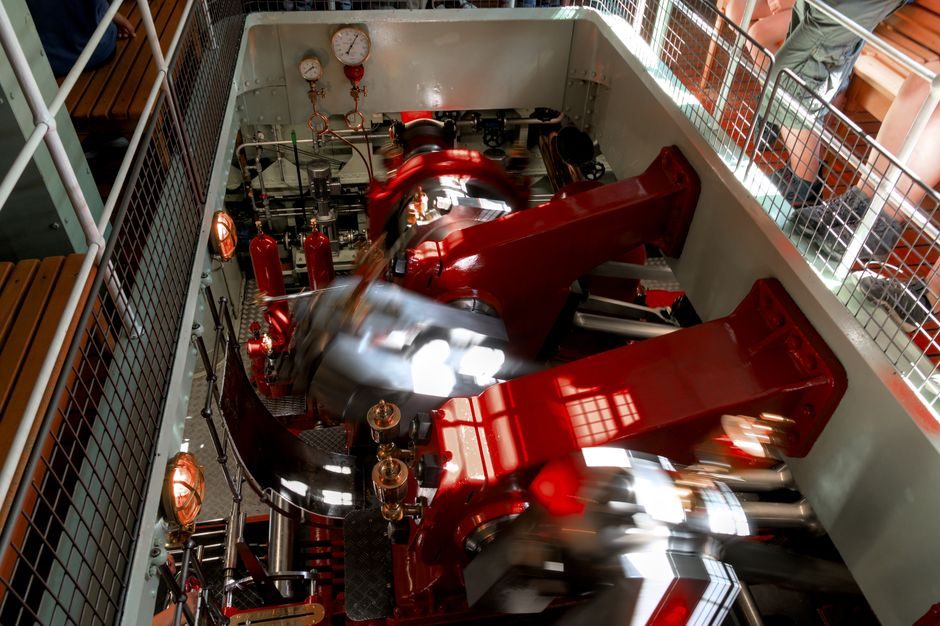
Engineers reach for a multistage pump when total differential head climbs past roughly 80 m on water-like fluids, because stacking impellers multiplies head per stage while keeping shaft speed and footprint manageable.
Two structural variants dominate: horizontally-shafted barrel designs (common 30-650 m head, flows up to ~450 m³/h) and vertical in-line / can-type units (typically up to ~250 m head, smaller footprint, the form cited in China customs tariff schedules for vertical multistage centrifugal pump imports) [S2]. Both share the same selection grammar; what changes is mechanical arrangement and how NPSH is met.
Five Hard Selection Criteria That Decide the Buy
First, required differential head H (m) and flow Q (m³/h) are non-negotiable inputs - on a single-stage centrifugal pump you trade one for the other, but a multistage lets head climb in discrete stage steps while efficiency stays in a workable band (commonly 70-82% at BEP for ISO 9906 class-A tested units). [S2]
Second, NPSHa must exceed NPSHr by at least 0.5-1.0 m margin, with hot-water, condensate, and volatile-organic services needing the wider end; suction-specific speed Nss values above roughly 8500 (metric) flag incipient cavitation risk that a stage split cannot fix.
Third, the fluid envelope drives materials - 304/316L stainless for clean water, duplex 2205 or super-duplex for brackish/seawater RO trains, bronze or CD4MCu for chlorides, and Alloy 20 / Hastelloy for sulfuric or HCl trim, all matched against the chloride / pH / temperature triangle of the duty.
Fourth, sealing - packed gland (cheapest, limited to ~120 °C and non-hazardous duties) versus single mechanical seal (John Crane Type 2 / Burgmann equivalent) versus double seal with barrier fluid (PLAN 53A/54 for hot hydrocarbons and VOC services, mandatory on most ATEX/IECEx Zone 1 pump skids).
Fifth, driver and speed: 2-pole 50 Hz 2950 rpm or 4-pole 50 Hz 1475 rpm induction motors in IEC frame sizes 80-355, with VFD compatibility becoming standard on any new boiler-feed or pressure-booster build.
Horizontal vs Vertical vs Self-Priming: When Each Wins
Horizontal end-suction multistage (e.g. CR/GR/CRI family style) is the default for clean-water booster sets and light industrial duties up to roughly 16 bar and 160 m³/h - the cheapest installed cost and the easiest mechanical-seal maintenance because the shaft is horizontal and accessible. [S2]
Vertical multistage in-line (CRV / Helix V style) wins in plant rooms where floor area is the binding constraint, in high-rise booster risers, and in light chemical dosing where the suction is flooded; space savings of 50-70% over horizontal layouts are realistic on retrofit skids. The customs-tariff data for vertical multistage centrifugal pump shows the form is tracked as a discrete import category, which alone justifies a separate spec line rather than a horizontal variant [S2].
Self-priming multistage (e.g. cast-iron frames for construction dewatering) is reserved for duties where the pump sits above the wet well and cannot be flooded - efficiency is usually 5-10 points below flooded-suction equivalents, so it is a compromise, not a default.
Performance Envelope, Efficiency, and Operating Cost
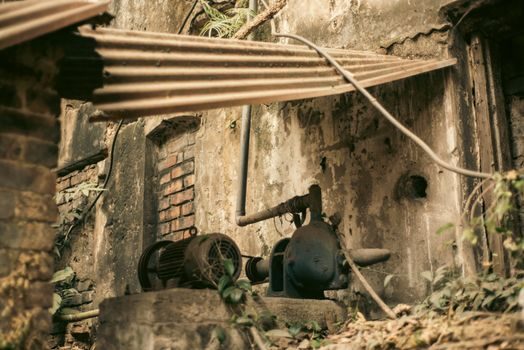
Specific speed (Ns, metric) is the cleanest way to compare multistage options: Ns = n·√Q / H^0.75. For radial multistage pumps on water, Ns typically lands between 20 and 90 - well below the 150-400 mixed-flow band, confirming radial impeller geometry. Running far to either side of BEP (below 70% or above 120% of Q at design H) costs 8-15% efficiency, accelerates mechanical-seal wear, and is the single most common cause of premature bearing failure on field returns. [S4]
On a 75 kW motor at 4000 hr/yr and €0.12/kWh, a 5-point efficiency gap (say 73% vs 78%) costs roughly €7,000/yr in electrical input - over a 10-year life that dwarfs the purchase-price spread between an entry-level and a premium multistage.
Minimum-continuous stable flow (typically 25-35% of BEP for radial stages) sets the lower operating bound; boiler-feed duties with wide turndown should specify a VFD with a minimum-frequency floor, not a throttling valve, to keep the pump above this thermal-loading limit.
Materials of Construction and Corrosion Windows
Standard 304 stainless stages cover potable water and most HVAC chilled-water booster duties to roughly 110 °C; 316L extends chloride tolerance to a few hundred ppm and handles CIP rinse loops in food/pharma skids. [S2]
For RO feed with brackish water (5,000-15,000 mg/L TDS) and chlorine residuals of 0.5-1.0 ppm, 2205 duplex or higher is the practical floor; super-duplex 2507 handles seawater (35,000 mg/L TDS) at the same temperature window. Below pH 3 with chlorides, no stainless survives indefinitely - non-metallic diaphragm pump or PTFE-lined gear pump alternatives enter the conversation.
Shaft options (SS431, 17-4PH, duplex 2205) must be matched to the stage material to avoid galvanic corrosion at the impeller-shoulder interface; mismatched shafts are a frequent forensic finding on wetted-stage failures.
Sealing, API Plans, and Hazardous-Area Logic

Standard cartridge single mechanical seal (silicon-carbide vs carbon, EPDM or FKM secondary) is the default for clean, non-hazardous water service to 120 °C / 16 bar. Above those limits, or on any VOC, hot-oil, or light-hydrocarbon duty, step to API 682 Plan 53A (pressurized barrier water) or 54 (pressurized barrier oil) - the buffer fluid holds the seal faces apart and absorbs the heat that would otherwise cook the faces.
For ATEX/IECEx Zone 1 (Group IIA/IIB) flammable fluids, the seal plan must be specified in the same document as the motor certification; ATEX 2014/34/EU Category 2 is the baseline for the pump assembly, with the motor carrying its own Ex d / Ex e marking. Pairing a non-certified seal plan with an Ex d motor is the most common audit finding on European skid reviews.
Plan 52 (unpressurized containment with throat bushing) and Plan 75 (slight recirculation) are intermediate options for warm-water service where full Plan 53A is over-spec but single seal is too thin.
Acceptance Testing, Standards, and Document Discipline
ISO 9906 governs hydrodynamic performance - demand at least Class 2B (≈ ±4% on flow, ±3% on head) on any multistage order above ~10 kW, and Class 1B (≈ ±2.5% flow, ±2% head) on boiler-feed and high-energy skids. Witness tests at the OEM shop, not just a nameplate review, are the only way to catch a mis-applied impeller trim before shipment. [S4]
Materials traceability per EN 10204 3.1 is non-negotiable on stainless and duplex stages; 3.2 (independent inspector countersigned) is the right call for hydrocarbon, offshore, and pharmaceutical duties. NACE MR0175 / ISO 15156 applies when H2S partial pressure exceeds 0.0003 MPa in oil-and-gas service.
Hydraulic performance is normally verified on water at room temperature; for viscous duties (say above 30 cSt), request a viscosity correction per the Hydraulic Institute 9.6.7 method and re-rate the pump - the headline curves lie once viscosity climbs.
Where the Multistage Pump Is the Wrong Choice
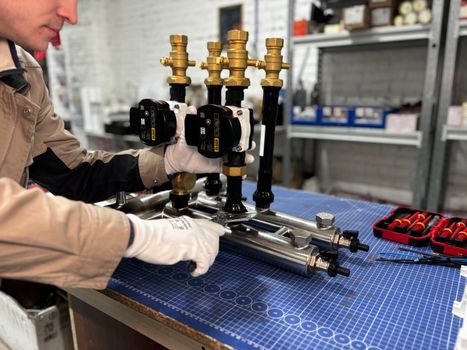
If Q is below roughly 3 m³/h, a single-stage centrifugal pump, a diaphragm pump, or a metering pump is usually cheaper, easier to seal, and more efficient than any 2+ stage multistage. [S2]
If the fluid is highly viscous (above ~200 cSt), a positive-displacement gear pump or progressive-cavity pump out-performs any multistage centrifugal by wide margins on both efficiency and shear-sensitive duties. If the duty is metering or requires ±1% dosing accuracy, switch to a metering pump - multistage centrifugals are flow/head machines, not metering machines.
If suction is dry and NPSHa is below 2-3 m absolute, a self-priming or submersible variant is the only multistage form that works; flooded suction is a hard requirement for the standard horizontal and vertical in-line builds.
For related context on pump-adjacent selection, the multistage centrifugal pump selection for wastewater lift stations article covers the lower-head / higher-solids end of the family, while sanitary process piping stainless steel selection criteria sits naturally next to a 316L / duplex stage material spec.
Two trackable signals: published ISO 9906 acceptance-test certificates with witness sign-off, and seal-plan documentation that explicitly references API 682 / ATEX 2014/34/EU - both belong in the datasheet, not buried in the O&M manual.