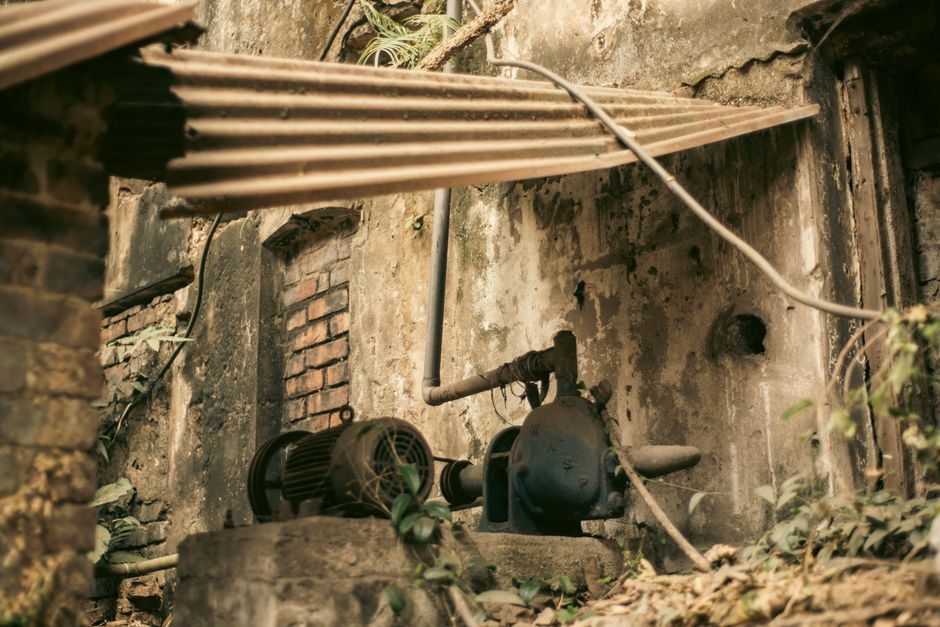
Buying a plunger pump in 2026 starts with four spec gates: flow (l/min or m³/h), pressure (bar), fluid compatibility (viscosity, solids, temperature) and duty cycle (continuous vs intermittent), because pump head, plunger diameter, packing stack and driver size all derive from those numbers before a brand shortlist is even opened [S2][S4].
Reference units already on the market in mid-2026 confirm the spread buyers should expect: a WOMA Type 700Z plunger pump delivers flow up to 435 l/min (114.9 US gal/min) at 1,500 bar (21,755 psi) from a 513 kW (697 hp) driver, weighs 1,430 kg in a 1,517 × 1,067 × 620 mm envelope, and is rated for 5–45 °C fluid temperature with ATEX options for paint/oil/cleaning service [S2]. At the other end, Peroni Pompe's PD series is built for crude oil, hydrocarbons and gas duty, and is typically specified for upstream and midstream applications where multi-plunger head geometry and API-style bolting dominate the data sheet [S1].
China-side supply is dense: Alibaba's plunger-pump supplier index listed 941 matched suppliers at the time of the May 2026 pull, and Jinan Baoshan Petroleum Equipment continues to offer plunger pumps and spares for HT400 and TWS600S units — relevant if you need legacy oilfield spares rather than a new build [S3][S4].
What a Plunger Pump Is and Where It Sits Against [Piston, Gear, Diaphragm] Pumps
A plunger pump is a positive-displacement reciprocating pump that uses a solid cylindrical plunger sliding through a static seal packing set, displacing fluid on each stroke — distinct from a piston pump, where the seal rides on the piston itself plunger pumps. The separation of the dynamic seal from the wet end means plungers can run at higher pressures and handle dirtier fluids than piston designs, and at higher pressures than centrifugal pumps, which lose head efficiency as pressure climbs. Compared with diaphragm pumps, plunger pumps tolerate higher pressures and higher solids loading but leak past the packing and cannot run dry indefinitely; compared with gear pumps, they reach far higher pressures (gear pumps typically cap below ~250 bar) but are larger, pulsating, and need a pressure-relief path. Spec sheets almost always show flow in l/min or m³/h, pressure in bar or psi, plunger diameter in mm, stroke in mm, stroke rate in rpm or strokes-per-minute, and driver power in kW [S2].
Selection Criteria: The Four Gates Before Brand
Gate 1 — Required flow and pressure. Calculate the process duty point, then add 10–15 % margin; the WOMA 700Z datasheet lists 435 l/min at 1,500 bar as one operating point, with up to 605 l/min at lower pressures available across the Z series [S2]. Plunger diameter × stroke × strokes/min × volumetric efficiency = flow; the same geometry pushed harder by driver power = pressure. Mismatch in either direction shows up first as packing overheating, valve-chatter noise, or driver overload trips.
Gate 2 — Fluid compatibility and temperature. List viscosity, solids content, chemical aggressiveness, and fluid temperature. WOMA 700Z caps fluid temperature at 45 °C with a 5 °C minimum, which is typical for water-jetting and paint/cleaning service [S2]. Crude, hydrocarbon and gas service shifts the seal and valve materials — Peroni's PD series is explicitly designed for crude, hydrocarbons and gas, which implies metal-to-metal or hard-faced valve seats, API-style bolting, and plunger/liner material pairs sized for that fluid envelope [S1].
Gate 3 — Duty cycle. Continuous high-pressure duty (water-jetting, injection, descaling) demands heavier fluid ends, more plungers (3 or 5 vs 2 or 3), forced lubrication, and gear-box rating well above nameplate. Intermittent duty (odorizing, metering, batching) can use lighter 2-plunger heads and lower-cost packing. The 700Z sits in heavy continuous duty; an odorizing plunger-metering pump uses a mechanically locked short stroke to hold a constant output per cycle, which is the right architecture for low-flow dosing, not for high-pressure cleaning [S2][S5].
Gate 4 — Certification, environment and integration. For hazardous-area builds, confirm ATEX/IECEx zone, temperature class, and protection concept; the WOMA 700Z explicitly offers ATEX-rated variants for cleaning and descaling service [S2]. For oilfield, the API 674 (reciprocating positive-displacement pumps) envelope — API bolting, gauge points, performance-test procedure — is the spec most EPCs call out for the PD-style heavy plunger pump, and buyers should confirm the supplier's data sheet maps to API 674 before purchase [S1].
Options Comparison: Triplex/Quintuplex vs Duplex/Triplex Light, Process vs Water-Jetting
The practical shortlist for 2026 buyers falls into three buckets. Heavy process plunger pumps (Peroni PD, HT400/TWS600S-class) are typically triplex or quintuplex, multi-plunger, low-rpm, with API 674 envelopes, used for crude, hydrocarbon, water injection, and chemical dosing [S1][S4]. Water-jetting/cleaning plunger pumps (WOMA 700Z) are triplex, high-rpm, packaged with gearbox and driver, certified for high pressure up to 1,500 bar and flow to 435 l/min on the rated point [S2]. Light industrial/metering plunger pumps (the odorizing-plunger architecture and small radial-piston units) handle low-flow dosing where stroke locking or radial piston geometry is the point [S5][S3].
Compare on four axes: (1) Pressure ceiling — water-jetting up to ~1,500 bar, heavy process typically 100–700 bar, light metering under 50 bar; (2) Flow band — water-jetting 50–600 l/min, heavy process 5–200 m³/h, light metering under 100 l/h; (3) Solids/abrasion tolerance — process plunger pumps lead, water-jetting pumps handle suspended scale and paint, light metering pumps need clean fluid; (4) Driver size — water-jetting at 1,500 bar needs ≥500 kW (the 700Z sits at 513 kW), heavy process runs 50–500 kW, light metering often under 5 kW [S2][S1][S3]. A buyer who needs 1,000+ bar for descaling is in water-jetting bucket only; a buyer needing API 674 documentation for an oilfield package is in heavy process only.
Real Use Cases and Sourcing Map
Upstream oil and gas: plunger pumps are used for water injection, chemical injection (methanol, corrosion inhibitor, scale inhibitor) and crude transfer; the supplier shortlist is dominated by API 674-class builders, and Jinan Baoshan continues to supply spares for legacy HT400 and TWS600S units, which matters for brownfield operations where the fleet is already standardized on those fluid ends [S4].
Process industry and high-pressure cleaning: WOMA's 700Z (1,500 bar, 435 l/min, 513 kW, ATEX option, 1,430 kg in a 1,517 × 1,067 × 620 mm frame) is the reference build for industrial descaling, paint and oil removal, and shipyard or heat-exchanger cleaning, and the 5–45 °C fluid window is the rated operating envelope buyers should respect [S2].
Refining and hydrocarbon transfer: Peroni Pompe's PD series targets crude, hydrocarbon and gas service and is the kind of unit called out in European and Middle Eastern EPC packages where API-style documentation and European build pedigree are procurement requirements [S1]. China OEM supply is broad — the May 2026 Alibaba index showed 941 matched plunger-pump suppliers, including radial-piston hydraulic pump offerings in the 700–800 bar pressure class — useful for cost-down builds, with the usual caveat that pressure-class claims below 1,000 bar should be cross-checked against nameplate and test-certificate data [S3].
Limitations, Failure Modes, and Sourcing Watch-Outs
Three failure modes dominate the field. (1) Packing and plunger wear — the dynamic seal is the wear part; in abrasive service, expect packing replacement every 500–2,000 hours and plunger/liner inspection at the same window. (2) Valve-seat erosion — solid-laden fluids eat the suction and discharge valve seats; API 674 service typically hard-faces them and specifies a max solids content. (3) Pulsation and vibration — single- and two-plunger heads are inherently pulsating; piping and instrumentation must include a pulsation dampener or a triplex/quintuplex head to stay within vibration limits on long pipe runs. [S1]
Sourcing watch-outs specific to 2026: ATEX/IECEx certification must be on the nameplate, not just in marketing — WOMA explicitly lists "Protection level ATEX" as a configurable option for the 700Z [S2]. Spare-parts continuity matters more than sticker price on legacy oilfield fleets — Jinan Baoshan's continued offering of HT400 and TWS600S spares is a useful signal for brownfield buyers [S4]. On the low end, radial-piston and small plunger-pump listings at 700–800 bar should be checked for nameplate pressure class, fluid-end material certificate, and a documented test certificate; the supplier count on Alibaba is high and the spec spread is wide [S3]. For a structured spec-first build sequence, the Plunger Pump Selection: Four Spec Gates That Decide the Build Before Brand walk-through applies the same gate logic in step form.
Standards, Documentation, and Pre-Purchase Checklist
For heavy process and oilfield plunger pumps, the governing spec is API 674 (Reciprocating Positive-Displacement Pumps), which sets performance test, noise, pulsation, and documentation expectations; buyers should require an API 674-compliant data sheet and test report at PO, not as a post-delivery extra [S1]. For hazardous-area European builds, the ATEX 2014/34/EU framework (with IEC 60079 series for protection concepts) is the certification envelope, and the OEM must show the notified-body certificate and the specific zone/temperature-class marking on the nameplate [S2]. For water-jetting and cleaning service, occupational-safety pressure-test documentation at 1.5× the maximum working pressure is the minimum; the 700Z is rated to 1,500 bar working pressure, which implies hydrostatic test at or above that figure on the production test certificate [S2].
Pre-PO checklist: (1) required flow in l/min and pressure in bar with operating point and turndown, plus the fluid's viscosity, solids content, and temperature window; (2) duty cycle (continuous hours/day), ambient conditions, and hazardous-area zone; (3) fluid-end material (duplex SS, alloy 20, carbon steel, etc.), plunger/liner material, and packing specification; (4) API 674 data sheet and test certificate for process units, ATEX/IECEx certificate for hazardous-area units; (5) spares list keyed to wear parts (packing sets, valves, plungers, liners) with lead time; (6) driver and gearbox rating, coupling alignment procedure, and noise/vibration data. For buyers who have already settled the pump type and are now narrowing the brand, the Plunger Pump Selection: Four Spec Gates That Decide the Build Before Brand gate-by-gate list is the most direct cross-reference, and buyers comparing plunger to diaphragm architectures can cross-check the Diaphragm Pump Selection: Five Spec Gates That Decide the Build Before Brand to confirm which technology fits the fluid envelope.
Trackable signals over the next sourcing cycle: confirm whether API 674-compliant ATEX/IECEx dual-certified heavy plunger pumps appear on more 2026–2027 European chemical-plant bid lists, and watch whether China OEM radial-piston plunger suppliers (the 700–800 bar cluster) move up into the 1,000+ bar water-jetting class — the 700Z-class pressure band is still dominated by European and US builders as of mid-2026 [S2][S3].