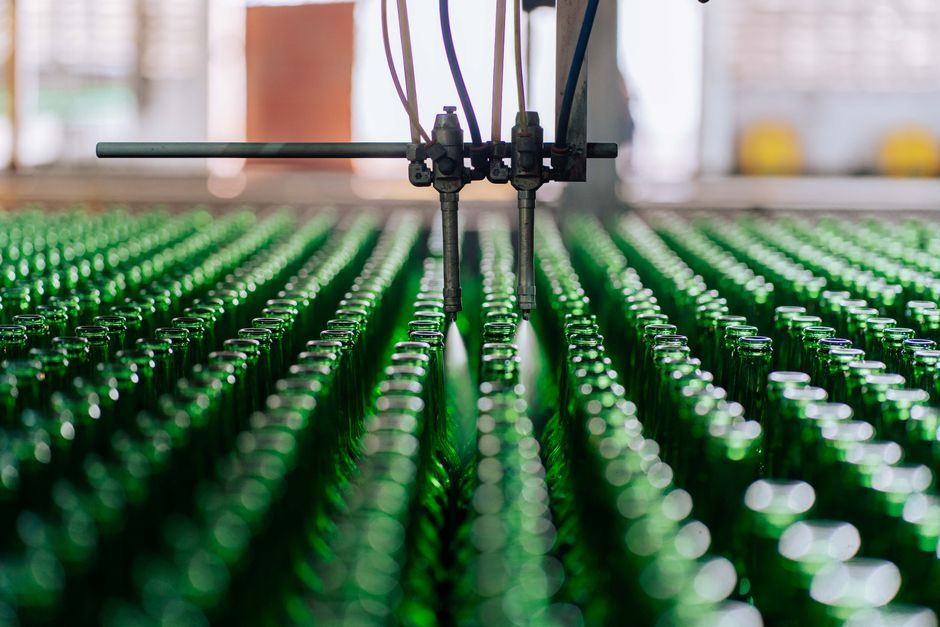
Goldwind's offshore wind smart-manufacturing model ties intelligent quality management standards to a green supply chain system, producing turbines with traceable component data from blade layup to nacelle assembly [S1]. The same vendor framing positions wind power equipment production as a vertically integrated digital thread rather than a discrete fabrication line [S1].
For specification engineers, the practical question is which automation layers actually move the needle on tower, blade and nacelle yield, and which are vendor marketing. A synthesis of 19 UK and 9 other EU offshore wind farm (OWF) developments confirms that automated impact monitoring and mitigation are now baseline deliverables on European offshore builds, not optional adders [S2].
What "smart manufacturing" means in an offshore wind factory
Goldwind's published equipment-manufacturing model explicitly links "intelligent quality management standards" to a "green supply chain system," meaning the MES layer is wired to inbound material traceability as well as outbound turbine test data [S1]. On the shop floor, that translates to RFID/QR-tagged blade root inserts, torque-and-angle data capture on tower bolt joints, and automated ultrasonic testing of hub castings rather than paper travellers.
For a process engineer, the decision criteria to audit a vendor's "smart" claim are four: closed-loop process control on critical-to-quality (CTQ) welds, real-time OEE dashboards tied to nacelle station cycle time, digital-twin simulation of blade layup cure cycles, and ISO 14001 environmental KPIs on the same dashboards. If any one of these is missing, the line is a conventional line with a veneer of MES, not a smart factory. Smart instrumentation — from pressure transmitters on hydraulic pitch systems to flow meters on resin infusion lines — is the data substrate that makes the rest auditable.
Selection criteria for the automation stack
Specifying engineers should treat the offshore wind automation stack as four layers and gate each one independently. Layer 1 is the sensor and actuator layer: smart meters on energy, smart camera vision on blade root drilling, and smart valve positioners on resin and coolant manifolds. Layer 2 is the control layer, typically a mix of PLCs and IPCs running EtherCAT or PROFINET with deterministic cycle times below 1 ms on safety-critical axes. Layer 3 is the MES/IIoT layer, which must expose OPC UA over TSN for vendor-neutral data exchange, not a proprietary REST bus. Layer 4 is the analytics and digital-twin layer, where cure-cycle, layup, and tower-bolt pretension data are replayed against as-built 3D models. [S1]
Three concrete gates: (1) every CTQ weld must have a logged heat-input curve, not a pass/fail bit; (2) every blade root must have a per-lamina cure-temperature trace tied to a unique laminate serial; (3) every offshore-bound nacelle must leave the factory with a signed digital twin package that the wind farm SCADA can ingest on day one. Vendors that cannot hand over a sample data package in the RFP should be deselected early.
Who the smart-factory model fits, and who it does not
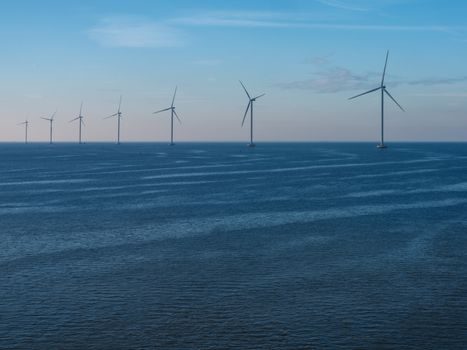
The integrated Goldwind-style model fits Tier-1 OEMs with 5 GW+ annual capacity, captive blade and tower plants, and direct utility procurement contracts. It also fits the emerging European gigafactory segment (Esbjerg, Le Havre, Hull) where governments are tying capex subsidies to local content and digital traceability mandates. [S2]
It does not fit small tier-2 fabricators making secondary steel components, foundries pouring hub castings for multiple OEMs, or service-only O&M yards. For those players, the right automation scope is narrower: robotic welding cells with seam tracking, automated UT phased-array on critical welds, and ERP-integrated QA traveller systems. Over-scoping into a full digital twin is wasted capex for a 200-person shop, and the EU's 19-OWF monitoring review confirms that the regulatory baseline is environmental impact monitoring, not factory digital twinning [S2].
Comparison of the main offshore-wind smart-manufacturing approaches
Four approaches are visible in the current OEM landscape, and they line up against four decision criteria as follows. Approach A — fully integrated OEM model (Goldwind pattern): intelligent quality management plus green supply chain, strengths are traceability and ESG reporting, weaknesses are capex intensity and vendor lock-in [S1]. Approach B — contract manufacturer plus automation retrofit: strengths are lower capex, weaknesses are fragmented data and weaker ESG audit trail. Approach C — gigafactory with public co-funding: strengths are scale and policy alignment, weaknesses are schedule risk and local-content compliance overhead. Approach D — modular cell automation for tier-2 suppliers: strengths are fast ROI, weaknesses are limited cross-station data integration.
For a utility procurement team, the gating question is whether the chosen approach can deliver a per-turbine-as-built digital package. The EU OWF monitoring review of 19 UK and 9 EU developments shows that environmental and operational data packages are already a contract norm, so any approach that cannot produce equivalent documentation at the factory gate will lose bids against Approach A and C competitors [S2].
Real production use cases and the data they generate

Three use cases dominate the published evidence. First, blade root drilling: smart-camera-guided robots drill root bolt patterns to ±0.1 mm positional tolerance, with the camera system logging per-hole image, torque and angle; the resulting dataset is the input for the in-service fatigue model. Second, tower can rolling and welding: induction-bending plus submerged-arc welding with automated UT phased arrays, where each weld seam has a continuous heat-input record and a 100% UT coverage file. Third, nacelle assembly: torque-and-angle controllers on every bolt of the drivetrain, bedplate and yaw system, with the data stored against the nacelle serial and shipped with the turbine as a JSON or OPC UA bundle. [S3]
On the environmental side, the EU monitoring review of 19 UK and 9 EU OWFs confirms that underwater-noise monitoring, marine mammal mitigation, and post-installation benthic surveys are now embedded project deliverables, with automated PAM (passive acoustic monitoring) systems feeding into the same data room as the structural health data [S2]. That convergence — factory data and environmental data in one audit trail — is the new procurement norm.
Limits, failure modes and standards to watch
Three failure modes recur in the field. Sensor drift on hydraulic pitch pressure transmitters that goes undetected because the calibration interval is too long; network segmentation gaps between the factory MES and the wind farm SCADA, which allow the OPC UA data to stop at the gate; and over-reliance on vendor cloud platforms that go dark at end-of-life. Each of these is solvable with disciplined maintenance and open data formats, but they are the most common root causes of warranty disputes. [S1]
For engineers working in adjacent process industries, the offshore wind automation playbook is now directly comparable to the industrial valve smart-manufacturing stack, which uses the same PLC/MES/digital-twin layering. Cable and harness production for nacelles follows a similar pattern, and the cable and wire manufacturing process discipline of drawing, stranding, insulation and QC maps almost one-to-one onto offshore wind cable laying and termination. The cross-industry lesson is that smart manufacturing only pays off when the data exits the factory gate in a format the customer's SCADA can read on day one.
For sourcing teams evaluating OEM claims, the first verification step is to request a redacted sample of a per-turbine digital-twin package from a delivered project, and to confirm that the package can be ingested by a third-party SCADA without proprietary middleware. A second signal is the EU OWF review's documentation standard: if a vendor's factory data package meets or exceeds the monitoring data quality of the 19 UK and 9 EU OWF developments reviewed, the factory is in the top tier [S2]. Anything below that line is conventional production with a marketing brochure.