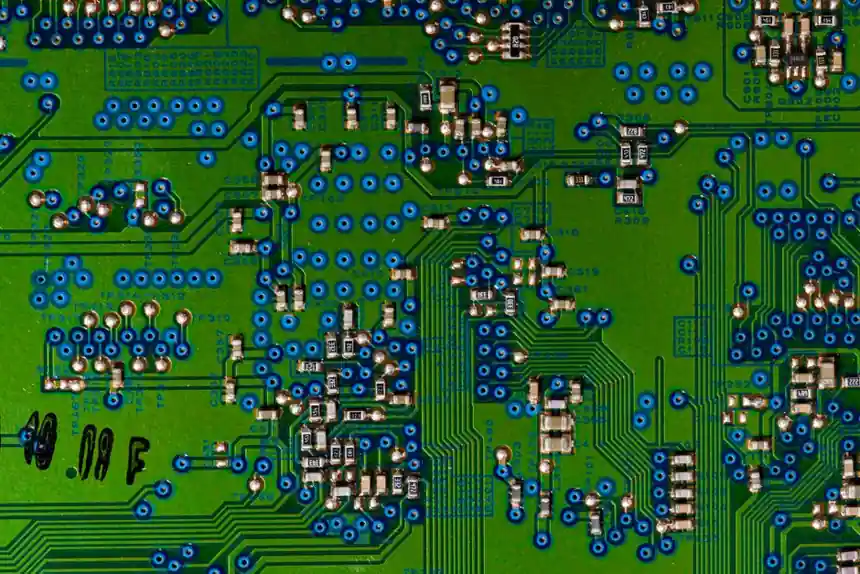
Global printed circuit board revenue is projected to land in the USD 85-90 billion band in 2026, up from an estimated USD 78-82 billion in 2025, with most analyst houses modeling a 5-7% CAGR through 2030 on AI server, EV, and high-end HDI pull [S3]. Technavio's standalone forecast puts the incremental opportunity at USD 28.57 billion over 2025-2030 at a 6.2% CAGR, with APAC capturing 88.4% of that growth and the multi-layer segment alone valued at USD 25.86 billion in 2024 [S1].
Inside that envelope, the AI server pocket is the swing variable. Goldman Sachs raised its 2026 global AI PCB forecast by 35% to USD 13.56 billion, then projects USD 37.53 billion in 2027 (up 38% from prior) and USD 84 billion in 2028, implying a 148% three-year CAGR [S4]. AI server PCB shipment area is modeled to climb from 0.9 million m² in 2025 to 1.3, 2.6, and 4.5 million m² across 2026-2028 (85% three-year CAGR), with blended ASP rising from USD 5,833/m² to USD 18,549/m² over the same window [S4]. For context on how that pulls adjacent hardware lines, see the server hardware ramp through 2028.
Segment Mix: Multilayer Still Leads, HDI Captures the Growth Premium
Multilayer FR-4 boards remain 60-65% of unit volume, with 4-6 layer as the workhorse for industrial PLC controllers and consumer goods, 8-12 layer for telecom backplanes, and 16+ layer reserved for switches and AI accelerator cards [S3]. Within the multi-layer bucket, the 30+ layer slice is the fastest-moving spec: Goldman models its share of multi-layer PCB revenue rising from 12% in 2025 to 18% in 2026, 46% in 2027, and 47% in 2028, lifting the 30+ layer market from USD 1.42 billion in 2026 to USD 19.24 billion in 2028 [S4].
HDI has crossed 18% of PCB revenue on any-layer microvia demand from 5G smartphones and wearables, with line/space down to 30-40 µm and SLP (substrate-like PCB) now standard on flagship mainboards [S3]. High-end HDI (3+N+3 / 4+N+4, plus 6+N+6 and above) is where the volume-versus-value split is sharpest: in India, 3+N+3 and 4+N+4 stackups already command a 22.3% CAGR through 2030, while 6+N+6 is forecast to grow from 10% of global HDI revenue in 2025 to 66% in 2028 (USD 28.39 billion market) [S2][S4]. Rigid-flex remains the fastest-growing absolute slice for foldable displays, medical implants, and aerospace harnesses where vibration tolerance is a hard requirement [S3]. Process control on these lines uses the same pressure transmitter and PLC hardware specified across the rest of the fab, so the spec lever sits in the substrate and lamination step, not the control loop.
Application Pull: AI Servers, EV Power, and 5G Smartphones
AI server motherboards and switch boards are the single largest demand swing in 2026: 16-22 layer low-loss stackups with DK 3.2-3.6 and Df 0.005-0.010 at 10 GHz, 50-115 Ω impedance control, and OAM/UB30 retimer boards pulling 30+ layer counts into volume [S3]. Goldman splits the AI PCB opportunity between GPU and ASIC platforms: 2026 GPU-server PCB at USD 4.73 billion (only 5% upward revision) versus ASIC-server PCB at USD 8.83 billion (60% upward revision), and by 2027 the two converge near parity at roughly USD 18.8 billion each [S4]. The ASIC pull is the structural change: hyperscaler in-house silicon is taking share from a GPU-dominated stack, and vendors qualified into both supply chains sit on materially larger order books.
EV power electronics adds a different spec vector. Heavy-copper PCBs at 3-10 oz outer / 4-12 oz inner copper weight are now standard for IGBT and SiC inverter busbars on 800 V platforms, paired with 200 °C Tg laminates and embedded cooling channels that are replacing traditional wiring harnesses [S3]. In India, automotive electronics is projected to grow at 22% CAGR through 2030, with HDI content in 75% of new vehicles and EV penetration reaching 30% by 2030, quadrupling HDI content per vehicle versus ICE equivalents [S2]. Smartphones remain the largest single HDI consumer at 12-14 layer any-layer boards and 30-40 µm line/space, but the volume is migrating toward substrate-like PCB on flagship tiers [S3].
Material Stack and Spec Levers Buyers Should Track

FR-4 standard Tg at 130-150 °C covers industrial and consumer; mid-Tg 150-170 °C and high-Tg 170-200 °C families (FR408HR, S1000-2, IT-180A equivalents) handle under-hood automotive; polyimide and LCP flex carry >200 °C and mmWave loads [S3]. Low-loss CCL separates cleanly by data rate: mid-loss (Df 0.008-0.012 at 10 GHz, DK 3.3-3.7) for 25-56 Gbps SerDes, low-loss (Df 0.003-0.006, DK 3.2-3.5) for 56-112 Gbps, and ultra-low-loss (Df ≤0.0025, DK 3.0-3.4) for 112 Gbps PAM4 backplane and AI accelerator packages [S3]. Goldman expects M9-and-above CCL share to climb from 7% in 2026 to 41% in 2027 and 58% in 2028, taking that premium material market from USD 0.46 billion to USD 27.78 billion in two years, while M6 and M7 erode [S4].
Surface finish is a real cost lever: ENIG and ENEPIG for fine-pitch and wire-bond, OSP for cost-driven consumer, hard gold for edge-finger wear, and lead-free HASL still alive in low-cost industrial but losing share to ENIG [S3]. A direct comparison for spec teams: mid-loss CCL (Df 0.008-0.012) delivers the right economics for 25-56 Gbps industrial backplanes at the lowest $/Gbps, low-loss (Df 0.003-0.006) is the sweet spot for 56-112 Gbps switch and retimer boards, and ultra-low-loss (Df ≤0.0025) is mandatory for 112 Gbps PAM4 AI accelerator cards but not justifiable on telecom line cards. Buyers should treat Df/DK at 10 GHz and at the actual operating frequency as separate columns rather than collapsing them, since Df typically rises with frequency and a 10 GHz spec understates loss at 28 GHz [S3].
Supply Side: Region, Capacity, and the High-End Bottleneck
APAC dominates PCB manufacturing, accounting for 88.4% of forecast 2025-2030 market growth, with the multi-layer segment alone valued at USD 25.86 billion in 2024 [S1]. Within APAC, India is the structural story: total Indian PCB revenue is projected to grow from USD 2.71 billion in 2026 to USD 4.35 billion in 2030 at a 12.3% CAGR, outpacing the global 6.4% average, while the HDI sub-segment jumps from USD 0.87 billion to USD 1.52 billion at a 15.2% CAGR with HDI share of total PCB revenue rising from 32% to 35% [S2]. Domestic production now covers 78% of Indian demand versus 62% in 2022, supported by USD 1.2 billion in PLI scheme allocation and 25-30% tax incentives under the Make in India electronics manufacturing push [S2].
The high-end constraint is capacity conversion, not nominal line count. 30+ layer PCB and high-order HDI runs tie up more equipment hours per unit and run lower yields, so added nameplate capacity does not translate one-for-one into high-end output, and customer qualification plus ramp time extend the lag [S4]. Goldman's read is that 30+ layer PCB, M9 CCL, HVLP4 and above copper foil, and low-Dk glass cloth stay tight through 2027, with the bottleneck node for AI GPU and HPC ramp still sitting on ABF substrate capacity in Taiwan and Japan, a USD 18-20 billion sub-market decoupled from the broader PCB curve [S3][S4]. For the upstream silicon and packaging tension that drives this, see the AI chip demand 2026-2030 curve.
Standards, Sourcing, and What 2027 Will Test
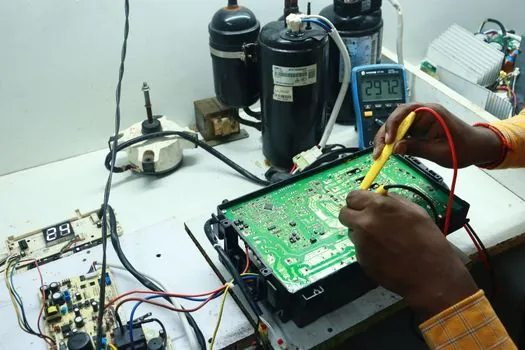
AI compute demand is the single largest swing on the 2026-2030 PCB forecast, and the spec ramp is non-linear: AI rack-scale revenue is modeled to grow from USD 53.9 billion in 2025 to USD 561.4 billion in 2028, lifting its share of global server revenue from 15% to 51% over three years, while traditional 8-GPU training servers drop from 35% to 20% of that mix [S4]. The signal buyers should track is material qualification cadence: M9 ramp versus M8 fallback on the NVIDIA NVL144 Rubin Ultra backplane alone swings the 2028 GPU PCB total by roughly USD 600 million between scenarios, and the M9-versus-PTFE choice on backplane material shifts 2028 backplane PCB revenue between USD 0.9 billion and USD 1.17 billion without changing the overall growth direction [S4]. India HDI manufacturing milestones, specifically the 6+N+6 and any-layer ramps above the current 3% share ceiling, are the second watch item, with 31.5% CAGR through 2030 priced in if the lines hold yield [S2].
Two trackable signals for the next planning cycle: first, the 30+ layer PCB share crossing 46% in 2027 versus Goldman's 18% 2026 baseline, since that single mix shift drives most of the multi-layer revenue re-rating; second, the ASIC-versus-GPU PCB revenue crossover in 2027, where both segments land near USD 18.8 billion and any divergence in qualification pace between GPU and hyperscaler-inhouse silicon programs will reshape vendor order books more than the topline number [S4]. For the downstream data center build-out that absorbs the resulting boards, the 2026-2030 power and pipeline outlook sets the floor on where this volume physically lands.
Component reference pages worth checking: flow meter.