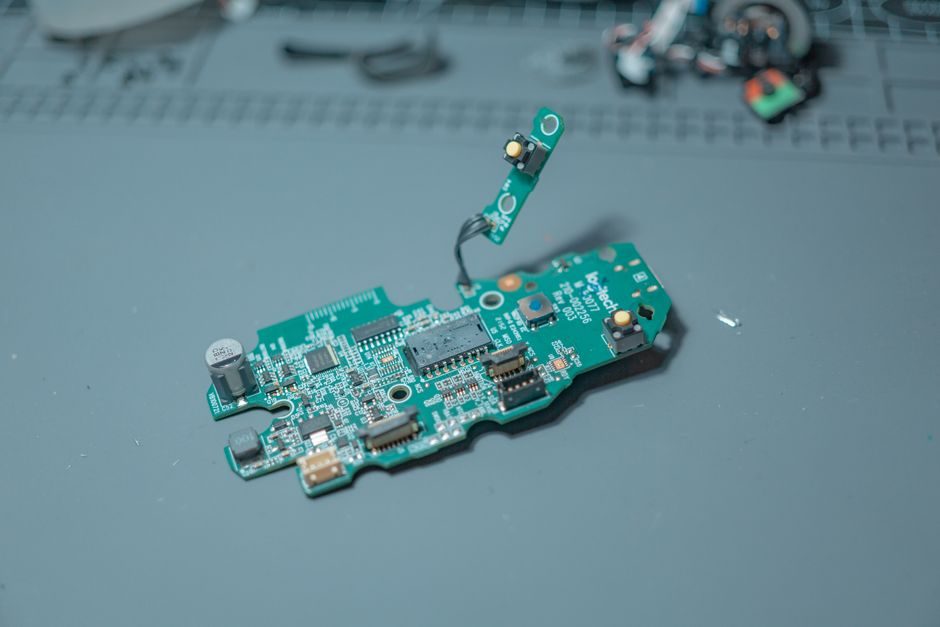
Taiwan-based PCB automation specialist SAA has been formally invited by the Ministry of Economic Affairs' Industrial Development Bureau to co-author reference standards for PCB Industry 4.0, sitting on a cross-stakeholder team that includes private OEMs and government agencies [S1]. The 2026-06 update positions SAA as one of the few Tier-1 integrators shaping the methods, data models, and machine interfaces that the Taiwanese PCB sector will standardise on through 2026-2027 [S1].
Industry 4.0 itself is a cyber-physical production paradigm built on IIoT, autonomous robotics, big-data analytics, cloud MES, and additive processes; in manufacturing it manifests as horizontal and vertical system integration, real-time M2M communication, and decentralised decision logic [S2]. For PCB fabs the translation is concrete: closed-loop AOI feedback, RFID-traceable panel routing, and pressure-sensor-driven lamination presses all streaming into a unified digital twin rather than discrete SCADA islands.
Reference architecture: cyber-physical stack and IIoT data plane
An Industry 4.0 PCB cell is structured as three coupled layers: a physical layer of CNC drills, PLC-controlled plating lines, and servo-motor-driven pick-and-place heads; a network layer of IIoT gateways speaking OPC UA over TCP, MQTT for event streaming, and legacy Modbus/Profibus on brownfield equipment; and a service layer running cloud MES, predictive maintenance, and digital-twin simulation [S2]. The Industrial Internet of Things analysis framework (Boyes et al., 2018) is the most cited reference model for interop layers in this stack [S2].
Big-data analytics on the service layer require structured time-series from every machine — spindle current, etch bath pH, lamination pressure-transmitter output, desmear flow-meter rates — and that is the integration pain point that SAA's standards work targets: a canonical data model so that a drill from vendor A feeds the same digital twin as an AOI from vendor B [S1]. Standards alignment matters because horizontal integration (across suppliers) and vertical integration (across the value chain) are explicit Industry 4.0 requirements, not optional add-ons [S2].
Decision criteria for new PCB lines
Specifying a 2026 PCB line means auditing four criteria in order: (1) OPC UA / MQTT conformance at the machine level, (2) edge-compute capacity per cell for vision inference, (3) brownfield-protocol adapters (Modbus RTU, RS-485) on legacy assets, and (4) cybersecurity posture aligned with ENISA's Industry 4.0 guidance [S2]. A practical comparison: CNC drills with native OPC UA publish 200-500 tags per spindle and integrate in days; legacy drills requiring a retrofitted gateway typically take 4-6 weeks of point-mapping before the digital twin is usable. Lamination presses with built-in industrial-valve manifold telemetry reach closed-loop control in a single commissioning pass; hydraulic-only presses need a parallel sensor retrofit.
SAA's stated consulting model runs an audit-then-design cycle: analyse current setup, identify bottlenecks through monitoring, then choose, design, or partner-source the automation layer that fits the existing line [S1]. That workflow matches the academic view that I4.0 adoption is iterative, not a one-shot ERP replacement [S2]. For greenfield projects the same approach collapses to a single design phase, which is why Taiwanese IDB seminar attendees are predominantly running new capacity, not retrofitting [S1].
Who Industry 4.0 is for — and who should defer
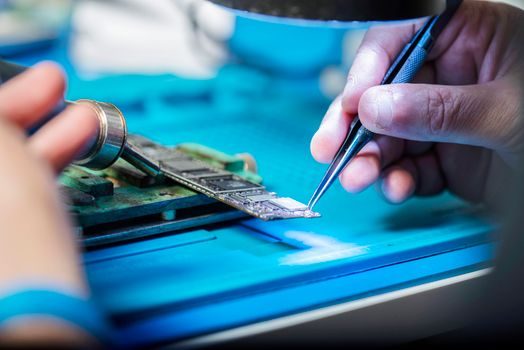
Under those conditions the digital twin pays back through yield uplift and scrap reduction within 18-24 months. A high-volume commodity PCB house running 50,000 m²/month of 4-layer FR-4, by contrast, sees a much longer payback because the pressure-transmitter and flow-meter signals it would virtualise are already stable and the scrap delta is small. SAA's co-development program explicitly targets equipment-OEM feedback so that next-generation drills and AOI are born I4.0-compliant, sidestepping the retrofit tax [S1].
SMEs sit on the wrong side of that equation. Springer research on I4.0 supply-chain financing finds that small manufacturers face a five-pillar adoption barrier: technology cost, knowledge gap, cybersecurity risk, regulatory uncertainty, and workforce resistance — and that these barriers compound rather than sum [S3]. The recommended remediation is a systems-theory framework where I4.0 tools are sequenced alongside SCF (supply-chain financing) so that the capex line is funded by the working-capital release the same tools create; case data from the same study show SME I4.0 maturity models converging on five levels (Mittal et al., 2018) [S3]. Engineers specifying for an SME client should budget for 24-36 months of staged rollout, not 6.
Use cases already standard in 2026 PCB fabs
Closed-loop AOI with deep-learning classifiers is the highest-ROI I4.0 use case for HDI and substrate-like PCB lines, with defect-classification latency below 200 ms and rework-loop automated through MES work-order updates. Predictive maintenance on spindle bearings is the second: vibration and current signatures streamed from each drill, models trained per-machine, alert thresholds tuned to a Cpk of 1.33 or better. Digital twin of the wet process — desmear, electroless Cu, electroplating — is the third, where flow-meter and conductivity loops drive a virtual model that catches chemistry drift before the first panel scrap [S2]. SAA's reference work covers exactly this taxonomy: production-technique improvement through standardised data collection and bottleneck identification [S1].
For background reading on how upstream process equipment specifications are being harmonised across electronics-adjacent lines, see this silicon wafer production line design map. Engineers handling panel transfer, component feeding, and surface-mount staging will also benefit from the selection criteria laid out in this screw conveyor spec map for electronics handling.
Limitations, failure modes, and cybersecurity
The dominant failure mode in 2026 PCB I4.0 deployments is not the IIoT stack — it is organisational. Davenport's "big data in big companies" framing (2013) is routinely misapplied to mid-tier PCB houses that lack data-governance roles; the result is a digital twin that drifts from physical reality within six months and is silently overridden by line operators [S2]. Cybersecurity is the second failure mode: hyperconnected drill lines expand the attack surface, and ENISA has flagged I4.0 cyber as a Tier-1 operational risk for European plants [S2]. ENISA's 2018-11 advisory treats cybersecurity as a precondition for I4.0 adoption, not an add-on, which is why SAA's standards work runs security into the data model rather than bolting it on at commissioning [S1][S2].
A third constraint is brownfield heterogeneity. A typical Taiwanese PCB shop carries 15-25 years of equipment vintages, and the I4.0 migration cost is dominated by protocol translation, not new hardware. SAA's stated service of either adapting its own equipment, designing new interfaces, or sourcing a partner's solution is an explicit recognition that one vendor's stack will not cover a real fab [S1]. The OECD's SME Going Digital toolkit (Kergroach, 2021) further confirms that policy-side friction — data-sovereignty rules, cross-border data flows, and IPC standard harmonisation — adds 6-12 months to enterprise I4.0 timelines [S3].
Standards and sourcing signals to track
No single IEC or ISO standard yet governs "PCB Industry 4.0" end-to-end; the operative references are IEC 62264 (enterprise-control system integration), IEC 62443 (industrial cybersecurity), and the OPC UA companion specifications for the semiconductor and electronics industries — but the SAA-IDB program is the first Taiwan-domestic attempt to fold these into a single PCB-domain reference [S1]. For procurement teams the practical signal is supplier maturity on three items: (1) published OPC UA companion-specification compliance for at least one machine category, (2) a documented digital-twin API rather than a vendor-locked SCADA export, and (3) cybersecurity certification aligned to IEC 62443-3-3 [S2].
Track the next SAA-IDB seminar output, the next IEC 62264 revision, and the next round of IPC-2581 (digital PCB data exchange) conformance announcements as the three leading indicators of when the I4.0 reference architecture hardens into a citable standard. Until then, treat I4.0 in PCB sourcing as an architectural commitment with a 24-36 month maturity horizon, not a product SKU.