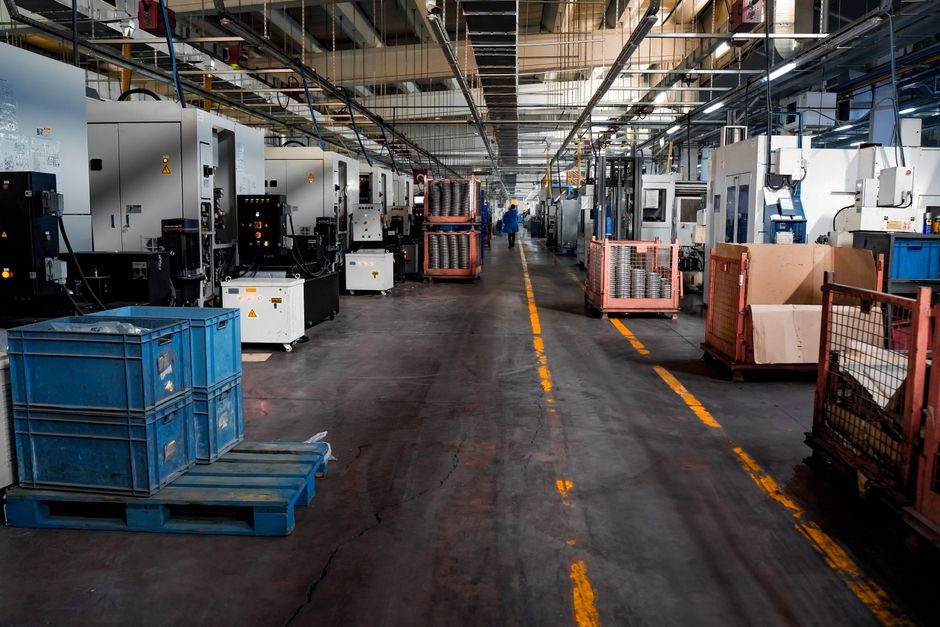
Petrochemical smart-manufacturing programs in 2026 are anchored in a five-layer reference architecture (field sensing, control, MES, APS, cloud) where the field layer is dominated by smart meters, pressure transmitters, and smart valve positioners communicating over HART, Foundation Fieldbus, PROFINET, and the newer Ethernet-APL physical layer [S2].
Chinese refining and ethylene complexes have been the most aggressive adopters, with academic and vendor literature describing large-scale deployment of IoT gateways, real-time optimizers, and digital-twin models on continuous-process units such as atmospheric-vacuum distillation, hydrocrackers, ethylene crackers, and polypropylene lines [S3].
Field-instrumentation stack and protocol mix on a 2026 ethylene plant
A typical 2026 ethylene or refining unit mixes 4–20 mA HART, FOUNDATION Fieldbus, and PROFINET on the asset bus, with Ethernet-APL (10BASE-T1L, IEC 61158/61784 profile set) carrying both process data and power over a single twisted pair into hazardous areas [S2].
Smart valve positioners are specified with partial-stroke and full-stroke self-diagnostics, on-board pressure sensors, and NAMUR NE 107 status categories so that the control system can alarm on valve health rather than waiting for a position deviation in the loop [S2].
For custody transfer and mass balance, Coriolis and ultrasonic flow meters are the reference primary elements, with high-pressure natural-gas and ethylene runs operating up to ANSI Class 1500# and process temperatures from –196 °C (ethylene) to +400 °C (cracked-gas compressor discharge) [S2].
Process-control layer: APC, soft sensors, and closed-loop optimization
Soft sensors (kernel-based and neural-network inferentials) are layered on top of the DCS to estimate hard-to-measure qualities such as refinery C5+ cut points, polymer melt index, and pumparound tray loading, using the field smart-meter and lab-data streams as inputs [S3].
Digital-twin platforms from vendors such as PTC and Rockwell, paired with academic programs at HKUST (Guangzhou) and East China University of Science and Technology, now extend the APC horizon from minutes to days, running what-if scenarios on feed slate, catalyst age, and energy price [S1][S3][S5].
Safety, hazardous-area, and cybersecurity guardrails

Field devices in flammable service must carry ATEX (2014/34/EU), IECEx, or North-American Class/Division certification depending on jurisdiction, with many 2026 specs demanding dual certification so the same SKU can be deployed across regions [S2].
Cybersecurity at the field layer now follows IEC 62443 zone-and-conduit models, with the Purdue Levels 0–3 segmented from Levels 3.5/4 by industrial DMZs and unidirectional gateways, an architecture repeatedly cited in Industry 4.0 case literature for both German discrete and process plants.
Functional safety remains anchored in IEC 61511 for the process sector, with SIF loops typically using smart pressure transmitters and smart valve positioners in 1oo2 or 2oo3 voted architectures, and partial-stroke testing scheduled by the asset management system rather than by calendar [S2].
Edge, cloud, and the AI/ML overlay
Edge gateways (Advantech iFactory-class and equivalent industrial PCs) aggregate PLC and smart-instrument data via OPC UA over TSN, then push a curated subset to plant historians and cloud platforms such as AWS, Azure, and EMQX-based MQTT brokers, with on-prem AI inferencing kept for closed-loop control and cloud AI used for batch analytics and yield prediction [S2].
IIoT-focused university curricula, including the PTC / Brigham Young University program documented in 2025, are explicitly training the operator and engineer profile that 2026 refineries and chemical plants need to run these stacks [S5].
Industry 4.0 case studies on German mid-cap manufacturers flag data quality, brownfield integration, and skills as the three recurring barriers, the same triad that petrochemical operators report when retrofitting legacy DCS to Ethernet-APL and OPC UA.
Vendor landscape and sourcing levers (2026)
The control-platform market is dominated by Rockwell Automation (Logix-based EtherNet/IP architectures), Emerson (DeltaV with CHARMs and Ethernet-APL), Honeywell (Experion), Siemens (SIMATIC PCS 7 / neoNAMUR), Schneider Electric, and ABB, with the China-domestic stack led by Supcon, HollySys, and Rockwell-aligned partners serving petrochemical sites under Sino-foreign JVs. [S1]
For field instruments, sourcing leverage comes from the spec sheet: HART vs FOUNDATION Fieldbus vs PROFINET, ATEX/IECEx certification, SIL 2/3 capability, diagnostic coverage rate, and lead time are the four levers that actually move bid price, with HART 7 devices on Ethernet-APL bridges typically running a 10–20 % cost premium over legacy HART 4–20 mA [S2].
For cost-dense mechanical and electrical scope, see how IGBT module pricing and SiC displacement in 2026 is shifting motor-drive stacks on compressors and pumps, and how the aerospace manufacturing process map is borrowing similar digital-twin patterns that petrochemical plants are now adapting for cracker and reformer operations.
Selection criteria: who benefits and who should not
For small-batch specialty chemicals, pharmaceutical intermediates, or single-train pilot plants, the same stack is hard to amortize: a full Ethernet-APL field layer plus APC plus cloud can exceed USD 50 M on a 100 kta plant, and IIoT implementations on German mid-caps have shown mixed ROI when the digitalization scope is bolted onto a non-standard ERP backbone.
Plants with legacy pneumatic instrumentation, mixed I&C vintages, or no standardized instrument database should stage the rollout as instrument-replacement-driven, not as a greenfield digital program, or risk data-quality failures that propagate into the AI layer.
Comparison: which protocols, sensing tech, and architectures to pick
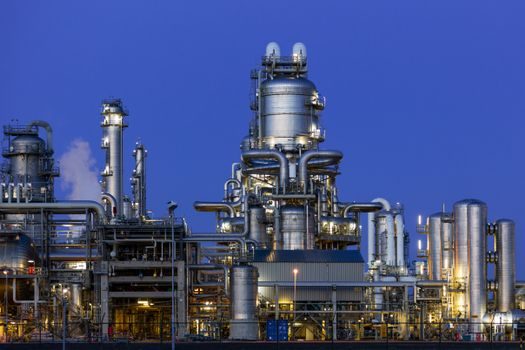
For new ethylene and refining builds in 2026, the dominant choice is HART + Ethernet-APL on the brownfield-compatible I/O, with FOUNDATION Fieldbus retained only on existing FF-only DCS, and PROFINET used on Siemens-centric units and compressor skid packages [S2].
For process-level sensing: Coriolis mass flow for custody transfer and two-phase service; ultrasonic for clean, large-pipe, non-conductive service; vortex and magnetic flow for utility and water loops; guided-wave radar for hydrocarbon and chemical storage from –40 °C to +400 °C; and smart camera-based vision systems increasingly used for flare monitoring, leak detection, and catalyst condition rather than for in-line quality [S2].
For the analytics layer: rule-based APC for tight, well-instrumented loops; first-principles + ML hybrid for digital twins; pure ML only for predictive maintenance, energy benchmarking, and quality inference where the data set is large and the physics is poorly known [S3].
Trackable signals over the next 6–12 months: Ethernet-APL device count per large ethylene project (currently 5,000–10,000 endpoints on a 1.0–1.5 Mt/yr cracker), IEC 62443-3-3 SL2 vs SL3 split on new builds, and the share of field devices carrying IEC 61508 SIL 3 capability rather than SIL 2.