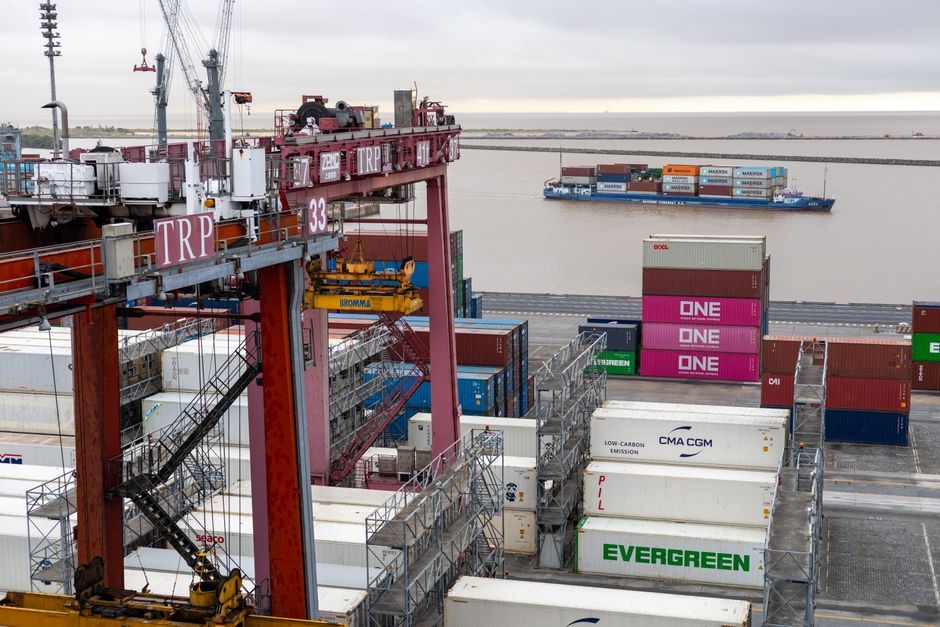
Overhead bridge cranes serving pharmaceutical production are engineered around four non-negotiables: stainless or coated contact surfaces, particulate-controlled lubricants, FEM/ISO duty class 1Cm to 2m (light to medium cleanroom), and ingress-protected electrical enclosures rated IP55 minimum for washdown zones [S2][S3].
The decision front-loads to one number — the cleanroom ISO class the crane must operate in. ISO 7/GMP Grade C cleanrooms force underrunning single-girder bridge cranes with aluminium or epoxy-coated bridge beams, food-grade grease (NSF H1 registered where used), and 316L stainless hoist suspensions; ISO 8/GMP Grade D halls tolerate top-running double-girder units fitted with enclosed VFD-controlled hoists to lift 5–25 t API reactor skids [S2][S5][S6]. For the geometry of an overhead bridge crane in a cleanroom, span typically runs 7.5–22 m, hook lift 6–12 m, and end-carriage rail centres 1.5–3 m. Compared with the heavier civil-construction units on the market (rated 20–100 t with 415 V/50 Hz three-phase supply and CE/SGS/ISO/TUV marking), pharma units trade raw tonnage for surface finish, smoothness, and documented material traceability.
Crane Topology: Single-Girder Underrunning vs Double-Girder Top-Running
Single-girder underrunning (underhung) bridge cranes are specified for 1–5 t pharmaceutical service where headroom is constrained and cleanroom air balance must not be disturbed by deep structural members; the runway is suspended from the building roof structure and the trolley rides on the lower flange of a single bridge beam [S2][S3]. Double-girder top-running cranes carry 10–32 t API reactors and lyophiliser skids on a hoist mounted between two parallel girders, delivering higher hook-approach to ceiling (1.0–1.5 m on 10–20 t units) and allowing maintenance access from the catwalk rather than from the floor [S4][S5]. For duty cycles inside GMP halls, FEM 1Cm corresponds to roughly 100,000 full-load cycles and 1.6 million partial cycles — the spec a process engineer should write into the URS rather than accept a vendor default of FEM 2m (heavier, 200,000 full cycles) that over-engineers the installation [S2].
Materials, Surface Finish and Cleanroom Compatibility
Pharma-grade crane contact surfaces (hook, hoist suspension, lifting lug) are conventionally supplied in 316L stainless or zinc-flake + epoxy powder-coated mild steel at 60–80 µm DFT, paired with food-grade H1 chain lubricant on moving parts that could shed into the room [S2][S5]. Stainless options carry a 15–25% cost premium and 2–4 week longer lead time versus painted mild steel, with most China-origin OEM lines (e.g. the 16 t monorail electric-hoist bridges catalogued on dowellcranecn.com) offering both finish grades from the same fabrication line [S5]. The trolley and end-carriage bearings on cleanroom units are typically greased-for-life (sealed 2RS bearings) to eliminate re-lubrication events that would introduce airborne lubricant aerosol into the suite [S2]. Compared with a general gantry crane used in outdoor warehouse service, an in-room pharma bridge crane must avoid exposed machined surfaces, open gearing, and chain boxes that cannot be wiped down between batches.
Electrical, Drive and Control Architecture
Pharma bridge crane hoists are typically 3-phase 380–415 V / 50 Hz (EU/Asia) or 460 V / 60 Hz (US) squirrel-cage motors with VFD control on both hoist and travel motions to keep start/stop accelerations below 0.05–0.1 m/s² and limit swing of the suspended load during sterile transfer [S2][S6]. Variable-frequency drives also cut peak inrush current by 50–70% versus direct-on-line contactor control, which matters on cleanroom UPS-backed power where voltage dip on a DOL start can drop instrument supplies. Enclosure ratings for hoists in non-washdown suites sit at IP54 minimum, rising to IP65 where the crane operates inside a CIP zone subjected to daily foam-and-rinse cleaning [S2]. Pendant control is acceptable in Grade D suites; Grade B/C cleanrooms require radio-remote or wall-mounted pendant through the airlock, with no exposed wiring terminations on the bridge. If the application is upstream of a pneumatic conveying line moving excipient powders, crane operators should size the bridge for slow-lift transfer with anti-sway software rather than fast-cycle production tonnage.
Sizing Gates Buyers Get Wrong
Four sizing errors dominate pharma crane RFQs. (1) Under-specifying duty class: writing "light duty" when the line runs two shifts moves the FEM class from 1Cm to 2m and forces a heavier hoist. (2) Ignoring hook-approach: the distance from hook centre to runway beam on a single-girder underrunning unit is typically 0.8–1.2 m, but a 10 t top-running double-girder delivers 1.5–2.0 m — the difference between clearing a reactor manway and not [S4]. (3) Forgetting rail reaction: a 10 t crane with 18 m span and 3 t trolley weight delivers roughly 35 kN per wheel; the building column grid must be designed for it, not the other way round. (4) Skipping the cleanroom validation pack: GMP audit trails require documented material certificates (EN 10204 3.1 for stainless contact parts), surface roughness Ra ≤ 0.8 µm on hoist housings, and validated weld procedures (ISO 3834-2) on load-bearing welds. For a fuller walk through these gates see the related overhead bridge crane selection guide; for the heavier civil counterpart the gantry crane sizing logic covers the same span/SWL matrix.
Comparison of Configuration Options

The optimum choice for a typical secondary-pharma packaging hall is (a) at FEM 1Cm; for an API synthesis block with reactor charging, (c) at FEM 2m with VFD hoist is the spec worth writing.
Applicable Standards, Sourcing Reality and Limitations
Pharma bridge cranes are governed by FEM 1.001 / DIN 15018 for duty classification, ISO 4301 for utilisation classes, EN 15011 for the safety of crane structures, and IEC 60204-32 for electrical equipment of hoisting machines — these are the standards a process engineer should cite in the URS, not a generic "CE" mark [S2]. The dominant supply cluster is Henan/Shandong China (Santo Crane, Dowell, AFE-affiliated fabricators) offering 15–30 day ex-works lead time on standard single/double-girder lines; US/EU integrators (J.Herbert, AFE Crane) deliver 6–10 weeks but supply full OSHA/ANSI B30.2 / EN 15011 documentation in English without translation gaps [S2][S3][S5][S6]. Limitations to flag: most low-cost China-origin units are supplied with 380 V / 50 Hz three-phase as standard, and US sites will pay a US$1,500–3,000 transformer/uplift fee; second-shift preventive maintenance intervals shorten from 500 h to 250 h on continuous-pharma duty regardless of FEM class, and spare-hoist holding (a complete redundant hoist on the deck) is worth specifying on Grade A/B aseptic lines where downtime is a batch-loss event. A watchable next signal is the rollout of integrated crane-scale telemetry for weight-batch GMP records, with several OEM lines now offering 0.1% accuracy crane scale options on the hoist block.