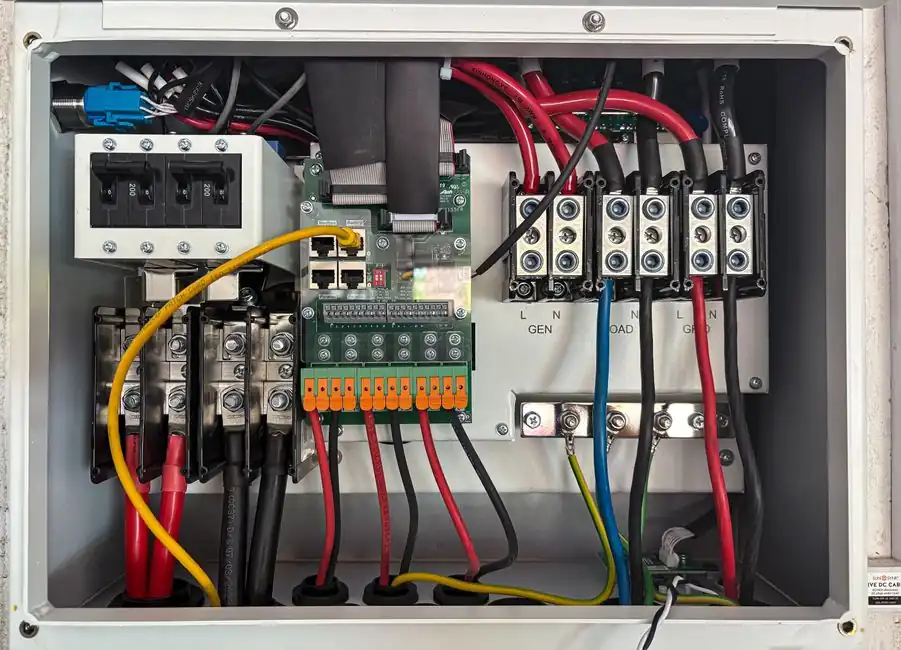
A PROFIBUS DP to PROFINET gateway is a DIN-rail protocol converter that lets an existing PROFIBUS DP-V0/V1 segment (RS485) and PROFIBUS PA segments (MBP, 9-32 VDC) appear as a PROFINET IO Device on a plant Ethernet backbone, with one gateway such as the Softing pnGate PB supporting 1 DP segment plus 2 PA segments and exposing S2 redundancy plus MRP [S4][S1].
Use is dominated by brownfield retrofits where a PROFINET controller (TIA Portal, Step7, PC WORXS) must reach instruments, drives, or remote I/O that physically remain on PROFIBUS copper, rather than by greenfield PROFINET-only builds [S1][S9].
Protocol Stack and What the Gateway Actually Does
PROFINET runs on IEEE 802.3 100BASE-TX / 10BASE-T, with RT and IRT classes and an embedded switch for daisy-chain topology, while PROFIBUS DP-V0/V1 uses RS485 on a 9-pin Sub-D and PROFIBUS PA (MBP) bus-powered devices sit on a 9-32 VDC trunk with a 3-position screw connection [S1]. The gateway bridges the two: on the PROFINET side it presents itself as a PROFINET Device, and on the PROFIBUS side it acts as DP/PA Master, exposing both segments as a single access point to the higher-level network [S1][S4].
Inside the box, current designs use an Altera Cyclone V SoC with a dual-core ARM Cortex-A9 processor, with status LEDs split between gateway-level (PWR, RUN, ERR, CFG) and fieldbus-level (SF, BF) diagnostics, and a RESTful API for device configuration [S1]. The same gateway family also includes a Modbus/TCP variant (mbGate PA) for plants that want PA segment data on Modbus/TCP instead of PROFINET [S1].
Hard Specs That Drive the Datasheet Comparison
Softing's pnGate PB occupies 100 mm H x 35 mm W x 105 mm D, weighs about 0.25 kg, runs on 18-32 VDC SELV/PELV with typical 200 mA and peak 1 A inrush, and survives -40 to +70 C operating / -40 to +85 C storage at 10-95 % non-condensing humidity, IP20, convection-cooled, with conformal coating to ANSI/ISA-S71.04 G3 for corrosive atmospheres [S1]. Sibling part numbers scale PA capacity: pnGate PA 2-port variant supports up to 32 PA devices, the 4-port variant up to 64 PA devices, and a STAHL-backplane reversed-mount variant (GCA-AL-024605) targets Ex-cabinet builders [S1].
Entry-level converters are smaller in scope. Hilscher's NT 50-DP-EN (netTAP 50) integrates a single PROFIBUS DP slave into a PROFINET network, advertises a short I/O data conversion time under 20 ms, and uses a loadable firmware to flex between other Real-Time Ethernet, fieldbus, and serial conversions in either slave-to-slave or slave-to-master direction [S2]. For 1-to-1 DP-segment-bridging at low cost, that is the usual pick; for full multi-segment plant integration the Softing pnGate line is the comparable tier.
Bandwidth, Slots, and the Data Mapping Pass-Through
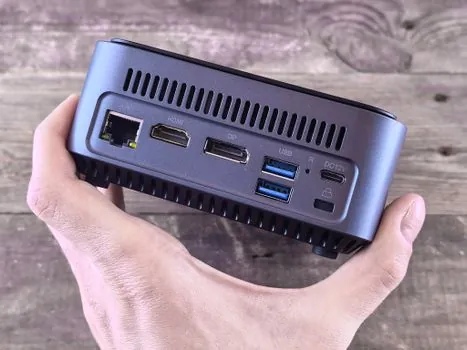
RTA's 460PSPBS exposes the limits of a slot-based data model: up to 10 PROFINET IO slots in/out at 8, 16, 32, 64, or 128 bytes per slot with typed support for Int8 through Int64, UInt8 through UInt64, float, double, and binary8/16/32, capped at 1280 bytes total, with 1 PROFINET IO Controller connection [S3]. On the PROFIBUS side it mirrors the same 10-slot object model but at 2, 4, 8, 16, 24, or 32 bytes per slot, 244 bytes per direction, and 1 PROFIBUS DP connection, which is the classic ceiling for DP cyclic payload [S3].
Where the data type set is too rigid for the application, Anybus Communicator (ABC4023) and HMS-style protocol converters focus on PLC-to-PLC seamless transfer across PROFINET IO and PROFIBUS DP for shop-floor inter-PLC traffic rather than instrument-level slot mapping [S7]. For a hybrid process plant mixing field instruments and PLCs, multi-vendor gateways like the RTA, Anybus, and Prosoft PLX51-PBM (PROFIBUS DP Master/Slave to EtherNet/IP, Modbus TCP/IP, or Modbus Serial) are the most common picks because they cover three protocols on a single box [S8].
Selection Criteria: Segment Count, Redundancy, Engineering Tool
Three decision criteria separate the candidates. (1) Segment count per gateway: pnGate PB = 1 DP + up to 2 PA (64 devices), pnGate PA 4-port = 4 PA (64 devices), Softing pnGate DP = 1 DP segment only, RTA 460PSPBS = 1 DP segment, Hilscher netTAP 50 = 1 DP slave [S1][S2][S3][S4]. (2) Plant network redundancy: pnGate PB supports PROFINET redundancy (S2) plus MRP for ring topologies, while entry-level boxes do not advertise S2 [S1][S4]. (3) Engineering toolchain: pnGate PB ships a CommDTM for FDT/DTM frames and supports EDD-based parametrization via Siemens SIMATIC PDM, and works inside TIA Portal, Step7, and PC WORXS, which is the deciding factor when the upstream controller is a Phoenix Contact or Siemens PLC [S1].
For an existing PA trunk that already has power conditioners and junction boxes, the upgrade path is explicitly a coupler swap, not a re-pull, because the pnGate PB re-uses the installed power conditioners and connects directly to the existing segments [S1][S4]. Where the DP segment is a single device cluster, the cost-optimized netTAP 50 at under-20 ms conversion is usually enough; where the network carries a DP master that must keep talking to multiple slaves across plants, the higher-tier gateway with a DP Master role on the fieldbus side and PROFINET Device on the upper side is the correct pick [S1][S2].
How PROFIBUS DP to PROFINET Compares to Fieldbus Gateway Conversion in General

A DP-to-PROFINET gateway is a specific case of the broader protocol gateway category, and most of the engineering rules (segment count, isolation, conformance, toolchain) carry over from adjacent conversions such as Modbus-to-PROFINET/PROFIBUS bridges that Moxa ships for instrument vendors without native PROFINET support [S6].
For plants that want sensor-level data on the new PROFINET backbone, the conversion is often paired with a smart instrument swap on the pressure transmitter and differential pressure transmitter sides rather than carried as analog pass-through, and a flow meter replacement program can simultaneously move off PROFIBUS PA while gaining Ethernet-APL for new builds [S1][S4]. Where the conversion target is a multi-vendor PROFINET ring with sub-millisecond IRT, plan to specify pnGate-class S2 redundancy from day one; where the goal is just a single dropped-in DP slave on a SIMATIC line, netTAP 50 class is the right size and 20 ms is well below the human-MMI refresh budget [S1][S2].
Standards, Certification, and Reliability Anchors
PROFINET conformance is administered by PI (PROFIBUS & PROFINET International), and the pnGate PB and pnGate PA family carries the certification and GSD file set in the Softing product finder; Hilscher's NT 50-DP-EN is listed as "not certified" on the PI product finder, which is fine for a single-slave box but rules it out where PI-certified PROFINET is contractually required [S1][S2]. PROFIBUS PA physical layer follows IEC 61158-2 (MBP, 9-32 VDC trunk, 31.25 kbit/s), and the engineering protocol for PA device parametrization (EDD) is the standard route that SIMATIC PDM and FDT/DTM frames use to push parameters through the pnGate PB into the PA device [S1][S4].
Conformal coating to ANSI/ISA-S71.04 G3 is what allows the Softing pnGate family to claim operation in corrosive- atmosphere cabinets, including H2S and SO2 exposure profiles, without extra enclosure cost, and the 18-32 VDC SELV/PELV requirement is a typical 24 V industrial bus-rail supply, not a wide-input AC/DC brick [S1]. PROFINET S2 redundancy in pnGate PB means two independent PROFINET controllers can keep the DP/PA segment alive across a controller failover, which is the same redundancy class used for S2 PROFINET devices in process skids [S1][S4].
Limits, Failure Modes, and What to Watch For

The most common failure mode in the field is DP bus termination and shielding: a 9-pin Sub-D segment is sensitive to missing or double terminators, and a gateway that is a drop-in replacement for a segment coupler still needs the segment's termination resistors re-checked after the swap, especially when the replaced coupler had integrated bus terminators that the gateway does not reproduce [S1]. Second, PROFIBUS PA segments depend on the trunk voltage staying inside 9-32 VDC; the pnGate family does not power the PA segments from the gateway itself (it re-uses the existing power conditioners), so a failing conditioner will look like a gateway fault until the conditioner is bypassed [S1][S4].
Third, the 244-byte per-direction PROFIBUS DP cyclic payload ceiling in the RTA 460PSPBS data model is a real wiring-diagram limit, not a marketing number: any application that needs more than 244 bytes in either direction on the DP side must be split across two gateways or moved to PROFINET-native I/O [S3]. Fourth, entry-level gateways that are "not certified" (NT 50-DP-EN) cannot be quoted in PI-conformance-required tenders even though the protocol stack itself is correct, so procurement should always cross-check the PI product finder certification number before issuing a PO [S2]. For new industrial valve and instrument skids, plan the gateway choice alongside the controller choice, since MRP and S2 redundancy both require the upper-side PROFINET controller to support the same redundancy role. fieldbus gateway selection typically lags controller selection by a quarter, which is the most common cause of a S2-capable gateway being deployed in a non-redundant ring and the redundancy feature never being exercised.
Next signal to watch: Softing's pnGate family ships MRP client + S2 PROFINET redundancy on the same hardware revision, and any future firmware that pushes the 244-byte DP ceiling up via slot fragmentation will show up first in the Softing Downloads tab under the pnGate PB GSD/GSDML package [S1][S4].
See also our earlier report, Thermocouple vs Bimetal vs Liquid-in-Glass: How the Three Sensors Actually Differ.