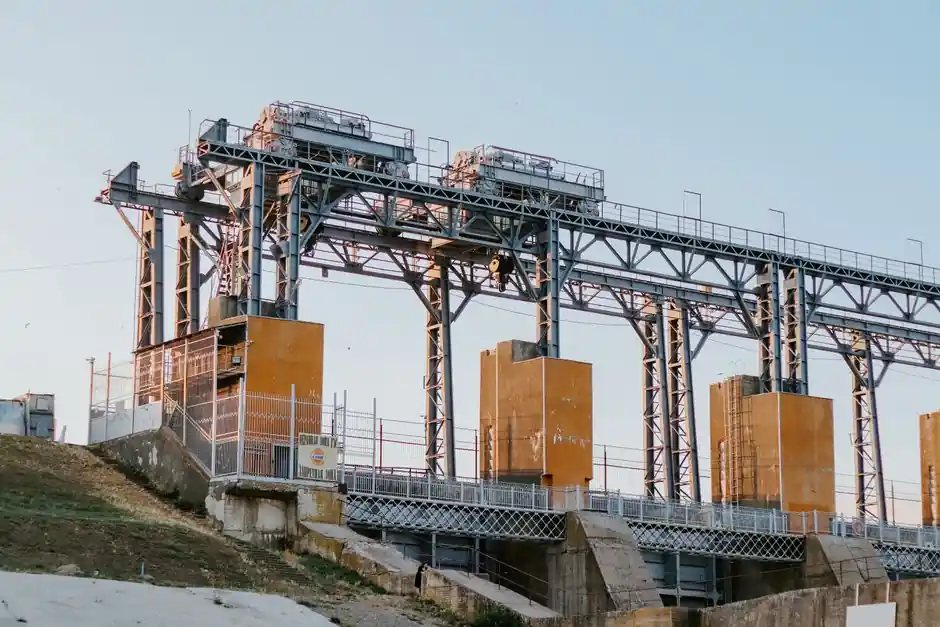
A servo motor used in power generation is a closed-loop rotary or linear machine with encoder feedback, typically a brushless AC or DC permanent-magnet design, sized from 50 W to roughly 10 kW for auxiliary generation roles [S3].
Selection pivots on four datasheet numbers: continuous torque (Nm), rated speed (rpm), encoder resolution (bits or ppr), and the matching servo drive current loop bandwidth, since these directly set the generator's ability to hold voltage and frequency under step loads [S3].
What "servo motor for power generation" actually means in 2026
Servo motors are not used as utility-scale turbine-generators; instead, they show up in three distinct generation-adjacent roles that engineers regularly specify [S3][S4]. The first role is small prime mover, where a servo-class permanent-magnet AC motor is driven by a variable-frequency drive and mechanically coupled to a generator head, typically for telecom backup, remote telemetry, and microgrid applications below 10 kW. The second role is turbine valve actuator, where the servo motor drives a hydraulic or electro-mechanical actuator that positions inlet guide vanes, governor valves, or pitch mechanisms on gas and steam turbines, with a position loop accuracy under 0.1 degrees. The third role is grid-tie inverter interface, where the servo motor's encoder provides the rotor-angle reference to a power converter synchronising to a 50 Hz or 60 Hz grid, which demands encoder resolutions of 17 bits or higher for stable phase-locking at 8 kHz switching [S2][S3].
The eight major global servo brands identified in 2026 vendor analysis account for roughly 90% of worldwide servo motor and drive sales, a concentration that materially affects spare-parts availability for generation-side installations [S2].
Selection criteria: matching torque, speed, and feedback to generator duty
Engineers should build the spec around four quantifiable criteria rather than brand preference [S1][S3]. First, continuous torque must exceed the generator's breakaway torque by at least 25% to absorb load transients without stalling. Second, rated speed must match the target electrical frequency: a 4-pole machine at 1500 rpm produces 50 Hz, and a 4-pole machine at 1800 rpm produces 60 Hz, so off-the-shelf servo ratings of 2000 rpm or 3000 rpm require either a gear reducer or a different pole count. Third, encoder feedback must be a 17-bit or 20-bit absolute encoder for grid-tie applications, because incremental encoders lose position reference after a power dip and complicate resynchronisation. Fourth, the servo motor and drive pair must be tested as a system, with a current loop bandwidth above 1 kHz to reject load disturbances within one electrical cycle [S3].
For a clearer cross-reference, the main options for generator-side prime movers line up as follows: brushless DC servo motors with sinusoidal commutation deliver the highest efficiency (typically 90-95%) but limit voltage to roughly 48-96 V DC bus; AC permanent-magnet synchronous servos reach 400 V AC bus levels and suit higher power; induction servo drives tolerate harsher thermal environments at 5-10% lower efficiency. Across all three, encoder resolution and drive bandwidth, not motor type, are the dominant factors in voltage stability [S3].
Who should specify a servo motor and who should not
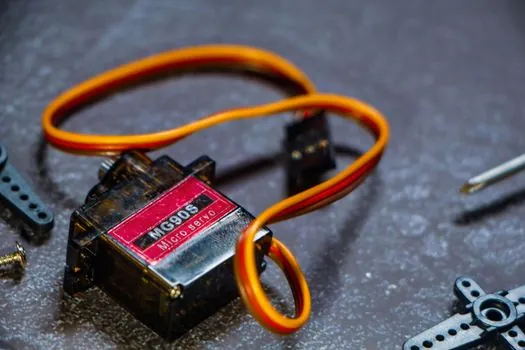
A servo motor is the correct choice when the application demands closed-loop speed or position control below 0.5% steady-state error, fast dynamic response under 10 ms, and reversible regenerative braking, which together describe most small prime-mover, valve-actuation, and grid-tie roles [S1][S3]. Specifying a servo is the wrong call when the load is a constant-torque centrifugal pump, fan, or compressor that runs at a fixed speed for thousands of hours, because a standard induction motor on a VFD is roughly one-third the cost and the additional precision buys no efficiency gain. It is also the wrong call above 10 kW in continuous generation duty, where the servo-class encoder and high-bandwidth drive premium is not justified against a purpose-built induction or permanent-magnet generator [S2][S3].
For engineers cross-specifying a related servo-driven press line or a power distribution panel that will house the inverter, the same encoder bandwidth and EMC-shielded power cable discipline apply, since noise coupling into the feedback line is the single most common field failure mode cited in vendor guidance [S3].
Top servo motor and drive brands in 2026 generation-side procurement
Vendor selection for generation-side duty is dominated by eight brands that together hold around 90% of global sales, each with a distinct geographic and application footprint [S2]. Yaskawa leads with about 21% global market share, anchored by the Sigma-7 series, and is widely deployed in Asian robotics and packaging. Siemens holds over 15% global share and is the largest European supplier for heavy industry, with the Sinamics S220 drive family launched in January 2026. Mitsubishi Electric's MELSERVO-J5 series, launched in 2020, claims roughly 0.3-second quick tuning and AI-based predictive maintenance, and is the first-tier choice across the Asia-Pacific region, which itself accounts for 74% of global servo demand. Fanuc, with over 5 million AC servo motors delivered since 1955, powers approximately 75% of Japanese machine tools and 55% of machine tools worldwide. Rockwell's Allen-Bradley Kinetix 5500 single-cable EtherNet/IP system, launched in 2012, can cut cabling by up to 60%, which is a meaningful cost factor in distributed generator installations. ABB entered the servo market in 2007 with DTC/IPM-based drives and is strongest in process-industry retrofits [S2].
One verbatim guidance from the 2026 vendor roundup captures the procurement reality: "Manufacturers need to stay on top of new tech and evolving customer needs. One thing that's becoming really important is pushing for energy-efficient solutions" [S4]. For power-generation buyers, that translates to requesting IE4 or IE5 efficiency class data on the servo motor datasheet, not just generic "high efficiency" claims, and to verifying regenerative braking energy recovery figures with the drive vendor before order placement [S4].
Operating limits, failure modes, and standards discipline
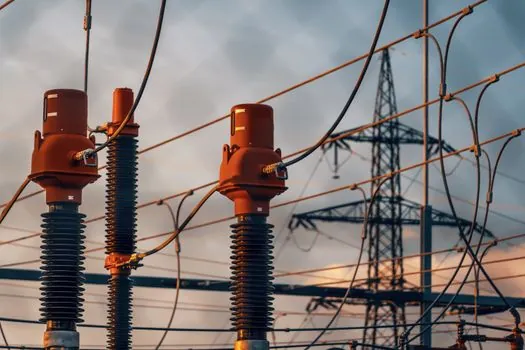
The dominant failure modes documented for servo motors in continuous-duty generation roles are encoder contamination, bearing grease migration in high-temperature enclosures, and DC bus capacitor aging in the drive after roughly 50,000 operating hours [S3]. For wind or hydro installations, ingress protection should be specified at IP65 minimum, with IP67 for salt-spray or condensing environments; the encoder connector must be a sealed M12 or military-grade circular type rather than a standard D-sub, because the encoder cable is the most common moisture entry point. Regenerative braking energy must be dissipated through a properly sized brake resistor or returned to the DC bus, with a DC bus capacitance sized to absorb a full load-rejection step without over-voltage trip. Compliance with IEC 60079 series is mandatory for explosive-atmosphere generator rooms (hydrogen-cooled sets in particular), and CE/UL listing of the drive is required for grid interconnection in most jurisdictions, though the specific clause numbers must be confirmed against the current revision in force at the site [S3].
Engineers extending the same spec discipline to the auxiliary power meter on the generator output will find consistent requirements on EMC immunity, isolation voltage, and current-loop bandwidth.
Sourcing checklist and trackable signals for 2026 procurement
A defensible 2026 RFQ for a servo motor in power generation should lock the following datasheet fields: continuous and peak torque in Nm, rated and maximum speed in rpm, bus voltage in V DC or V AC, encoder type and resolution in bits or ppr, protection class, efficiency at rated load, and the matched servo drive model number with its current loop bandwidth in kHz [S3]. Two trackable signals to monitor in the second half of 2026 are the rollout of the Sinamics S220 drive platform into heavy-industry generator retrofits and any further integration of AI-based predictive maintenance across the Mitsubishi MELSERVO and Yaskawa Sigma-7 lines, both of which will shape three-to-five-year total cost of ownership for new generation-side installations [S2][S4]. A complementary servomotor selection reference covers the broader factory-automation use case, and degassing and refining unit spec guidance addresses the upstream process equipment that often drives the same procurement cycle.