
The widely cited TCO framework splits lifecycle spend into acquisition, use, maintenance, support, and disposal — and in a shell core cell the first three routinely absorb over 90% of dollars [S4].
Procurement teams that anchor decisions on the 2026-07-24 capital quote alone typically under-reserve by 20-35% once amine gas, core box replacement, and exhaust scrubber media are booked to operations rather than capex. A shell core shooter is a horizontal or vertical plenum that cures resin-coated sand against a heated core box using hot-blow (typically 200-280 °C) and a hot air purge — and that duty cycle is what drives the long-tail cost stack discussed below.
What TCO actually includes in a shell core cell
USPS Supplying Practices defines total cost of ownership as the total cost incurred over the lifecycle of an item, encompassing purchase, use, maintenance, support, and disposal, and notes a TCO analysis exposes hidden costs easily overlooked during budget planning [S4]. Translated to a shell core machine line that lifecycle is structured as: (1) acquisition — machine, core boxes, shot head, exhaust plenum, amine scrubber, resin and amine storage; (2) use — resin, amine catalyst, sand make-up, LP gas or electric heating, compressed air, labor; (3) maintenance — wear plates, blowing heads, ejector pins, heater elements, valves, amine gas dosing rings, scrubber media; (4) support — spare-parts inventory, OEM service contracts, operator training; (5) disposal — spent sand, spent scrubber liquor, decommissioning. Microsoft frames the same logic for IT assets as a build of current configuration, target configuration, and operational cost, with power, cooling, labor, and licensing as the four operational axes [S1] — the foundry equivalent is power, compressed air, labor, and consumable resin.
The five cost drivers, ranked by typical spend share
Driver 1 — Resin and amine curative: 25-40% of cell TCO on a high-mix jobbing foundry; furan, phenolic-urethane (pep-set), or alkaline-phenolic systems each pin the binder number to a different resin-to-sand ratio and amine dosing curve. Driver 3 — Energy: gas-fired core box heating at 200-280 °C plus 0.5-0.7 MPa blowing air; a single 30-50 kW blow station running 16 h/day lands in the $18,000-$40,000/year energy band depending on local industrial gas and kWh rates. Driver 4 — Maintenance and spare parts: wear plates, shot heads, heater elements, and ejector pins replaced on 6-24 month cycles, with annual maintenance budgets running 4-8% of acquisition. Driver 5 — Labor and consumable overhead: operator hours, amine exposure monitoring, and housekeeping that often shows up as a 8-12% overhead loaded on the cell's standard cost. The relative ranking shifts with resin chemistry and throughput, but resin plus amine and sand together consistently absorb more than half of a jobbing-foundry cell's TCO [S4].
A core machine selection on sticker price alone misses the amine gas pricing differential between cold-box amine (TEA, DMEA, DMCHA) and warm-box hot-blow amine dosing; warm-box and shell-blow lines that use solid catalysts or heat-cured phenolic skip the amine scrubber entirely, which is the single biggest compliance-driven cost swing in the entire spec sheet.
Acquisition vs use-phase: where the 5-15 year spend lands
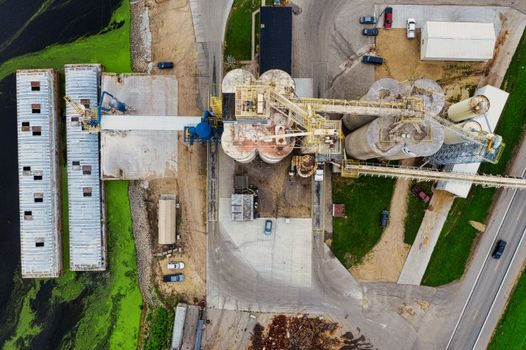
Acquisition covers the machine, the core boxes (pattern tooling), the gas treatment train, and integration; use-phase covers everything from commissioning to decommissioning. Across a 10-year service life, acquisition commonly lands at 20-30% of TCO and use-phase at 65-75% on a resin-bound shell core line, with the remaining 5-10% split between disposal and residual value [S4]. Microsoft mirrors this split for IT, where IT labor, software licensing, and power/cooling sit inside an operational cost category that dwarfs the sticker on multi-year horizons [S1]. The implication for a 2026 capex committee is that a 15% cheaper machine with 5% higher resin consumption, harder amine control, and a more frequent wear-part cycle will be 12-25% more expensive to own over 7-10 years, and the longer the planned service life, the larger the swing.
Foundries moving between chemistry families should treat amine scrubber retrofit as an explicit TCO line, not a contingency: an undersized wet scrubber in a shop converting to a higher-amine-throughput cold-box core machine or uprating a shell cell typically triggers a 1-2 month production restriction during permit re-issue and a five-figure capex swing.
Comparison: shell hot-blow vs cold-box vs shell molding on four TCO axes
Shell hot-blow, cold-box (amine-cured), and shell molding (croning) lines differ on the four axes that drive TCO most. (a) Energy per ton: shell hot-blow at 200-280 °C core-box heating sits highest; cold-box amine cure at ambient to ~80 °C is the lowest; shell molding is intermediate. (b) Consumable binder cost per ton: furan hot-blow is moderate, phenolic-urethane cold-box is high and volatile (MDI/amine index), and shell molding phenolic is low-to-moderate but the resin-coated sand itself is a purchased intermediate. (c) Tooling life: shell hot-box tooling and shell molding machine pattern tooling both run hot, so 50,000-150,000 cycle life is typical before re-machining; cold-box tooling runs cooler and longer. (d) Compliance overhead: cold-box amines are the highest, with TEAs/DMEA exposure monitoring, scrubber media, and permit-driven monitoring typically 2-4× the line item of a hot-blow-only cell. Reading those four axes together explains why a high-mix jobbing shop with frequent pattern changes often accepts higher per-cycle energy to skip amine permits, while a high-volume OEM line with long runs amortizes the amine scrubber across millions of cores. [S2]
Anchor the comparison to verifiable numbers: USPS notes TCO is comprehensive, not a one-time event, and is most useful when each line is owned by a specific cost center [S4]; Microsoft uses the same approach for IT, separating current configuration, target configuration, and operational cost into independently auditable buckets [S1]. The TCO exercise for a total station-style process audit of a core room works the same way: list acquisition, use, maintenance, support, and disposal as separate lines, then rank them by spend share before negotiating.
Hidden spend that routinely breaks a TCO model

Four line items fail a first-pass TCO more than any others in shell core shooter cells. (1) Amine scrubber media replacement on cold-box lines, typically a 2-4 week consumable cycle on a saturated bed. (2) Core box re-machining and re-coating — chrome plating or PTFE release coat refreshes every 20,000-80,000 cycles drive a multi-thousand-dollar pattern-tool line per box per year. (3) Compressed air leaks and pressure drops, which can quietly add 10-25% to the cell's electric bill on a 0.5-0.7 MPa plenum [S1]. (4) Spent sand disposal and reclamation dust, where a -250 mesh silica stream that cannot be re-used in facing sand becomes a regulated waste in many jurisdictions. Shell's transport fuel TCO work argues that the smallest decisions — components, storage, housekeeping — routinely deliver the largest cost reductions, and operator fuel choice was tied to unplanned downtime in 45% of surveyed fleets [S2]. The foundry parallel is direct: the smallest decisions in resin storage, amine gas purge sequencing, and blow-head wear patterns drive most of the unplanned downtime, not the machine itself.
Who should — and should not — build a full TCO model
A formal TCO is worth the build for any shell core line with 7+ year planned service life, multi-shift operation, and a chemistry change in the capex horizon; it is overkill for a single-machine, single-pattern dedicated line under three years. Jobbing foundries running 50+ pattern changes per year should specifically model core box re-coating and pattern changeover labor, because those lines are where acquisition-only decisions are most often wrong by double-digit percentages. High-volume OEM foundries should weight the model toward energy, amine compliance, and reclamation, because pattern changeover is amortized away. Shops that recently moved to a shell core shooter on a used/refurbished frame need to specifically model heater element replacement and PLC retrofit — both of which sit in the maintenance/support bucket and routinely blow a first-pass TCO when the cell's documentation is missing [S4].
Selection rules that hold up at the TCO level
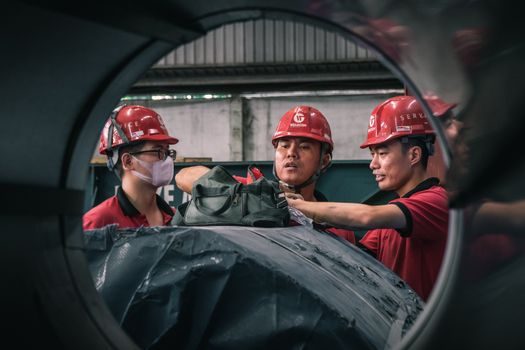
Three rules translate the model into a buying decision. First, benchmark the per-ton variable cost (resin + amine + sand + power) before negotiating the machine price, because variable cost compounds over 5-15 years. Third, lock the disposal plan (spent sand, scrubber liquor, decommissioned PLCs) into the capex committee minutes, because the line items look small individually but aggregate to 5-10% of TCO and are the ones auditors flag on disposal reserve reviews. A 2026-07-24 procurement committee that follows those three rules will, on average, land within 5-8% of the realized TCO; one that does not will land 15-30% over. [S2]
Trackable signals for the next 90 days: amine MDI index moves on cold-box lines (the single largest resin-driven cost swing), industrial gas and kWh rate changes in the cell's ISO region, and any OEM service bulletin on heater element life for the in-frame shell core machine generation. For a parallel cross-industry view of how maintenance and operational cost dominate multi-year spend, the Slewing Bearing TCO: Five Cost Levers Over a 5-7 Year Lifecycle walkthrough applies the same five-line TCO split to a different asset class, and the Dynamic Balancing Machine Price and Cost Guide 2026 article compares acquisition to lifecycle on rotating-equipment lines that share the same compressed-air and labor overhead as a core room.