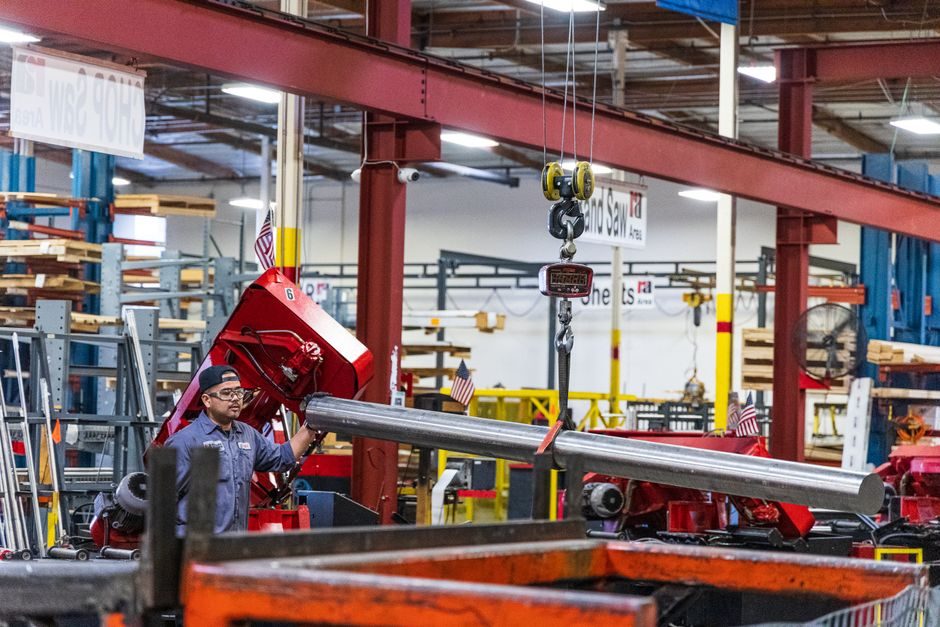
Single girder overhead crane sourcing in 2026 is concentrated in a tight Chinese supplier cluster — Shandong Mingdao, Zhejiang Xiecheng, Shanghai Kenvole, Henan Nucleon, and Henan MAGICART — where the dominant build is the LD/LDA type with 1-20 t SWL, paired with CD1 or MD electric chain hoists, FOB price US$2,000-6,480 per piece on a 1-piece MOQ [S2][S3][S6].
Outside the China cluster, the spec map is the same: India-based Microtech Engineers lists single girder EOT, HOT, and Goliath packages as part of a wider material-handling portfolio, while European-style HD single girder builds from Chinese suppliers such as Okorder-listed vendors add FEM/ISO-rated end-carriages and variable-frequency drives as a step-up option [S4][S7]. For a baseline definition of the single girder crane architecture (one main girder, one hoist trolley, end-carriages on runway rails), the LD/LDA spec is the volume workhorse.
LD/LDA Single Girder Spec Bands and Price Levers
LD type single girder overhead cranes, when paired with CD1 or MD electric hoists, are the volume baseline — Okorder lists the 1t and 10t variants as "the most popular crane for all type of workshops" and the FOB price band sits in the US$2,000-10,000 range across single and double girder European-standard builds on Made-in-China [S5][S8][S9].
Shandong Mingdao Heavy Industry quotes US$4,250-6,480 per piece for a 3 t single girder beam EOT crane on a 1-piece MOQ, while Shanghai Kenvole Industries lists 1-20 t single girder and 5-600 t double girder overhead cranes in the same Made-in-China catalog band [S2][S6]. Price is driven less by the girder count and more by hoist class (CD1 vs MD), duty cycle (A3/A4 vs A5/A6), and whether the package includes a variable-frequency drive — a spec cut that the overhead bridge crane buying guide breaks down line by line.
Hoist Pairings: CD1, MD and European Electric Wire Rope
The default hoist on a 1-20 t single girder EOT crane is a CD1 (single-speed) or MD (dual-speed) electric chain hoist; on the European-style HD builds, the equivalent is a low-headroom electric wire rope hoist with FEM 1Am/2m duty classification [S4][S5][S9].
Hoist choice is the single biggest spec lever after SWL: a CD1/MD chain hoist on an LD crane lands in the US$2,000-4,000 FOB band, while a wire-rope European hoist on an HD crane roughly doubles the line-item price to US$6,000-10,000 per piece for similar tonnage [S2][S4][S8]. For buyers weighing a bridge-mounted single girder against a gantry crane package, the same hoist and end-carriage set is reused — the structural difference is rails-on-the-floor vs rails-on-the-runway-beam, and that is a procurement decision, not a hoist decision.
Manufacturer Cluster: Shandong, Henan, Zhejiang and Shanghai
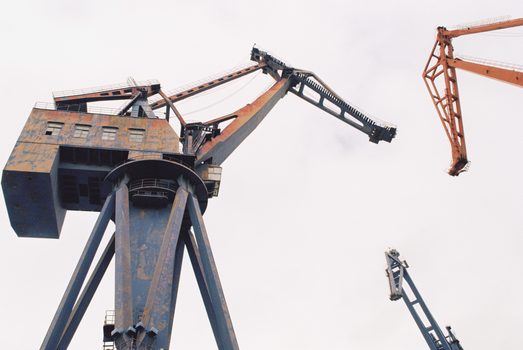
Four Chinese provinces account for the bulk of 2026 single girder crane export volume: Shandong (Mingdao Heavy Industry, listed at mdcrane.en.made-in-china.com), Henan (Nucleon/Xinxiang Crane Co. and Xinxiang MAGICART Cranes on DirectIndustry), Zhejiang (Xiecheng Crane Machinery, sieccranes.com), and Shanghai (Kenvole Industries, ltcrane showroom) [S1][S2][S3][S6].
DirectIndustry's industrial-manufacturer index for single-girder chain hoists lists GH Cranes & Components alongside these Chinese vendors as the consolidated sourcing funnel for spec-driven buyers [S1]. Kenvole's product matrix — "1-20t Single Girder Overhead Crane, 5-600t Double Girder" — is the most explicit capacity band on the public record and matches the design cut that single girder vs overhead bridge crane buyers need to walk through before issuing an RFQ [S6].
India and EU Out-of-Cluster Suppliers
Outside China, India's Microtech Engineers (microtechengineers.net) supplies EOT, Goliath, jib, and single girder cranes in a single material-handling portfolio, positioning itself as a regional alternative for buyers who need shorter inland freight and rupee-denominated invoicing [S7].
GH Cranes & Components, listed in DirectIndustry's single-girder chain-hoist index, is the European regional benchmark and tends to specify FEM/ISO duty classifications and inverter-controlled hoists as standard [S1]. For a buyer whose facility has a washdown or sanitary requirement — dairies, breweries, pharma — the food and beverage single girder spec tightens surface finish, ingress protection, and lubricant food-grade certification, which pushes the supplier shortlist away from the LD workhorses toward stainless or galvanized European builds.
Sourcing Gates: MOQ, Payment, FOB Port, Lead Time
The 2026 sourcing gates for a Chinese single girder crane are: 1-piece MOQ, FOB China Main Port or Shanghai, TT or LC payment terms, supply capability typically 30 unit/month per vendor, and order tracking via the Made-in-China or Okorder service-pledge escrow layer [S4][S5][S8][S9][S10].
For 1-10 t LD/LDA units in stock spec, the realistic 2026 lead time is 30-45 days ex-works for the bare crane, plus 15-25 days for sea freight to most US Gulf, North Europe, and Middle East ports; non-stock European-style HD builds stretch to 60-90 days because the hoist and VFD panel are built to order [S2][S4][S5]. If the application requires weighing-integrated lifting — coil handling, batching, scrap — the procurement line item that should be added to the same RFQ is a crane scale rated to the duty cycle of the hoist, not a separate vendor.
Selection Criteria: Duty Class, Span, Hoist and Drive
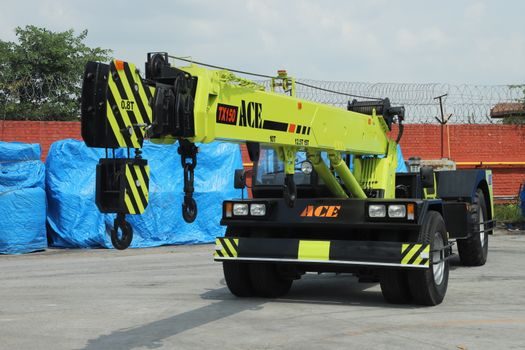
Four criteria separate the LD workhorse from the European HD build and from the mobile crane option: (1) duty classification — A3/A4 for the LD chain-hoist build vs FEM 1Bm-2m for the European wire-rope build; (2) span — typically 7.5-31.5 m for single girder EOT vs 12-30 m for the equivalent single-girder portal/gantry package; (3) hoist type — CD1/MD chain hoist (2-3 m lift standard, dual-speed MD adds 2-3× price) vs low-headroom wire-rope hoist with cross-travel inverter; (4) drive — conventional contactor control on LD vs VFD control on HD, which adds roughly 8-15% to the FOB line [S4][S5][S9][S10].
For indoor heavy-maintenance bays, steel-mill coil handling, and container-yard work, the comparison often comes down to gantry crane vs overhead bridge crane — gantry is ground-rail and relocatable, bridge is runway-fixed and higher lift. For warehousing, a stacker crane only makes sense above ~6 m aisle height and only when the SKU count justifies dedicated aisle.
Limitations and Failure Modes Buyers Should Price In
The LD/LDA single girder chain-hoist build has three honest constraints: (1) chain hoist duty is limited to FEM 1Bm/2m — so any buyer pushing toward A6/A7 duty (steel-mill coil yard, foundry, scrap handling) must step up to double girder or wire-rope hoist; (2) end-carriage wheel diameter on stock units is typically 125-400 mm, and undersized wheels on poor runway rail cause premature flange wear — a known field-failure mode; (3) the FOB unit price excludes installation, commissioning, and the runway rail itself, which is often 30-50% of the total installed cost on greenfield sites [S4][S5][S9][S10].
Buyers who skip the runway-rail scope in the initial RFQ routinely see the project run 20-30% over budget once the civil and rail sub-vendor invoices land. For a spec-driven shortlist, the 2026 baseline gate is: confirm FEM/ISO duty class on the nameplate, confirm the hoist is matched to the duty (not just the SWL), and confirm the end-carriage wheel diameter and rail-clamp geometry against the existing runway.
The next trackable signal for buyers is the 2026 Q3 capacity statement from Shandong Mingdao (currently 30 unit/month single girder baseline per Okorder) and whether Henan MAGICART and Nucleon push DirectIndustry-listed inventory above the 1t-10t LD core into 16t/20t variants; the second signal is the FOB Shanghai rate on European-style HD single girder builds, where US$6,000-10,000 is the band to watch for downward pressure as VFD panel costs normalize.