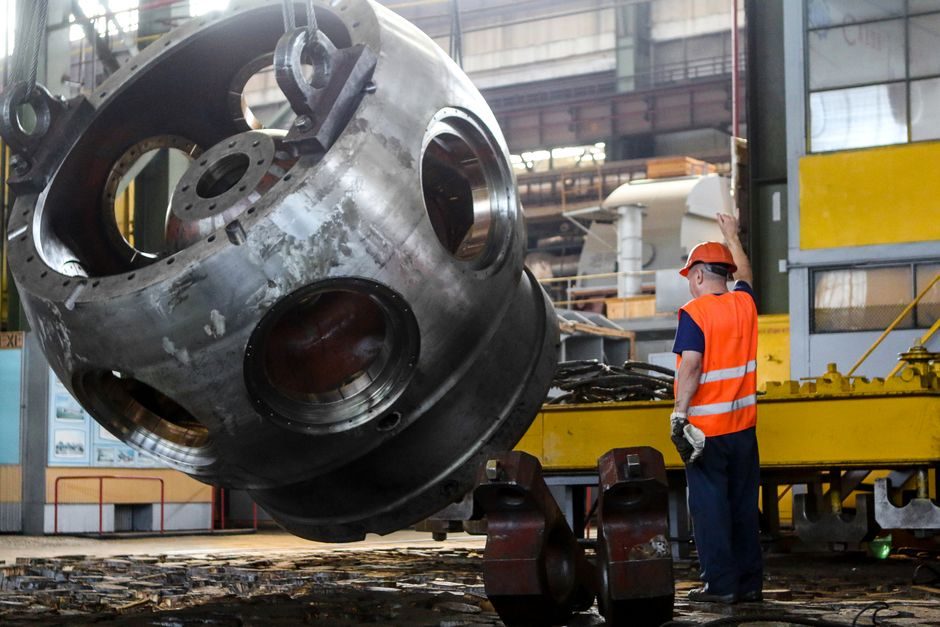
A slewing ring bearing — also called a slewing ring bearing or turntable bearing — is a rotational rolling-element or plain bearing engineered to carry heavy, slow-turning, or slow-oscillating loads on a horizontal platform such as a crane, swing yarder, or wind-turbine nacelle [S2]. Compared with general rolling-element bearings, slewing rings are characterized by a thin cross-section and are commonly produced in diameters of a metre or more, with integral gear teeth on the inner or outer race used to drive the platform relative to its base [S2][S8].
Market-facing catalogues from Chinese OEM/ODM suppliers group the product into a consistent taxonomy. Shanghai JINB, for example, lists five core structural variants — ball slewing rings with flange rings, single-row ball, double-row ball, crossed-roller, and roller/ball combination — plus a triple-row roller line and matched slewing drives [S5]. Fenghe offers 796 product types across its standard and custom lines, supported by an 85-engineer technical team and a 36,850-unit annual output [S1].
Four Structural Families and What Each One Carries
Single-row ball slewing rings use one row of balls as the rolling element, giving the lowest cost and the lightest weight in the family, at the expense of the lowest load capacity and the highest deflection under moment load [S5][S7].
Double-row ball slewing rings add a second ball row on a separate raceway, raising axial and moment capacity roughly 1.5–2× over the single-row design and noticeably stiffening the bearing against tilt, which is why excavator and crane upperstructures frequently default to this geometry [S5]. Crossed-roller slewing rings replace the balls with cylindrical rollers set at 90° to each other between two raceways, doubling as both thrust and radial bearings in a single compact ring; the trade-off is tighter assembly tolerance and the need for higher machining precision on the mounting structure [S5].
Triple-row roller slewing rings stack three independent raceways — two radial roller rows plus one axial ball row — and represent the highest-capacity variant in the standard catalogue, sized for the largest port cranes, stacker-reclaimers, and wind-turbine nacelles where overturning moment dominates [S5]. A plain-bearing / slewing-drive variant wraps the same problem in a different envelope: a slewing drive combines a slewing bearing with an integrated worm or planetary gearbox so radial, axial, and moment loads can be held without a separate brake [S1].
Loading Logic: Axial, Radial, and Overturning Moment Together
A slewing ring in service simultaneously experiences three load components: axial force Fa along the rotation axis, radial force Fr perpendicular to it, and an overturning moment M from wind, slewing acceleration, or cantilevered payload [S7]. The dominant combination shifts with the application: a horizontal-axis wind turbine sees high M and Fa, a ship-to-shore crane sees high Fa with intermittent Fr, and a hydraulic excavator sees a mixed Fa + M profile that swings through 360° every cycle.
Modelling work on quenched soft-zone behaviour — the unquenched area intentionally left on the ring to relieve stress and aid machining — shows that load distribution between the rolling elements and the cage changes markedly under extreme wind events, and finite-element analysis is now standard for verifying capacity on large-diameter rings [S9]. Fenghe's catalogue explicitly attributes 86 patented technologies to raceway hardening and soft-zone control, a clue that this is where Chinese OEM R&D is currently concentrated [S1].
Gear-Integration Options: None, Internal, or External
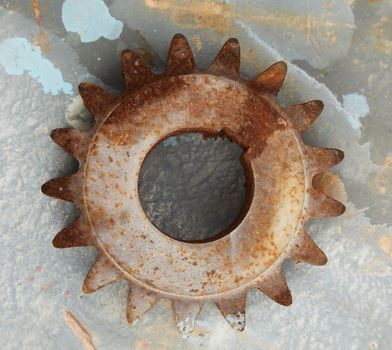
Every structural family above can be ordered in three gear configurations: no gear (smooth ring, driven by an external pinion), internal gear (teeth machined into the inner race bore), or external gear (teeth on the outer race OD) [S8][S10]. Internal-gear designs protect the teeth from debris and weather and are common in excavators, aerial work platforms, and enclosed crane turrets; external-gear designs allow a larger module and easier tooth inspection, suiting port and mining machinery where the ring is exposed [S8].
The Wanda WD-23 light-type / flange series, for example, lists bore sizes of 342–1022 mm and outside diameters scaling above 5× the bore, and is offered in all three gear options specifically to fit food machinery, canning machinery, and environmental machinery where the same envelope is used across duty profiles [S10]. The mechanical principle is identical to large industrial slewing rings — only the cross-section is reduced, which is why this family is often sold as "thin-section slewing bearing" rather than as a separate bearing type [S10].
Selection Criteria Mapped to Duty Profile
Four decision criteria drive the structural choice: peak axial + moment load, required rotational accuracy, allowed deflection under moment, and budget per unit. On a four-way comparison, the picture sharpens: [S1]
• Single-row ball — lowest cost, lowest capacity, highest deflection; matches light-duty tracker and small-platform applications [S5].<br>• Double-row ball — 1.5–2× the moment capacity of single-row, moderate cost; the workhorse for mid-size excavators and truck cranes [S5].<br>• Crossed roller — high stiffness and accuracy in one compact ring; matches machine-tool indexing tables, robot positioners, and medical imaging where runout matters [S5].<br>• Triple-row roller — top capacity, largest OD, longest lead time; matches port cranes, stacker-reclaimers, and multi-MW wind turbine nacelles [S5].
Suppliers such as LYXQL position themselves at the large-size end of this map — the company is one of China's national high-tech enterprises and listed on the GEM board under stock code 300850 on 2020-07-13, with manufacturing capability dedicated to large-diameter rings [S6]. Wafangdian (ZWZ) — a state-level bearing factory with ISO 9001 approval from 2003 — covers nine standard and non-standard bearing types and supplies precision machine tools, rolling mills, aviation, mining, metallurgy, coal, and oil & gas [S3]. Luoyang Jiawei, founded 2007 with 101–200 employees, also positions on the slewing-ring plus slewing-drive combination, illustrating that the small/medium-OEM tier in China competes on packaged slewing-drive units rather than on raw ring machining [S4].
Materials, Heat Treatment, and Manufacturing Discipline
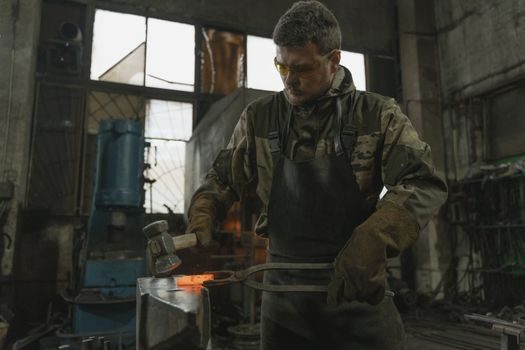
Raceway hardening is the single most-cited manufacturing discipline across the supplier set, because case depth and hardness directly control rolling-contact fatigue life [S1][S7]. Fenghe's published workflow explicitly walks through stretching test, magnetic-particle inspection, and material analysis as gatekeeping steps, and runs an in-house forging operation with an 11,330-unit annual forging capacity to control steel cleanliness from blank to finished ring [S1].
The Springer modelling study (2020) frames the metallurgical concern more precisely: a deliberately unquenched "soft zone" lowers residual stress and eases machining, but reduces local fatigue capacity; verifying its size and location via 3-D finite-element analysis is the modern way to balance the trade-off rather than treating it as a fixed rule of thumb [S9]. For buyers, the practical signal is to ask suppliers for raceway case-depth data, quenching pattern, and any soft-zone drawing — not just hardness numbers [S9].
Where Slewing Rings Go: Application Map and Supplier Coverage
Slewing rings are the rotation joint on essentially every machine that swings a heavy load on a horizontal plane. Fenghe's published application list spans port machinery (reach stackers, floating cranes, container cranes, marine piling rigs, ship-to-shore cranes), mining machinery (rock drills, rotary drilling rigs, stacker-reclaimers, hydraulic excavators, TBMs), and the energy / environmental stack including wind, solar, tidal, and wastewater treatment [S1].
SWBTEC echoes the same logic with a different framing — three-axis loading during swing is the universal design driver, and the bearing type has to be matched to which axis dominates in service [S7]. The light-section / flange sub-family extends the same technology into food, canning, and environmental machinery where the OD stays modest but the duty is continuous [S10]. For adjacent technology context, the ceramic-bearing taxonomy is useful when corrosion or non-magnetic requirements push a buyer toward hybrid or full-ceramic rolling elements, and steel market dynamics in 2026 shape the raw-material cost curve that any slewing-ring quote sits on top of.
Limits, Failure Modes, and What Spec Sheets Do Not Show
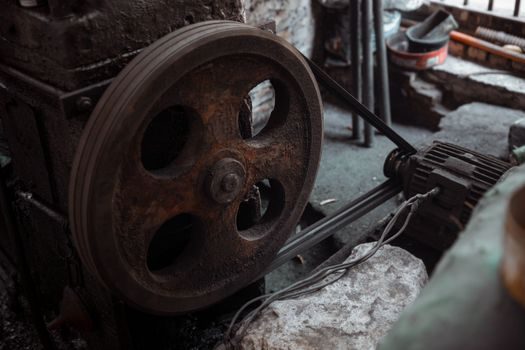
Slewing rings are usually the limiting-life component in their host machine, and the failure modes cluster into four buckets: brinelling from static overload during shipping or installation, raceway spalling from overload or contamination, gear-tooth wear on internal/external drives, and bolt-loosening fatigue on the mounting structure [S1][S7][S9]. Raceway spalling and brinelling can both be traced back to either undersizing for the actual moment load, poor mounting flatness, or inadequate bolt preload, which is why finite-element-based capacity verification is now standard for the larger sizes [S9].
Spec sheets rarely expose the soft-zone pattern, bolt-preload class, or the lubricant path, so the practical sourcing step is to ask for an installation drawing, a bolt-preload specification, and a recommended grease schedule, not just a catalogue page with a static-load number. Slewing-ring selection also overlaps with the broader rolling-element bearing family; for very high-speed shafts, a slewing ring is the wrong product and a deep-groove or cylindrical roller ball bearing belongs in the bill of materials instead.
Track the next three signals before committing to a supplier and size: raceway case-depth and hardness test reports per lot, gear-tooth profile and backlash measurement on internal/external-gear orders, and a documented soft-zone drawing for any ring above ~2 m OD — all three are now baseline asks across the Chinese OEM tier and the easiest way to separate a real manufacturer from a trading intermediary. Light-type / flange variants under the WD-23 pattern (342–1022 mm bore) are the lower-risk way to qualify a new supplier on a non-critical machine before scaling up to port or wind-turbine sizes.