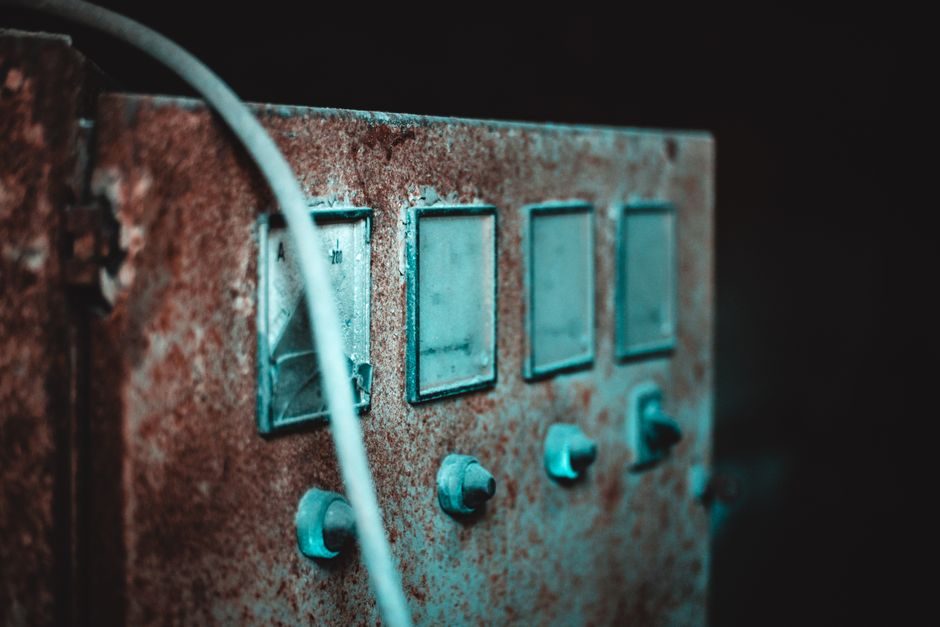
Soft starters are three-phase AC motor control devices built around anti-parallel thyristor (SCR) modules that ramp firing angle from near-full to full conduction, limiting inrush current and starting torque to programmable values across the acceleration curve [S2][S3].
Devices marketed as soft starters universally combine a power section (SCR stack, heatsink, often an integrated bypass contactor) and an electronic control board handling ramp, kick, current limit, deceleration and motor-protection logic; they fill the cost-versus-function gap that star-delta starters and VFDs leave open in fixed-speed applications [S3].
What a Soft Starter Actually Is — and Is Not
A soft starter is NOT a variable-frequency drive: output frequency stays at line frequency; only voltage (and therefore torque) is shaped during start and stop. Soft-stop is achieved by extending the firing-angle ramp downward, which lengthens the slip-curve coast, not by regenerative braking [S2].
The power section uses back-to-back SCRs per phase, controlled by a microprocessor that fires each pair in synchronism with line voltage; this is the same topology described as three-phase anti-parallel thyristors in series between supply and motor in the reference definition [S2]. Modern units integrate a vacuum or air bypass contactor that closes after ramp completion, eliminating SCR losses during run — a configuration documented in the HPMV medium/high-voltage architecture (isolation switch, fuses, vacuum contactor, control transformer, SCR module, bypass contactor) [S4].
Gate 1 — Voltage Class and Network Type
Low-voltage soft starters cover 200–690 V AC at 50/60 Hz; medium-voltage HPMV-class units step up to 3 kV, 6 kV and 10 kV classes, built as full motor starters with isolation switch, fuses, main vacuum contactor, control transformer, SCR modules and a high-voltage bypass contactor [S4].
Selection must match the network: 380 V / 400 V / 480 V / 600 V / 690 V for LV; 3.3 kV / 6 kV / 10 kV for MV. Where the motor is part of an explosive-atmosphere installation, the chosen soft starter must carry ATEX 2014/34/EU or IECEx certification appropriate to the motor's category, otherwise the protection chain is invalid [S1].
Gate 2 — Current Rating and Thermal Headroom
Ratings are quoted in amperes (e.g. 11 A, 55 A, 200 A, 800 A) at a given AC voltage, and a single unit cannot be used across the full range — derating curves are required for high-starting-duty applications. A pump or fan may accept a smaller unit than a crusher of the same kW because locked-rotor starting time and starts-per-hour differ [S1][S3].
Practical rule: the soft starter FLA must exceed motor nameplate full-load amperes with thermal headroom for the start duration; starters are typically rated for a duty cycle (e.g. 3× FLA for 30 s, or 4× FLA for 20 s). Where starts exceed this duty, oversize the unit or move to an MV-class device. Engineers in pump and HVAC service often select one frame above the motor FLA to absorb cyclic-restart heating [S3].
Gate 3 — Starting Profile: Voltage Ramp, Current Limit, Kick Start
Three programmable parameters dominate the start curve: initial voltage (often 30–60% of line), ramp-up time (typically 1–60 s) and current limit (e.g. 1.5–4× FLA). Heavy loads may need a kick pulse (50–80% line for 100–500 ms) to break static friction before the soft ramp resumes [S1][S3].
Stop profiles mirror starts: soft-stop voltage ramp and deceleration time (often 0–60 s) extend the natural coast-down to suppress water-hammer in pumps and to prevent belt slip reversal in conveyors. The trade-off is clear — a soft stop demands the SCRs stay in circuit during deceleration, so the integrated bypass contactor must open for the entire stop window [S3].
Gate 4 — Bypass Topology and Energy Loss
Two physical layouts exist: external bypass (separate contactor wired and controlled by the soft starter) and integrated bypass (contactor inside the same enclosure, closed by the controller after ramp completion). Integrated bypass removes SCR I²R loss during run — a measurable saving on motors above ~30 kW running continuously [S1].
For high-voltage service, the HPMV reference design explicitly lists a high-voltage vacuum bypass contactor as standard equipment; without it, SCR losses would dominate enclosure cooling at 6 kV / 10 kV levels [S4]. Engineers should also verify the bypass is rated for the same AC-3 / AC-4 utilization category as the upstream contactor, otherwise the contactor becomes the weak link in the chain.
Gate 5 — I/O, Communication and Protection Functions
Modern soft starters expose digital inputs (start/stop/reset), relay outputs (run/fault), analog I/O (4–20 mA for motor current), and fieldbus — Modbus RTU on RS-485 is the baseline, with PROFIBUS, PROFINET, EtherNet/IP and DeviceNet available on higher-tier units. Protection typically bundled: phase loss, phase sequence, overcurrent, undercurrent (dry-run / broken belt), overload (thermal model), stall, earth fault, and SCR overtemperature [S1].
For process plants already running Foundation Fieldbus or PROFINET, the soft starter must publish the same input image (start, stop, status, actual current) or it cannot be integrated into the existing asset model; a Modbus-only unit will work in a brownfield but adds a gateway. For a deeper look at how these protections are sequenced, see the engineering Soft Starter Selection Criteria: Six Gates That Decide 2026 Specs reference.
Gate 6 — Certifications, Environment and Mechanical Form
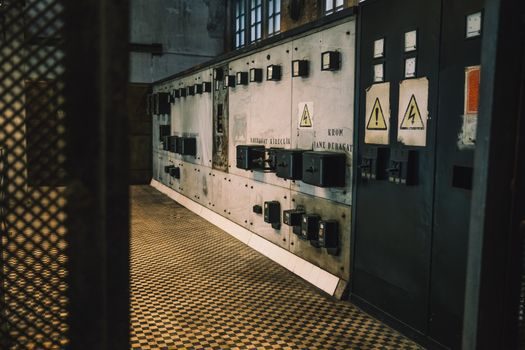
Mandatory certifications vary by region: CE / UL / cUL for industrial cabinets, ATEX 2014/34/EU or IECEx for explosive atmospheres, and marine type approvals (ABS, DNV, LR, BV) for offshore and shipboard.
The packaged medium-voltage HPMV architecture also includes isolation switch, fuses, main vacuum contactor and control transformer in the same enclosure, so the buyer's checklist is a complete motor starter cubicle — not just an electronic module [S4]. For retrofits pairing a soft starter with an existing AC motor, the practical spec cuts are laid out in AC Motor and Soft Starter: Spec Cut for 2026 Plant Retrofits.
Soft Starter vs Star-Delta vs VFD — Decision Comparison
For fixed-speed loads, soft starters win on cost and footprint: a 75 kW unit typically lists 60–70% below an equivalent VFD, with no harmonics to manage, and they fit the same 4-20 mA / discrete control logic an existing pressure transmitter or flow meter already speaks to. VFDs remain the correct choice when the process needs below-base speed, controlled acceleration above 1:10 ratio, or precise torque regulation; a linear guide servo axis is a VFD problem, not a soft-starter problem [S3].
Selection by load profile: pumps and fans (centrifugal) → soft starter is the default; conveyors and compressors (constant-torque) → soft starter with current-limit profile; extruders, mixers, crushers (high-inertia) → soft starter with kick start and oversize rating; hoists and traction drives → VFD mandatory because regen braking and four-quadrant operation are required. Where the actuator downstream is a crossed-roller guide on a precision stage, a VFD (or stepper) is again the only viable motor control; a soft starter is built for line-frequency induction machines.
Where Soft Starters Are Used — and Where They Are Wrong
Dominant applications: water and wastewater pumps (pressure boosting, sewage, irrigation), HVAC chilled-water pumps, centrifugal fans and compressors, belt conveyors, mixers and agitators. In all of these the goal is to reduce mechanical stress (belt wear, water hammer, gearbox shock) and electrical stress (voltage dip, contactor welding) on start and stop [S1][S3].
Wrong-fit applications: any load that must run below base speed, any load that needs four-quadrant braking (regenerative), and any load that requires precise speed holding under varying torque. A soft starter cannot replace a VFD on a industrial valve actuator that needs positioning feedback, nor on a hoisting winch that must hold a suspended load against gravity. High-starting-frequency duty (more than ~10–20 starts per hour) also moves the selection toward a VFD or an oversized soft starter with explicit thermal headroom documented [S3].
Historical Context and Current Vendor Landscape
Soft starters entered the market in the late 1970s and early 1980s, positioned between the simple but hard-stepping star-delta starter and the expensive variable-frequency drive [S3]. Modern units now include microprocessor control, multi-parameter ramps, integrated bypass contactors and fieldbus connectivity, with HPMV-class medium-voltage designs adding the full motor-starter cubicle (isolation, fusing, vacuum contactor, SCR module, bypass, control transformer) as a packaged line [S4].
The 2026 catalog tier typically splits into low-voltage panel-mount units (5.5 kW to ~800 kW, often with integrated bypass) and medium-voltage cubicle units (200 kW to 20+ MW, with vacuum contactor and bypass). Forced-air or water-cooled heatsinks are standard on units above 500 kW, and liquid-resistance / magnetic-reactor pre-start variants are still specified for very high-inertia MV motors [S1][S4].
For an updated frame, torque and sourcing comparison that pairs motor and starter selection, see Stepper Motor 2026 Buying Guide: Frame, Torque, Driver and Sourcing Levers — useful context even though stepper and soft-starter control different motor families. The next decision gate beyond the six above is always the start/stop frequency and the thermal envelope of the installation: if cyclic duty exceeds the unit's datasheet, step up a frame or move to a VFD.