A 400 V class soft starter rated 7.5–250 kW with built-in bypass contactor, adjustable ramp-up of 1–60 s, and IEC 60947-4-2 coordination covers roughly 80% of pump, fan, and conveyor duty in process plants in 2026 builds [S2].
The decision problem is narrow: size the unit to motor Full-Load Amps (FLA) at the actual supply voltage, pick a topology (6-pulse thyristor vs. controlled-rectifier with bypass) that matches the load's starting torque, and confirm the protection set (overload, phase loss, locked rotor) plus the fieldbus link before you commit. The article that follows walks the six gates a process engineer must clear before signing the PO [S2].
Gate 1 — Motor and Supply Data: FLA, Voltage, Duty Class
Every soft starter selection starts with four numbers on the motor nameplate: rated power (kW/HP), rated voltage (208 V / 230 V / 400 V / 480 V / 690 V), FLA at that voltage, and the duty profile (S1 continuous, S2 short-time, S3 periodic) [S2]. The starter's current rating must meet or exceed motor FLA at the actual site voltage — a 400 V / 110 kW IEC motor at 50 Hz typically draws about 197 A, which puts it inside the standard 200 A frame used in 75–132 kW pump and compressor packages [S2][S3].
Two operating-mode limits matter: standard duty allows up to 4–6 starts per hour at 3.5–4.5 × FLA for 6–10 s; heavy/heavy-duty operation drops the start current ceiling to about 2.5–3 × FLA. Going past 6 starts/h usually forces a jump to the next frame, or a move to a variable frequency drive on the same PLC rail [S2].
Gate 2 — Starting Topology: 6-Pulse, Bypass, and Two-Phase Control
The workhorse topology is a 6-pulse anti-parallel thyristor bridge (three phases, two SCRs per phase) with phase-angle or current-ramp firing — the structure every major OEM uses in the 7.5–250 kW range [S3]. A built-in bypass contactor that closes after ramp completion is now standard: it cuts heat loss by 90% or more, lets the starter run in a smaller panel, and extends thyristor life by removing continuous conduction losses [S2].
Two-phase (three-SCR) controlled units exist for cost-sensitive or lightly loaded fans where full three-phase control is unnecessary, but the trade-off is DC injection into the motor and elevated harmonic content on start — generally not acceptable for sensitive upstream supplies [S2]. For a direct comparison of decision criteria the spec sheet must capture: 6-pulse three-phase control gives 1.5–3 × FLA start current and cleanest ramp; 6-pulse with built-in bypass adds the efficiency win at modest cost premium; two-phase control is the lowest-cost option but only for uncritical loads. The same comparison gate also governs pressure transmitter cabinet pairings where the soft starter lives in the same MCC line-up.
Gate 3 — Starting Torque and Load Match
That math rules out high-inertia loads: heavy flywheels, deep-well pumps, hammer mills, and large fans need either a higher initial voltage setting (60–70% Un) and longer ramp (20–60 s), or a frequency-controlled drive instead. Constant-torque conveyors and mixers sit in the middle; centrifugal pumps, fans below 30 kW, and lightly loaded scroll compressors are the sweet spot [S2].
Modern starters add an adjustable current-limit clamp (commonly 150–400% of FLA) and a kick-start pulse (0.1–1.0 s at 70–90% Un) for loads that need a breakaway nudge. The result is a tunable starting profile: pump-style decel ramp of 5–30 s for hydraulic surge control, or S-curve accel for conveyors carrying fragile product [S2][S3].
Gate 4 — Protection and Coordination
Beyond the start/stop function, the 2026-spec soft starter carries a defined protection set: electronic overload (Class 10/20/30 selectable), phase-sequence and phase-loss detection, locked-rotor jam, stall during run, under/over-voltage, and imbalance trip (typically 30% default) [S2][S3]. The starter's short-circuit coordination has to match the upstream breaker or fuse per IEC 60947-4-2 Type 1 or Type 2 — Type 1 allows contactor damage with no external hazard, Type 2 demands the unit survives a fault without a fire risk. For continuous-process lines most engineers specify Type 2 with semiconductor fuses sized at about 1.7 × starter rating.
Thermal management matters: 7.5–55 kW units are usually fan-cooled with a 50 °C ambient derate; 75–250 kW frames shift to forced-air or panel heat-exchanger cooling, and above 250 kW liquid-cooled cabinets appear. Ambient derating starts at 40 °C for most product lines and steps up at 50 °C and 60 °C — common in steel-mill and refinery MCC rooms [S2].
Gate 5 — Communications, I/O, and Cabinet Integration

Selection Gate 5 is where mechanical and electrical meet digital. The 2026 baseline spec is a Modbus RTU (RS-485) port as standard, with PROFINET, EtherNet/IP, or Modbus TCP as plug-in option cards for PLC integration [S2]. At minimum the starter should expose: start/stop commands, run/stopped/faulted status, motor current (4–20 mA or digital), and the active fault word over the bus — that is enough for the SCADA to alarm and for the flow meter on the same pump skid to cross-check suction conditions on a fault.
Hard-wired I/O is still the fallback: at least two programmable digital inputs (start, stop, reset), one relay output for the line contactor, and one configurable analog input (4–20 mA for remote setpoint of current limit).
Gate 6 — Standards, Certification, and Documentation
Two standards govern the bulk of low-voltage motor starters: IEC 60947-4-2 for the soft starter itself and IEC 60947-1 for low-voltage switchgear common rules, with regional variants (UL 508 in the US, GB 14048 in China) for the same scope [S2]. Hazardous-area installs add ATEX 2014/34/EU category for the starter cabinet or IEC 60079 series for the motor terminal box, and the dual-certified pressure pressure sensor on the same skid follows the same documentation chain. For marine and offshore service the relevant route is type approval from a major class society (ABS, DNV, LR, BV) — confirm it on the certificate, not the data sheet.
For pumps and large fans in continuous process plants, an active-controlled or active-front-end soft starter removes the need for a passive harmonic filter and is often the lower-TCO choice over a 10-year life [S2][S3].
Where the Soft Starter Fits — and Where It Doesn't
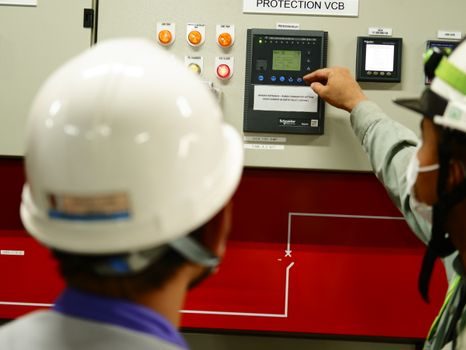
A soft starter is the right call when the motor is between 7.5 kW and roughly 500 kW, the load is a centrifugal pump, fan, or low-inertia conveyor, and the goal is to limit inrush to 2–3 × FLA while cutting mechanical shock [S2][S3]. It is the wrong call for: high-inertia loads that need 100% DOL torque to break away; applications requiring continuous speed change (use a VFD); or sites where 4-quadrant regenerative braking is mandatory.
For pumps paired with industrial valve trim, the soft starter and VFD compete directly above 75 kW: pick the soft starter for constant-speed centrifugal duty where a downstream control valve is already specified, and pick the VFD when pump speed modulation will deliver process-side energy savings above 20%. The same 2026 cost-discipline lens is detailed in our AC Motor 2026 Buying Guide: IE Class, Mount, Enclosure and Supply Gates, which covers the upstream machine the starter has to drive. For shot-weight and clamp tonnage decisions on packaging lines that share the same MCC, the Shell Core Machine Selection 2026: Shot Weight, Platen, Cure and Clamp Gates reference captures the mechanical side.