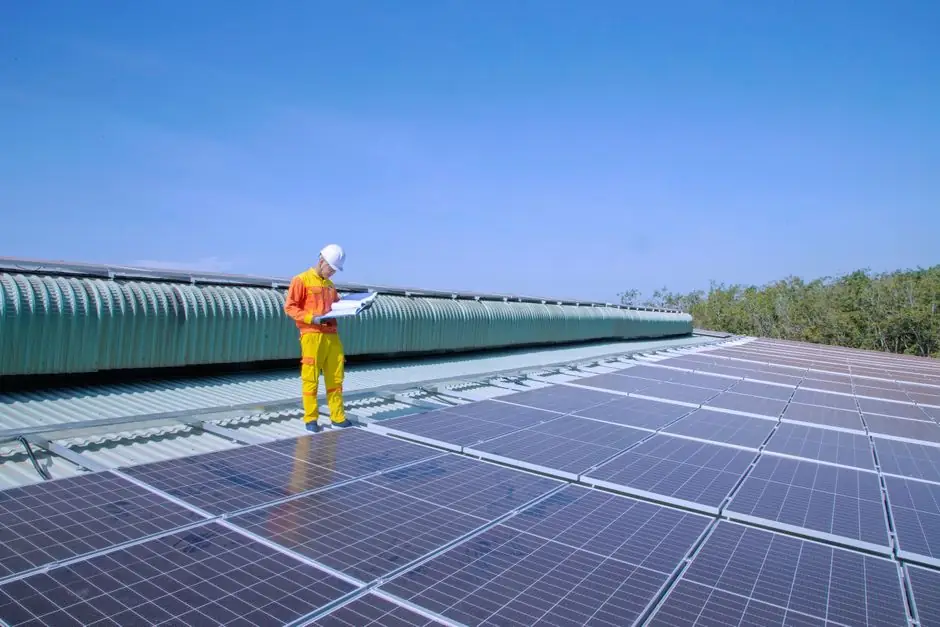
Buyers sourcing solar in August 2026 are dealing with three distinct procurement lanes, not one: PV module production lines (5MW-600MW capacity brackets supplied by Ooitech with 15+ years of factory-build experience), residential and commercial installation services (Simply Solar lists 12 years of field experience at a $299 flat inspection price), and software/remote-tracking subscriptions (SolarRelax delivers daily and monthly production plus fault alerts by SMS or email) [S3][S6][S7].
Each lane has its own qualifying questions, its own documentation, and its own failure modes; treating them as a single "solar buy" is the most common cause of cost overrun on the equipment side and of poor post-installation performance on the service side [S1][S5].
Lane 1: Production Equipment (B2B / Factory Builders)
Buyers standing up a panel assembly plant need a vendor that quotes capacity by named tier rather than by vague "high output" language, because line throughput sets capex payback directly. Ooitech lists explicit 5MW-600MW panel production line brackets at factory-direct price, with free factory layout design and machine management training bundled in [S7]. A spec-first RFQ for this lane should pin: line capacity in MW, automation level (semi vs full), number of cells per hour, layup area footprint, and whether laminator, stringer, and IV tester are included or itemized.
For factory builders, the most common procurement failure is buying a semi-auto line that bottlenecks at the layup station within 18 months; insisting on a defined throughput curve at the PO stage, not at the FAT stage, is the cheapest insurance [S7]. Buyers who also need downstream plant-floor controls should review the control panel component reference, since most PV line stringers and IV testers are driven through dedicated PLC/HMI cells rather than off-the-shelf PCs. A relevant cross-reference is the Industrial PC Sizing and Selection: A Spec-First Guide for Plant Buyers brief, which covers the operator-station hardware these lines often pair with.
Lane 2: Installation Services (Residential and Commercial)
For roof-top and ground-mount projects, the procurement gate is installer competence, not module brand. Simply Solar's published commercial positioning is "12 years of experience" backing installation and a $299 flat rate for a full system inspection, which is the kind of trackable signal a procurement checklist can score [S6]. Kuby Energy (Solar by Kuby) is a comparable service supplier covering residential solar, commercial solar, EV charging, energy storage, and engineering across Alberta (Edmonton, Calgary, Lethbridge) and BC (Kamloops) [S4].
The San Antonio installer market is a useful contrast: an August 2026 advisory from the Solar Panel Guide explicitly recommends collecting at least three written quotations per project, verifying installer certification, and confirming more than one year of completed installations on the books [S1]. Translating that into a 2026 procurement checklist: three bids minimum, certification evidence on file, a reference list of at least ten completed sites, and a written workmanship warranty term in years, not verbal assurance [S1]. For projects that include an HMI on the inverter skid, see the HMI panel reference for the typical touch-screen and enclosure class used in 5-50 kW commercial inverters.
Lane 3: Monitoring, ROI, and After-Sales

After-sales is where most residential and small-commercial buyers under-spend and then over-pay in lost production. SolarRelax positions itself as a remote tracking application that pushes daily and monthly production reports plus failure notifications via SMS or email, and that is the minimum data rate any monitoring contract should be measured against [S3]. Renewgenius publishes an ROI calculator as a public tool and structures its buying guide around eight content pillars: components, benefits, installation, maintenance, technology, efficiency, financing, and ROI [S5].
The procurement-side rule is: do not sign an installation contract whose monitoring tier is undefined. The contract should name the reporting cadence (instant, daily, monthly), the alert channel (SMS, email, app push), and the fault-classification list (inverter offline, string under-performance, communication loss) [S3]. Buyers weighing solar against other capex lines can compare the long-tail service structure to the CNC OEM vs ODM: Picking the Right Manufacturing Model for Your Build article, which applies the same three-bid, written-warranty logic to machine tools.
Selection Criteria: How the Three Options Compare
The three procurement lanes are best compared on four decision criteria: lead time, capex intensity, recurring cost, and qualification evidence. Production lines (Ooitech) sit at the high-capex, long-lead, evidence-via-FAT end, with capacity quoted in 5MW-600MW bands and 15+ years of vendor experience as the headline qualifier [S7]. Installation services (Simply Solar, Solar by Kuby) sit at the mid-capex, short-lead, evidence-via-reference-list end, with vendor experience of 12 years and a $299 inspection price point published [S4][S6]. Monitoring subscriptions (SolarRelax) sit at the low-capex, instant-deploy, evidence-via-trial end, with reporting cadence as the headline qualifier [S3].
A buyer whose actual need is a turnkey rooftop on one building belongs in lane 2 only; lane 1 is a wrong fit because the capex is for assembling panels, not consuming them. A buyer whose actual need is a private-label module brand belongs in lane 1 only; lane 2's installer relationships do not transfer. A buyer in either of those two cases should still contract lane 3 monitoring, because production-loss visibility is the same metric whether the modules came from a vendor's line or a competitor's [S3][S5][S7].
Who This Lane Structure Is For, and Who It Is Not For
The three-lane structure fits three buyer profiles: module-brand founders who need a factory line, building owners who need an installer, and operators of any installed system who need production visibility [S3][S6][S7]. It does not fit utility-scale developers procuring hundreds of MW through a single EPC, because that buyer needs a different gate set (PPA terms, interconnect queue, EPC bonding) that none of the three lanes addresses [S1]. It also does not fit buyers whose primary decision driver is a specific cell technology (TOPCon, HJT, perovskite tandem); none of the three reference sources published in this research window discriminates at that level, and any procurement memo that claims it does is reading beyond the evidence [S1][S3][S4][S5][S6][S7].
Limitations, Failure Modes, and Verifiable Next Signals
Three failure modes repeat across the research. Second, factory buyers who accept "free layout" without a written throughput curve end up with a line that cannot hold nameplate at the layup station; Ooitech's bundling of layout and training is the partial mitigation, but only if the throughput number is in the PO [S7]. Third, any buyer who lets the monitoring tier default to a free-tier mobile app loses fault-alert granularity, since SolarRelax's value proposition is specifically daily and monthly production reports plus fault SMS/email, not raw dashboard access [S3].
Trackable signals for the next 90 days: (1) any vendor-side revision of the 5MW-600MW line brackets or a new capacity tier above 600MW from Ooitech, (2) any change in the $299 full-inspection price point or the 12-year experience claim at Simply Solar, and (3) any new alert channel beyond SMS and email from SolarRelax-class platforms, which would shift the minimum reporting cadence in residential procurement checklists [S3][S6][S7].
Spec-level background on the components involved: linear guide.
