SVG selection in 2026 is driven by three binding gates: voltage class (LV 0.4 kV vs MV 6–35 kV chain topology), response time (full reactive step under 5–20 ms), and reactive range of at least −1 to +1 per-unit (inductive-to-capacitive) [S5][S1].
For LV plants drawing 50–500 kVAr per node, a wall-mount or cabinet SVG now competes head-to-head with detuned capacitor banks; for MV/STATCOM-class compensation (1–50 MVAr) the chain cascaded H-bridge with fiber-interfaced controller is the established topology, with high-speed optical fiber linking the controller to each power cabinet [S1][S6].
How an SVG works and what differentiates it from a capacitor bank
An SVG is a self-commutated voltage-source converter (typically IGBT-based) tied to the grid through a coupling reactor; the unit regulates the amplitude and phase of its inverter AC voltage to inject a continuously variable leading or lagging reactive current [S1][S2]. Reactive output is the difference between the inverter AC voltage and the grid AC voltage across the connected reactance, with the DC-side capacitor holding the inverter's DC bus stable [S1].
Three engineering consequences follow. Sineng Electric's Static Var Generator (SVG) achieves capacitive and inductive load compensation from −1 to +1 per-unit with fast bi-directional linear adjustment of reactive power, in a single integrated unit [S5]. Second, response is sub-cycle — sub-5 ms full reactive step on most LV units and in the 1–5 ms range on MV STATCOMs — versus 1–3 s for an MSC contactor and 40–200 ms for a thyristor-switched capacitor (TSC) [S1][S3]. Third, the same inverter can synthesize compensating harmonic currents when controlled to specific harmonic orders, which is why a STATCOM/SVG with active filtering firmware is a frequent upgrade over a passive detuned-cap bank [S1].
Voltage class and topology decision
Two physical architectures dominate the 2026 market. The LV 380/400/480/690 V class uses a two-level or three-level NPC IGBT inverter in a single cabinet, with air or water cooling; air-cooled units are typical below 200 kVAr and water-cooled or hybrid-cooled units above 200 kVAr to 600 kVAr per cabinet [S1][S6]. The MV 6 kV / 10 kV / 35 kV class uses chain cascaded H-bridge (CC-HB) modules — one H-bridge per phase level — with a starter cabinet, control cabinet, power cabinet, and either a connected reactor or step-down transformer tying to the grid [S1][S6].
Choice gate: at bus voltages up to and including 690 V, a single-cabinet LV SVG is almost always the lower-cost and faster-to-deploy option; above 6 kV on the bus, the LV SVG must step up through a transformer, and at that point a direct MV chain inverter STATCOM is the dominant selection [S1]. The chain topology also allows fiber-optic isolation of gate drives, which is why the controller-to-converter link is specified as high-speed optical fiber in modern MV units rather than copper [S1]. For grid code compliance on flicker, voltage sag mitigation, and ride-through, the MV chain STATCOM and the LV SVG with low-voltage-ride-through (LVRT) firmware are the two compliant options [S3].
Reactive range, response time, and harmonic capability
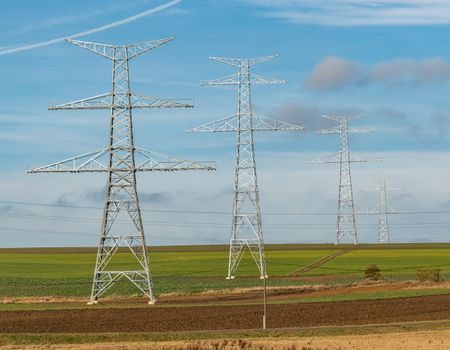
Reactive range is non-negotiable: a true SVG covers −1 to +1 per-unit — meaning it can absorb reactive (inductive mode) as well as supply it (capacitive mode) from a single device, including split-phase compensation in delta connection [S5][S1]. Response time on modern SVGs is in the millisecond range: full capacitive-to-inductive step in 5 ms or less on LV units, and as fast as 1–2 ms on MV STATCOMs using chain inverters [S1][S3].
Harmonic handling splits the market. A pure SVG without harmonic compensation firmware still improves harmonic voltage by softening bus impedance, but it does not actively cancel load current harmonics. A combined SVG + AHF (active harmonic filter) cabinet — sometimes branded as a hybrid VAR compensator — closes the loop on specific harmonic orders (5th, 7th, 11th, 13th are the common targets) [S3]. For nonlinear loads (variable-frequency drives, DC drives, arc furnaces, EV chargers, electrolytic rectifiers), the active filter function is the deciding factor between a passive detuned-cap + TSC stack and an SVG/STATCOM [S3]. Cooling is the third sub-criterion: water-cooled STATCOM is specified where ambient temperature, dust, or cabinet footprint pressure is high; air-cooled STATCOM is preferred in clean indoor switchrooms for serviceability [S6].
Criteria-based comparison: SVG vs TSC vs MSC capacitor bank
Three reactive-compensation technologies compete for the same kVAr. The decision matrix on four criteria: response time, reactive range, harmonic behaviour, footprint per MVAr. SVG / STATCOM delivers sub-5 ms full-step response, −1 to +1 per-unit range from one cabinet, active harmonic mitigation when equipped, and the smallest footprint per MVAr at the high end of the rating range [S1][S3][S5]. TSC delivers 40–200 ms step response, stepped capacitive-only compensation (no inductive absorption), no harmonic mitigation, and a smaller footprint than MSC but larger than SVG at the same kVAr.
Use the matrix as a hard gate: if the load includes large motor starting transients, soft-melting, or welding flicker, the TSC and MSC step times are too slow and the SVG/STATCOM is the only compliant choice. If the only goal is power factor correction on a linear load with stable reactive demand, the MSC bank or detuned-cap with TSC remains the lowest-capex path. Where space is constrained above 1 MVAr, the SVG/STATCOM wins on footprint even before the harmonic-function credit is counted. For variable-frequency drives and EV DC fast chargers, a complementary active harmonic filter often rides alongside the SVG to cover higher-order harmonics the SVG's basic firmware may not track. The HVDC and renewable-interconnection case — wind farm STATCOMs, PV plant STATCOMs — is dominated by MV chain inverters and is the only class where the medium-voltage direct-connection topology without step-up transformer is specified [S1][S2].
Who an SVG is for, and who should pick a capacitor bank instead
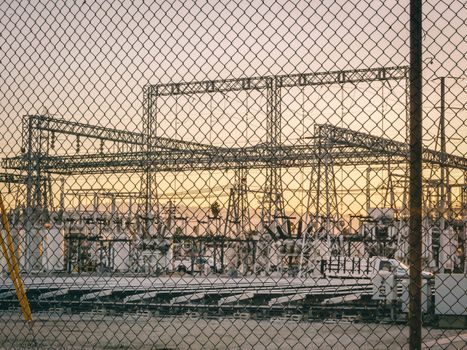
An SVG is the correct specification when the load is dynamic — cyclical, fast-changing, or non-linear — including rolling mills, arc furnaces, crane drives, press lines, elevators, large VFD clusters, EV DC fast charging depots, and renewable plant interconnections [S3][S5]. A capacitor bank is still the right answer for stable, slow-changing, linear loads with a predictable reactive profile — offices, HVAC-dominated commercial sites, and small motor-fixed-speed plants with no flicker or harmonic concern [S3].
Three situations where the SVG premium is not justified. First, a small shop with sub-50 kVAr peak reactive demand where a single detuned-cap rack at 0.4 kV is one-tenth the capex of an equivalent SVG cabinet. Second, a site with no harmonic-emitting load and no flicker requirement where the SVG's harmonic-mitigation and sub-cycle response features are unused. Third, an existing switchroom with limited cooling capacity and no water hookup, where water-cooled MV STATCOMs are the only viable SVG class — in that case, a complementary air-cooled AHF paired with an MSC bank is often a lower-cost, lower-risk path. For interconnections that demand voltage-sag ride-through and reactive support during faults, the MV STATCOM is not optional — it is the grid-code-mandated solution [S1][S3].
Cooling, communication, and integration gates
Cooling sets the derating envelope. Air-cooled LV SVGs typically rate up to 50 °C ambient without derating; above 50 °C, or in dusty switchrooms, water-cooled or hybrid cooling is the de-rated-free choice [S6]. MV chain STATCOMs at 1–50 MVAr are almost universally water-cooled; ambient and water-quality spec sheets should be checked against the same one-line [S6].
Communication and monitoring: the LV/MV units in current production ship with RS-485 Modbus RTU, Ethernet Modbus TCP, and optional IEC 61850 for substation integration, and the controller-to-converter link in MV chain units is high-speed optical fiber for noise immunity across the long gate-drive path [S1][S5]. For broader plant integration, the industrial Ethernet switch selection feeding the SVG comms port is a binding downstream decision, not an accessory. For protection coordination, isolation switches upstream of the SVG cabinet must be rated for the full capacitive-current switching duty, and the spec map for low-voltage to high-voltage isolating switch selection should be reviewed in parallel with the SVG order. Mechanical properties, environmental derating curves, and qualification certificates (typically CE, IEC 62477, IEC 61000-6-2/4 for EMC, and IEC 60068 for environmental) should be requested as a pre-order submittal package rather than a post-shipment question [S5].
Standards, sourcing, and supplier shortlist logic

Standards to verify on the data sheet: IEC 62477 (power electronic converter systems — safety), IEC 61000-6-2/4 (EMC immunity/emission for industrial environments), IEC 60068 (environmental testing), IEEE 519 or equivalent grid-side harmonic voltage/current limits, and — for utility-interconnected MV STATCOMs — the relevant regional grid code (e.g. China's GB/T 15545, EU's EN 50549, or the local RfG). Certificates (CE, type-test reports) should be supplied as a binding deliverable, not a sales extra [S5].
Sourcing channels: domestic Chinese OEMs (YT Electric, Hiconics Eco-energy, Sineng, Sinopak) and global majors (ABB, Siemens, Schneider Electric) all supply LV SVGs and MV STATCOMs with overlapping kVAr ratings. Shortlist logic for 2026: pre-qualify three suppliers per voltage class; require a one-line reactive-load profile, a one-line harmonic profile, and the upstream transformer short-circuit MVA as the input to a written proposal; demand a factory acceptance test (FAT) with full-load step-response and harmonic-mitigation waveforms; require two LV and two MV reference sites in the same industry vertical with operating data older than 12 months. The internal SVG static var generator product category reference and the related linear guide cross-reference for cabinet-side mechanical motion give buyers a single-sourced spec for procurement.
Track the European grid-code adoption of EN 50549-2 updates, the IEEE 519-2022 amendment cycle, and the rollout of GB/T 15545-2024 in Chinese utility procurement as the three 2026-2027 standards events most likely to change SVG/STATCOM spec language. The next procurement decision node is the FAT date on the first shortlisted unit; lock that date before signing the master supply contract.
For component-level specifications, see crossed roller guide.