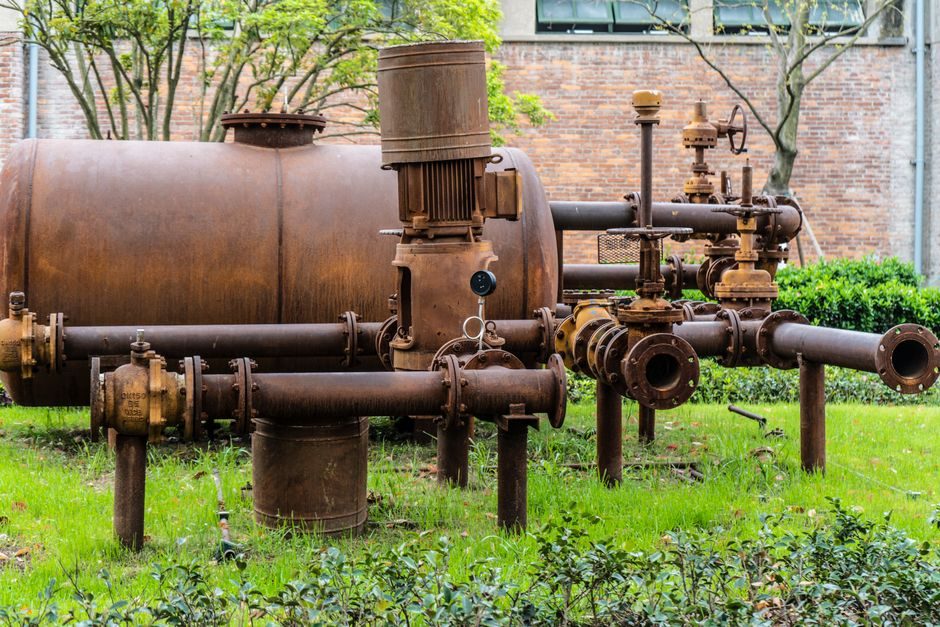
A swing check valve is specified by five hard gates: nominal diameter (DN 1/4"–60"), pressure class (PN 16 / Class 150–2500), body material, line orientation, and the type of reverse-flow hazard being mitigated (water hammer, exhaust backflow, or process media contamination) [S1][S2][S6].
For process lines in chemical, pharmaceutical, and petrochemical service, stainless steel (AISI 304 / 316) female-female threaded bodies from 0.25" to 2" DN, rated 16 bar (232.1 psi) and -25 °C to +180 °C, dominate the low-pressure end [S1]. For larger and higher-pressure duty, BS 1868 swing check valves are published in NPS 2"–60" and ASME Classes 150–2500, with carbon steel, stainless steel, and duplex steel as the three common body materials [S6].
Pressure Class and Body Material Logic
BS 1868 swing check valves cover ASME Class 150 through Class 2500, with body options in carbon steel, stainless steel, and duplex steel for NPS 2"–60" pipelines [S6]. For class 600 and above, a ring-joint bonnet gasket is commonly used to ensure positive sealing under thermal cycling [S5].
The SFERACO 320 series is a stainless-steel swing check valve in AISI 316 (Ref. 326) or AISI 304 (Ref. 327), female/female BSP cylindrical threaded from DN 1/4" to DN 4", with a published 16 bar maximum pressure rating and a 180 °C upper temperature limit [S1]. Minimum backpressure for bubble-tight sealing is 0.5 bar up to DN 1-1/2" and 1 bar from DN 2" to DN 4" on the same series [S1].
Carbon steel and alloy bodies take over when the line exceeds the stainless steel pressure-temperature envelope, particularly in refinery and boiler feed service where ASME class ratings above 600 are routine [S5][S6].
Sizing Range, End Connections and Installation Geometry
Swing check valves are published in DN ranges that span six orders of magnitude: 0.25"–2" (DN 6–DN 50) for the SFERACO 320 threaded series, 1"–28" (DN 25–DN 700) for the Mercury Products FJ20 weld-ended raincap series, and NPS 2"–60" (DN 50–DN 1500) for BS 1868 process swing checks [S1][S2][S6].
End-connection choice follows the duty: female BSP threaded for low-pressure chemical and hydraulic service, wafer or lugged bodies for compact water and HVAC skids, weld ends for exhaust and high-integrity process piping, and flanged ends matching ASME Class 150/300/600/900/1500/2500 face-to-face dimensions for refinery and power [S1][S2][S6].
Swing checks can typically be installed in horizontal lines and in vertical lines with upward flow, because the disc relies on gravity plus reverse-flow pressure to seat [S5]. For vertical-downward or pulsating service, the standard gravity-return geometry is not sufficient and a lever-and-weight, air-cylinder, or air-cushion assisted swing check is specified instead [S4].
Disc, Seat and Sealing: Where the Shutoff Actually Happens
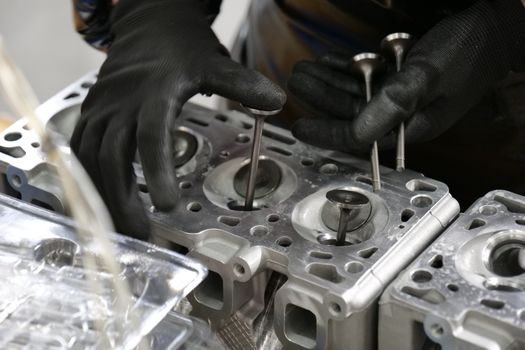
The sealing envelope is set by the disc-and-seat pair, the body material, and the minimum backpressure required to keep the disc seated [S1][S3]. On the 320 series, 0.5 bar backpressure is enough to seal DN 1/4"–1-1/2", but the requirement rises to 1 bar at DN 2"–4" because of the larger disc area [S1].
Spring-assisted designs use a helical spring to push the disc onto the seat before reverse flow fully develops, which limits water-hammer and pressure-surge damage in pump-discharge lines [S3]. CPV Manufacturing notes that its silent check valves, invented in the 1940s, were the first to combine a streamlined body with a spring-loaded disc to control pressure surges and prevent water hammer in water, oil, and gas service [S3].
For metal-seated swing checks, a ring-joint bonnet gasket at Class 600 and above is the standard sealing arrangement against the body-bonnet joint, and a precision-balanced vane with a welded lid and lubricated metal bushing is the typical heavy-duty exhaust variant [S2][S5].
Selection Criteria: Swing vs Lift, Ball, Dual-Plate and Butterfly
Among non-return valves, the swing check uses a hinged disc that pivots on a hinge pin, the lift check uses a guided disc that travels vertically inside the body, the ball check uses a sphere on a seat, the dual-plate (wafer) check uses two spring-loaded half-discs, and the butterfly swing check uses a single disc on a shaft with a return spring [S3][S7].
Swing checks fit horizontal installations with lower pressure drop; lift checks require vertical installation but give tighter shutoff and faster response; ball checks handle viscous fluids; and spring-assisted dual-plate or silent designs target water-hammer-sensitive pump-discharge lines [S3].
A short comparison of the five check styles against four selection criteria:
Horizontal install: Swing check (best), Lift check (no, vertical only), Ball check (yes), Dual-plate silent (yes), Butterfly swing (yes). Tightest shutoff: Lift check (best), Ball check (close), Swing check (depends on backpressure), Dual-plate (good), Butterfly swing (good). Water-hammer control: Dual-plate silent (best), Spring-loaded swing (good), Plain swing (poor), Lift check (poor), Ball check (poor). Viscous or dirty media: Ball check (best), Swing check (acceptable), Lift check (poor), Dual-plate (poor), Butterfly swing (acceptable) [S3][S7].
Auxiliaries: Lever-and-Weight, Air Cylinder, Air Cushion
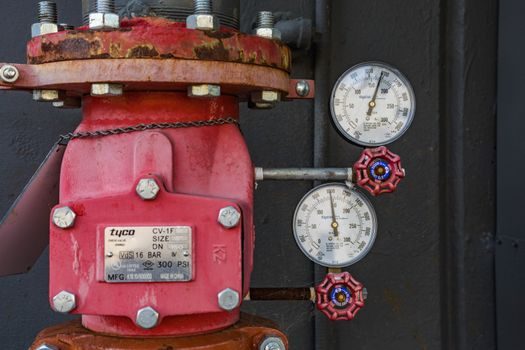
A plain swing check closes by gravity and reverse flow, which is too slow for vertical-downward, pulsating, or high-energy pump-discharge lines; auxiliaries are added to control closing speed and disc position [S4].
The three common swing-check auxiliaries are: lever-and-weight (adjustable gravity closing), air cylinder (pneumatically controlled opening/closing for fast cycle service), and air cushion (dashpot-style retardation that slows the final 10–20% of disc travel to suppress slam) [S4].
The CPV silent-check principle — a spring-loaded disc that closes before reverse flow fully develops — is the underlying mechanism behind both the air-cushion and many lever-and-weight assisted swing checks used in water, oil, and gas service [S3][S4].
Application Boundaries and Failure Modes
Swing checks fail in three characteristic ways: water-hammer-induced disc shatter on pump discharge, seat erosion from entrained particulates, and hinge-pin wear in dirty or abrasive service [S3]. The standard remedy for the first is a spring-assisted or air-cushion swing check; for the second, a hard-facing seat or a ball check; for the third, an external hinge or a lift-check geometry [S3][S4].
The SFERACO 320 series is a low-pressure stainless steel unit intended for chemical, pharmaceutical, petrochemical, and hydraulic service up to 16 bar, with a 180 °C ceiling and a -25 °C floor — outside this envelope, the body rating, not the seat, is the limit [S1]. The Mercury FJ20 swing raincap is a heavy-duty exhaust unit sized 1"–28" with hot-rolled, cold-rolled, stainless, or aluminized stainless construction; it is intended for stationary engine exhaust, construction, agricultural, and military vehicle vertical exhaust systems, not for process backflow [S2].
Swing checks are also not the right pick for slurry, paper stock, or fibrous fluids: the disc and hinge collect debris. In those duties, pinch valves or elastomer-lined ball checks are the typical replacement, as discussed in our pinch valve selection criteria reference. For pump-side and skid builds, the balancing valve selection logic is a useful comparison point because both duty classes are sized off DN and PN, and both demand clear body-material logic. For the broader ball valve selection criteria for corrosive chemical service, a swing check is often the upstream companion to a ball valve, sharing the same body-material envelope (AISI 316 / duplex).
Shortlist Logic and Sourcing Signals
The minimum shortlist for a swing check valve is: (1) DN and end-connection; (2) pressure class (PN 16, ASME 150, 300, 600, 900, 1500, 2500); (3) body material matched to media and temperature (AISI 304, 316, duplex, carbon steel, alloy); (4) seat / backpressure requirement (e.g. 0.5 bar to 1 bar minimum on 320 series); (5) installation orientation and whether an auxiliary (lever-and-weight, air-cushion, air-cylinder) is required to control closing [S1][S2][S4][S6].
Trackable next signals: published OEM datasheets that re-state minimum backpressure at each DN step (e.g. 0.5 bar ≤ DN 1-1/2", 1 bar for DN 2"–4" on the 320 series), explicit body-material and seat-durometer pairings on chemical-series catalogues, and any published BS 1868 / API 6D updates to the Class 150–2500 envelope for NPS 2"–60" units. For comparison across the broader check valve family, the four main variants — swing, lift, ball, dual-plate/silent — line up against horizontal-install, tight-shutoff, water-hammer-control, and viscous-media criteria as shown above. In high-cycle pneumatic-panel builds, an air solenoid valve vs push-in fitting EMC trade-off is sometimes run on the same skid, and the swing check sizing logic (DN, PN, body) carries over to that pneumatic circuit.
The underlying component specifications are covered under balancing valve.