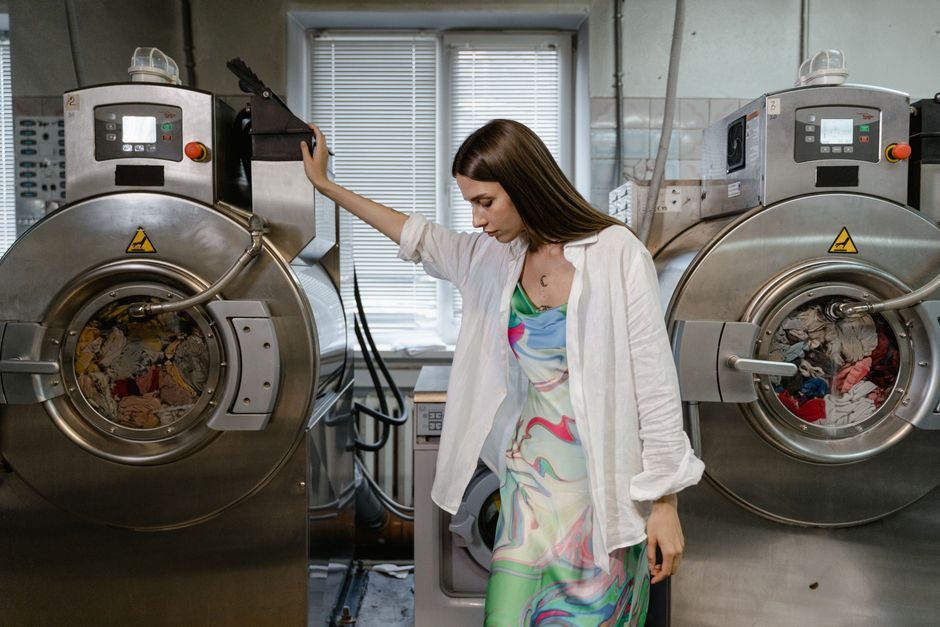
An industrial tank cleaning machine is selected first by the cleaning task's drive pressure (3-200 bar), flow class (10-300 L/min), and the tank's geometry; matching the nozzle technology (rotary jet, spray ball, or static spray) to residue type and zone rating is the single biggest determinant of effective cycle time and utility consumption [S1].
Three families cover the bulk of process-plant applications: portable high-pressure rotary jet units for road-tankers and IBC tank fleets, fixed-install spray-ball / CIP (clean-in-place) heads for reactors and mixing vessels, and robotic crawler units for large bulk storage tank container bottoms where manual entry is restricted. Selection is dominated by four variables — drive pressure, flow, nozzle tip pattern, and explosive-atmosphere certification — not by brand.
Drive Pressure and Flow Class: The First Filter
Low-pressure chemical-service cleaning (caustic, acid, detergent rinse) typically runs 3-8 bar at 30-150 L/min, which is the operating envelope of fixed spray-ball and CIP spray-head installations on stainless reactors and mixing vessels [S1].
Mid-pressure 30-80 bar / 20-60 L/min is the workhorse band for solvent and paint residue in road-tanker fleets and rail tank container interiors; rotary jet heads in this class deliver a 360° pattern with 2-4 m effective throw. High-pressure units above 100 bar, often 150-200 bar, are reserved for hardened residues (bitumen, polymer, scale, cementitious build-up) where impact force — not chemistry — does the work.
A common specification mistake is to size on pressure alone. Impact force scales with pressure × flow at the nozzle; a 100 bar / 15 L/min unit can clean a soft-residue dairy tank, but a 100 bar / 10 L/min head will stall on polymerised residue. The published "cleaning radius" figure (typically 1.5-6 m for rotary jets) is only valid inside the pressure-flow envelope the OEM tested.
Nozzle Technology: Rotary Jet vs Spray Ball vs Static Spray
Rotary jet heads use two or four counter-rotating nozzles driven by gear or turbine; typical tip count is 2 or 4, with orifice diameters 0.8-4.0 mm and cycle times 6-30 minutes for a 50 m³ vessel. The compact, self-driven geometry makes them the default for hazardous-area Zone 1 / Class I Div 1 cleaning of road tankers. [S1]
Static spray balls are fixed-pipette devices with a spherical perforated shell producing low-impact droplet coverage; they are the standard fitment on food, beverage, and pharmaceutical CIP loops, operating at 2-5 bar and 5-30 L/min. They are NOT a substitute for rotary jets on tough residue — the impact energy is roughly two orders of magnitude lower.
Fixed static spray nozzles (disc, cone, flat-fan) are used for rinsing, sanitising, and gas-quenching duties in atmospheric tanks; they cost less than spray balls and are easier to validate for hygienic service, but the throw pattern is shorter and they do not sweep the tank wall.
Tank Geometry: Diameter, Obstructions, and Throw Radius
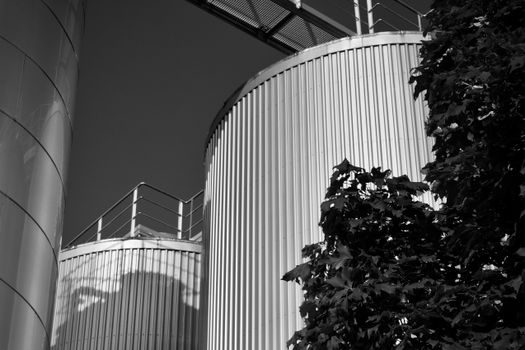
Cleaning head selection must satisfy the OEM-stated "effective throw radius" (typically 1.5-6 m for rotary jets, 0.5-2 m for spray balls) — undersizing leaves a dead zone of untouched residue, oversizing wastes energy and increases aerosol carry-over into the vent system [S1].
For vertical cylindrical vessels with internal coils, agitator shafts, or baffles, the spray pattern must be a full 360° solid-cone or rotating pattern; otherwise the baffle casts a shadow that has to be addressed by repositioning the head. For horizontal cylindrical road-tanker barrels, end-mounted rotary jet heads with 4 nozzles at 90° are the dominant pattern because the throw covers both end-caps and the long axis in one cycle.
Vessels with cone or dished bottoms, internal heating/cooling coils, and bottom-drain sumps typically require either (a) a downward-angled second nozzle on a rotary head, or (b) a dedicated bottom-spray device; a single upward-facing head leaves the sump untouched.
Material Compatibility and Hygienic Finish
Stainless 316L is the default wetted material for food, beverage, pharma, and most chemical cleaning heads, with surface finishes of Ra ≤ 0.8 µm on the product-contact path for hygienic service; PTFE, EPDM, and Viton are the common seal choices matched to CIP chemical concentration and CIP-loop temperature (typically 80-95 °C for caustic-acid wash, up to 140 °C for sterile loops). [S2]
For aggressive chemistry (concentrated acids, solvents, bleach, hot caustic above 5% NaOH), 316L can be upgraded to Hastelloy C-276 or PTFE-bodied heads; carbon steel is only acceptable for hydrocarbon / lube-oil cleaning where residue does not corrode ferrous parts. Shaft seals must be matched to chemical compatibility AND to the maximum CIP temperature — a Viton seal at 95 °C is fine, but EPDM at 140 °C will fail inside weeks.
For road-tanker cleaning of edible oils, wine, and dairy, the wetted path must be food-grade per FDA 21 CFR / EU 1935/2004 contact-surface rules; for chemical-service tankers, ATEX/IECEx certification of the head is the gating requirement.
Explosive-Atmosphere and Drive Certification
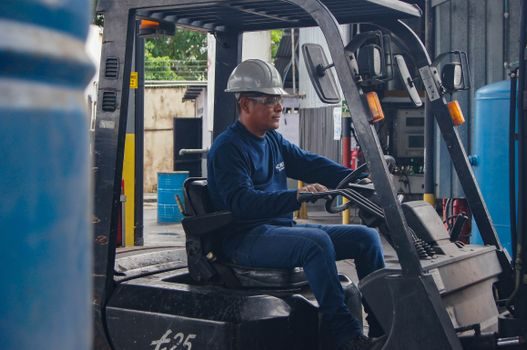
ATEX category 2G/2D (Zone 1 / Zone 21) and IECEx equivalent certification is mandatory for any tank cleaning head used inside a flammable-vapour service — petrol, solvent, alcohol, and most hydrocarbon road tankers fall in this class. A non-ATEX rotary jet head is a rejected specification; pneumatic or hydraulic drive is preferred over electric drive in Zone 1 because it removes the ignition source entirely [S1].
Pneumatic drive is the default for portable high-pressure cleaning of flammable-product tankers; hydraulic drive is used on permanent fixed-installation cleaning skids where a hydraulic power unit is already available. Electric-drive units are restricted to Zone 2 or non-classified service; when electric drive is used in Zone 1, the motor must be Ex d (flameproof) or Ex e (increased safety) with the cable entry certified to IEC 60079 series.
For pharmaceutical and food service in non-hazardous atmospheres, pneumatic and electric drives are interchangeable; the choice follows the site's existing CIP skid architecture. In hygienic service the head is often a 3-A / EHEDG-certified spray ball rather than a rotary jet.
Selection Criteria: A Side-by-Side Match
Three decision axes drive 90% of head selection: pressure-flow class, residue hardness, and zone/hygiene rating. A side-by-side matrix lines them up against the four main head types. [S3]
• Static spray nozzle — 2-5 bar, 5-30 L/min, soft residue (rinse, sanitise, gas quench), Zone 2 / non-Ex, hygienic service OK. Cheap and easy to validate, but no wall-sweep.
• Spray ball — 2-5 bar, 5-30 L/min, soft residue (CIP, dairy, beverage, pharma), Zone 2 / non-Ex, hygienic 3-A / EHEDG options. Full 360° coverage; impact energy is low so it cannot shift dried or hardened soil.
• Rotary jet (turbine / gear) — 30-200 bar, 15-60 L/min, hard residue (polymer, scale, bitumen, paint), Zone 1 / Class I Div 1 with ATEX, hygienic variants for food/brewing. This is the workhorse for road-tanker and chemical-vessel cleaning.
• Robotic crawler / high-volume rotary — 100-800 bar, 50-300 L/min, very hard residue (concrete, coke, mineral scale), typically pneumatic-drive, Zone 1 capable. Used for storage tank floors and large-vessel bottoms where manual entry is restricted or where a fixed head cannot reach the residue.
The decision flow is straightforward: classify the residue (soft / hard / very hard) → confirm zone rating → match pressure-flow class → verify throw radius covers the largest cross-section of the vessel → check hygienic certification only if food/pharma.
Where Tank Cleaning Machines Fit (and Where They Don't)

Tank cleaning machines are specified for: road-tanker and rail-tanker fleets, IBC tote cleaning and refilling stations, fixed-process reactors and mixing vessels, bulk storage tank floors and walls, brewing/dairy CIP loops, and pharmaceutical / biotech bioreactor CIP. Across these duties, the 3-200 bar envelope covers roughly 95% of industrial cleaning tasks. [S1]
Tank cleaning machines are NOT a substitute for: ultrasonic cleaning of precision parts, immersion-tank cleaning of small components (which uses heated solvent baths), and manual entry of confined spaces where the residue cannot be safely wetted down before entry. For very large storage tank floors (above 30 m diameter), high-volume robotic crawler units are usually rented as a campaign service rather than purchased outright; for road-tanker fleets, the mobile rotary-jet unit is almost always the right answer [S1].
One often-missed point: a poorly selected head increases utility consumption. Oversized pressure on a soft-residue tank wastes water, energy, and chemical; undersized flow on a hard-residue tank forces re-cleaning cycles that cost more than the head would have. Specifying a self-cleaning filter on the cleaning supply loop is a common upgrade when the residue load is high enough to clog nozzles between cycles.
Standards, Sourcing, and Common Pitfalls
Key governing documents are ATEX 2014/34/EU for EU hazardous-area equipment, the IEC 60079 series for explosive atmospheres, 3-A Sanitary Standard 78-03 (spray cleaning devices) for hygienic service, and EHEDG Doc. 2 / Doc. 8 for hygienic CIP validation. Material traceability per EN 10204 3.1 is the standard mill-cert request for wetted stainless parts [S1].
The most common specification pitfall is matching the OEM "effective throw radius" curve to a tank larger than the head was tested on; the second most common is selecting a spray ball where a rotary jet is required because the residue is hard; the third is accepting a non-ATEX head for a solvent / hydrocarbon tanker because it is cheaper. Each of these is found and rejected in the FAT or in the first production shift, not in the office.
The right next step for a new specification is a wash-test of two candidate heads on a single representative vessel before committing fleet-wide — most OEM vendors will lend a head for this.
For related coverage, see Sand Mixer Price 2026: Foundry Spec, Capacity and Cost Levers.