
Three distinct vendor cohorts define the 2026 AI accelerator market: Chinese edge-AI hardware integrators, US AI-native SaaS platforms, and specialised spatial-intelligence data-fusion companies [S1][S2].
The 2026-04 AI Product Index lists global web-product traffic and app MAU separately, and a separate cohort — Colorado-based AI companies tracked on Built In — combines 6,500-employee monitoring platforms with sub-100-person spatial intelligence firms [S3][S2].
Edge-AI Hardware Cohort: Chinese Integrators and the Rockchip 1808 Form Factor
Made-in-China.com lists 10+ verified suppliers shipping USB3.0 AI computing sticks built around Rockchip 1808 silicon, with explicit runtime support for TensorFlow, Caffe, ONNX, and Darknet model formats [S1]. The form factor targets edge inference at sub-25 W, and the listing is tagged "audited supplier" with no published unit volumes or pricing tiers [S1]. Selection criteria for this cohort are silicon vendor (Rockchip, Huawei Ascend, Alibaba T-Head), framework support, and USB/PCIe/M.2 host interface — not the integrator brand [S1].
For industrial buyers, the practical decision is whether the model zoo (ONNX, Darknet) covers the deployed computer-vision pipeline; TensorFlow alone is insufficient for plants running YOLO-family detectors [S1]. A related industrial angle is captured in the Abrasives Smart Manufacturing Stack: 2026 Automation Map, where edge inference at the cell level drives PLC feedback loops.
AI-Native SaaS Cohort: Datadog, Skillsoft, Cat Digital, PwC
Datadog (NASDAQ: DDOG) is described on Built In Colorado as delivering a "monitoring and security platform for developers, IT ops teams and business users in the cloud age" across 16 offices and 6,500 employees with 65 listed benefits [S2]. Skillsoft (NYSE: SKIL) positions itself as an "AI-native skills management" vendor, unifying learning with real-time skills intelligence for "the human + AI era" [S2]. Cat Digital reports "over 1.5M connected assets worldwide" feeding its AI analytics layer for Caterpillar equipment [S2].
PwC, while not a silicon vendor, fields a 370,000-person global technology practice across 149 countries and embeds AI tooling inside its Audit, Advisory and Tax service lines [S2]. The cohort's selection criteria are enterprise integration footprint, public-market disclosure quality, and time-to-value for AI-augmented workflows — not TOPS or accelerator silicon specs.
Spatial-Intelligence Cohort: Vantor and Sensor-Fusion Platforms
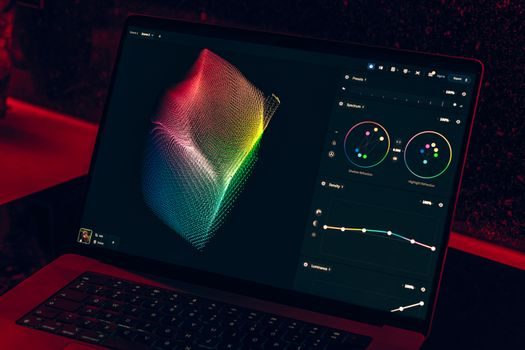
Vantor describes its product as an "AI-powered spatial intelligence platform" that "fuses data from the world's highest-resolution satellites with real-time sensor feeds from space, air, and ground" [S2]. The platform targets decision-makers in defence, logistics, and autonomous-systems markets where ground-sensor fusion matters more than raw model accuracy [S2].
Selection here is sensor-source diversity (EO, SAR, RF geolocation), licensing model (per-seat vs. per-square-kilometre), and export-control posture under ITAR/EAR. Procurement teams pairing this with factory-floor data should review the Industrial Coatings Smart Manufacturing: Automation Stack, Sensors, and 2026 Build-Out, which documents the sensor-class choices that feed the same fusion logic on the plant side.
Legal-Vertical AI Cohort: Legora and Bessemer-Backed Workflows
Legora is described on Built In Colorado as building "the world's first truly collaborative AI for legal professionals" serving "1000+ clients across the globe" with backing from Bessemer Venture Partners, ICONIQ, General Catalyst, Benchmark, Redpoint, and Y Combinator [S2]. The product is a workspace integrating lawyer-authored drafting with model output rather than a standalone model API [S2].
Selection criteria for this cohort are jurisdiction coverage (US/UK/EU common-law first), audit-trail fidelity, and the depth of the citation-grounding layer that prevents hallucinated case law. This is a domain-specific AI accelerator in the workflow sense — not silicon, and not relevant to industrial spec lists but a real 2026 line item for enterprise IT procurement.
Hyperscaler and Silicon Adjacencies: 2026 Shipment Context
The 2026 AI server shipment forecast is tracking 3.7 million units per published industry projections, with hyperscaler share and diversification detailed in the AI Server Industry 2026: Shipment Trajectory, Hyperscaler Share, and Diversification analysis, and the unit volume cross-referenced against the AI Server Shipments Hit 3.7M Units in 2026 Forecast tracker [S2]. These platforms are the downstream customers for accelerator silicon — the Made-in-China.com edge-stick vendors and the Built In Colorado SaaS vendors sit on opposite sides of that value chain.
Process engineers should treat the edge-stick and hyperscaler-server tiers as a stacked architecture: edge inference for sub-100 ms cell-level control, regional cluster for batch retraining, and hyperscaler cloud for foundation-model fine-tuning. Hype around "top AI accelerator company" collapses once the workload — model class, latency budget, and data-residency constraint — is fixed.
Selection Criteria Comparison: Three Cohorts Side by Side
The three cohorts line up against four decision criteria. (1) Workload: edge-stick vendors handle on-device computer vision; SaaS platforms handle observability, learning, and skills; spatial-intelligence vendors handle multi-sensor fusion [S1][S2]. (2) Form factor: USB3.0 stick / M.2 module / cloud SaaS / satellite-ground sensor mesh [S1][S2]. (3) Procurement model: unit-price hardware vs. seat-licence SaaS vs. data-volume licence [S1][S2]. (4) Buyer profile: OT/automation engineer vs. CIO/CHRO vs. defence/logistics programme office [S1][S2].
Industrial buyers specifying a pressure transmitter feedback loop with on-device ML inference should default to the edge-stick cohort with ONNX support; those building a flow meter anomaly-detection layer over plant historians should evaluate the SaaS observability cohort for data-pipeline integration; and the spatial-intelligence cohort is only relevant when satellite or aerial feeds are part of the asset-monitoring scope. NAND pricing pressure documented in the NAND Flash 2026: AI Demand Pushes Q1 Revenue to $46B Record tracker feeds the memory subsystem that all three cohorts rely on, even though none of the cohort vendors fabricate it themselves.
Limitations, Failure Modes, and Sourcing Standards

Edge-stick vendors fail on thermal throttling in sealed enclosures above 50 °C ambient and on TensorFlow-only firmware when ONNX models are deployed; silicon-level thermal-design power figures are not published on Made-in-China.com supplier pages [S1]. SaaS cohort risk is vendor lock-in around proprietary telemetry schemas — Datadog's pricing scales with host count and custom-metric cardinality [S2]. Spatial-intelligence cohort risk is export-control classification under EAR 99 / ITAR 120-series, which determines whether a German or Japanese plant can lawfully ingest the satellite layer [S2].
Buyers should require: (a) a published bill-of-materials with silicon part number for any edge-AI stick; (b) SOC 2 Type II plus ISO 27001 evidence for any SaaS cohort; (c) EAR classification letter for any spatial-intelligence platform ingesting non-US satellite data. The Chip Packaging Upstream and Downstream Map: 2026 Capacity, Equipment, and Sourcing reference is the upstream constraint that gates silicon availability for the edge-stick tier in particular.
The 2026 vendor map is stable as of 2026-07-21. Trackable signals to watch over the next quarter: Rockchip 1808 successor silicon releases, Datadog and Skillsoft quarterly earnings disclosure on AI-attached revenue, and Vantor's published sensor-coverage expansion into SAR constellations.
For component-level specifications, see industrial valve.