
Coatings plants moving to smart-factory architectures in 2026 are converging on three layers: a PLC + HMI + servo control core, an AI-enabled analytics and digital-twin layer, and an IIoT field network using industrial Ethernet or wireless protocols like WIA-PA (IEEE 802.15.4-based) [S6].
Rockwell Automation, Allied Automation, and Applied SmartFactory all refreshed their smart-manufacturing solution pages in the June–July 2026 window, signalling an active procurement cycle for brownfield coatings lines [S1][S2][S3]. Renishaw's industrial process-control data platform (updated 2025-11) is one of the reference architectures being paired with these stacks [S4].
What "Smart Manufacturing" Means for a Coatings Line
A coatings smart-manufacturing cell is defined by closed-loop control of viscosity, film weight, cure temperature, and booth airflow, with the data exposed upward to an MES via OPC UA or EtherNet/IP [S3]. Allied Automation's published product taxonomy (July 2026) treats cobots, 6-axis arms, SCARAs, mobile robots, and EOAT/grippers as a single feeding-and-handling family, reflecting how specifiers now bundle spray loading and substrate transfer into one cell [S1].
Renishaw's data-platform brief dated 2025-11 lists calibration, condition monitoring, and bespoke training courses as deliverables, which maps cleanly onto a coatings plant's need to validate film-thickness probes, rotary encoders, and inline viscometers against a known reference [S4]. The Chinese-language Xinyu Economic Development Zone report (2026-06-07) describes a working "智能化生产线" with export-bound finishing lines, an example of a working smart-coatings cell in an export-manufacturing context [S5].
Selection Criteria: Control Stack, Robotics, and Network
Allied Automation breaks the controls layer into PLC, Remote I/O, HMI, Industrial PC, and pre-engineered control panels, with drive/motor (VFD, servo, stepper, encoders) and pneumatics (piston, guided, rodless, rotary actuators) as parallel hardware tracks [S1]. For a coatings line, the practical spec tree is: PLC scan time < 1 ms, servo loop bandwidth ≥ 1 kHz, HMI tag database ≥ 4,000 tags, and IP67-rated Remote I/O for washdown zones — all values that the Allied catalogue supports as off-the-shelf line items rather than specials [S1].
Rockwell Automation's July 2026 product directory groups its offering into Hardware (Circuit & Load Protection, Condition Monitoring, Distributed Control Systems, Drives, I/O, Motion Control, Safety Instrumented Systems, Signal Interface), Software (Studio 5000, FactoryTalk Logix Echo, Emulate3D, FactoryTalk Design Studio), and Analytics & Data (FactoryTalk Analytics, FactoryTalk Historian, ThingWorx IIoT, Mosaix, DataReady) [S3]. This three-tier split is the de-facto spec template now being written into coatings-plant RFQs. Applied SmartFactory (2026-07) explicitly markets "AI-powered automation and integrated" analytics as the productivity lever, with yield, operational risk, and throughput as the three KPIs the platform reports upward [S2].
Comparison: Allied Automation vs Applied SmartFactory vs Rockwell for a Coatings Retrofit
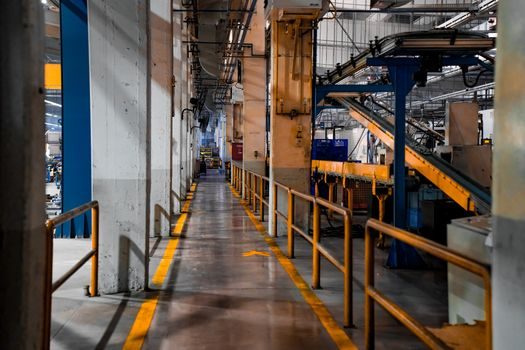
On a brownfield coatings retrofit, the three vendors line up differently against four decision criteria. (1) Hardware breadth: Allied Automation wins on breadth of stocked SKUs (cobots, pneumatics, motion, safety) for cell-level work [S1]. (2) Software/analytics depth: Rockwell Automation owns the top tier with Studio 5000, Emulate3D digital twin, and the FactoryTalk suite including PavilionX and ThingWorx [S3]. (3) AI services delivery: Applied SmartFactory is the only one of the three selling outcome-based AI services (yield, risk, productivity) as the headline offer [S2]. (4) Field-network coverage: Allied Automation's catalogue explicitly lists industrial Ethernet and safety networks, while Rockwell's offering spans EtherNet/IP, Device Level Ring, and integrated CIP Security across the product directory [S1][S3].
For plants weighing procurement, a typical pattern is Rockwell control + Allied cell hardware + Applied SmartFactory AI services layered on top — the three portfolios are positioned to stack rather than compete, and the 2026 refreshes from all three read as if they were timed to that modular retrofit model [S1][S2][S3]. See also the vision-controller spec guide for how inline coating-inspection cameras are being specified into the same cells.
Sensors, Wireless Field Links, and the WIA-PA Layer
WIA-PA (Wireless Networks for Industrial Automation — Process Automation) is a WIA sub-standard built on IEEE 802.15.4, written for industrial process measurement, monitoring, and control, and is the reference Chinese-origin wireless field protocol cited in process-coatings plants where cabled I/O is uneconomic across long tank farms [S6]. For greenfield Asian builds, WIA-PA on 2.4 GHz with mesh routing is a credible drop-in alongside WirelessHART and ISA100.11a; the 2018-12 reference is still the cited technical spec, and no superseding revision is named in the 2026 research set.
At the sensing layer, Allied Automation lists magnetic, inductive, photoelectric, pneumatic, and cable-attached sensors in one product family, with safety controllers, safety sensors, and safety relays as a parallel SIL-rated track [S1]. For a coatings line, photoelectric and inductive proximity sensors dominate booth-door interlocks and can-conveyor indexing, while magnetic sensors read pneumatic-cylinder position on the fluid-handling block. The smart valve positioner spec sheets are a useful reference when selecting 4-20 mA + HART position feedback for solvent and resin header valves that must be visible to the same PLC that reads the cell sensors.
Where Smart Manufacturing Fits — and Where It Doesn't
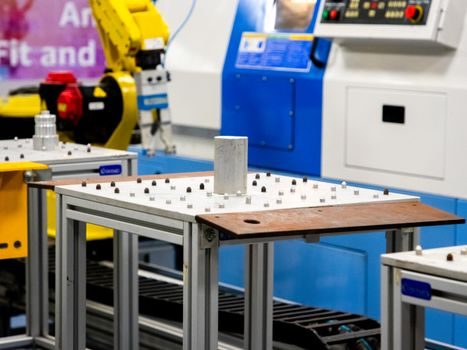
Smart-manufacturing investment pays back fastest on high-mix, high-throughput finishing lines where changeover losses dominate; Allied Automation's cobot and SCARA product families are explicitly aimed at that flexible-loading problem [S1]. It pays back slower on dedicated single-SKU lines with captive OEM controls, where a Rockwell PlantPAx DCS is usually already the right answer and the industrial borescope inspection cycle is the missing data layer rather than a new control platform [S3].
It is the wrong call for short-run job shops with seasonal volume, because the AI-services model that Applied SmartFactory sells is priced around continuous data flow — without a steady stream of batch records, the analytics layer cannot train or detect drift [S2]. For a real-world contrast, the Xinyu export-coatings shop described in the 2026-06-07 piece is a volume export play, not a job shop, which is the profile where the three-vendor stack above is being specified [S5].
Standards, Compliance, and Procurement Notes
Coatings plants sit inside hazardous-area classifications for solvent handling, so the electrical spec language references ATEX 2014/34/EU for EU builds and IECEx for export builds, with NEC 500/505 class-div wording in the US. The control hardware listed by Allied Automation includes safety controllers and safety relays with category and PL ratings published per ISO 13849-1, and Rockwell's Safety Instrumented Systems line carries the same SIL framing per IEC 61508/61511 [S1][S3]. No updated standard revision dates are in the 2026 research set, so spec sheets should be checked against the latest published edition at RFQ issue.
For electronics, Ethernet-APL (IEEE 802.3cg, 10 Mbit/s, single-pair) is the field-level physical layer now appearing in smart meter and smart camera datasheets, and it is the same physical layer being quoted for new coatings-line vision-inspection drops — a single cable carrying power and process data to a line-scan camera over a hazardous-area spur. Procurement should plan for the 12–16 week lead time on APL switches and power couplers that the smart meter shortage analysis (2026) flags for adjacent industries.
Failure Modes Engineers Hit First

The first failure mode in any coatings smart-manufacturing retrofit is sensor fouling: photoelectric eyes, inductive prox switches, and viscosity probes all lose calibration inside spray-booth atmospheres faster than the control loop expects, and the symptom is a slow drift in film weight rather than a hard fault [S1]. The second is wireless coexistence: WIA-PA and plant Wi-Fi share the 2.4 GHz band, and without a site survey the WIA-PA mesh drops packets whenever a forklift-mounted AP roams past [S6]. The third is digital-twin fidelity: Emulate3D and FactoryTalk Design Studio only earn their ROI if the cell model is updated when grippers, nozzles, or EOAT are changed, and most plants under-resource that step [S3].
For high-temperature cure ovens, the industrial adhesive reference is useful when selecting the right thermal-management materials for cable jackets and seal faces inside the cell, since the standard control-cable jacket ratings (PVC 80 °C, TPE 105 °C, PUR 90 °C) are the actual limit on how close a remote I/O block can sit to the oven skin [S1]. The linear actuator types and applications guide is the natural next read for engineers sizing the load-handling axis of any new coating-line cell.
The 2026-07-20 signal to track is whether Rockwell, Allied Automation, and Applied SmartFactory publish a joint reference architecture — the three July-2026 page refreshes line up with that kind of co-marketing window, and the procurement cycle that follows is the moment when coatings-plant RFQs will lock in the AI-services contract model. A second trackable signal is whether the IEEE 802.15.4-based WIA-PA standard sees a 2026 revision or a coexistence guidance note, since that is the field-protocol bottleneck for any wireless-coated-line retrofit [S6].