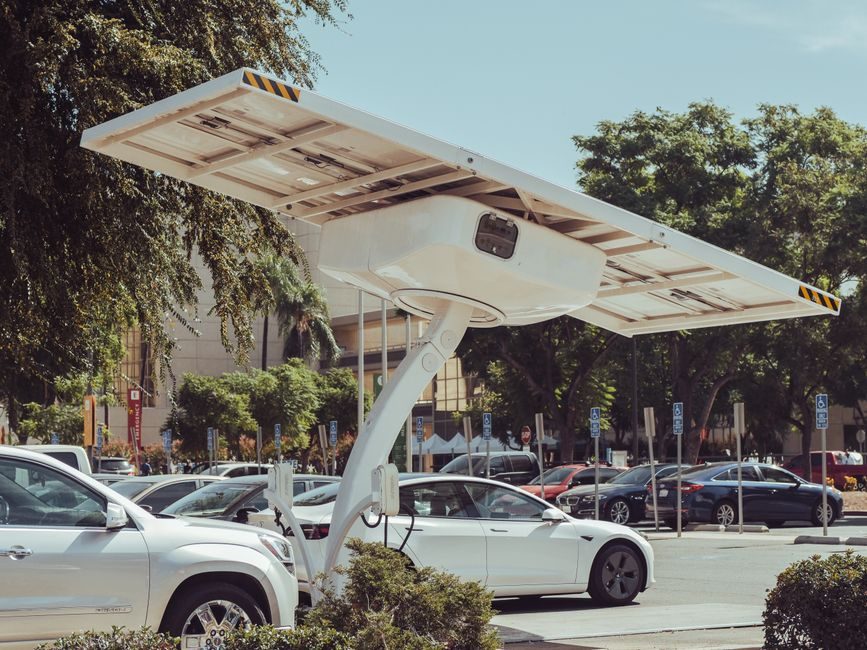
Top EV charger companies in 2026 are evaluated by kW output, connector standard, OCPP protocol support, and regional certification, with FUERD Group positioned as a 2026-listed solution provider for DC fast-charging stations from 30 kW to 360 kW [S1].
The buyer-relevant split for 2026 is AC Level 2 (7-22 kW, Type 1/Type 2) for destination and fleet depot charging, DC fast (30-360 kW, CCS1/CCS2/CHAdeMO/NACS) for corridor and retail sites, and HPC (350 kW+, liquid-cooled) for highway hubs and heavy-duty truck pilot corridors [S1].
EV Charger Hardware Tiers and kW Output Bands
DC fast-charging station hardware in 2026 covers 30 kW, 60 kW, 90 kW, 120 kW, 150 kW, 180 kW, 240 kW, and 360 kW power modules, with paralleled-module architectures allowing output scaling at the same cabinet footprint [S1]. FUERD's published 2026 lineup lists 30-360 kW DC fast-charging stations built for commercial and fleet deployments [S1].
AC Level 2 chargers cluster at 7 kW (single-phase 32 A) and 11 kW / 22 kW (three-phase 16 A / 32 A), with Type 2 (Mennekes, IEC 62196-2) dominant in the EU and Type 1 (SAE J1772) plus NACS (SAE J3400) in North America. The same FUERD source also offers portable and AC charging units as part of its 2026 product line [S1].
Connector Standards: CCS2 vs NACS vs CHAdeMO
The 2026 connector landscape is a three-way contest: CCS2 (Combo 2, IEC 62196-3) remains the EU default, NACS (SAE J3400, the Tesla-derived compact coupler) has been adopted by most North American OEMs for new EV platforms, and CHAdeMO (JEVS G105) holds the Japanese and a portion of the legacy DC fast installed base. Dual-head chargers that mount CCS2 + CHAdeMO or NACS + CCS1 are the most common 2026 retrofit configuration for highway sites with mixed traffic [S1].
For buyers specifying new hardware, the safer 2026 path is a multi-standard DC fast charger (CCS1 + CCS2 + NACS selectable via cable set) when shipping to mixed-region fleets, or a single-standard cabinet (NACS-only for US-only depots, CCS2-only for EU depots) when the duty cycle is known. CHAdeMO-only is now typically a special order, not a stock SKU, as global DC fast demand consolidated around CCS and NACS.
Communication Protocols: OCPP 1.6 vs 2.0.1 and Backend Integration

Open Charge Point Protocol (OCPP) is the de-facto charger-to-network-management-system (NMS) interface, with OCPP 1.6 (SOAP and JSON) the 2026 baseline for interoperability testing and OCPP 2.0.1 the target for ISO 15118 Plug & Charge (PnC) and smart-charging profiles. Hardware that ships with OCPP 2.0.1 firmware upgradeable from 1.6 is the practical 2026 procurement spec, because it lets a depot deploy on an existing 1.6 back office today and migrate to PnC later without a cabinet swap. [S1]
ISO 15118-20 (the V2G-capable, higher-bandwidth revision) is the next step for bidirectional charging pilots, but 2026 volume hardware still defaults to ISO 15118-2 (PnC over CCS). Smart-charging features (load balancing across a depot, peak-shaving against a servo motor-driven load-shedding scheme, or solar-following modes) ride on OCPP 2.0.1 smart-charging profiles, not on the lower-layer protocol.
Certification Matrix: UL, IEC, CE, Energy Star, and OCPP Compliance
North American 2026 deployments require UL 2594 (EV supply equipment) and UL 2231-1/-2 (personnel protection), with FCC Part 15 for EMC, while EU sites require IEC 61851-1 (general conductive charging) plus EN 62196 connector parts and the CE marking under the Low Voltage and EMC directives. Energy Star certification for Level 2 AC units is a procurement gate for many US utility rebate programs, and OCPP 1.6/2.0.1 conformance is verified through OCA (Open Charge Alliance) test certificates [S1].
Enclosure ratings on outdoor 2026 hardware are typically IP54 minimum (dust + splashing water) and IK10 (20 J impact) for vandal-exposed sites, with operating temperature windows of -30 °C to +55 °C for cabinets and -35 °C to +50 °C for cable-cooled variants. Power-factor and harmonics compliance usually references IEEE 519 at the site level rather than a charger-level standard, because utility interconnect drives that requirement.
Selection Criteria: Who Should Buy What in 2026
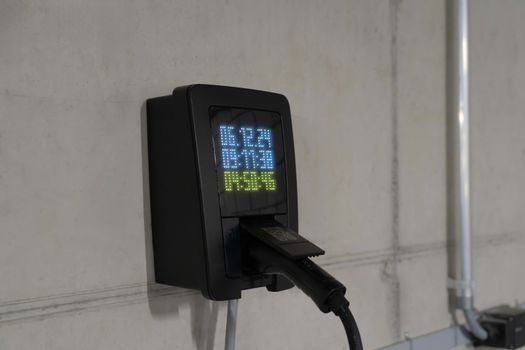
For fleet and depot buyers, 7-22 kW AC Level 2 with OCPP 2.0.1 + ISO 15118-2 PnC readiness and Energy Star is the default; the total cost per port is lowest and overnight dwell time absorbs the slower kW. For retail and corridor sites, 120-180 kW DC fast with dual CCS1+NACS cables and OCPP 2.0.1 is the 2026 sweet spot, balancing $/kW against driver dwell tolerance. For highway hubs and truck corridors, 350 kW+ liquid-cooled HPC with CCS1 or CCS2 (and CHAdeMO where Japanese OEMs still ship) is required, with dispenser-mounted coolant units and 4-5 m liquid-cooled cables. [S2]
Who should NOT specify a single 2026 SKU: anyone deploying across both US (NACS) and EU (CCS2) on the same cabinet without a dual-head configuration; anyone running an OCPP 1.6-only back office and expecting native ISO 15118-20 V2G without a firmware and back-office upgrade; anyone placing chargers in coastal/salt-air sites without verifying the enclosure spec against the specific salt-mist profile (a generic IP54 rating is not the same as a salt-mist-tested cabinet).
Comparison: 2026 EV Charger Options Across Four Decision Criteria
The main 2026 options line up as: AC Level 2 (7-22 kW) on cost-per-port and overnight dwell use cases, DC fast 30-180 kW on retail/corridor dwell (15-45 min) use cases, HPC 350 kW+ on highway-hub use cases, and portable/mobile units on temporary-event or roadside-assistance use cases. On $/kW installed, AC Level 2 is lowest and HPC is highest; on connector flexibility, dual-head DC fast leads; on back-office maturity, OCPP 1.6 has the largest installed base while OCPP 2.0.1 leads on smart-charging features; on certification breadth, the larger 2026 OEMs ship UL + IEC + CE + OCPP test-cert bundles while smaller Chinese-OEM SKUs frequently ship CE + OCPP only and require a US importer to add UL. [S3]
For the broader energy-storage context that determines how a depot absorbs 1 MW+ of EV charging load, the BESS Market 2026 breakdown of lithium-ion dominance vs flow-battery niches is the operating envelope most buyers will size their on-site storage against, and the Top Battery Energy Storage Companies 2026 map tells you which integrator will co-deliver a PV + BESS + EV depot package.
Limitations, Failure Modes, and Sourcing Watch-Outs
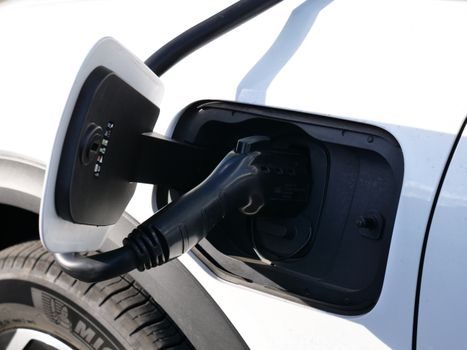
The 2026 failure modes that drive warranty claims on DC fast hardware are connector-pin wear at high-cycle sites (mitigated by pin-replacement kits and IP67 mated-condition couplers), coolant leaks on liquid-cooled HPC (mitigated by dispenser-side leak detection and dielectric coolant chemistry), and OCPP back-office incompatibility after a software update (mitigated by pinning the OCPP version in the procurement spec rather than leaving it "OCPP-compliant"). [S4]
Sourcing watch-outs: a CE mark alone is not equivalent to a UL-listed SKU for US installs, an "OCPP 2.0.1 ready" claim frequently means "1.6 today, 2.0.1 by firmware later" (verify, do not assume), and dual-head CCS1+NACS cabinets still need a single EMC compliance dossier for the whole cabinet, not a side-by-side of two single-standard approvals. For grid-side hardware tied to the same substation bill of materials, the Power Grid 2026 outlook USD 487B 2031 capex envelope is the upstream signal that will dictate how much utility-side reinforcement money is available behind the meter.
For buyers who want a mechanical-spec anchor to compare depot-side cable management against, the Jaw Coupling Buying Guide 2026 covers the same hardness-vs-tolerance tradeoff that a 350 kW liquid-cooled cable coupler presents in the field.
For component-level specifications, see pressure transmitter, and flow meter.