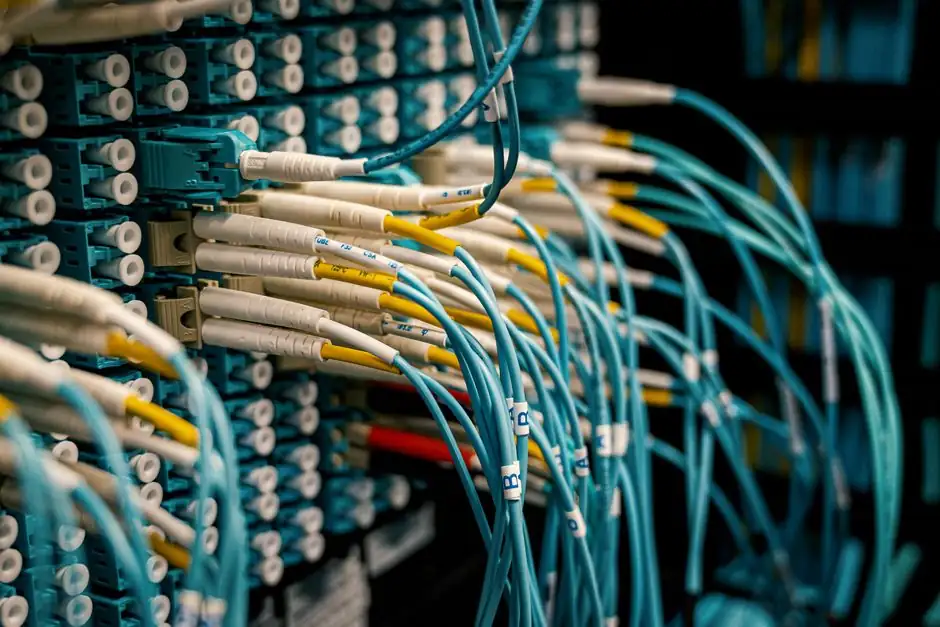
Industrial Ethernet revenue hit USD 13.9 billion in 2026 with PROFINET capturing 27.0% of the protocol segment and Siemens holding an estimated 14.0% global share [S2].
The vendor landscape splits cleanly into three tiers: automation-OT majors (Siemens, Rockwell, Schneider, ABB), networking-native specialists (Moxa, Belden/Hirschmann, Cisco, HMS Networks, Allied Telesis), and Asia-Pacific challengers (Huawei, Advantech, Omron), each competing on different parts of the protocol stack.
Market Sizing, Growth, and the 4.3% vs 7.92% Forecast Gap
Two reputable 2026 datasets disagree on the size and speed of this market. Future Market Insights pegs 2026 revenue at USD 13.9 billion and 2036 revenue at USD 21.13 billion, implying a 4.3% CAGR, with hardware at 46.8% of type-segment value, PROFINET at 27.0% of protocol value, and automotive and transportation at 25.0% of end-use value [S2]. Spherical Insights instead projects USD 10.5 billion in 2025 expanding to USD 22.5 billion by 2035 at a 7.92% CAGR, a roughly 1.8x higher growth rate off a smaller base [S3]. Procurement teams writing 2026 capital requests should treat the FMI 4.3% figure as the conservative case and the Spherical 7.92% figure as the upside case, then stress-test switch ASPs and 5-year service contracts against both.
China leads country-level growth at 10.9% and India at 10.1%, well above the global average, which is why domestic champions Huawei and Advantech appear on most vendor shortlists despite limited share in North American process plants [S2].
Tier 1: Automation-OT Majors With Native Protocol Stacks
Siemens AG, Rockwell Automation, Schneider Electric, and ABB Ltd. lead Spherical's 25-company ranking, joined by Omron Corporation and Yokogawa Electric Corporation from the process-control side [S3]. Their advantage is vertical control of the protocol stack: PROFINET for Siemens, EtherNet/IP for Rockwell, Modbus TCP and EtherNet/IP for Schneider, and a mix of EtherNet/IP, Modbus TCP, and PROFINET for ABB. For greenfield plant builds where a single vendor supplies the controller, the I/O, the industrial camera network, and the VFDs, this tier is the lowest-friction choice because firmware compatibility, cybersecurity certifications, and lifecycle support are unified.
Siemens' 14.0% market share figure reflects installed-base momentum rather than unit shipment dominance, since much of the SCALANCE switch line ships as part of larger automation packages that bundle PLCs, HMIs, and drives [S2].
Tier 2: Networking-Native Specialists
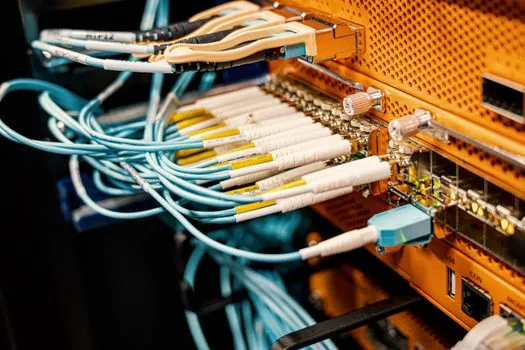
Moxa Inc., Belden Inc. (Hirschmann), Cisco Systems, HMS Networks, and Allied Telesis sit in the second tier, competing primarily on switch hardware, network management software, and protocol gateways rather than controllers [S3]. Moxa demonstrated the boundary of this tier at SPS 2025 in November 2025 with its EJS Series EtherCAT junctions and gateways: solid metal housings, dual redundant power inputs, and microsecond network timing aimed at high-speed modular robot cells [S3].
HMS Networks, Cisco, and Belden focus on the connectivity layer between OT and IT, supplying managed switches, media converters, and Anybus/IXM gateways that translate PROFINET, EtherNet/IP, EtherCAT, and Modbus TCP traffic. For brownfield retrofits where the controller vendor is locked but the network backbone is being replaced, this tier offers the broadest protocol interoperability and the most aggressive pricing per port.
Tier 3: Asia-Pacific and IT-Infrastructure Challengers
Huawei Technologies, Advantech, Dell Technologies, Intel Corporation, Bosch Rexroth AG, and General Electric round out the top 25 [S3]. Huawei's relevance is concentrated in East Asia and Belt-and-Road infrastructure projects; Advantech dominates the industrial PC and edge-gateway adjacent switch business; Dell and Intel primarily supply server-class networking and NICs for industrial edge compute rather than DIN-rail switches. Bosch Rexroth bridges Tier 1 and Tier 3 by shipping EtherNet/IP and PROFINET-capable controls alongside its hydraulics business.
For buyers sourcing inside China, industrial coating specifications on enclosures and a vendor's domestic RMA turnaround often matter more than the published spec sheet. Tier 3 pricing runs 15 to 30% below Tier 2 on equivalent managed-switch SKUs, but firmware update cadence and cybersecurity patching support lag in most non-domestic geographies.
Metoree Switch-Manufacturer Ranking: A Sourcing Lens
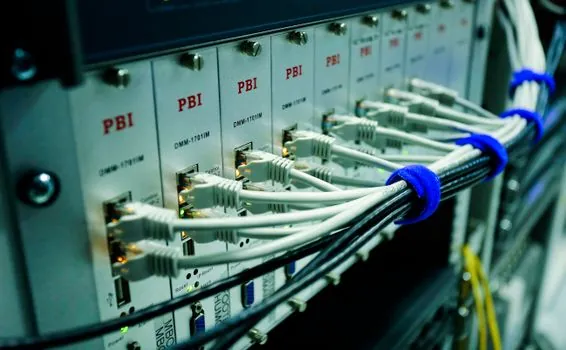
Metoree's August 2026 ranking of 19 industrial Ethernet switch manufacturers puts Omnitron Systems Technology, Antaira Technologies, and Phoenix Contact in the top three, a list that overlaps with but does not coincide with the broader Spherical top 25 [S1]. The discrepancy is methodological: Metoree ranks switch manufacturers specifically, while Spherical ranks companies across the full industrial Ethernet stack including protocols, services, and edge compute. Phoenix Contact's high ranking on a switch-specific list reflects its FL SWITCH product family and the broad distribution footprint in European panel building, while Omnitron and Antaira serve the ruggedized media-converter and NEMA TS-2 traffic-grade niches.
Practically, this means a control engineer writing a switch-only RFQ should weight Metoree rankings more heavily, while a plant-wide digitalization RFQ that bundles switches, controllers, and edge servers should weight Spherical rankings.
Selection Criteria and Comparison Across the Three Tiers
Lining the tiers against four common decision criteria clarifies the trade-offs. On protocol breadth, Tier 1 vendors support their own native protocol plus all major alternatives through gateways, while Tier 2 vendors support all protocols natively and Tier 3 vendors are strongest on PROFINET and EtherCAT. On cybersecurity certifications (IEC 62443-4-2, UL 2900-1), Tier 1 leads with the most certified SKUs per family, Tier 2 is close behind on managed switches, and Tier 3 lags outside domestic markets. On mean lead time in 2026, Tier 2 specialists like Moxa and Hirschmann ship from regional warehouses in 4 to 6 weeks, Tier 1 runs 8 to 12 weeks on configured SKUs, and Tier 3 outside Asia runs 10 to 16 weeks. [S2]
For a typical mid-sized process plant, the right mix is usually a Tier 1 controller with Tier 2 switches on the plant-floor ring and Tier 3 edge gateways on non-critical monitoring loops, an architecture validated by FMI's observation that pricing pressure is shifting competitive differentiation toward product performance, service reliability, and total cost of ownership rather than per-port cost alone [S2].
Real Use Cases and Failure Modes
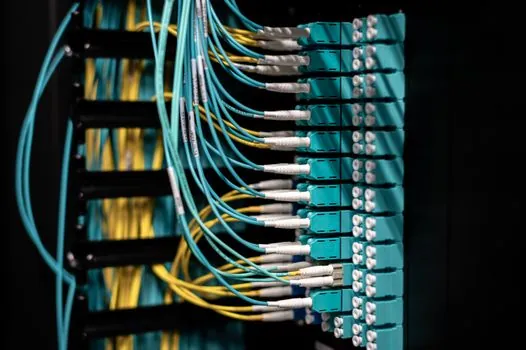
Automotive and transportation consumes 25.0% of industrial Ethernet value, dominated by PROFINET and EtherCAT on robotic weld cells and paint lines, exactly the application Moxa targeted with its November 2025 EJS launch [S2][S3]. Energy and power, oil and gas, and chemical and fertilizer are the next largest end-use segments, where IEC 61850 and EtherNet/IP dominate substation and refinery networks. Specifying the wrong tier for these segments is the most common failure mode: Tier 3 switches without IEC 61850-3 conformance fail utility substation EMI testing, and Tier 1 controllers without the right hazardous-area certifications fail refinery FAT.
For buyers tracking this space beyond the headline vendor list, the wider industrial Ethernet forecast landscape is analyzed in Industrial Ethernet 2026 Market: Four Forecasts, One Order-of-Magnitude Gap, which benchmarks the FMI and Spherical projections against two additional 2026 sources. Procurement teams sourcing from Asia should also watch the related semiconductor supply picture, since Tier 3 lead times and Tier 2 NIC availability both depend on the same fab capacity discussed in tungsten and molybdenum coverage; see Molybdenum Suppliers and Manufacturers: A 2026 Sourcing Map for adjacent supply-chain pressure points.
Limits of the 2026 Vendor List and Sourcing Caveats
Both Spherical and Metoree rankings are based on revenue and listing volume, not on field-reliability data, MTBF, or cybersecurity incident history, so they should be treated as sourcing shortlists rather than quality rankings. The FMI 4.3% CAGR and the Spherical 7.92% CAGR differ enough that 5-year TCO models should be run against both, and any contract longer than 3 years should include a price-revision clause tied to a public industrial-Ethernet market index. [S2]
Trackable signals for the next 6 to 12 months: Moxa EJS Series general availability and field-reliability data from the SPS 2025 launch, Siemens' PROFINET v2.7 release notes, and any IEC 62443-4-2 certification announcements from Advantech or Huawei that would shift Tier 3 credibility in European and North American process plants. Buyers should also watch China-domestic 10.9% growth for any indication of export-channel expansion, since that would compress Tier 2 ASPs in Southeast Asia and Latin America.
Component reference pages worth checking: industrial adhesive.