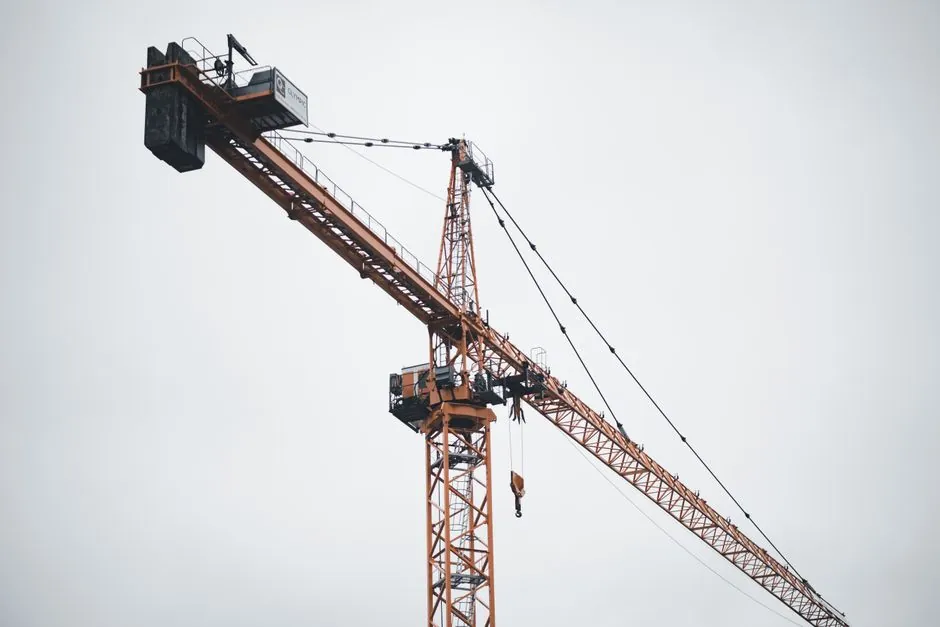
A complete tower crane spare parts inventory is organised around four functional blocks: structural steel (mast sections, anchorage frames, jib and counter-jib components), mechanical drive (hoist, slewing, and trolleying gearboxes, motors, wire rope, sheaves, brakes, hydraulic cylinders), electrical and control (cab, joystick controllers, contactors, limit switches, power cable), and safety and monitoring (anemometers, load cells, anti-collision systems, overload protection) [S1][S4].
For procurement, the rule of thumb is to confirm the crane model, serial number, mechanism type, jib length, rated capacity, and mast tie-in spacing before pulling a part number, because a luffing jib uses a different hoist and trolley arrangement than a flat-top or hammerhead [S4]. On Potain OEM channels, parts are released as dated Service Parts Notices such as SPN-26-005 (Mobiload, 2026-08-21) and SPN-26-002 (hydraulic tensioner for slewing ring bolts, 2026-03-31), which carry the EN/FR/DE/IT/ES/PT-BR file set for European Range equipment [S2].
Structural Steel: Mast, Anchorage, Jib, and Fasteners
The mast section is the vertical backbone of the crane and carries compression loads from the jib and counter-jib, so it must stay in alignment as the crane climbs [S4]. Mast joints and connection bolts need torque checks at set intervals; loose hardware at these joints causes misalignment that stresses the whole structure, which is why OEM documentation for tower structural assemblies treats torque values as inspection-critical, not advisory.
Anchorage frames secure the mast to the building structure once free-standing height is exceeded, and wall-tie assemblies must be installed at the spacing specified in the manufacturer manual, typically every 3-4 mast sections for mid-rise climbs [S4]. Jib sections, counter-jib frames, platform structures, and pins carry static and dynamic lifting loads, so welded joints and pin connections need inspection for cracking or deformation, especially after storm events or repeated overload trips [S3][S4].
Mechanical Drive: Hoist, Slewing, Trolleying, Brakes
Hoisting, slewing, and trolleying mechanisms are the three motion systems that define a tower crane, and each one is built around a motor, a gearbox, a brake, and a drum or pinion set [S1][S6]. Wire rope and sheaves (pulleys) sit inside the hoisting mechanism, which is the most heavily loaded sub-assembly and the one with the shortest consumable cycle; a luffing jib crane's hoist sees higher peak loads per cycle than a flat-top's trolley hoist, so rope retirement intervals differ by configuration [S3][S4].
Wire rope, brake pads, brake discs, sheave bearings, and slewing ring bolts are the high-wear consumables on any tower crane, and most maintenance teams keep a rotating stock of each [S7]. For slewing ring bolts specifically, Manitowoc's SPN-26-002 hydraulic tensioner procedure (dated 2026-03-31) is the controlled tightening method for European Range Potain machines, replacing the older impact wrench practice [S2]. Hydraulic cylinders, pumps, and valves show up on luffing jib and telescopic models; regular fluid replacement, leak checks, and piston/cylinder inspections are the published preventive tasks for the hydraulic system on these cranes [S1][S3].
Electrical, Control, and Cab Components
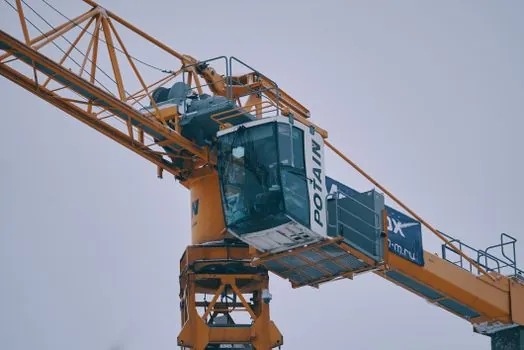
Electrical spare parts cover the operator interface and the power chain: control panels, joystick controllers, contactors, relays, limit switches, the cabin itself, and the tower crane power cable that feeds the slewing section [S1][S6]. Limit switches are the safety devices that prevent over-travel on hoist, trolley, and slewing motions, and they are the single most-replaced electrical item on most fleets because they sit on every motion axis [S1][S7].
Power cable deserves special attention on free-standing or climbing cranes: the cable is wound on a cable drum or guided through a festoon, and the inner cores fail first from flex fatigue, typically after 2,000-4,000 hours of slewing duty depending on cable type and drum diameter [S1][S6]. Joysticks, contactors, and cabin glass are operator-side consumables; relays and the control board sit in the electrical panel and are usually replaced as assemblies rather than component-level. On modern Potain and similar units, the cabin also houses the anti-collision and zoning electronics, so a cabin swap out carries programming steps that OEM documentation controls [S2].
Safety and Monitoring: Anemometers, Load Cells, Anti-Collision
Anemometers, load cells, overload protection devices, and anti-collision systems form the safety and monitoring layer and are now mandatory for most urban job sites under tower crane safety codes [S1][S4]. The anemometer sits on the jib tip or counter-jib and triggers the audio-visual alarm plus hoist cutout at the manufacturer-set wind speed threshold, usually 50-72 km/h depending on crane configuration and local regulation.
Load cells (or pin-load sensors at the pendant line) feed the moment indicator / safe load indicator, which compares measured load against the crane's load chart for the current radius and configuration. Anti-collision monitoring systems use transponders or laser/radar units to enforce buffer zones between adjacent tower cranes on a shared site, and the system hardware (sensors, central processor, junction boxes) is the fast-growing retrofit spend on multi-crane sites [S1][S4]. Solar-powered aviation warning lights on the jib tip and counter-jib are now standard consumables for night operations near flight paths and are replaced as sealed units, not field-repaired [S1].
Identification, Inspection, and Sourcing Workflow
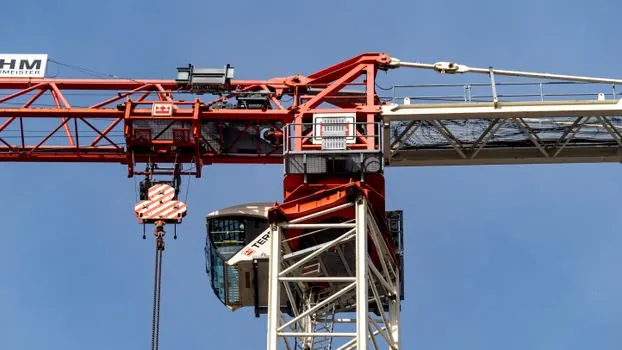
Part identification should start with the crane's system architecture: model and serial number, mechanism type (hoisting, slewing, or trolleying), jib length, rated capacity, mast section height, and tie-in spacing [S4]. Cross-checking the OEM parts catalog, manufacturer drawings, and technical specification sheets against these parameters is what separates a correct part from a "close but not exact" part, which is the most common cause of installation rework [S4].
OEM parts guarantee factory-matched tolerances, but approved aftermarket replacements can perform reliably when tested and documented; what does not work is visual matching, cross-family substitution (e.g. KBK parts on a tower crane), or skipping post-installation load testing [S5]. Sourcing channels break into three: OEM direct (Potain, Manitowoc SPN bulletins, Zoomlion, XCMG, SANY), specialised independent suppliers that stock mixed fleets, and custom fabrication shops for legacy units that no longer have OEM support [S1][S2][S5]. Lead time is the constraint that drives the decision: critical spares (slewing ring bolts, hoist motor, load sensor) belong in a bonded on-site bin, while long-lead fabricated items need scheduled replacement windows.
Wear-Item Comparison: Structural vs Mechanical vs Electrical vs Safety
A useful procurement view is to score each wear-item family on replacement frequency, lead time, OEM-only vs aftermarket availability, and inspection effort [S1][S4][S5].
Structural steel (mast, anchorage, jib sections) replaces rarely, has long lead time when it does, is usually OEM-only, and demands the most inspection hours because failure mode is catastrophic. Mechanical drive (wire rope, brake pads, sheave bearings) replaces frequently on high-cycle fleets, is stocked by most independent suppliers as aftermarket, and is inspection-light because wear is visible. Electrical and control (contactors, limit switches, joysticks, cable) replaces on a medium cycle, is widely available aftermarket, and is the lowest inspection burden. Safety and monitoring (anemometer, load cell, anti-collision sensors) replaces rarely but must be calibrated on schedule, and the part itself is usually OEM-only because calibration certificates are site-acceptance requirements [S1][S4][S5].
What to Watch and Verify Before You Order
Two trackable signals for the next quarter: the Potain SPN bulletin stream (Manitowoc's European Range has averaged 4-6 dated SPN releases per quarter through 2026, covering Mobiload, slewing ring, support plates, and energy storage sub-systems [S2]) and the harmonisation of the load-moment indicator interface across the major Chinese OEMs (Zoomlion, XCMG, SANY, Potain) for European CE-marked deliveries. Buying teams should also keep the crane's CE declaration, the operator's manual, and the most recent annual inspection report on file before sourcing any structural or safety part, because local regulation will reject unverified substitutes on tower lifting equipment regardless of brand [S1][S4][S5].
Spec-level background on the components involved: linear guide.
Related analysis: Backhoe loader failure modes: five-system map and prevention plan.