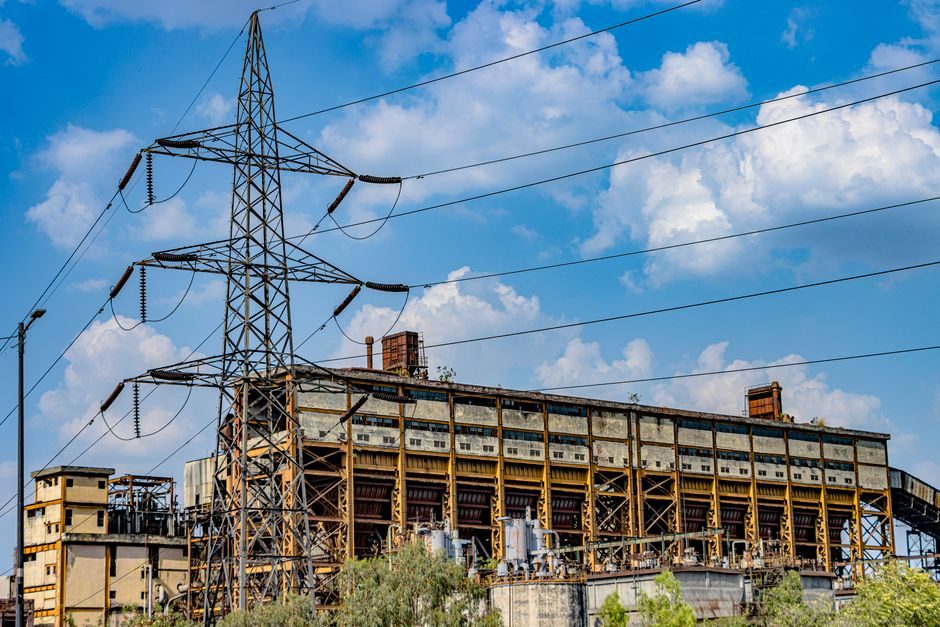
A power transformer is the meeting point of three heavy upstream inputs — grain-oriented electrical steel laminations, copper or aluminium conductors, and cellulosic-pressboard or cast-resin solid insulation — and five downstream load classes, including MV/LV distribution, industrial rectifier drives, power transformer rectifier duty, data-hall UPS, EV fast-charging and utility-scale solar/step-up/step-down PV and BESS tie-ins.
Specifying a unit in 2026 means tracing the GOES MOH grading (M2 to M6), the copper-to-aluminium conductor choice, the dry-type transformer vs oil-immersed decision, and the loading profile of the downstream bus — and every one of those threads is constrained by lead time, not just price.
Upstream Tier 1: GOES, Copper, Aluminium and the Lamination Line
GOES (grain-oriented electrical steel) remains the dominant core material for 50/60 Hz power transformer cores, specified per thickness 0.23 mm / 0.27 mm / 0.30 mm and graded M2–M6 by core-loss at 1.7 T, 50 Hz. Thinner 0.23 mm grades cut no-load loss roughly 10–15 % against 0.30 mm at the same flux density, but the step-lap or mitred cut adds tooling cost and yield loss at the lamination line. [S1]
Winding machines — foil, wire, disc, and layer — sit at the boundary between Tier-1 material and Tier-2 sub-assembly, and capacity there is the single most common 2026 bottleneck flagged by OEMs.
Upstream Tier 2: Insulation, Oil, Tanks and the Bushing Maker
Cellulosic pressboard (Weidmann T-IV, T-III, T-II) plus mineral oil (IEC 60296 uninhibited, or IEC 60296 inhibited for sealed units) is still the default dielectric pair in 2026; ester fluids (natural ester per IEC 62770, synthetic ester per IEC 61099) are specified for fire-sensitive indoor substations and for retrofills where K-class fire points ≤ 350 °C are required. Solid cast-resin systems using epoxy plus filler (silica, alumina trihydrate) anchor the dry-type transformer segment under IEC 60076-11. [S2]
Tank fabrication (carbon steel ASTM A36 / EN 10025 S235JR, optionally hot-dip galvanised to ISO 1461) and porcelain / composite / RIP (resin-impregnated paper) bushings per IEC 60137 round out the BOM. On-line Dissolved Gas Analysis (DGA) — H₂, CH₄, C₂H₂, C₂H₄, C₂H₆ — and bushing tan-delta taps have moved from optional to commonly specified on new builds above 33 kV class, because fleet operators now treat partial-discharge early-warning as part of the upstream QA hand-off.
Downstream Tier 1: Grid, Distribution, Data Centres and EV Charging
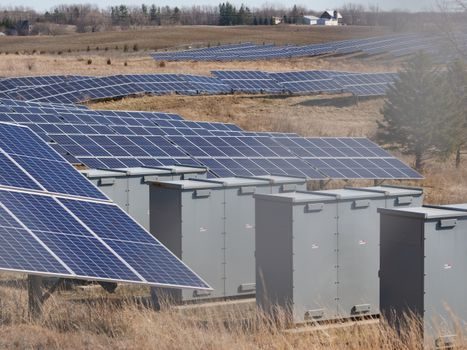
The biggest demand drivers for 2026 deliveries are grid step-up for utility solar and BESS, data-hall MV-LV transformers, and DC fast-charging for EVs. A 100 MWh BESS site typically steps up from 0.69 kV inverter output to 33/66/110 kV grid via a 50–120 MVA power transformer, often with an ONAN/ONAF cooling vector and a 25–30 % continuous overload rating to absorb solar ramp. [S3]
Data-hall builds specify 2.5–10 MVA cast-resin or oil-immersed units with K-rated neutral, 5th-harmonic derating per IEEE C57.110, and a 20-year sealed-tank design life; we covered the upstream bottlenecks for this build-out in Transformer Supply Chain 2026: Lead Times, GOES Bottlenecks and Sourcing Levers. DC fast-charging depots use 1–3 MVA pad-mount units, often with dual LV windings (e.g. 400 V + 800 V) to feed both 400 V and 800 V EV architectures in parallel.
Downstream Tier 2: Industrial Drives, Rectifiers and Traction
Downstream of MV distribution, rectifier transformers for electrolysis, aluminium smelters, DC arc furnaces, and LCI / cyclo-converter drives are a distinct sub-class — usually 6-, 12- or 24-pulse phase-shifted windings, with a dv/dt screen between HV and LV and forced-oil-air (OFAF) cooling. Traction transformers (25 kV AC rail) follow IEC 60310 with strict mass and impedance limits; onboard rectifiers and the wider power-electronics stack sit on the IGBT side, mapped in IGBT Suppliers and Manufacturers: 2026 Tier Map for Power-Electronics Buyers. [S4]
Process plants (refineries, LNG, chlor-alkali) still order oil-immersed hermetically sealed or nitrogen-padded units with copper windings and a 1.05 p.u. sustained over-voltage ceiling; the build-out is paced by the upstream Cu supply and the Tier-2 pressboard lead time, both of which stretched through 2025 and have not fully normalised by mid-2026.
Options Compared: Oil-Immersed vs Dry-Type vs Ester-Filled
Three dielectric choices dominate 2026 bids; the decision is driven by fire class, indoor/outdoor, and total cost of ownership, not headline price. [S1]
Oil-immersed (IEC 60076-2): lowest $/kVA, highest overload headroom, best for outdoor HV; requires bunding, oil-spill containment, and periodic oil sampling.
For indoor data halls and metro substations, cast-resin or natural-ester is now the default; for utility step-up above 50 MVA, mineral oil still owns the spec sheet; for offshore wind and sub-station retrofits near water courses, synthetic ester is gaining ground.
Selection Criteria and Common Failure Modes
Selection in 2026 is gated by five numbers: rated power (kVA/MVA), primary/secondary voltage, impedance (typically 6–12 % at 50/60 Hz short-circuit), vector group (Dyn11, Yyn0, YNd1, etc.), and temperature rise (60/65/75 K winding over ambient). Buyers should also pin ambient temperature, altitude (> 1000 m derating per IEC 60076-2), and harmonic load spectrum up front, not at the FAT stage. [S2]
Dominant failure modes in the field follow a consistent pattern: 38–45 % of in-service transformer outages trace to bushing failure (moisture ingress, partial discharge), 20–25 % to on-load tap-changer (OLTC) contact wear, 15 % to winding deformation under through-fault, and the rest to oil leaks and accessories. DGA trending with Duval Triangle 1 / Pentagon 1, plus bushing tan-delta and FRA (Frequency Response Analysis) on a 12-month cadence, catches the first two classes before they become unplanned outages.
Standards, Sourcing Signals and What to Track Next

The governing document set in 2026 is still IEC 60076 (parts 1–22), with IEEE C57 series anchoring the North American market, IEEE C57.110 for harmonic derating, IEC 60076-11 for dry-type, and IEC 60296 / 62770 / 61099 for the dielectric fluid. ATEX category 2 (2014/34/EU) and IECEx apply to transformer installations in hazardous areas, and NACE MR0175 governs oil-and-gas units exposed to H₂S service. [S3]
Trackable signals for the second half of 2026: the GOES M2/M3 spot price and the 0.23 mm lamination lead time; the Cu/Al conductor price ratio against a 3.5:1 crossover; ester-fluid order intake at the Tier-1 OEMs; and the booked capacity of Tier-2 winding shops tied to BESS and data-hall builds. For broader context on the manufacturing side that feeds this chain, see Server Hardware for Smart Manufacturing 2026: Sizing, Stack and Spec Gates and the upstream material flow in Semiconductor Production Technology 2026: Wafer Fab Flow, Node Scaling and Power Device, which shares the same GOES and high-purity-copper pinch points.
For component-level specifications, see pressure transmitter.