
Automotive plant VSD selection in 2026 is organized by workcell power band and duty cycle, not by brand: body shop conveyor and robot auxiliaries cluster at 1.5–75 kW with V/f or vector control and built-in STO; paint-shop exhaust and HVAC fans run 11–160 kW variable-torque VFDs sized to the affinity law; and test-cell dynos above 500 kW demand regenerative active front-end drives with sinusoidal regen back to the line [S7][S5].
Every automotive line spec, whether press shop, paint, final assembly, or EV battery module assembly, applies the same four gates that the wider industry uses: motor kW and full-load current match, supply voltage class, enclosure ingress protection, and load torque profile (constant vs variable) [S3][S4]. A variable speed drive sized on motor nameplate FLC rather than horsepower alone survives the inrush and thermal stress of repeated reversing duty, which is the normal operating mode on a body-shop crossbar or skid conveyor [S3].
Workcell Power Bands and Drive Family Match
Press-shop main presses and large transfer bars run at fixed line speed and rarely justify a VFD, but the feed conveyors, destackers, and inter-press shuttles sit in the 4–22 kW band where a general-purpose V/f or sensorless vector VFD is standard, with ACS580, SINAMICS G120, and VLT FC-302 covering that range at 0.55–250 kW in catalogue form [S5]. Robotic welding cells in the body shop use 1.5–15 kW VFDs on the positioner axes and seam-tracking motor spindles, typically with Profinet and STO wired into the cell safety controller, a configuration published as the 2026 default for Chinese-built body shops [S7].
Paint-shop atomizers and exhaust fans cluster higher, with 11–160 kW variable-torque VFDs driving centrifugal exhaust and fresh-air fans, where the energy savings follow the cube of speed reduction; pairing the drive with an IE5 synchronous reluctance motor is now common, with losses governed by IEC 61800-9-2 for the drive system and IE-class efficiency for the motor [S5]. Final assembly conveyor lines use 0.75–7.5 kW VFD drives on the 400 V three-phase bus, often IP20 finger-protected inside the control panel rather than IP54 on the machine, because the panel itself provides the enclosure [S4].
Voltage Class, FLA Sizing, and Enclosure IP
Low-voltage 380–480 V three-phase is the universal automotive-plant standard, with 208 V drives appearing only on North American 600 V class step-downs for legacy 5 hp stations; matching drive input voltage to the available bus avoids the cost of an input transformer [S3]. FLA sizing must be done on motor nameplate full-load current at the actual operating voltage, not on horsepower, because IEC and NEMA motors of the same kW can differ by 10–15% in rated current, and a drive undersized for FLA trips within minutes on a high-inertia load [S3][S4].
Enclosure ingress protection is the spec that engineers most often under-pressure: standard open-chassis IP00 or IP20 VFDs go inside a control cabinet and rely on the cabinet for sealing, while IP54 or UL Type 12 drives sit on or near the machine when the cabinet cannot host them, such as on a wet paint-line deck or a battery-cell electrolyte room [S4]. For body-shop cells where the drive lives in a 400 V MCC bucket next to the robot controller, IP20 is the practical minimum, and derating above 40 °C ambient follows the manufacturer's published curve [S4]. On the motor side, an inverter-duty rating per NEMA MG-1 Part 31 is now standard for any motor fed by a modern IGBT VFD, because the 3–5 kHz switching produces a peak line-to-line voltage that stresses standard winding insulation [S5].
Constant Torque vs Variable Torque Load Profiles
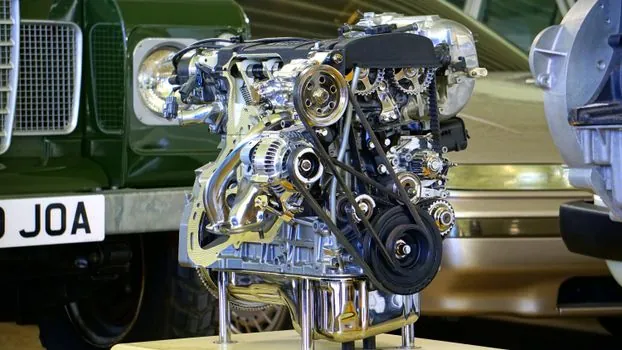
Constant-torque loads, conveyors, hoists, screw feeders, extruders, and positive-displacement pumps, demand a drive rated for 150% or 100% overload for 60 s and sized to the motor nameplate regardless of speed, with sensorless vector or full vector control selected so that starting torque at low speed does not collapse [S3]. Variable-torque loads, centrifugal fans and pumps, can be served by a quadratic-torque V/f drive sized to the running load, not the breakaway, and the energy saving scales with the cube of the speed reduction across the damper or valve it replaces [S3].
Automotive examples map cleanly onto these two profiles: a body-shop skid conveyor is constant torque and reversing, a paint-shop exhaust fan is variable torque, a press-shop destacker ram is constant torque with high breakaway, and a final assembly torque-controlled E-ratchet is essentially a servo drive rather than a general-purpose VFD [S6]. Mixing a variable-torque drive onto a constant-torque load is the most common field failure, because the drive cannot deliver starting current and the motor stalls; a constant-torque drive on a fan is not a fault, it is just over-spec and accepted on rebuilds [S3][S4].
Communication, Safety, and Functional-Safe Integration
Profinet and EtherCAT dominate automotive-cell integration in 2026, replacing point-to-point analog and digital I/O on all new cells because the welding, sealing, and vision controllers need deterministic 1–4 ms cycle time for synchronizing the robot with the conveyor [S7]. Built-in STO (Safe Torque Off) per IEC 61800-5-1 is now the minimum safety input on every catalogue VFD from ABB ACS580, Siemens SINAMICS G120, Danfoss VLT FC-302, Schneider Altivar ATV600, and Yaskawa GA800, all of which carry SIL 3 / PL e capable STO as standard equipment without a safety option card [S5]. Where the cell needs SS1 or SLS, a safety option module adds the extra input, and the drive-motor feedback loop is closed on an SIL-rated encoder; a servo drive takes over for cam, gearing, and tension-control axes, with the VFD holding only the speed-controlled auxiliaries [S5][S6].
Harmonic limits on the plant bus are governed by IEEE 519 in North America and IEC 61800-3 for the drive itself, and a body shop running 40–60 VFDs typically needs a passive or active harmonic filter at the MCC to keep THDi under 5% on the supply transformer, otherwise the robot controllers see nuisance DC-bus trips [S5]. On regenerative test-cell dynos, an active front-end (AFE) drive regen path returns braking energy at near-unity power factor with sinusoidal current, and the same AFE topology cleans the harmonic spectrum well below IEEE 519 limits without external filtering [S7].
Selection Logic: From Motor Nameplate to Catalogue Code
The first gate is motor kW and FLA at the actual supply voltage; the second is load profile and duty cycle, which sets constant vs variable torque and overload requirement; the third is the enclosure IP and ambient temperature; the fourth is communication protocol and safety I/O [S3][S4]. Once those four are fixed, a drive-motor pair drops out of the manufacturer's selection tool almost mechanically, and the remaining choice is control mode, V/f for fans, sensorless vector for conveyors, full vector with encoder for hoists, and direct torque control (DTC) where the very fastest torque response is needed, for example ABB ACS580 with DTC in the 0.75–500 kW range [S5].
For comparison, a body shop 1.5–75 kW cell typically points at an ABB ACS580 or Siemens G120 with Profinet and STO, a paint-shop 11–160 kW fan points at a Danfoss VLT FC-302 or Schneider Altivar ATV600 in IP54 with quadratic V/f, and a 500 kW+ test-cell dyno points at a Voith VECON 23 or equivalent AFE regen drive, with the cell above 500 kW regenerative class explicitly mapped to a Voith VECON 23 in the published 2026 selection logic [S7]. Where the workcell is a conveyor or roller line, the VFD selection for material handling walkthrough covers constant-torque sizing, regen-on-overhauling-load behaviour, and the shared Profinet cell-safety stack used in body-in-white lines, and the adjacent VFD selection for packaging lines guide is a useful sanity check on changeover-time and ramp profiles for final assembly and trim cells.
Mechanical and Hydraulic VSD Alternatives for Special Cells
Mechanical variable-speed gear motors using a PIV chain variator or a traction drive deliver high torque at low speed without the motor-heating risk of running a self-ventilated induction motor below 20 Hz on a standard VFD, and they are plug-and-play in cells where the electronics cabinet cannot be co-located, such as on a moving transfer cart or a clean paint deck [S8]. A traction drive (input cone and output ring on a Reeves-style geometry) typically spans about 60–4,200 rpm with hand-cranked ratio change and is the historical reference for stepless mechanical speed control; electromagnetic eddy-current clutches are a third route, transmitting torque through a magnetic field with no mechanical contact, at the cost of slip losses as heat [S10][S5].
Hydraulic VSDs meter fluid flow to a hydraulic motor and are used in heavy press shops where the actuator already has a hydraulic supply, but they are not part of the electrical spec sheet that drives 95% of automotive-plant procurement today [S10]. DC motor drives, with ±0.001% regulation and 400–1200 Hz current-loop bandwidth, persist only on legacy test stands and on continuous-process lines where the existing DC motor fleet would be uneconomic to replace with an AC inverter-duty retrofit [S9].
Common Failure Modes and Selection Pitfalls
The four most common automotive-plant VSD field failures are: undersizing FLA on a high-inertia load, missing the inverter-duty winding rating on a standard induction motor, mounting an IP20 drive in a wet environment, and ignoring the harmonic injection into the DC bus when many small VFDs share one transformer [S4][S5]. A body shop retrofit that drops 30 new VFDs onto an existing 1,500 kVA transformer without checking impedance can raise the THDi above 8% and trip the cell safety UPS; the published guidance is to either apply a passive trap filter at the MCC or to specify AFE drives on the largest units (above 22 kW) [S5][S7].
A second class of failures comes from sensorless vector control being asked to deliver torque at standstill, which it cannot; applications that need full torque at zero speed, such as a press-shop die-cushion ram holding a 200-ton blank, require either a closed-loop vector drive with an encoder or a servo drive with a position loop, with the VFD alternative being the ACS880 or equivalent product family outside the general-purpose 0.75–500 kW ACS580 range [S5]. Finally, regen-on-overhauling-load faults on downhill conveyors and vertical hoists are avoided by either oversizing the brake chopper or specifying an AFE regen drive, a topic covered in detail in the material-handling VFD selection guide and aligned with the 2026 spec logic for body-in-white conveyor cells [S7].