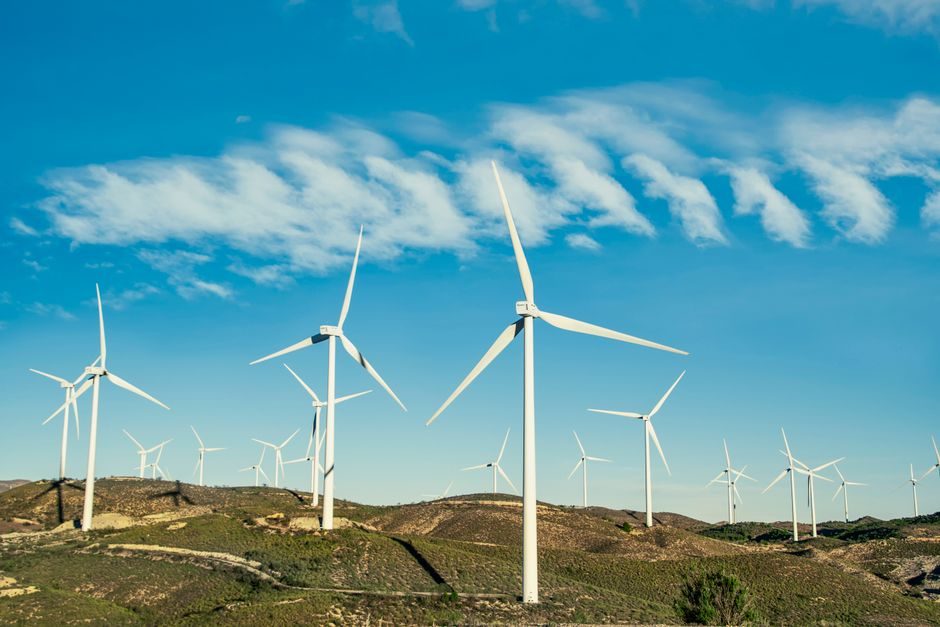
On 2026-06-24 the wind-turbine supplier landscape divides cleanly into a Chinese small-wind manufacturing cluster (rated outputs from 150 W to 500 kW, predominantly horizontal-axis, ISO 9001-certified) and a smaller Western tier of gearless distributed-energy OEMs (Northern Power Systems lists a 6 kW-1.5 MW range with 900+ installations and 98% reported availability) [S5][S8].
Made-in-China.com's 2026 supplier index returns 295 wind-turbine manufacturers offering 885 catalog products, with permanent-magnet generators, power inverters, energy-storage systems and MC4 connectors listed as the four most common co-exported line items — a useful proxy for how a buyer should bundle the BoM rather than treat the turbine as a standalone SKU [S4].
Power-Band Sourcing Map: 150 W to 1.5 MW
Suppliers self-organise by rated power, not by drivetrain. The 150 W-500 kW band is overwhelmingly Chinese and includes Qingdao Hengfeng (Shandong, ISO 9001), Wuxi Flyt (Jiangsu, ISO 9001), Better Success Limited (Guangdong, in renewable energy since 2004), and First Renewable Energy Group (Shandong, with explicit model steps of 300 W, 500 W, 1 kW, 2 kW, 5 kW, 10 kW and 20 kW plus a 450 W mini series) [S7][S8][S9][S10]. Above 100 kW the supplier set thins out fast: Northern Power Systems (US) explicitly serves 6 kW-1.5 MW and quotes 98% availability across 900+ gearless units [S5]. Below 10 kW the 2026 Made-in-China hot-product page is dominated by 1 kW, 2 kW, 3 kW, 5 kW and 10 kW horizontal-axis machines pitched at low-start-speed, high-utilisation residential use [S2].
Drivetrain and Topology: Gearless PMG vs Geared Horizontal Axis
Chinese small-wind suppliers universally pair horizontal-axis rotors with permanent-magnet generators (PMGs) and a low-RPM start threshold — the Wuxi OEM listing calls out "low start up speed, high wind energy utilization" and "amazingly quiet operation" as the two headline selling points [S1]. Northern Power Systems takes the opposite architectural position: gearless, direct-drive high-yield machines aimed at harsh-environment distributed-energy sites, a topology that trades higher unit cost for the 98% availability figure they publish [S5]. A buyer matching drivetrain to use-case should therefore pre-decide: PMG-geared horizontal-axis for cost-driven small-wind (≤20 kW), gearless direct-drive where availability and maintenance intervals dominate the LCOE calc.
Standards, Certifications and What Buyers Can Verify
The verifiable third-party signal on the Chinese side is overwhelmingly ISO 9001 management-system certification — both Qingdao Hengfeng and Wuxi Flyt list it as their headline credential on Made-in-China.com showroom pages [S8][S9]. Northern Power Systems does not publish an ISO 9001 claim but anchors its credibility on a 40-year operating history and 900+ installed units delivering 98% availability, which is a different kind of evidence (field data vs management audit) [S5]. No supplier in the 2026-06-24 snapshot publishes IEC 61400 (wind turbine design) series certification on the showroom page itself, so a specifier chasing grid-tie utility-grade compliance should request the design-assessment certificate directly rather than infer it from a B2B listing. For sensor-side spec work on these machines, the pressure transmitter and flow meter families are the usual candidates on the hydraulic and lubrication side of the gearbox, while industrial valve selections govern the pitch and yaw hydraulic circuits.</h2> <h2>Regional and Channel Distribution: Made-in-China, DIYTrade, Alibaba</h2> <p>Three B2B channels carry the bulk of small-wind sourcing. Made-in-China.com lists 295 manufacturers and 885 products and exposes verified-contact, ISO 9001 and business-type fields for every showroom [S4]. Alibaba's home-wind-turbine supplier page clusters Chinese exporters with response rates of 91.5%-93.2% and revenue bands from "Below US$1 Million" to "US$50 Million - US$100 Million" — the mid-tier is led by wind-turbine, wind-mill and PMG SKUs with Mid East, Central America and South America each claiming ~15% of export volume [S6]. DIYTrade still carries older 20 kW listings (e.g. the art-20kw) that have not been refreshed since 2012-12-28, a useful signal that any spec value below a 10 kW nameplate on long-tail channels needs a manual datasheet re-pull [S3]. Wuxi's supplier page rounds out the channel map with low-wind-speed horizontal-axis 2 kW units as the default listing [S1].
How to Compare Suppliers on Four Decision Criteria
The four criteria that actually separate one supplier from the next on the 2026-06-24 data are: (1) certified rated-power range, (2) drivetrain topology, (3) third-party evidence, and (4) channel-verified export footprint. Northern Power Systems scores 6 kW-1.5 MW / gearless / 900+ units at 98% availability / EPC turnkey projects [S5]. Wuxi Flyt scores ≤small-wind / PMG horizontal-axis / ISO 9001 / Made-in-China showroom [S9]. Qingdao Hengfeng scores 150 W-500 kW / PMG / ISO 9001 / also a Trading Company so export paperwork is in-house [S8]. First Renewable Energy Group scores discrete steps 300 W-20 kW / PMG / Manufacturer-Factory only / Shandong base [S10]. A specifier should weight criterion (3) most heavily for utility and distributed-energy projects and criterion (4) most heavily for residential or off-grid buyers who need a single freight-ready SKU.
Linked Component Sourcing: Magnets, Castings, Sensors
Wind-turbine sourcing never stops at the nacelle — the magnets inside the PMG, the cast hub and the sensor stack each pull a different supplier set. The NdFeB magnet line is a documented pinch point covered in the related rare-earth manufacturing process reference, while hub and frame castings route through aluminium and iron foundries whose spec gates (tonnage, shot weight, alloy) are detailed in the aluminum die casting machine 2026 brief. The nacelle sensor and safety-side component shifts — pitch sensors, vibration, lubrication oil conditioning — are mapped in the wind turbine industry 2026 sensor and safety sourcing brief. The market-size and vessel-constraint backdrop against which all of these suppliers are quoting is laid out in the wind turbine market 2026 size-bands and vessel-constraints reference. [S1]
Failure Modes and Limits Buyers Hit at Quote Stage
Three failure modes show up repeatedly in the 2026-06-24 snapshot. First, power-band misfit: small-wind factories quoting 150 W-500 kW will happily accept any RFQ inside that range, so a buyer asking for a 1.5 MW unit from a small-wind factory burns two weeks before being redirected to Northern Power Systems or equivalent [S5][S8]. Second, certification drift: ISO 9001 is a management-system audit, not a product-design certification against IEC 61400, and the showroom pages do not display a design-assessment certificate [S8][S9]. Third, channel staleness: long-tail listings older than 5 years (e.g. the 2012 DIYTrade art-20kw record) are not refreshed, and treating them as live inventory is a known source of RFQ-to-quote slippage [S3]. Specifier workflow should therefore pre-classify the RFQ by power band, request the IEC 61400 design-assessment certificate as a separate document, and re-verify the showroom page within 30 days of issuing the PO.
The trackable signals for the next sourcing cycle are the Made-in-China 295-supplier count (refreshed in the 2026-06-24 snapshot at 885 catalog products [S4]) and the next Northern Power Systems availability-and-installation disclosure, since the 98% / 900+ figure functions as the only public field-data benchmark against gearless direct-drive units in this size band [S5]. A separate, slower-moving signal is how many of the Chinese small-wind ISO 9001 factories add an IEC 61400 design-assessment line to their showroom in the second half of 2026, since that single addition would shift the sourcing decision matrix heavily toward the Chinese cluster above 100 kW.