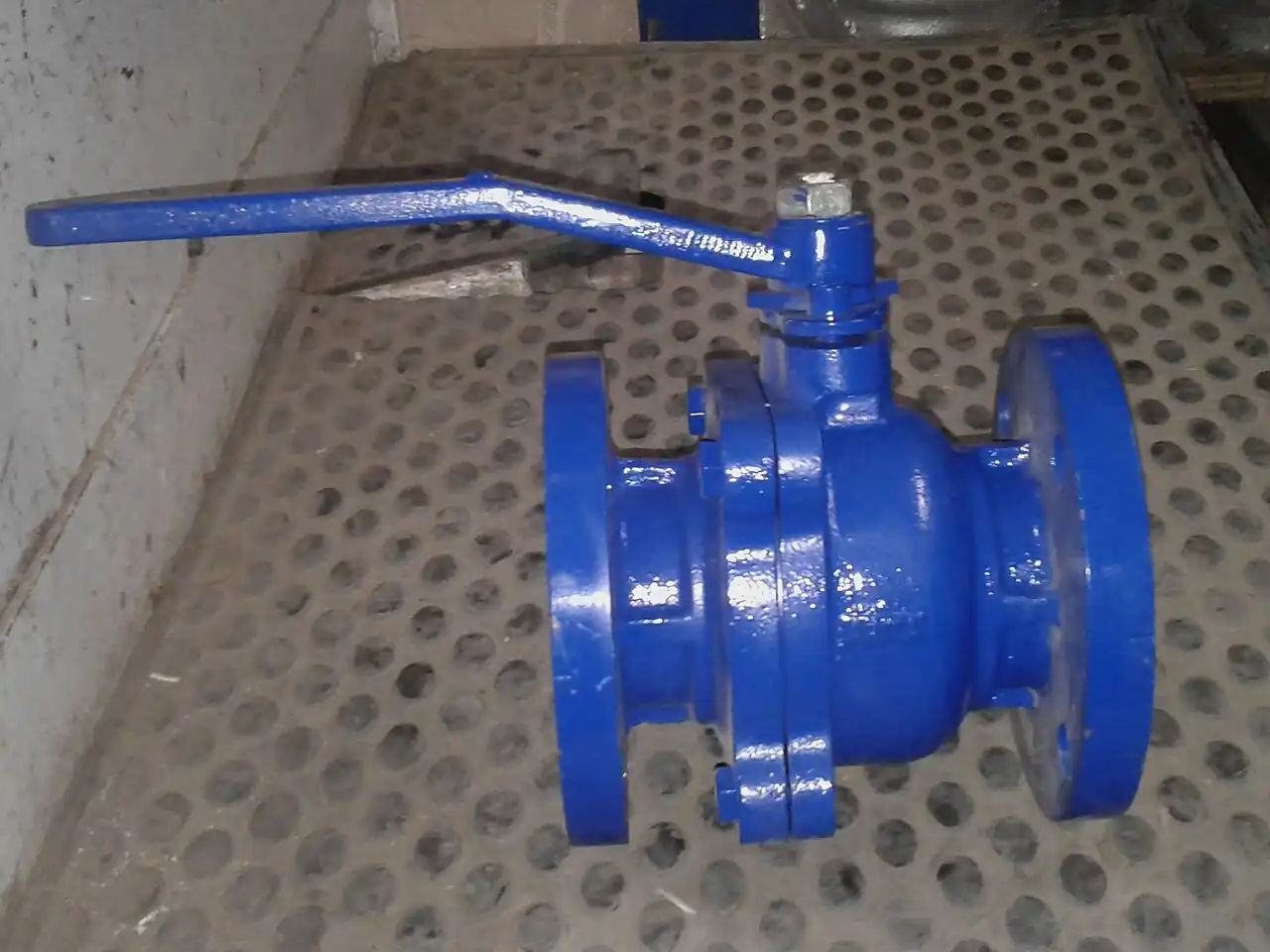
A double block and bleed valve is a single valve, or a single compact assembly, that provides two independent seating surfaces which in the closed position block pressure from both ends of the valve, plus a bleed port that vents or drains the cavity between those seats. The definition comes from API 6D and it is stricter than marketing language suggests: one body, two seats each capable of sealing against pressure from its own side, and a verified means of proving both seats hold by opening the bleed and watching the cavity pressure fall to zero. Sizes run from NPS 1/2 instrument manifolds to NPS 48 pipeline bodies, classes CL150 to CL2500.
Procurement engineers meet these valves on custody transfer metering skids, where the flow meter must be isolated from both sides and drained for proving; on pig launchers, where barrel isolation has to be positive before a door opens; on tank farm loading manifolds, where one side cannot be drained; and at every pressure transmitter takeoff, where instrument impulse lines need double isolation in one fitting. The decision this page settles is narrow: whether the duty needs true double isolation in one body or a cheaper single seat, which seat arrangement seals the required directions, and what test evidence the purchase order must demand. The answer lands as an RFQ line set, and every chapter feeds it.
This page treats the double block and bleed valve as a purchasing object: what API 6D actually requires of the seats, how trunnion, cartridge, and instrument constructions earn or fail the DBB label, how cavity pressure behaves when liquid is trapped between seats, which tests and qualifications belong on the certificate, and how all of it combines into a defensible RFQ. It is written for engineers who issue purchase specifications, not for readers who want a brochure summary.
Chapter 1 / 06
What a Double Block and Bleed Valve Is and What Is Being Decided
Start with the API 6D definition, because most confusion in the market comes from quoting something looser. API 6D defines double block and bleed as a single valve with two seating surfaces which, in the closed position, block pressure from both ends of the valve, with a means of bleeding or relieving the cavity between the seating surfaces. Every word carries weight. Single valve means the isolation is not two separate flanged bodies bolted into a spool. Two seating surfaces means two closure interfaces, each with its own sealing mechanism and each tested on its own. Both ends means the seats face opposite directions and each one is loaded by the pressure it must hold back. The bleed means the cavity can be opened to atmosphere or a drain while both seats are shut, which is exactly how the operator proves the isolation instead of assuming it.
What is being decided in this purchase is the credibility of isolation, and it is a decision with a number attached. Two valves in series seal independently only if a drain exists between them; a single conventional ball valve with one loaded seat cannot offer that proof at all, because it has no cavity that both seats isolate. The classic field compromise, two gate valves with a drain tee between them, works but costs six gasket joints, four flange faces, roughly three times the weight, and three times the potential leak paths of one cartridge body. The DBB purchase collapses that assembly into one envelope with two gasket sets and one fugitive emission count per stem instead of three. The buyer is trading a modest body premium against leak paths, weight, calibration access, and the ability to prove isolation on demand.
Boundary against the neighbors matters, because the phrase is used loosely in catalogs. A standard ball valve, even a good one, is not a DBB valve. A floating ball valve floats on line pressure onto its downstream seat: the upstream seat carries almost no load and will not seal reverse pressure, so one seat seals one direction and the assembly is single isolation regardless of what the label implies. A trunnion ball valve has two mechanically loaded seats and can be built as a true DBB valve when each seat seals pressure from its own side, which is a seat design decision, not a body style decision. A check valve is not isolation at all; it responds to flow direction and belongs downstream of pumps, not in a maintenance isolation scheme. A gate valve with a single slab or wedge seals one closure interface and needs a partner plus a drain to fake double block. A butterfly valve, with its one disc and one seat, belongs in large bore low class water duty, not anywhere a proof of isolation is demanded.
The RFQ decision this page settles therefore has three layers. First, does the duty actually need double isolation: positive separation of live inventories, break containment for instrument removal, or proving a meter zero. Second, which construction family carries the duty best: a trunnion twin-seat single ball for pipeline bores, a cartridge twin-valve body for skids, or a small bore instrument manifold for gauges and transmitters. Third, which seat arrangement, self-relieving or double piston, seals the directions the process actually presents, a question developed fully in the selection chapter because it decides cavity relief hardware. A purchase order that answers only the first layer gets a body that passes hydrostatic testing and still cannot prove isolation in service.
Four standards organize the datasheet. API 6D fixes the definitions, the seat test directions, and the cavity relief expectations for pipeline valves. API 598 is the reference inspection and test practice purchasers invoke for shell, seat, and backseat test pressures and acceptance. API 607 and ISO 10497 are the fire test qualifications demanded wherever liquid hydrocarbons can pool around the valve. ISO 15848-1 governs fugitive emission qualification of the stem seals, and NACE MR0175 with ISO 15156 materials limits applies when wet sour gas is present. A datasheet that quotes none of these is a price tag, not a specification, and the chapters that follow show exactly where each standard enters the RFQ line set.
Chapter 2 / 06
Seating Mechanics and Cavity Bleed Behavior
Most DBB valves are trunnion mounted, and the mechanics start with the trunnion. The ball is held on fixed upper and lower bearings so line pressure cannot push it into a seat; instead, two seat rings are pressed against the ball by springs at assembly and then by process pressure itself. Each seat ring works like a piston: line pressure enters the annular chamber behind the ring and adds a hydraulic seating force on top of the spring preload, so sealing force grows with the pressure it must seal, typically from a few bar of spring preload up to the full class differential at rating. This is why a trunnion ball valve seats repeatably at both low and high differential, and why seat design, not ball position, decides whether the assembly qualifies as double block and bleed.
Two seat behaviors exist, and the difference is a hole. A self-relieving seat, often called an SPE seat, seals pressure arriving from its own line side but allows excess cavity pressure to lift the ring off the ball and relieve the cavity back into the line. A double piston effect seat, a DPE seat, is machined so pressure from either side loads it harder against the ball, so it seals in both directions but can never relieve the cavity by itself. A DBB valve in the strict API 6D sense carries seats arranged so each end blocks pressure from its own defined direction with self-relief of the cavity. Two DPE seats also block both ends, but the trapped cavity between them has no relief path, which changes the safety case and the hardware list, and that fork is handled as a selection decision in chapter 5.
The bleed path is where the purchase earns its name. Between the seats, the body cavity carries a drilled port, usually NPS 1/2 or NPS 3/4, terminated by a needle valve for small bodies or a globe valve for larger ones, and piped to atmosphere, flare, or drain. The verification procedure is mechanical and unmistakable: close both block seats, open the bleed, and observe. Trapped pressure between the seats escapes in seconds; if the bleed then holds no flow and the cavity gauge reads zero while both ends remain at line pressure, both seats have just been proven against full working differential, each from its own side. That observation is the entire functional point of the architecture, and it is why operators of custody transfer skids and pig launchers will not accept anything less.
Cavity pressure behavior deserves real respect because liquid gets trapped. With both seats closed on a liquid-full line, solar gain or ambient warming heats the fluid in the cavity, and because liquid is nearly incompressible the pressure climbs fast: as an order of magnitude, water in a rigid liquid-full cavity gains roughly 4 to 5 bar per deg C, and light hydrocarbons can exceed 10 bar per deg C. Ten degrees of afternoon sun on a closed NPS 8 body can therefore push a CL150 cavity toward its shell test pressure with no moving part involved. Self-relieving seats solve this by lifting back into whichever line is at lower pressure; double piston seats cannot, so the body needs a cavity relief valve, a small spring-loaded safety relief valve connected to the bleed port, set to relieve above maximum working pressure and routed somewhere safe. A DBB valve with DPE seats and no cavity relief is a hydraulic lock waiting for a warm afternoon.
Test pressures and acceptance come from API 6D and API 598 as invoked. The shell test runs at roughly 1.5 times the 38 deg C pressure rating of the class; each seat is tested at about 1.1 times rating, from each direction in turn, with the cavity bled so only one seat is under test at a time. Soft seats, PTFE, nylon, PEEK, or filled grades, are expected to show zero visible leakage, ISO 5208 rate A, bubble tight at test pressure. Metal seats carry defined allowable rates, typically rate B or looser depending on size, and that number must appear in the purchase acceptance table because it is the number the isolation procedure inherits in service. Anti-static design, a spring or stem ball giving continuous electrical contact between ball, stem, and body, is verified by a continuity resistance of a few ohms, and it belongs on every hydrocarbon specification.
One mechanical consequence of twin seating deserves the last paragraph: torque and proof loading. A trunnion DBB valve seats two spring-loaded rings instead of one, so breakaway torque at full differential is higher and more pressure-dependent than a single-seat body of the same size, and the operator sizing, gear, electric actuator, or pneumatic actuator, must use the manufacturer torque curve at maximum differential with a safety factor of 1.25 to 1.5. Partial stroke devices keep actuated pipeline valves exercised without full isolation events. The valve that cannot break away in year ten because the actuator was sized for year one torque is a standard failure with a standard fix, and the fix belongs in the original RFQ.
Chapter 3 / 06
Construction Families and Duty Boundaries
Three construction families cover the market, and they serve different size and duty bands. The trunnion twin-seat single ball is the pipeline animal: one ball, two spring-loaded seat rings, a cavity bleed port into the body, sizes roughly NPS 2 to NPS 48, classes CL150 to CL2500, with full bore options that pass pigs and inspection tools. The cartridge or modular DBB valve is the skid animal: two complete but valve elements, ball on ball, ball on gate, or gate on gate, machined or forged into one body with a bleed tee between them, sizes roughly NPS 1/2 to NPS 12 typical, flanged or flangeless for trapping between two line flanges. The small bore instrument DBB manifold is the panel animal: two block valves and one bleed valve in a single barstock body, screwed or flanged, built to isolate a pressure gauge or a pressure transmitter impulse line.
The cartridge family exists because of arithmetic. A traditional three-valve isolation train, two block valves and a bleed tee with valves, presents six flange gaskets, three stems, three fugitive emission sources, and roughly three times the mass of the duty it performs. A cartridge body cuts that to two gasket sets, one or two stems depending on layout, and typically 30 to 60 percent less weight in a third of the spool length, which on a metering skid with twenty isolation points is tonnage and footprint, not trivia. The flangeless variant drops the body between line flanges as a trapped cartridge, which removes even the two gasket sets in exchange for slightly harder maintenance access. The penalty of any cartridge is internal complexity: more seats in one body means a single body rejection scraps more machining, and cavity volumes between the two elements must still be drained by the bleed path, so the drainage orientation of the installation matters.
The instrument family is best understood as a duty, not a miniature pipeline valve. A barstock manifold in 316 stainless steel carries two block elements, ball or needle, with a needle valve bleed between them, rated commonly to a 6,000 psi class at ambient with a temperature derate, and it exists so a technician can isolate a pressure transmitter or pressure gauge, vent the trapped impulse line safely, and remove the instrument without touching the process flange. The relationship to the generic multi-valve instrument manifold used on differential pressure transmitters is close kinship, and the comparison with the dedicated instrument manifold page is drawn in the selection chapter; for this page the point is that the two-block-one-bleed pattern scales from NPS 1/2 panels to NPS 48 pipeline bodies with the same logic and the same proof of closure.
Materials follow the line service rather than the family. Body materials run WCB carbon steel with electroless nickel plated trims for sour hydrocarbon duty, CF8M and 316L stainless steel for chemical and clean service, duplex 2205 for chlorides and seawater cooling, and Inconel 625 or equivalent overlays on seat pockets where wet sour gas meets high chlorides, all documented against NACE MR0175 or ISO 15156 when H2S partial pressure puts the service in sour territory. Seats are PTFE and filled PTFE for standard temperatures, nylon and PEEK for higher load and heat, and metal with tungsten carbide or chromium carbide seating faces where sand or sludging fluids would destroy polymer. Fire safe qualification to API 607 or ISO 10497 requires the soft seat to collapse onto a secondary metal seat and hold defined leakage through a 30 minute burn and cooldown cycle, so any fire-zone specification must state the qualification, not hope for it.
Duty boundaries keep the families honest. Below NPS 1/2 or above NPS 48 the cartridge logic weakens and standard valve pairs take over. In slurry lines, gate-type cartridge elements resist solids better than ball pairs, and a lubricated plug valve element resists them better still where the torque budget allows it. In very high cycle instrument duty, needle elements outlive ball elements. And nothing in this family is a substitute for a safety relief valve on a pressure system: DBB valves isolate inventory, they do not protect against overpressure, a job that belongs to dedicated relief hardware sized by a different discipline. The table below compresses the family boundaries into the form a specifier can scan before drafting the RFQ.
Family
Size band
Typical duty
Boundary to respect
Trunnion twin-seat single ball
NPS 2 to NPS 48, CL150 to CL2500
Pipeline and station isolation, pig launchers, mainline block valves
Heaviest family; full-bore option needed for pigging; torque grows with twin seat preload
Cartridge or modular twin valve
NPS 1/2 to NPS 12 typical, CL150 to CL1500
Metering skids, tank farm manifolds, chemical injection and sampling
Cavity must drain by orientation; internal complexity concentrates value in one body
Small bore instrument manifold
NPS 1/2, 6,000 psi class typical at ambient
Pressure gauge and pressure transmitter isolation on impulse lines
Instrument duty only; never a substitute for line class isolation
Three separate valves with drain tee
Any size
Legacy plants, hot tapping constraints, mixed inventories
Six gasket joints and three stems; the assembly DBB valves replace
Chapter 4 / 06
Key Specification Parameters
The table below decodes the datasheet lines that decide whether a quoted DBB valve matches the isolation duty. Each row is purchase defining; the paragraphs after the table explain what to demand and what a weak answer looks like.
Attribute
Typical range or options
What it decides
Size and class
NPS 1/2 to NPS 48; CL150 to CL2500
Envelope, face-to-face, flange drilling, and cavity volume that must drain
Seat arrangement
Self-relieving both ends; double piston one or both ends
Which directions are sealed and whether the cavity can relieve itself
Seat leakage acceptance
Soft seat rate A, zero bubble; metal seat rate B or defined rate
The isolation credibility the operating procedure inherits
Cavity relief
None, integral seat relief, or external relief valve
Protection of the body against thermal liquid locking
Fire safe qualification
API 607 or ISO 10497 burn test report
Acceptance in liquid hydrocarbon fire zones
Fugitive emission
ISO 15848-1 stem qualification with test report
Emission counting where the site audits stem seals
ASME B16.5 RF or RTJ flange, butt weld, flangeless cartridge
Gasket count, spool fit, and maintenance access
Operator
Lever, gear, electric actuator, pneumatic actuator with partial stroke
Breakaway capability at year ten differential, not year one
Anti-static device
Ball, stem, body continuity of a few ohms
Static discharge control on hydrocarbon and oxygen service
The seat rows deserve the most attention because they are the product. Demand the seat test directions explicitly: each seat tested from each direction at approximately 1.1 times rating with the cavity open, per API 6D seat testing or API 598 as invoked, and demand the acceptance class in writing, rate A for soft seats or the specific allowable for metal seats. A quotation that says tested without stating direction, pressure, and acceptance is silent exactly where the DBB function lives. If the seat arrangement uses double piston seats anywhere, the cavity relief question must be answered on the same datasheet: integral relief, external relief valve with set pressure, or a written process justification that the cavity can never trap liquid.
The materials row carries the sour service decision. NACE MR0175, aligned with ISO 15156, limits hardness and heat treatment of all wetted parts, body, ball, seat rings, springs, and even weld repairs, whenever the H2S partial pressure puts the service in scope, and the material certificate set, EN 10204 3.1 as the working norm, must match the parts list rather than the brochure. Fire safe and fugitive emission rows are binary: either the test report exists under the named standard or it does not, and retrofitting either qualification after delivery is not a real option. The construction family tradeoffs are summarized next, because family choice couples tightly to the gasket and envelope rows.
Attribute
Trunnion single ball
Cartridge twin valve
Instrument manifold
Bore continuity
Full bore available, pigable
Full or reduced bore, pigable only if stated
Instrument bore only
Gasket joints
2
2, or 0 as flangeless cartridge
0, threaded or flanged face
Weight versus three-valve train
Roughly 50 to 70 percent
Roughly 30 to 60 percent
Negligible either way
Spool length
One face-to-face
One cartridge length replacing two valves plus tee
Fits on an impulse takeoff
Best duty
Pipeline, stations, pigging
Skids, manifolds, sampling
Gauge and transmitter isolation
Cost structure
Scales with class and bore
Premium body machining, saved installation
Low unit cost, high unit count
Read the second table as a replacement audit. The weight percentages are vendor-typical values for replacing a three-valve train with one body; verify against the specific quotation weights, because flange class and bore move the numbers more than family does. The zero gasket count of flangeless cartridges reads as pure benefit until first maintenance, when the line flanges must be spread to extract the body; state the extraction plan in the specification review, not after delivery. For instrument manifolds the cost driver is not the manifold but the count of takeoffs, so standardizing one manifold pattern across a unit buys spares and training that pay back on the first turnaround.
Chapter 5 / 06
Selection Decision Factors and RFQ Language
The decision sequence is short enough to run as a checklist in a specification meeting, and each step eliminates a class of quotations before price comparisons begin.
Confirm the duty needs double isolation at all: proving a meter zero, breaking containment for instrument removal, separating two live inventories, or protecting people before a door opens. If the duty is single isolation with drain access, a single valve is the honest purchase.
Fix the two pressure directions the seats must hold, including upset cases: both ends live in a transfer line, one end live at a transmitter, or reverse flow from thermal expansion elsewhere in the system.
Choose the seat arrangement against those directions and against cavity trapping, using the DBB and DIB logic in the paragraphs below.
Choose the construction family by bore and duty: trunnion single ball for pipeline and pigging, cartridge for skids, instrument manifold for impulse lines.
Fix materials and sour service scope per NACE MR0175, then the seat compounds and any metal seat rates the process fluids demand.
Fix the qualification set: API 6D or API 598 test evidence, API 607 or ISO 10497 fire safe where hydrocarbons pool, ISO 15848-1 stem qualification where emissions are audited.
Size the operator on the torque curve at maximum credible differential with a 1.25 to 1.5 safety factor, and state the fail action and any partial stroke arrangement.
Write the verification evidence into the PO: seat test in both directions, cavity functional test, shell test report, material certificates, and the cavity relief set pressure where fitted.
Now the seat arrangement fork, explained once and completely, because this is where DBB and its close cousin diverge. API 6D in its 24th edition distinguishes double block and bleed from double isolation and bleed, and the difference is which directions the seats seal and how the cavity relieves. A DBB valve in the strict sense seats self-relieving rings, each blocking pressure from its own defined direction, and the cavity relieves itself back into the upstream line. A DIB-1 valve carries double piston seats on both ends: both rings seal pressure arriving from the same upstream side, giving redundant sealing in one direction, but the cavity is fully trapped and an external cavity relief valve becomes mandatory hardware. A DIB-2 valve mixes one double piston seat with one self-relieving seat, sealing both directions without full redundancy and with partial self-relief. The purchase language should name the arrangement, DBB, DIB-1, or DIB-2, and not rely on the two-words-and-a-bleed label that sales sheets use interchangeably.
Which arrangement earns its cost depends on the failure you refuse. Self-relieving DBB seats fail toward relief: trapped cavity pressure lifts a ring and dumps back into a line, which is safe for the body but slightly less redundant per seat direction. Double piston DIB-1 seats fail toward tighter sealing from the declared direction, which is what a custody transfer skid wants between a live pipeline and a proving cart, but the trapped liquid question must be engineered away with a relief valve, and that relief valve becomes a live maintenance item with its own set pressure, routing, and test schedule. DIB-2 is the compromise most large pipeline owners actually buy for station isolation. Choose against the upset scenario, write the relief hardware into the same purchase order as the body, and the seat arrangement stops being a catalog checkbox.
Against neighboring valve types the comparison runs short and practical, and it belongs here rather than in the page title. A gate valve pair with a drain tee still wins where hot tapping or existing spools constrain layout, and a knife gate variant owns slurries that would pack a ball cavity. A plug valve cartridge, wedge or eccentric, handles abrasive and gummy fluids at the cost of higher torque. A butterfly valve takes large bore low class water isolation at a fraction of the weight, with none of the cavity proof capability, and none of the shutoff credibility at high class. A globe valve earns its place as the bleed element on high pressure cartridges where needle elements are not rated. For instrument duty, the generic instrument manifold family, three and five valve patterns on differential pressure transmitter stands, overlaps the small bore DBB manifold; the dedicated two-block-one-bleed body is the right buy when the takeoff serves one gauge or one transmitter and space is scarce, while the multi-valve manifold wins where a differential pressure transmitter needs both high and low side isolation plus equalizing.
The application map below turns the family and seat logic into a table the project file can carry into the RFQ round.
Application
Construction and seats to specify
Check before order
Custody transfer metering skid
Cartridge ball on ball, CL150 to CL600, RTJ ends, DIB-1 seats with cavity relief valve
Seat test both directions; drain orientation; flow meter proving access
Pipeline pig launcher barrel
Full-bore trunnion twin-seat, actuated with partial stroke
Pig signal clearance; DBB verification procedure in the operating manual
Tank farm loading manifold
Cartridge bodies manifolded, gear or electric actuator operation
Thermal relief of inventory trapped between stations
Pressure transmitter takeoff
Small bore two-block one-bleed manifold, 316 stainless steel barstock
Static head error; drain orientation; instrument removal procedure
Chemical sampling station
Cartridge with purge ports, needle valve bleed, PEEK or PTFE seats
Dead volume; flush routing; material certificate set
Sour gas double isolation
Trunnion or cartridge to NACE MR0175, metal seats, fire safe qualified
Hardness documentation on every wetted part including springs
The RFQ block should be written once and reused. A complete block reads: quantity, size, and class; family and seat arrangement named explicitly, DBB, DIB-1, or DIB-2; both fluids and both pressure directions including upset cases; maximum and minimum temperature; seat material and acceptable leakage rate per seat direction; cavity relief strategy with set pressure and routing where applicable; body, ball, seat ring, spring, and trim materials with NACE scope; ends, face-to-face, and flange drilling standard; operator type, torque basis at maximum differential, safety factor, fail action; qualifications demanded, API 6D or API 598 test report, API 607 or ISO 10497 fire safe, ISO 15848-1 fugitive emission, anti-static; and the drawing package expectation, torque curve, cavity volume, seat test record, and material certificates EN 10204 3.1. A quotation returned without the seat test directions or the cavity relief answer is incomplete at any price, because those two lines are the product being purchased.
Chapter 6 / 06
Installation, Standards, Failure Modes, and Maintenance
Installation quality decides whether twin seats reach their catalog life. Support the body, not the operator: a NPS 12 and larger cartridge or trunnion body concentrates tonnage on its flange faces, and a hanging gear box or actuator cantilevered off the stem bends the alignment that seat rings depend on. Bring flange bolts up in a cross pattern to the supplier torque table with a calibrated wrench, and check gasket face alignment before the first bolt loads: a flange started crooked crushes one side of a spiral wound gasket and starves the other, and the resulting leak is always blamed on the valve. For RTJ joints verify the ring grade and finish against the flange marking. Pipe the bleed to a safe location, flare, drain, or a closed sample system, because the bleed port is a designed open path to whatever is between the seats. And where the station sits downstream of a pump, remember that the check valve protecting that pump is not isolation for your work permit; the two proven seats of the DBB valve are what a permit to work actually accepts.
Orientation is a DBB specific issue, not a general valve nicety. The cavity between the seats must drain through the bleed port, so on liquids the bleed is oriented low and on gases high, and cartridge bodies with two cavities need both drainage paths respected; an installation that traps liquid in an upper cavity has rebuilt the hydraulic lock that the seat design was chosen to prevent. Leave withdrawal clearance for flangeless cartridges, and leave test access: the seat test connection and cavity gauge point must remain reachable under insulation and cladding, or the periodic proof of isolation quietly stops happening. Insulate the body only per the manufacturer thermal schedule, because oversized trunnion bearings and seats have temperature limits of their own.
The standards set the verification frame, and the same five names recur through the purchase file. API 6D supplies the definitions, the cavity relief expectation, and the pipeline valve test framework. API 598 governs inspection and test practice where the purchaser invokes it, shell at roughly 1.5 times rating and seats at roughly 1.1 times from each direction. API 607 and ISO 10497 define the fire test for soft seated valves in hydrocarbon fire zones. ISO 15848-1 qualifies stem sealing against fugitive emission classes with defined endurance cycles. NACE MR0175 and ISO 15156 constrain materials in wet sour service. ASME B16.34 and B16.5 govern the pressure temperature ratings and the flange interface. A specification that cites these by name transfers the burden of proof to the supplier, which is where it belongs.
Failure modes in service follow a short and predictable list. Seat relaxation: cycles and heat relax spring preload, seat leakage rises first at low differential, and the bleed verification that used to hold zero now weeps; the fix is seat or spring replacement, planned at the first drift signal. Cavity seal leakage: the bleed path itself, needle or globe, is the most exercised element in the assembly and its soft tip or seat erodes first, showing up as a bleed that will not shut; rebuild kits exist precisely because of this. Thermal overpressure: a trapped cavity without relief, usually after a seat swap changes the arrangement, pressures the body shell until something yields; the fix is relief hardware, not tighter torquing. Galvanic corrosion: dissimilar trim metals sharing a wet cavity, for example a nickel plated ball against stainless seat rings in chloride water, sets up a couple that eats the less noble surface; match the trim metallurgy deliberately. Grease hardening in needle bleeds and stem packing leakage complete the routine list, both cured by the interval maintenance below.
Maintenance intervals scale with duty severity. Cycle the bleed weekly to monthly in custody service so the element never sits long enough to bind, and log the cavity gauge reading each time; that log is the seat health trend. Exercise block seats on a quarterly to annual partial stroke where actuators allow, and run the full closed-and-bleed verification at every planned shutdown, recording zero flow as the acceptance. Retest seats per API 598 or API 6D practice at major turnarounds, commonly three to six year intervals, and rebuild the bleed element on the same calendar regardless of apparent health. Keep the torque table, seat test certificates, and material certificates in the valve file from day one; the next RFQ for the adjacent station starts from that file, which is how a purchasing specification gets sharper instead of just older.
FAQ
What does double block and bleed actually mean in API 6D?
API 6D defines it as a single valve with two seating surfaces which, in the closed position, block pressure from both ends of the valve, with a means of bleeding or relieving the cavity between the seating surfaces. Each seat must seal pressure arriving from its own side, and the bleed port lets the trapped cavity be vented so an operator can prove both seats hold before breaking any joint downstream. It is a functional definition tied to seat behavior and testability, not a body style or a marketing label.
Why can't a single floating ball valve provide double block?
In a floating ball valve, the ball is free to move and line pressure pushes it onto the downstream seat, so only that downstream seat carries real sealing load. The upstream seat sees almost none and will not reliably seal reverse pressure, meaning one seat seals one direction at a time. Double block requires two independently loaded seats each holding pressure from its own end, which is why trunnion mounted twin-seat bodies, cartridge pairs, and small bore two-block manifolds qualify while a single floating ball does not.
What test evidence should a DBB valve ship with?
Demand a shell test at roughly 1.5 times the class rating and a seat test at roughly 1.1 times rating performed from each direction with the cavity open, per API 6D or API 598 as invoked. Soft seats should show zero visible leakage, ISO 5208 rate A, and metal seats a stated allowable rate. Add a cavity functional test, an anti-static continuity check where specified, fire safe qualification to API 607 or ISO 10497 for hydrocarbon zones, and material certificates EN 10204 3.1 for wetted parts.
When is a cartridge DBB worth the premium over three separate valves?
Almost always when multiple isolation points concentrate in one place, such as metering skids, tank farm manifolds, and injection stations. The cartridge replaces six flange gaskets and three stems with two gaskets and one or two stems, cuts weight by a vendor-typical 30 to 60 percent, and shrinks the spool to about a third of the length. It reduces fugitive emission points and speeds the closed-and-bleed verification. Three separate valves still win where layout, hot tapping, or slurry service forces the older arrangement.
Does my DBB valve need a cavity relief valve?
It depends entirely on seat arrangement. Self-relieving seats lift when cavity pressure exceeds line pressure, so trapped liquid relieves itself and no extra hardware is needed. Double piston effect seats trap the cavity in both directions, and liquid warming inside a closed rigid cavity gains pressure fast, roughly 4 to 5 bar per deg C for water and over 10 bar per deg C for light hydrocarbons, so a spring relief valve on the bleed port with a defined set pressure and safe routing becomes mandatory hardware, not an accessory.
How is a DBB valve used to isolate a pressure transmitter?
A small bore two-block one-bleed manifold sits between the process takeoff and the instrument. Closing both block valves isolates the impulse line from both directions, then opening the bleed vent safely drains the trapped fluid so the transmitter can be removed or calibrated. With both blocks shut and the bleed open, any continued flow or pressure at the bleed immediately reveals a leaking seat, giving on-demand proof of isolation. The same logic scales to NPS 48 pipeline bodies, which is the point of the architecture.
What sizes and pressure classes do DBB valves cover?
Small bore instrument manifolds run NPS 1/2 at working pressures commonly to a 6,000 psi class at ambient with temperature derate. Cartridge twin-valve bodies cover roughly NPS 1/2 to NPS 12 in CL150 to CL1500. Trunnion twin-seat single-ball bodies span NPS 2 to NPS 48 in CL150 to CL2500, with full bore options for pigging. Outside those bands, the practical answer is a conventional valve pair with a drain tee, which is the assembly the DBB valve exists to replace.