
Two production-AI platforms have positioned themselves as drop-in shop-floor stacks in 2026: Accella AI publishes a >99.99% inspection-accuracy claim, 100% QC coverage on a consumer-goods line, and an 80% quality-cost reduction at a leading CPG manufacturer [S1]. Arch Systems reports 2x OEE within two months, 140% machine-availability gain, US$10M+ in recovered components, and a 75% downtime reduction across deployed electronics and discrete-manufacturing sites [S2].
Both vendors frame the same data→insight→action loop, differ on the human role, and converge on the same enabling hardware: industrial PCs, machine-vision stacks, smart cameras feeding PLCs, and process data that already lives in MES, ERP and SCADA. The relevance for a process engineer is that the spec anchor is no longer the algorithm — it is the line-side sensor, throughput budget and data-acquisition layer the AI is bolted onto.
What the two reference stacks actually do on the line
Accella AI runs a four-step pipeline: sensors and cameras capture, purpose-built models classify, an OK/NOK decision plus alert is emitted, and the result is fed to the PLC for in-line reject action [S1]. Arch Systems runs a parallel DATA → INSIGHT → ACTION loop, but adds an "agentic factory expert" layer that consumes error codes, cycle times, UPH, downtime events, Cpk trends, state changes, OEE and factory routes from MES, ERP, SCADA, equipment-automation and sensor stacks [S2].
The two diverge on autonomy: Accella AI keeps a human-in-the-loop on quality calls and targets visual inspection, predictive maintenance and inbound/outbound verification as its three product surfaces [S1]. Arch Systems goes further into prescriptive guidance — "telling your team what to do about it" rather than just showing dashboards — and explicitly markets to factories where expert headcount is shrinking [S2].
Concrete, citable performance claims from deployed sites
Accella AI cites a deployed CPG line where "AI-based quality inspection helped us achieve superior defect calling and categorization and enables faster QC of 100% of our products all while reducing cost by 80%" and a Director of Engineering stating the platform is being rolled out worldwide [S1]. The same vendor claims continuous model retraining driving >99.99% accuracy in production, with low-code training via its "Accella Quality Box" replacing Jupyter notebook workflows for shop-floor engineers [S1].
Arch Systems publishes four case-study numbers on its landing page: OEE doubled in two months, 140% improvement in machine availability, over US$10M in recovered valuable components, and 75% reduction in downtime, across "leading electronics and discrete manufacturers" [S2]. These are marketing figures rather than third-party audited benchmarks, so any spec writer should treat them as upper-bound claims and design margins against the lower end.
Reference architecture: data sources, line-side sensors and control hooks
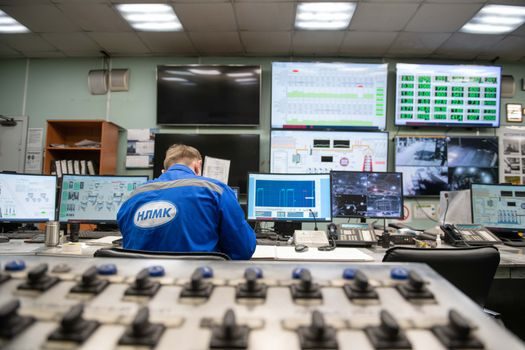
Both vendors emphasise brownfield integration rather than greenfield replacement. Arch Systems explicitly lists "modern automated lines to legacy PLCs and manual work" as ingest targets and consolidates error codes, cycle times, UPH, downtime events, Cpk trends, state changes, OEE and factory routes into a single model [S2]. Accella AI plugs into "legacy systems" and writes its decision back to the PLC for real-time reject actuation [S1].
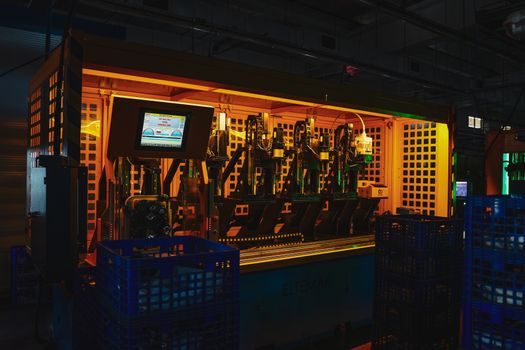
The sensor mix is industrial-PC-centric: machine-vision cameras for surface and dimensional checks, vibration and current transducers for asset-health models, barcode readers for inbound/outbound verification. The closest equipment-class references in this encyclopedia are the smart camera page (for inspection optics, frame rate, lighting and trigger budget) and the flow meter page (for the process-side telemetry that often feeds the same AI models in a process plant). On the maintenance side, pressure transmitter and smart valve positioner data are typical HART/digital inputs these platforms consume when they extend from discrete to process assets.
Decision criteria for spec-in or buy: who each platform fits
Accella AI is the better fit for plants whose binding constraint is visual quality, cosmetic defect escape and inbound/outbound verification, where the spec needs an OK/NOK digital output wired straight to a reject actuator and a low-code retraining path for shop-floor engineers [S1]. It is a weaker fit where the bottleneck is upstream yield variability, where AI inspection only catches the symptom after the process has already drifted.
Arch Systems is the better fit for plants with rich MES/ERP/SCADA telemetry, an OEE problem, a shrinking expert headcount and a willingness to let an agentic layer issue prescriptive guidance to operators [S2]. It is a weaker fit for sites with sparse instrumentation, undocumented PLC tags or quality-of-data issues — Arch's value collapses if the underlying error codes and Cpk trends are not trustworthy. For process industries, the parallel instrument-side data backbone is the smart meter class, which is increasingly shipped with on-board data-platform hooks for exactly this kind of AI consumption.
Comparison of the two reference stacks against four decision axes
Decision axis 1 — primary use case: Accella AI = visual inspection + predictive maintenance + inbound/outbound verification [S1]; Arch Systems = OEE/throughput recovery + downtime reduction + expert-capacity augmentation [S2]. Decision axis 2 — autonomy model: Accella AI keeps a human quality caller in the loop and writes OK/NOK to the PLC [S1]; Arch Systems issues prescriptive next-step recommendations to operators without dashboards as the primary surface [S2]. Decision axis 3 — data ingest: Accella AI focuses on cameras and shop-floor sensors [S1]; Arch Systems targets MES, ERP, SCADA, equipment automation, PLCs and sensors at line level [S2]. Decision axis 4 — deployment claim: Accella AI cites weeks-to-value, low-code retraining and global hardware roll-out [S1]; Arch Systems cites "weeks, not years" to measurable impact on OEE, availability, recovered value and downtime [S2].
A direct quote from Accella AI frames the value proposition bluntly: "AI-based solutions deliver against the challenging triple goal of better, faster, cheaper" [S1]. Arch Systems frames the same problem from the demand side: "in a factory with too few experts, another dashboard isn't the solution" [S2]. Both are positioning statements, but they are explicit and quotable.
Limitations, failure modes and what the spec must protect against
Model drift is the dominant failure mode. Accella AI addresses it with continuous retraining — "the longer they run, the smarter they get" — and an intuitive lifecycle workflow for deployment, retraining and decommission [S1]. Arch Systems does not publish a comparable retraining cadence and instead leans on the agentic layer to flag anomalies and adapt to "every shift, every challenge" [S2], which is a weaker guarantee on a regulated line.
Data-quality gaps in legacy PLC tags will silently break Arch's prescriptive guidance; Accella's vision models will degrade gracefully but produce false rejects on lighting changes. Any spec should require a documented training-data policy, a fallback rule when the AI confidence score falls below threshold, and an explicit human-override path wired to the reject actuator. Energy and sustainability are also surfacing as procurement criteria — Epicor, cited via IAA, notes 60% of large manufacturers are conscious of reducing carbon footprint through sustainability technology and 97% of surveyed Singapore manufacturers recognise the importance of digital transformation [S3] — which means the AI compute footprint at the line is now a defensible audit item.
Standards, sourcing and the broader Industry 5.0 framing
No specific AI-platform standard (IEC/SC42 series or equivalent) is named in the source material as governing these two products, so any spec should anchor compliance to the line-side standards already in force (IEC 61131-3 for PLC integration, IEC 62443 for industrial cybersecurity, ISO 9001 for quality management) rather than inventing an AI-specific clause. The wider framing in the source material is Industry 4.0 evolving into Industry 5.0, with the human-centric and sustainability pillars layered on top of IoT, AI, robotics and big-data automation [S3].
Rockwell Automation is referenced as a parallel smart-manufacturing and industrial-automation vendor, with site-selection and product-configuration flows covering the US and 20+ country regions [S6]. Renishaw's smart-manufacturing data platform for industrial process control is the other adjacent reference, training and genuine-parts support oriented [S5]. The general-purpose trend line, sourced from a 2025-10 industry roundup, is that "AI is no longer just a support tool in factories — it's becoming the brain of modern production systems" [S4].
Track the next two signals in the second half of 2026: a third-party audit of any of the case-study numbers cited above (Accella's >99.99% accuracy, Arch's 2x OEE / 75% downtime reduction), and the first published IEC/SC42-aligned conformance statement from either vendor or from a Rockwell-class incumbent, since that will harden the spec language engineers can put on a purchase order. The most relevant line-side parallels for the engineer writing that spec remain the smart camera for visual-AI front ends and the smart meter for process-side telemetry feeding the same agentic layer.
For related coverage, see Offshore Wind Foundation Smart Manufacturing: Robotic Welding and Line Automation 2026.