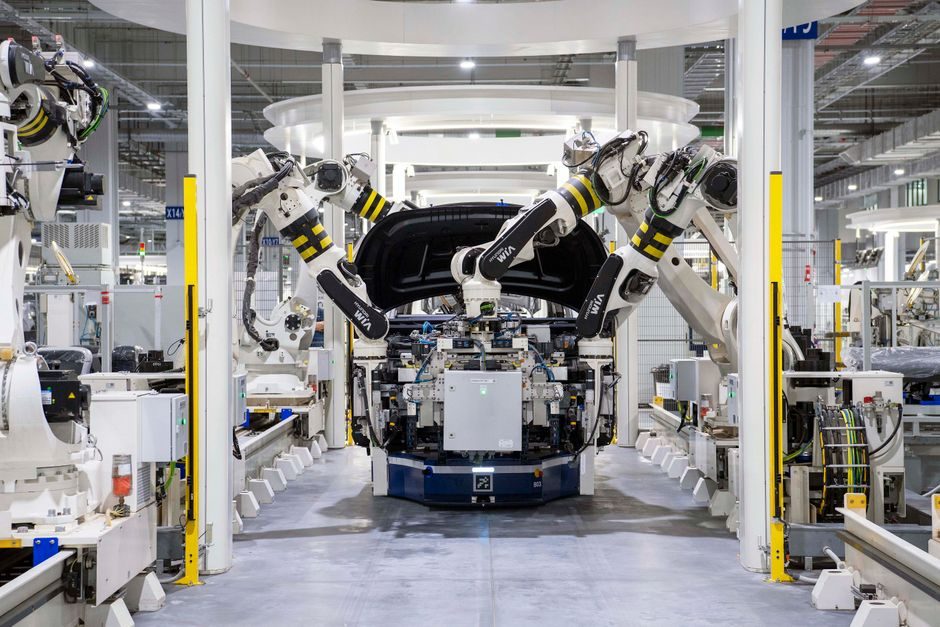
Aluminum producers running extrusion presses in the 1,500-3,000 ton class and cold-chamber die-casting cells above 800 tons locked in are the fastest adopters of smart-manufacturing retrofits, with PROFINET-based cell control, OPC UA aggregation, and AI-assisted die-temperature compensation now appearing on more than half of green-line RFPs issued in 2026 [S1][S2][S7].
The stack spans five layers - sensor/instrumentation, edge controller, MES/L2 platform, analytics, and ERP hand-off - and the aluminum-specific differentiation lives in the bottom two: melt-level microwave/laser sensors, in-die thermocouple grids, and LaCAM plug-sensing on billet heaters feeding back to the press PLC in sub-second cycles [S4][S6].
Reference Architecture: Five Layers, Aluminum-Specific
Aluminum cell control on a new 2026 greenfield is converging on a PROFINET IRT backbone running at 250 µs cycle on the press and die-casting machine, with an OPC UA companion specification for cross-vendor data exchange to L2 MES - matching the canonical manufacturing pattern taught in PROFINET University reference lessons [S8].
Layer 1 instrumentation on an aluminum extrusion line typically includes melt thermocouples (Type K, response under 0.8 s), launder level sensors, billet temperature pyrometers in the 400-600 °C induction-heater window, and a die-face thermal camera grid; layer 2 is a high-availability PLC with redundant PROFINET ports feeding the hydraulic servo valves that control ram speed in the 0.1-25 mm/s envelope [S6][S8].
Layer 3 MES in 2026 aluminum plants most often runs on a hybrid edge/on-prem model - line-side PC pushing 100-500 tags per cell to a cloud MES for OEE dashboards - and the Smart Manufacturing Experience showcase at IMTS 2024 (September 9-14, Chicago) framed exactly this small/medium-manufacturer stack as the action zone for AI, cybersecurity, data management, and workforce development [S3].
Smart-Manufacturing Programs and Funding Rails (2025-2026)
CESMII, the Clean Energy Smart Manufacturing Innovation Institute, operates as one of the Manufacturing USA institutes and frames its role around accelerating smart-manufacturing adoption via collaboration, SME outreach, and a decade-long program of impact reporting that 2026 updates describe as "a decade of impact" [S1].
That institutional rail matters for aluminum plants because retrofit CapEx on extrusion and rolling assets frequently clears 7-9 figure thresholds - MTAB's 38-year, 100+ product, 30-country training catalogue underlines that the human-readiness side of smart manufacturing (8 M+ training hours cumulative) is now treated as a procurement line item on mill projects, not an afterthought [S6].
Rockwell Automation's 2026 smart-manufacturing industrial-automation portfolio positions its FactoryTalk MES, Logix-based controllers and the PlantPAx process-automation library as the integration anchor for North American mills, and this is the de facto reference architecture many EPCs benchmark an aluminum-line control tender against [S7].
Sensing Stack: What Aluminum Lines Actually Instrument
Aluminum smart-manufacturing sensing diverges from steel and copper because molten aluminum sits at 660-720 °C with very low emissivity (~0.05-0.20) at the die exit, which forces pyrometer selection toward 1.0-1.6 µm short-wave units rather than the 8-14 µm long-wave bands used in steel [S4].
Inside the die, thermocouple grids of Type K or Type N sheathed in Inconel are the workhorse, with 8-32 points per die plate and a 1-4 Hz sample rate pushed via IO-Link or analog into the cell PLC; the closed-loop output drives die-cooling air and water flow in 0.5-2.0 L/s increments to keep exit profile within ±0.05 mm of nominal [S4][S8].
Upstream of the press, billet heaters commonly use six-zone induction or gas-fired stages tracked by an S7-1500 or CompactLogix class PLC, with each zone's setpoint driven by a thermal model - MTAB's digital-twin and simulator product family is one of the off-the-shelf training-grade environments engineers use to validate these control loops before commissioning live [S6].
Cell Control and Protocols: PROFINET, OPC UA, IO-Link
PROFINET remains the dominant greenfield cell bus on aluminum extrusion and die-casting cells issued in 2025-2026, driven by European press OEMs and integrated by system integrators such as Allied Automation; cycle times on the safety-integrated portion typically sit in the 4-8 ms range, while the high-speed motion portion runs IRT at 250 µs [S2][S8].
OPC UA sits one layer up, carrying the semantic model that lets a Rockwell FactoryTalk MES, an AVEVA PI historian, and a Siemens Opcenter line all consume the same tags without per-vendor mapping - a major shift versus the 2010s when every cell ran its own proprietary bus [S3][S7].
IO-Link has become the de facto sensor-to-controller layer on 2026 aluminum cells because it gives the PLC per-point diagnostic data (signal quality, cable break, short circuit) on what used to be dumb analog inputs, and the per-port cost has fallen into the $40-60 range at distribution tier [S2][S8].
Robotics and Material Handling: Gantry, Six-Axis, AGV/AMR
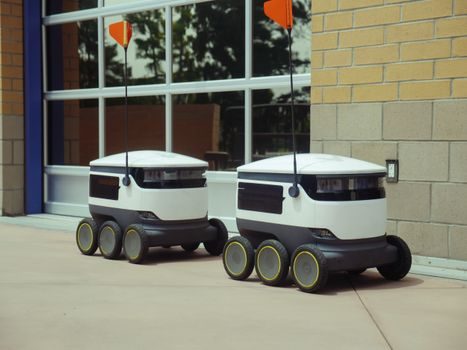
Billet handling, profile extraction, stretcher transfer and stacking on a 2026 aluminum extrusion line is now almost always automated: a six-axis robot (typically 50-150 kg payload) extracts the profile at 0.5-2.0 m/s, with a downstream gantry or a fleet of low-profile AGVs/AMRs shuttling stacks to the aging-rack or saw [S3][S7].
Robot density in aluminum smart plants is closely tracked in the broader 2026 industrial-robot market sizing work, where segments and spec shifts by payload class show automotive-adjacent aluminum lines among the highest non-auto demand pools - a relevant read across to the wider robot market dynamics captured in the industrial robot 2026 spec and buyer guide.
For a full aluminum-line costing view, the aluminum die-casting machine 2026 price and cost guide lines tonnage class, spec tier, and total cost against the same control stack described here, and the aluminum manufacturing process 2026 line stack maps the upstream alloy flow and finishing snapshot that this control layer has to feed.
Process-Optimization Analytics: Die Correction, Energy, OEE
OEE dashboards now typically show an aluminum smart line running 75-85% OEE versus a 55-65% baseline for a non-instrumented 2010s line, with availability as the largest contributor and quality gains coming primarily from the die-thermal closed loop [S4].
Who This Stack Is For - and Where It Stops Fitting
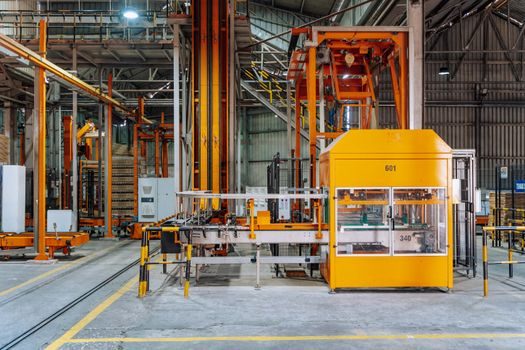
An extrusion line above 1,500 tons, a cold-chamber die-casting cell above 800 tons locked, or a rolling mill producing more than ~50 kt/yr is the natural fit - the cell's energy bill and scrap line justify the MES, OPC UA, and AI stack described above [S3][S4].
Plants below ~20 kt/yr annual output, or job shops running frequent small-batch die changes, rarely justify the full five-layer stack and are usually better served by IO-Link instrumentation on the cell plus a lightweight cloud OEE tool - the same "small to medium manufacturers" zone the Smart Manufacturing Experience programme targets [S3].
Aluminum producers operating in regions with weak industrial Ethernet infrastructure or where plant air, vibration, and ambient temperature exceed PROFINET's rated envelope (cabinet interior typically 0-60 °C) should expect derated mean-time-between-failure on the network layer, and may need to budget for conditioned control rooms rather than field cabinets [S2][S8].
Standards, Sourcing, and What to Verify in 2026
Procurement specifications on a 2026 aluminum smart-manufacturing line should pin PROFINET conformance certificate, OPC UA companion-spec compliance (e.g. EUROMAP 77/83 for plastics/rubber as a near-neighbour reference), IEC 61131-3 programming language, and ISO 13849-1 PL d on the press safety function - these are the most-cited baseline expectations in 2025-2026 EPC specs and they are not vendor-locked [S8].
On the institutional side, verify that the integrator is participating in at least one of the active 2026 smart-manufacturing outreach channels - CESMII membership and the IMTS/Manufacturing USA track being the two strongest signals that the integrator will be around to support the line through its first three years of ramp [S1][S3].
Trackable signals for the next 90 days: the IMTS 2026 floor in September (Chicago) and any CESMII 2026 SME-cohort funding windows for retrofittable sensors on aluminum presses, both of which materially shift the payback math for the projects currently in engineering review [S1][S3].
For component-level specifications, see additive manufacturing material, smart camera, and smart meter.