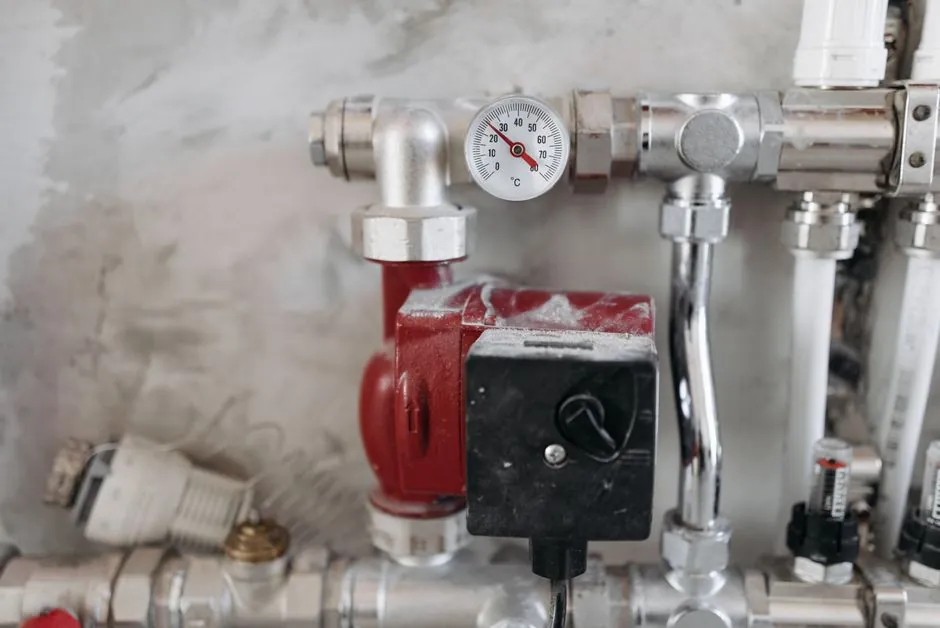
A maintained rotary Hand-Off-Auto selector switch in 22 mm or 30 mm mounting, rated NEMA 4X or IP66 and carrying 600 V / 10 A minimum inductive contacts, is the dominant specification for fractional-HP HVAC motors as of August 2026, based on published application guidance [S1][S2].
The HVAC envelope (rooftop units, air-handler coil circuits, electrical-room exhaust fans, freeze-protection pumps) subjects any operator to dust, condensate, and temperature swings, so switch sealing, contact rating, and lockout provisions matter more than bezel color. Rotary maintained action is preferred over momentary rocker or tactile styles because the position must be visible at a glance from several meters away by a technician in a mechanical room [S2].
Selection Criteria: What Actually Decides the Part Number
Four criteria decide the part number before any catalog is opened: contact rating, sealing, maintained action with three positions (HAND-OFF-AUTO), and a means of locking the position with a padlock or key, per current fractional-HP HVAC practice [S1].
Contact rating should be sized for the locked-rotor inrush of fractional motors, typically 600 V at 10 A minimum, with the catalog data sheet listing an explicit inductive / HP rating rather than a bare resistive amp number; undersized contacts weld closed and defeat the OFF function [S1]. Sealing must reach NEMA 4X or IP66 because rooftop and mechanical-room locations see water, glycol mist, and dust that destroy unsealed mechanisms within a season. The selector switch family in industry catalogs spans 16 mm to 30 mm panel cutouts, but 22 mm and 30 mm dominate HVAC because both accept standard NEMA-style contact blocks and locking accessories. The switch must be maintained (stays where it is set), not momentary spring-return, because the AUTO position has to hold unattended for months at a time.
Main Options Compared: Rotary HOA vs Rocker vs Pushbutton
Maintained rotary HOA wins on safety and visibility; illuminated rocker wins on panel density; sealed pushbutton wins on low-cost indicator duty only [S2].
Three switch families actually show up on HVAC submittals, and they are not interchangeable. A maintained rotary HOA in 22 mm or 30 mm form gives three labeled detent positions, padlock or key lockout, and visible state from across a mechanical room; that is the default for any motor an engineer needs to manually force on for commissioning or service. Illuminated rockers (typically snap-action, 10 A to 20 A) deliver dual-function ON/OFF plus a status neon or LED in one bezel, useful on small packaged-unit control doors where panel real estate is tight. Sealed pushbuttons and tactile switches sit at the bottom of the stack and are reserved for reset, test, or low-current logic duties, not for motor isolation. The published HVAC control-switch guide [S2] lists DIP, pushbutton, rocker, snap action, and tactile styles in its catalog tree, but only the rocker and a separate rotary SKU are realistic motor-control candidates; DIP and tactile are for set-up, not operation.
Where HOA Is Right vs Where It Is a Liability

HOA is the right call when a technician must force a fractional motor on for service, test interlocks, or recover from a sensor fault; it is the wrong call when the motor is a life-safety freeze-protection device, because leaving it in OFF is a documented failure mode that has caused coil freeze-ups and property damage [S1].
Engineers should reach for HOA on electrical-room exhaust fans, where periodic manual run-checks are part of maintenance, and on pumps and fans that need bench-test or troubleshooting access. The published argument is blunt: without HOA, technicians resort to jumper wires across contactor coils or to manually pressing contactor plungers, both of which expose them to arc-flash and shock hazards. The reverse risk is real and reported across multiple field cases, where a fractional freeze-protection pump was found switched to OFF, either deliberately to silence nuisance trips or accidentally, and the coil froze and burst. Two engineering compromises close that gap: a selector switch wired for HAND and AUTO only, with no OFF detent, or a key-lock or padlock-hasp variant so the position cannot drift without authorization. Modern BAS or DDC systems reduce the need for physical HOA on new builds by offering remote command, but they do not eliminate it, because the field service technician still needs local override during commissioning.
Spec Mapping: Contact Block, Sealing, and Locking Accessories
A 30 mm NEMA-style maintained 3-position selector with one NO and one NC contact block, NEMA 4X / IP66 sealing, and a padlock hasp in the OFF position covers roughly 80% of fractional-HP HVAC motor service; the 22 mm IEC-style equivalent covers the rest where panel depth is constrained. [S1]
On the contact-block side, fractional-HP single-phase motors up to about 1 HP at 115/230 V can be switched by a 10 A inductive-rated block, but anything driving a 3-phase motor or a contactor coil above the switch's rating must use the selector as a pilot device only, not as the line-side isolator. The line-side disconnect remains a separate motor-rated switch or breaker; the selector's job is logic, not isolation. Sealing comes from the bezel gasket plus an enclosure rated to NEMA 4X for wet rooftop duty or NEMA 12 for indoor mechanical rooms; cost differences between NEMA 4 and 4X are usually justified only by exposure to corrosive cleaning chemicals or coastal salt air. Locking accessories vary by manufacturer but typically include a padlock hasp that engages only in OFF, a key lock that engages in any position, or a spring-return-to-center variant for momentary HAND with maintained AUTO; specifying a key lock where the same key pattern is used across a facility cuts lost-key downtime. The catalog SKUs that surface in this niche are NEMA-style maintained selectors, and 22 mm or 30 mm maintained rotary operators with 600 V / 10 A blocks, both of which the industrial switch family in major lines covers.
Application Examples: Freeze Pumps, Exhaust Fans, and Packaged Units
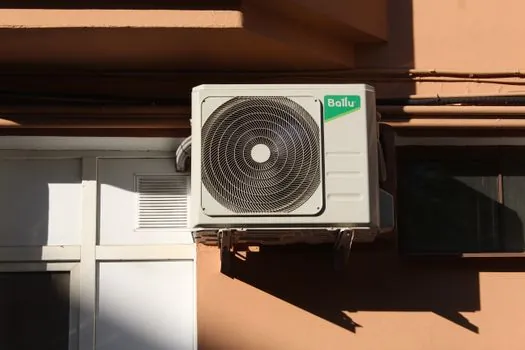
For freeze-protection pumps, the recommended wiring is a low-limit temperature sensor in series with a flow switch, optional OAT-based staging, and current-switch monitoring on the pump lead that triggers a damper shutoff on proof-of-flow loss; the HOA, if used, must lock only in OFF or be wired without the OFF detent [S1].
For electrical-room exhaust fans, the thermostat typically alarms to the BAS at around 90°F (32°C) and the selector gives the technician manual start without needing to land at the contactor; current-switch feedback is the cheapest way to alarm a failed fan. For packaged rooftop units, the HOA often sits on a small local control panel alongside a HAND-OFF pilot for the supply fan, and a separate AUTO position routes to the BAS schedule; the marine HVAC and industrial control segments share the same switch topology because the panel environment and service intervals are similar. The isolating switch is sometimes confused with the HOA in submittals, but a true isolator is a load-break disconnect, not a maintained selector with three detents.
Limits and Failure Modes: When to Skip the HOA
Skip the HOA when the motor is critical life-safety, when the BAS already covers all service modes, and when adding the switch, enclosure, and conduit runs cost more than the occasional service call they would prevent. [S1]
Known failure modes are not theoretical: a switch left in OFF defeats the auto control loop, contacts weld closed if the inductive rating is undersized, and a non-locking switch drifts between positions when the panel is bumped. Field experience documented in the fractional-HP HVAC guidance shows that nuisance-tripping freeze pumps, switched off by occupants to silence them, are a recurring cause of coil damage, and the same source argues that a DDC-monitored circuit with auto-reset and remote alarm can substitute for the physical switch on simple loops [S1]. The economic cutoff is roughly the cost of the switch, weatherproof enclosure, and two hours of conduit versus the avoided cost of a service truck roll; below that line, eliminate the HOA and rely on the BAS. Above that line, specify the maintained rotary 3-position selector with a lock, not a rocker, not a tactile, not a DIP. The level switch family in the same catalog tree handles a different job (sump and condensate sensing) and should not be substituted.
Sourcing and Standards to Anchor the Spec
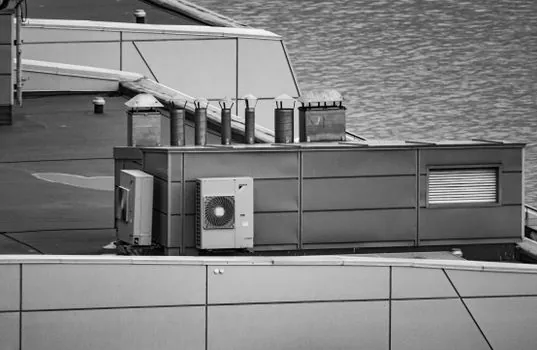
Anchor the HVAC selector spec to UL 508 industrial control panel recognition, NEMA 250 enclosure rating (Type 4X for wet/outdoor, Type 12 for indoor), and IEC 60947-5-1 low-voltage switchgear for the contact block; the bezel sealing mark IP66 is the parallel IEC designation [S2].
Buyers looking at rotary 3-position selectors for HVAC should compare at least three criteria across candidates: maintained vs momentary action, contact block voltage and inductive amp rating, and locking accessory availability in the OFF position. A representative product pattern seen in distribution is a rotary selector with heat ON/OFF labeling for unitary heater control, showing the rotary maintained form factor is the established fit for this duty class [S3]. For a deeper walk through the four-layer spec path on selector switch selection: four-layer spec path and failure traps, the editorial guidance there complements this HVAC-focused view. Track two signals going into late 2026: BAS vendors tightening remote-override audit trails (which reduces the case for physical HOA on new builds), and manufacturers expanding 22 mm maintained rotary SKUs with integrated LED indication (which compresses panel real estate and may push some rocker applications toward rotary).