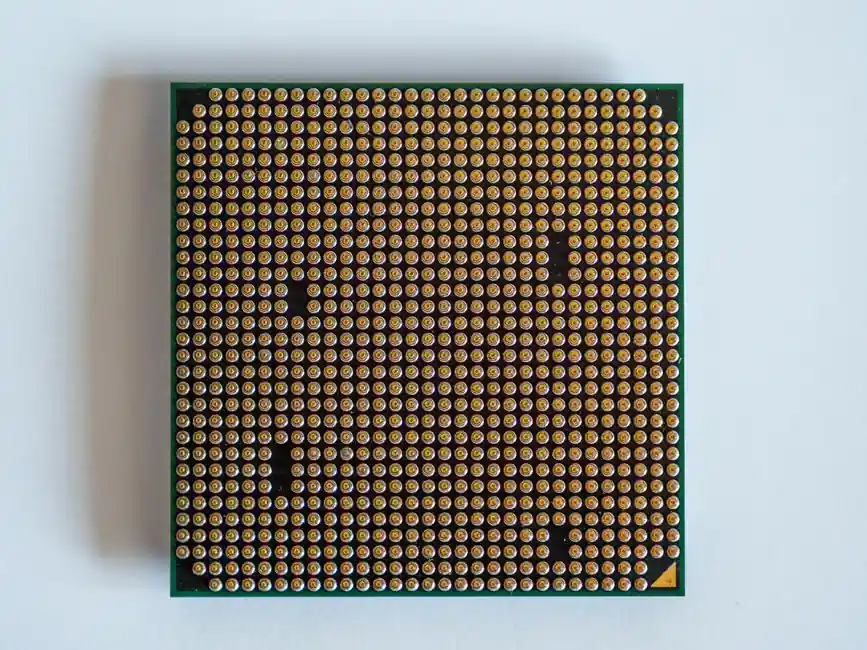
For fab thermal data acquisition in 2026, a 4–64 channel paperless recorder with 0.2% FS accuracy, universal TC/RTD/mA inputs, and Modbus TCP remains the workhorse, while IR pyrometers handle the non-contact wafer, rod, and reflow steps that contact sensors cannot survive [S2][S4].
Semiconductor thermal monitoring splits cleanly into two regimes: in-chamber profile data captured by instrumented wafers and IR spot sensors, and plant-side process historian data captured by panel-mount paperless recorders. Choosing the right class on the front end saves the fab from retrofit costs that run three to four times the original unit price in wiring and gateway work [S5].
Why a Single-Channel Logger Fails a 300 mm Fab
USB single-channel loggers quoted at ±0.3–0.5°C over 0–70°C with 8–32 k samples work for cold-chain audits, but a diffusion furnace or implant tool needs simultaneous TC inputs on multiple heater zones plus a reference junction, which a single-channel device cannot physically accept [S2]. A 16-channel universal input paperless recorder accepts J/K/T/E/R/S/B/N thermocouples, PT100/PT1000 RTDs in 2-/3-/4-wire, 0–10 V, and 4–20 mA on any channel switched in software, removing the per-channel module cost that locked older strip-chart units to a fixed input mix [S2].
Resolution is the second failure point for entry USB loggers. A 0.1°C resolution over a 0–1,200°C type-K span is 1 part in 12,000, which exceeds the 16-bit ADC that most low-cost units ship; a 24-bit input module with 4-wire RTD drops loop error below ±0.1°C at PT100, which is the band semiconductor process engineers actually need for ramp/soak profiling [S2]. For a deeper look at the underlying measurement layer, see the temperature measurement fundamentals reference.
Instrumented Wafers and TEDAQ: In-Situ Thermal Mapping
TEDAQ (Thermo Electric Data Acquisition) supports 1 to 60+ temperature sensors on a single instrumented wafer run, with real-time high-accuracy acquisition designed for next-generation process control where miniaturization has tightened thermal budgets [S1]. The platform is built around the same instrumented-wafer hardware that maps temperature directly on the wafer surface during etch, CVD, and anneal steps where no external probe can reach.
The architectural advantage over a thermocouple-rack recorder is positional resolution: instead of averaging four or five heater-zone TC readings, the fab gets a 60-point thermal map of the actual wafer every second, which is what process engineers need to correlate slip, warpage, and dose-uniformity faults to a specific radial gradient. TEDAQ integrates with existing process control systems rather than acting as a parallel historian, which is the difference between a diagnostic tool and a production-floor data source [S1].
IR Pyrometers for the Steps Contact Sensors Cannot Survive
Silicon rod growing in a polysilicon CVD reactor is the canonical case where contact sensors fail: push a thermocouple into the rod and the rod melts if power overshoots, forcing a process stop and restart [S4]. Fluke Process Instruments addresses this with single-wavelength spot pyrometers in the Endurance, Thermalert 4.0, and Mi3-100 families, plus the ES150 line scanner and ThermoView TV40 thermal imager for area coverage, and a Datapaq reflow tracker system for SMT profiling [S4].
Spot pyrometers are quoted as less affected by emissivity variation than two-color units in this application, which is why the polysilicon-growing recommended list is dominated by single-wavelength devices rather than ratio pyrometers [S4]. The recorder side of this architecture is a paperless recorder that accepts the pyrometer's 4–20 mA or TC-equivalent output, time-stamps it, and pushes it to a historian via Modbus TCP; pairing the wrong recorder class here costs the engineer the alarm latency that protects the rod from a thermal runaway. For the controller side of a closed-loop heater zone, see the temperature controller selection criteria page.
Channel Count, Memory, and I/O: 2026 Spec Bands
The 2026 multi-channel paperless recorder band is 4 to 64 universal inputs on a 5.6″ to 12.1″ color HMI, 0.1°C or 1°C display resolution, 0.2% FS accuracy, 32–128 GB SD storage, and Modbus TCP/RTU plus Ethernet, with list prices on export portals of US$530–2,700 per piece at a 1-unit MOQ [S2]. The HUATO S1500 and a 16-channel thermocouple data logger top the 2026 multi-channel shortlist on channel density and a -200°C to 1,800°C type-K range, which covers every step from cryo pump purge to epitaxial growth [S3].
Memory architecture matters as much as channel count. A 43,000-record non-volatile memory at a 1-minute sample interval is the de-facto entry benchmark and works out to roughly 30 days of dual-channel data; at a 10-minute interval the same memory stretches past 10 months [S5]. For continuous process historians the practical floor is a 32 GB SD card with FIFO overwrite, because nothing annoys a yield engineer more than a recorder that silently stops logging when the buffer fills on a Saturday night. For a walk-through of how the recorder differs from a controller on the same skid, see this paperless recorder buying guide.
Sensor Type, Calibration, and Traceability for Process Lines
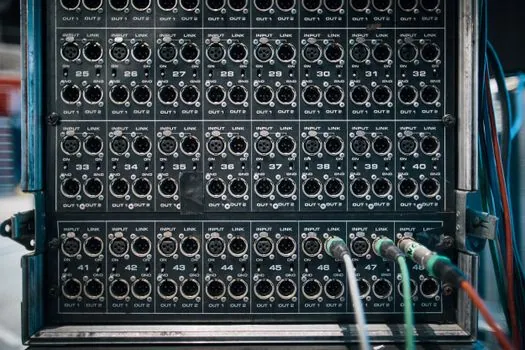
Type-K thermocouples dominate the heater-zone and cold-junction-compensation envelope because they cover -200°C to roughly 1,370°C at low cost, but for absolute accuracy below ±1°C on a heat exchanger outlet, a 4-wire PT100 RTD is the only honest answer; a 24-bit input module drops RTD loop error below ±0.1°C, while a 16-bit input drifts visibly with lead resistance on long cable runs [S2].
Calibration traceability is where many fab recorders quietly fail an audit. Lab-grade units ship with calibration certificates and accuracy bands of ±0.3°C / ±2%RH, mid-band units at ±0.5°C / ±5%RH, and entry units at ±1°C / ±8%RH, and the choice should be driven by the regulated environment rather than the sticker price [S5]. For pharmaceutical-adjacent semiconductor lines operating under GxP, a 21 CFR Part 11 paper trail requirement drives the recorder choice toward units with sealed audit logs and electronic signatures rather than the cheapest Modbus node on the panel.
Who a Paperless Recorder Is FOR, and Who It Is NOT For
A 16–64 channel paperless recorder is the right answer for a process engineer who needs simultaneous TC/RTD inputs from multiple heater zones, vacuum pump skids, and chiller loops, plus a Modbus TCP uplink to a SCADA or historian. It is also the right answer for a fab running a 24/7 historian with audit log retention in the 1–10 year range and a need to time-stamp thermal events to within one second across the tool set. [S2]
It is the wrong answer for cold-chain shipping audits on a single pallet, where a US$5–40 single-use USB logger is the correct economic choice [S2]. It is also the wrong answer for a utility boiler where a signed paper trace is still a regulatory artifact, since strip-chart and circular-chart paper recorders remain in service for exactly that archive role with 1–4 pen models covering 0–200 mV / 4–20 mA / TC inputs at ±0.25% FS accuracy [S2]. For humidity-laden cleanroom corridors, the more specific temperature and humidity recorder class is a better fit than a generic paperless unit.
Comparison Map: Four Recorder Classes Against Four Decision Criteria
On channel count, a single-use USB logger is 1 channel, a strip-chart is 1–4 pens, a paperless recorder is 4–64, and a wireless IIoT node is 1–8 per gateway. On accuracy, USB is ±0.3–0.5°C, paperless is 0.2% FS, strip-chart is ±0.25% FS, and IIoT is 0.2–0.5°C [S2]. On real-time alarm, USB and strip-chart are absent or mechanical, paperless is full software alarm stack with relay outputs, and IIoT pushes cloud or SMS notifications.
On price band, USB is US$5–40 retail or US$20–60 industrial, paperless is US$530–2,700 export list, strip-chart sits between, and wireless IIoT nodes land in the US$80–400 band per node plus gateway cost [S2]. For a semiconductor fab, the only class that simultaneously clears channel count, accuracy, real-time alarm, and historian integration is the paperless recorder; the others are gap-fillers for cold-chain, paper-archive, or remote-telemetry use cases where a wired panel-mount unit is over-spec or uneconomic to install. A useful adjacent read for plant-floor enclosure and ATEX context is this power distribution box ATEX spec map, which carries over the same hazardous-area thinking for fab solvent rooms.
Limits, Failure Modes, and What to Watch in 2026
Three failure modes dominate 2026 field returns on semiconductor paperless recorders: cold-junction compensation error on long TC runs through cable trays, SD card write fatigue on units logging at 1-second intervals, and Modbus TCP register-map drift between recorder firmware revisions and the SCADA gateway. The first is solved by moving to a 24-bit input module and 4-wire RTD for the critical zones [S2]; the second is solved by using industrial-grade SD cards rated for the temperature and write-cycle envelope; the third is solved by locking the recorder and gateway firmware together during commissioning and documenting the Modbus map in the plant's tag database.
Two trackable signals for the rest of 2026: TEDAQ-class instrumented-wafer platforms expanding channel counts beyond 60 as 3 nm and 2 nm nodes tighten thermal budgets [S1], and IR pyrometer vendors pushing more two-color and short-wavelength models into the polysilicon and epitaxial step where single-wavelength units already struggle with emissivity drift on coated rods [S4]. For a fab specifying today, the safe move is a paperless recorder with spare universal input slots, a 24-bit RTD module on the critical zones, and a documented Modbus map that the control system team can lock on day one.