
At sea level, atmospheric pressure can in principle support a water column of about 10.33 m, but the practical suction-lift ceiling for a standard end-suction centrifugal pump sits at roughly 8 m once pipe friction, vapor pressure, and a cavitation safety margin are subtracted [S5][S7].
The same physical limit is most often quoted in imperial units: 34 ft is the absolute theoretical maximum for cold water at sea level, while 25 ft is the realistic working limit at ambient temperature, and 22 ft is the threshold above which priming becomes unreliable on a stock end-suction unit [S1][S2][S3].
What "suction lift" actually means on a centrifugal pump
Suction lift is the vertical distance from the free surface of a water source up to the pump centerline when the source sits below the pump, a flooded-suction arrangement has lift = 0 [S5]. The pump must generate a partial vacuum at the inlet; atmospheric pressure then pushes the liquid up the suction pipe, which is why suction lift is fundamentally capped by barometric pressure, not by impeller design [S5].
For a stock non-self-priming end-suction unit, BPMA guidance puts the real-world capability at 2 to 4 m on a typical design, with 8 m cited as a "max" only when the suction line is unusually short, airtight, and generously sized [S7]. That gap between 4 m "typical" and 8 m "max" is almost entirely friction and air leakage, both of which eat directly into the available NPSH margin [S5].
The 34 ft / 10.33 m theoretical ceiling, and why no pump actually reaches it
34 ft of cold water at sea level is the textbook number, set by the weight of the atmosphere (≈14.7 psi or 101.325 kPa) pushing down on the open source [S1][S3]. At 20 °C the equivalent metric value works out to about 10.33 m, which the S5 author rounds to "about 10 meters" before friction and vapor pressure are subtracted [S5].
No production pump attains the theoretical value because three losses stack on top of the barometric head: friction in the suction pipe (which scales with the square of velocity), vapor pressure of the liquid (which rises with temperature and eats into NPSH), and a mandatory cavitation safety margin, often quoted as 0.5 to 1.0 m of head [S5]. Net result: a real pump is sold with a published "maximum suction lift" closer to 7 to 8 m (23 to 26 ft) than to 10 m [S4][S5][S6].
Where the limit breaks: altitude, temperature, and the NPSH calculation
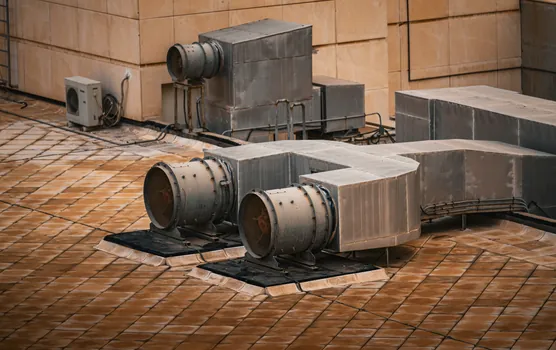
Two variables move the ceiling the most: site altitude and liquid temperature. Atmospheric pressure drops with elevation, so a pump rated for 8 m at sea level may only deliver 6 to 7 m at 1,000 m, and roughly 5 to 6 m at 2,000 m, since each 1,000 ft of altitude costs about 1 ft of suction lift [S1]. Hot water is worse: at 60 °C vapor pressure is roughly 0.2 m of head, at 80 °C it is about 0.5 m, and at 95 °C it is over 0.8 m, all of which are subtracted from the atmospheric budget before friction is even counted [S5].
This is the NPSHa / NPSHr trade. Required NPSH is set by the impeller geometry (NPSHr typically rises with the square of flow), and the suction lift must keep NPSHa comfortably above NPSHr at all running points, with a margin for transient excursions during start-up or a slugs of warm liquid [S5]. For ambient water on a 25 °C day, the practical ceiling of 25 ft / 7.6 m reconciles the 34 ft theoretical and 22 ft priming-reliability numbers in the field data [S3].
Standard end-suction vs self-priming vs positive-displacement: a head-to-head on deep lift
Once the suction lift passes ~6.7 m (22 ft), three options stay in the running, and the decision is driven by what kind of failure mode you are willing to accept. [S2]
Standard end-suction centrifugal pumps are the cheapest and most available, but they sit at 2 to 4 m of reliable lift, 8 m as an absolute ceiling, and become unreliable above ~22 ft because any pinhole air leak breaks the vacuum and the priming cycle has to repeat [S2][S7]. Self-priming centrifugal pumps add an air-separation chamber that lets the unit re-prime without operator intervention, and push the practical ceiling up to roughly 8 m with intermittent-duty ratings; this is the typical construction-dewatering choice for 5 to 7 m lifts [S2]. Positive-displacement alternatives (diaphragm, piston, peristaltic) decouple lift from atmospheric pressure entirely and routinely spec to 9 m or more, at the cost of flow rate and solids handling, see diaphragm pump for the typical pneumatic-driven envelope [S2].
For solids-laden or deep-well service, a hydraulic submersible placed directly in the source eliminates the suction line altogether, no priming, no vacuum, no 8 m ceiling; the trade is a separate hydraulic power unit and higher capital cost [S2]. The same logic shows up in industrial pump selection guides, which rate flooded suction (submersible or below-tank installation) as the default for any new build where the source can be put below the pump.
Field rules: how engineers keep a centrifugal pump inside its envelope
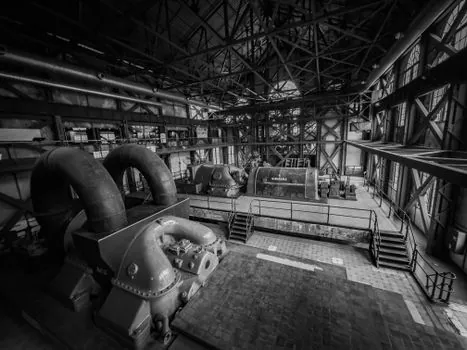
Five operating rules keep a centrifugal pump on the right side of the 8 m line in practice, and all of them show up in the BPMA and field-installation guidance [S7]. First, keep the suction pipe as short and as straight as possible, every elbow costs 0.3 to 0.5 m of equivalent head. Second, oversize the suction line by one nominal diameter relative to the discharge, friction losses scale roughly with v², so dropping velocity from 2.5 m/s to 1.8 m/s cuts suction-line loss by ~50%. Third, use a foot valve with a generous strainer area to keep air out of the line after shutdown. Fourth, keep the liquid cold: every 10 °C rise in temperature costs roughly 0.1 to 0.3 m of effective lift through vapor pressure alone [S5].
Note that the 8 m figure is a reliability number, not a hard physical stop; a well-sealed, oversized suction line on a fresh, cold-water end-suction pump has been demonstrated at 8.5 to 9 m in the field, but the margin to cavitation collapses to almost nothing and the next transient (warm slug, air bubble) will trip the pump [S5][S7].
Who this ceiling applies to, and who it does not
The 8 m / 26 ft ceiling applies to standard end-suction and overhung centrifugal pumps handling clean, near-ambient water on a fixed installation. It does not apply to self-priming units (which buy back roughly 2 to 3 m of effective lift through re-prime capability), to submersible or hydraulic submersible pumps (no suction line at all), to positive-displacement units like diaphragm pumps or gear pumps (which are limited by drive power, not atmospheric pressure), or to hot-oil and high-vapor-pressure services where the atmospheric budget is already spent by vapor pressure alone [S2][S5].
It also does not apply to flooded-suction arrangements, where the source sits above the pump centerline: in that case the pump has positive suction head and the "suction lift" term is replaced by the static suction head, which subtracts from NPSHa rather than adding to it [S5].
Limits, failure modes, and what the published curve does not tell you
Three failure modes define the practical 8 m envelope, and each one shows up in the field data. Cavitation is the textbook failure: vapor bubbles form at the impeller eye when local pressure drops below vapor pressure, then collapse on the vane pressure side, pitting the bronze or stainless impeller within hours [S5]. Loss of prime is the more common construction-site failure: any air leak in the suction line or foot valve drops the available vacuum, and the pump either runs dry or cycles the prime chamber endlessly. Vapor locking shows up on hot-service pumps (boiler feed, hot oil, glycol): the suction line heats above vapor pressure, the pump spins a vapor pocket, and flow drops to zero even though the mechanical seal is intact [S5].
The published "maximum suction lift" on a nameplate is almost always the best-case number, measured on cold water with a new, oversized, factory-leak-tested suction pipe; the real installed value is 30 to 50% lower once fittings, age, and warm summer water are factored in [S5][S7]. If the calculated suction lift sits within 1 m of the published maximum, switch to a self-priming unit, a flooded suction, or a hydraulic pump driver, do not chase the last meter with a stock end-suction pump.
For deeper or hotter service, watch the NPSHr curve on the manufacturer's published performance sheet, not the marketing suction-lift number, and re-derive the field ceiling using NPSHa = Ha - Hv - Hfs - Hvpa, with a minimum 0.5 m margin to NPSHr at the design flow point. Track altitude-adjusted atmospheric pressure (Ha drops ~0.12 m of water per 100 m of elevation) and liquid temperature at the pump suction, not at the source, since a long suction line in summer sun can run 5 to 10 °C above the open tank.
See also our earlier report, 2026 CDMO capacity: biologics, sterile fill-finish, and ADC platforms reshape.