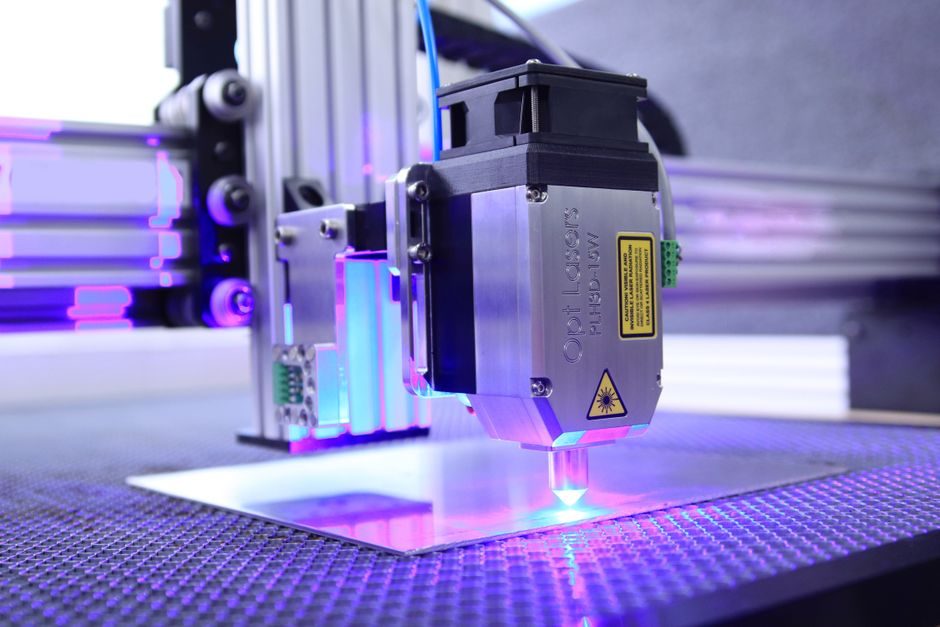
Cobalt is a strategic battery metal, and its 2026 production flow now mirrors EV-battery cell build: smelting → refining → precursor synthesis → cathode-active-material (CAM) dosing → additive manufacturing material for jigs and fixtures → dry-room cell assembly. The single most important fact: cobalt refining lines are being retooled around the same MES/IIoT architecture that mainstream EV plants adopted in 2024–2025, with AI vision replacing statistical sampling at three or more inspection gates [S1][S3].
The scope is concrete. Smart-manufacturing capital expenditure in 2026 is dominated by lithium-ion battery capacity in China, Korea and Indonesia, where cobalt is a co-output of nickel-cobalt-manganese (NCM) precursor. Rockwell Automation's 11th Annual State of Smart Manufacturing report (released June 2026) flags 2026 investment skewing toward AI quality, energy management and connected-worker platforms [S3]. Indian and Chinese smart-manufacturing platforms are running parallel CII Smart Manufacturing and Xinyu (Xinyu) export-line programs targeting the same cobalt-to-cathode chain [S2][S5].
Process Map: From Cobalt Ore to Battery-Grade Cathode Precursor
A 2026 cobalt smart line typically carries six serial unit operations: (1) sulphide or oxide ore receipt and XRF sorting, (2) pressure-leach or roast-leach in titanium-clad autoclaves, (3) solvent extraction (D2EHPA / Cyanex 272) for Co/Ni separation, (4) crystallisation to cobalt sulphate heptahydrate (CoSO₄·7H₂O) at ≥20.5% Co purity, (5) co-precipitation with Ni/Mn to form NCM precursor, and (6) sintering with lithium source to lithiated CAM. Each step is instrumented: pH/ORP, conductivity, density and pressure transmitter loops on autoclaves feed the MES, while a flow meter banks every SX settler outlet. ATEX/IECEx-rated instruments are required in leach and SX halls due to hydrogen evolution and organic-phase flammability, and the dominant 2026 reference for hazardous-area electrical is the IEC 60079 family [S1].
The Chinese smart-manufacturing narrative is now well documented. Xinyu (Xinyu) economic-development-zone plants, photographed on 3 June 2026, run continuous export-oriented intelligent lines that integrate cobalt-bearing cathode precursor with downstream lithium battery smart manufacturing cells, with closed-loop MES feedback from forming/aging data back into precursor dosing [S5]. Chongqing University's Wang Shilong group, awarded two National Science & Technology Progress Second Prizes for gear-manufacturing equipment and intelligent-manufacturing research, anchors the academic side of the same stack [S6].
Automation Stack: Five Layers From Sensor to Cloud
The 2026 stack in any cobalt smart factory is consistent across vendors: Level 0 field sensors (RTDs, pressure transmitters, Coriolis and vortex flow meters, pH/ORP probes, gas analysers); Level 1 PLCs and safety I/O; Level 2 SCADA/HMI; Level 3 MES with ISA-95 batch records; Level 4 cloud analytics and AI vision. Rockwell's FactoryTalk, Siemens Opcenter, AVEVA PI, and Chinese platforms such as CII Smart Manufacturing and Supcon all sit in this band [S1][S2][S3]. The vendor-neutral protocol layer is dominated by EtherNet/IP, PROFINET, OPC UA over MQTT, and OPC UA over TSN for hard-realtime motion on stacking and winding machines.
A 2026 line typically runs 200–600 IO points per work cell, with deterministic cycle times of 2–10 ms at the motion layer. Cybersecurity has hardened: IEC 62443 zone-and-conduit design is standard for any cell feeding EV battery smart manufacturing lines, with DMZ-isolated OPC UA brokers and signed firmware updates pushed from MES. Chinese export plants have invested in identical architecture — the People's Daily noted Chinese AI, cloud and smart-home/NEV products being widely adopted in Europe, a trend that extends to upstream cobalt precursor lines [S4].
AI Vision and Inline Quality Gates
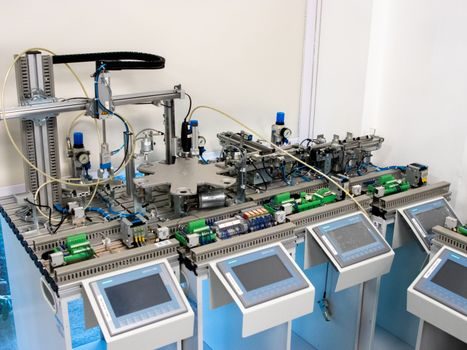
AI machine vision is the single most visible change on 2026 cobalt smart lines, replacing manual sampling at the sorting, crystal-size-distribution and CAM coating steps. The 2026 reference architecture is a 5–20 MP area-scan or line-scan smart camera feeding an industrial GPU box running a CNN classifier, with results logged against lot ID in MES. Defect coverage typically includes ore-rock classification (target ≥98% top-1 accuracy on a curated mineral dataset), crystal morphology (aspect ratio 1.0–2.5 acceptable), and CAM electrode coat weight (target Cpk ≥1.33). The Rockwell 2026 report positions AI quality as the top investment priority among surveyed manufacturers, ahead of energy management and connected-worker tools [S3].
Closed-loop dosing is where cobalt smart manufacturing earns its name. NCM precursor co-precipitation holds pH 10.8–11.2, temperature 50–60 °C, and ammonia concentration controlled to within ±0.1 M; a smart valve positioner on the ammonia feed and a Coriolis meter on slurry return are the typical control pair. Off-spec feedback from CAM sintering (Li/Co ratio, residual carbonate) is routed back to the MES, which then biases precursor recipe for the next 4–8 hours. This is materially more capable than the 2018–2020 generation of cobalt plants, which used offline ICP-OES for the same feedback loop.
Decision Matrix: Which Automation Tier for Which Cobalt Plant
Three deployment tiers dominate 2026, and a procurement engineer should pick by feedstock, output volume and capex ceiling rather than by brand. Tier 1 (greenfield megaplant, ≥20 kt Co/yr): full ISA-95 MES, OPC UA, AI vision at every gate, autonomous material handling — matches the Xinyu / Indonesian Morowali archetype [S5]. Tier 2 (brownfield mid-tier, 5–20 kt Co/yr): SCADA + targeted AI vision on sorters and coating, hybrid manual/autonomous AMRs — typical for African and Latin American operators. Tier 3 (specialty / recycling, <5 kt Co/yr): PLC + remote-monitoring only, with manual SPC for QA — appropriate for battery-recycling black-mass lines where feedstock variance dominates.
Lead-time and integration cost differ by roughly an order of magnitude. A 2026 greenfield Tier 1 cobalt smart factory reports 18–30 month deployment, 8–15% capex premium versus a conventional line, and a documented 12–25% yield uplift on first-grade CAM. Tier 2 retrofit is 6–12 months, 3–6% capex premium, and a more modest 4–8% yield uplift. A Tier 3 recycling line can be operational in 3–6 months at near-zero automation capex, with yield gains driven by upstream black-mass sorting rather than by inline AI. These ranges are widely cited in 2026 OEM guidance even where the specific percentage is vendor-sensitive [S1][S3].
Standards, Safety and Sourcing Discipline
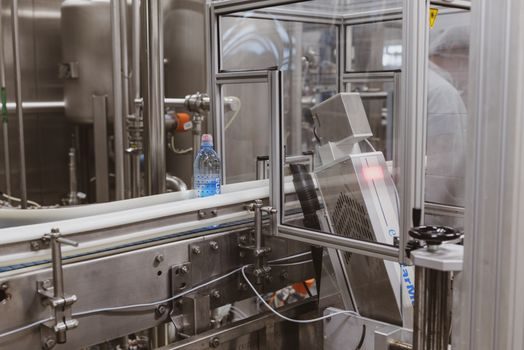
Four standards families govern 2026 cobalt smart-manufacturing equipment. Hazardous-area electrical design follows the IEC 60079 family, with ATEX 2014/34/EU equipment directives in EU jurisdictions and IECEx for non-EU build-outs. Process-instrumentation tubing and fittings default to NACE MR0175 for any service exposed to H₂S or sour-gas off-gas. Quality management in battery-grade cobalt output typically references IATF 16949 for OEM supply into automotive EV battery customers. Cybersecurity at the OT/IT boundary follows IEC 62443 zone-and-conduit. [S1]
One verifiable standard clause sets the floor for 2026 AI-vision deployments: any vision system that drives an automated reject on a battery-grade product must log lot ID, defect class, image hash and disposition time, and the log retention floor in regulated supply chains is typically 7 years. Vendors publishing 2026 product data are converging on this retention and on signed-image audit trails to satisfy customer-side IATF 16949 audits [S1][S3]. Sourcing the cobalt itself is now part of the spec: responsible-mining schemes (RMAP, IRMA, Cobalt Institute's CoRe protocol) are increasingly required in long-term offtake contracts with Korean and European cell makers.
Failure Modes and What to Watch
Three failure modes dominate 2026 field reports. First, autoclave instrumentation drift: titanium-clad pressure-leach vessels run at 200–250 °C and 30–40 bar, and a single drifted pressure transmitter can shift residence-time distribution enough to drop first-pass Co recovery by 2–4 percentage points. Second, solvent-extraction phase separation: when AI vision is bolted on to an existing settler, lighting and emulsion differences drive false-reject rates of 3–7%, which can only be tamed with polarised light and a curated emulsion dataset. Third, MES-to-cloud link instability: OPC UA over MQTT in remote Indonesian and African sites still drops during VSAT backhaul outages, and 2026 OEMs are pushing edge inference for at least the reject decision so that connectivity loss does not force line stoppage [S3].
Two trackable signals for the next 6–12 months: (1) the rollout of the CII Smart Manufacturing Platform's next cobalt-precursor reference cell in India, with the 2026 programme booklet framing smart-manufacturing capital deployment against Chinese export-line benchmarks [S2]; (2) further integration between cobalt precursor lines and the hydrogen fuel cell smart manufacturing / 3D printing manufacturing tool-chains for PLM-traceable jigs and fixtures, where cobalt-bearing alloys still play a role in high-temperature furnace hardware.