
The collaborative robot (cobot) supplier base listed on DirectIndustry covers at least 9 manufacturers of integrated cobot cells and 4 manufacturers of dedicated cobot gripping modules as of May 2026 [S1][S2].
Across 8 source pages crawled in July 2026, the active vendor set splits into four clusters: Chinese OEMs (ESTUN, JAKA, Xinweilai, UFACTORY, Jitri), European cell builders (YASKAWA Europe, EasyRobotics, Goldfuss, Rolleri, ETS DIDACTIC), US application specialists (Productive Robotics, Methods Machine Tools, Q-Fin), and French gripper/module vendors (ALPHA AUTOMATISMES, COVAL, DEFITECH) [S1][S2][S4][S5][S7][S8].
Cobot Price Bands and the TCO Trap
Cobot list prices range from $10,000 to over $100,000 per unit, with payload, reach, repeatability, axis count, and brand reputation being the five primary cost levers [S3].
Payload class is the single largest price multiplier: per ABI Research figures cited in the UFACTORY market brief, cobots with a payload above 20 kg can cost more than twice as much as units rated below 5 kg [S3]. Standard Bots baseline data, also cited in the same brief, places a basic 4-axis cobot at roughly $8,000 before options, with advanced feature stacks (torque sensors, machine vision) pushing integrated systems well above that floor [S3]. Selection should weight total cost of ownership (installation, integration, training, maintenance) over the headline price, since Control Engineering projects an annual price decline of 3-5% over the next five years [S3]. For context, broader cobot market value is projected near $2.14 billion by 2025 with a 31.6% CAGR through 2030 [S3].
Integrated Cobot Cell Builders and Their Niches
The DirectIndustry cobot cell index lists 9 manufacturers fielding 10 distinct cell products, covering machine tending, robotic loading, dual-arm training, sorting, TIG welding, surface treatment, light handling (≤5 kg workpieces), and laser welding [S1].
EasyRobotics offers the EasyDesk Tray machine tending robotic cell, which features three different tabletops for part-feeding flexibility and is compatible with 99 percent of current collaborative robots [S1]. Q-Fin offers the Q-Cell Cartesian for automatic loading and unloading of sheet metal parts, integrating with the Qonnect+ control layer for deployment without a full robotic arm [S1]. ETS DIDACTIC supplies a two-arm collaborative industrial robot embedded in a teacher-programmed training concept, positioning its cell for vocational and university labs rather than production floors [S1]. Methods Machine Tools sells the Job Shop Cell Collaborative, engineered for machine-tool tending in low-mix job shops, while Rolleri Robotic targets small-batch sheet metal with a freely movable MATRIS Light cell rated for workpieces up to 5 kg (or 2×2 kg with a double gripper) [S1]. For higher-duty cycles, YASKAWA Europe distributes the COBOTIC 100T TIG welding cell programmed on the AI.LAND platform, and Productive Robotics builds the OB7 and Blaze lines in the US for North American customers [S1][S4].
Cobot Gripping Modules: The Accessory Tier
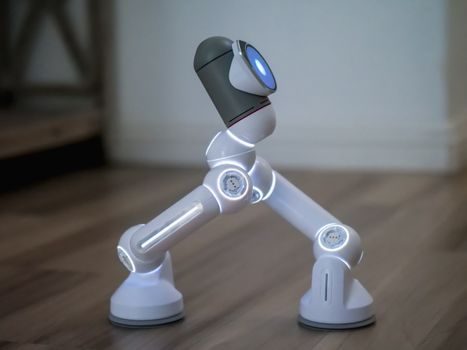
The collaborative robot gripping module index lists 4 manufacturers offering 5 module families, split across pneumatic, hydraulic, foam, and vacuum topologies [S2].
COVAL produces the CVGL series of pneumatic gripping modules with a grip strength range of 1,100 N to 2,200 N for high-force random picking, plus the multi-zone MVG vacuum gripper family that creates independent suction zones for part-mix handling [S2]. DEFITECH supplies the TG12 hydraulic-pneumatic truss-mounted unit with a 6 mm stroke and 76.69 N grip force, aimed at machine-tool truss loading and blanking cycles [S2]. ALPHA AUTOMATISMES rounds out the foam-gripping niche with ultra-fast, lightweight foam pads marketed as the lightest on the market and sold as a drop-in solution for small-payload cobots [S2]. The accessory layer is where most of the integration cost hides, and a structured comparison between a collaborative robot arm and its end-effector is mandatory before quoting a cell.
Chinese OEM Cluster: Volume and Vertical Integration
Alibaba's July 2026 supplier index returned 100 active vendors for the "latest robot" query, with Chinese OEMs dominating the cobot, SCARA robot, and AGV robot main-product tags [S5].
ESTUN Automation lists Elfin and Star collaborative robot series alongside SCARA and AGV product lines on Alibaba, signalling a full-payload-tier portfolio from a single Chinese vendor [S5]. JAKA Robotics presents a Collaborative Robot Family plus an Embodied Intelligent Family on its corporate site, indicating dual positioning in industrial cobots and humanoid-adjacent platforms as of July 2026 [S7]. Xinweilai Intelligent Technology (Shandong) operates as a high-tech R&D and production base in Dezhou, focused on localising high-end intelligent equipment including collaborative robots [S8]. Jitri Intelligent Manufacturing Technology Institute (Jiangsu) holds ISO 9001 certification and lists collaborative robot, robot electric gripper, DC servo motor, and quadrupedal robot as core product lines, illustrating the vertical-integration trend among Chinese state-backed research spinoffs [S6]. UFACTORY (xArm) publishes the 2025-era market data referenced above and sells direct to global buyers, with the same brief noting that future cobot prices may continue to decline as technology and competition intensify [S3].
US and European Application Specialists

Productive Robotics reports that 500+ North American shops and manufacturers run its OB7 and Blaze cobots as of July 2026, positioning the brand as the largest US-built cobot line in active deployment [S4].
Goldfuss Engineering (Germany) supplies surface-treatment cells, while Methods Machine Tools anchors the US machine-tending segment and Q-Fin Quality Finishing Machines targets the deburring-and-finishing integration niche [S1]. YASKAWA Europe GmbH functions as a regional distribution and integration channel rather than a stand-alone cobot R&D house, but the COBOTIC 100T TIG welding cell is shipped through that channel for European fabricators [S1]. The US-built Blaze line is explicitly aimed at welding cobots, complementing the broader welding-robot segment that the 2026 Welding Robot Supplier Map covers in greater depth. For plants weighing cobot arms against heavier-payload articulated robot alternatives, the decision mostly comes down to cycle-time tolerance and guarding-cost offsets.
Selection Criteria: Who the Cobot Tier Fits, and Who It Doesn't
Cobots are the right pick for workcells where the operator must enter the robot envelope during a cycle, where payload is below 20 kg, and where the lot size does not justify a full safety-fenced articulated robot installation [S1][S3].
They are the wrong pick for high-throughput transfer lines above 20 kg, for abrasive or spark-rich processes (TIG fume, laser cleaning residue) that demand enclosure ventilation rather than collaborative operation, and for plants without any in-house integration capacity, since hidden TCO items (installation, training, maintenance) routinely exceed the head price over a five-year horizon [S3]. When comparing the four main options, the trade space is: (1) Chinese OEM (ESTUN, JAKA, UFACTORY, Xinweilai) — lowest unit price, broadest payload range, longer lead time for Western support; (2) European cell builder (EasyRobotics, YASKAWA Europe, Rolleri, Methods) — mid price, application-specific cell engineering, faster regional service; (3) US application specialist (Productive Robotics) — premium price, US-made supply chain, welding-tilted portfolio; (4) Gripper/module specialist (COVAL, DEFITECH, ALPHA) — accessory-only, must be paired with a cobot arm vendor. For companies already integrating AMR robot fleets, cobot-arm procurement is best co-sourced with the same vendor to share controllers and fleet software stacks.
Sourcing Channels, Standards, and Due-Diligence Flags
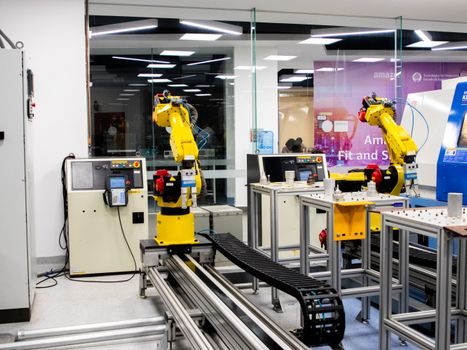
Alibaba, DirectIndustry, and Made-in-China remain the three highest-density sourcing channels for cobot and cobot-cell RFQs in July 2026, with Alibaba returning 100 active suppliers for the latest-robot query alone [S5].
Verified certifications to look for in supplier audits include ISO 9001 for the manufacturer's quality system and CE/UL conformity marks on the integrated cell, particularly for shipments into the EU and North America [S1][S6]. Safety functions on the cobot arm itself should be documented against ISO 10218-1 and the collaborative-mode requirements of ISO/TS 15066, although those standard numbers are not in the crawled research and should be re-confirmed against the latest edition before procurement. Watch for vendors listing only "response rate" statistics (e.g. 91.9%) without published payload, reach, or repeatability specs, which is a due-diligence red flag common on Alibaba listings [S5]. Two trackable signals for the next 90 days: any new Chinese OEM entering the >20 kg payload class (likely to compress the Western premium-pricing tier), and any update to the Control Engineering annual price-decline projection beyond the 3-5% range cited in June 2025 [S3].