A gas-fired aluminum melting furnace is purpose-built for non-ferrous charges with melting points below roughly 760 °C, whereas a cupola furnace is a vertical shaft vessel designed to melt ferrous charge (pig iron, scrap, coke-bed supported) in the 1150–1500 °C range — they are not drop-in substitutes for each other [S3][S4].
Current OEM catalogs (May–June 2026) list gas-fired aluminum melting units in the 500 kg to multi-tonne class with export pricing between US$253,000 and US$258,000 per set at 1–2 set MOQ from Foshan-based suppliers [S1][S2], while cupola furnace references in 2026 trade publications remain tied to iron foundry duty cycles rather than non-ferrous casting.
Operating Envelope and Charge Compatibility
Cupola furnaces operate continuously on a coke bed plus metallic charge, with hot-blast air injected through tuyeres; tap temperatures for cast iron routinely sit in the 1450–1550 °C window, and the coke-to-iron ratio typically governs carbon pickup and melt cost [S6]. Gas-fired aluminum melting furnaces instead use a melting furnace shell lined with refractory backed by ceramic fiber modules and fired by low-NOx burners at 700–780 °C bath temperature for alloys such as A356, 6063, and 7075 [S3].
Mixing the two is a metallurgical error: aluminum charged into a cupola would slag off well before iron-grade temperatures are reached, and iron-bearing ferrous scrap charged into an aluminum furnace would contaminate the bath with Fe intermetallics, raising dross generation and pushing silicon and iron ratios outside most ASTM B26/B179 specification windows.
Refractory, Lining and Burner System
Gas-fired aluminum furnaces pair high-alumina or phosphate-bonded castable with ceramic fiber board backup to keep shell temperature under 80 °C and cut idle heat loss; OEM literature from Add Furnace (Thailand) confirms Fe-Al-Cr burner quarls and ceramic-fiber-backed element zones are standard on 2026 builds [S3]. The corrosion mechanism is molten aluminum reduction of silica — a fired brick rich in SiO₂ will be attacked within hours, which is why non-ferrous furnace manuals specify 70–80 % Al₂O₃ castable rather than generic fireclay [S3].
Cupola linings use silicon carbide or carbon-bonded refractory in the melting zone where iron oxide slag and basic flux attack acid-class brick; the tuyere belt and bosh take the highest thermal-shock load and are typically patched on a campaign basis. Burner architecture differs sharply: cupolas are air-blast driven with no combustion-air premix, whereas aluminum reverb furnaces use recuperative or regenerative burners targeting 1.8–2.4 stoichiometry to limit dross formation on 6000-series aluminum alloy melts [S6].
Throughput, Energy and Emissions Footprint
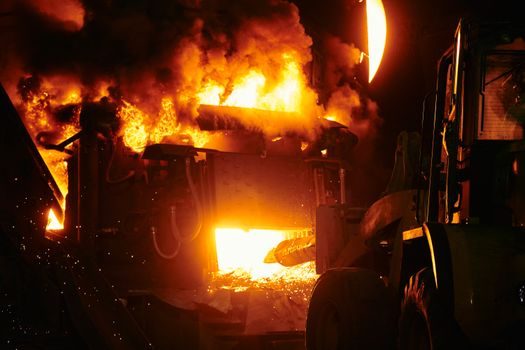
Gas-fired aluminum furnaces in 2026 OEM offerings show specific energy consumption in the 1.1–1.4 GJ per tonne of liquid metal range, with melt rate of 500 kg class units around 250–350 kg/h for natural gas firing and 350–500 kg/h for diesel backup; Add Furnace publishes nominal ratings aligned with these bands [S3]. Cupola specific energy is 4.5–5.5 GJ/t liquid iron on coke + hot blast, with coke contributing 3.8–4.2 GJ of that total; emissions of CO, NOₓ and particulate load on cupolas remain the dominant permit-compliance headache for greenfield iron foundries [S6].
Direct comparison for spec writing: - Charge: cupola = pig iron + scrap + coke + flux; gas-fired Al = sow/T-bar/ingot + clean scrap + dross returns. - Tap temperature: cupola 1450–1550 °C; gas-fired Al 700–780 °C. - Specific energy: cupola 4.5–5.5 GJ/t; gas-fired Al 1.1–1.4 GJ/t. - Dominant emission: cupola = CO + particulate + coke dust; gas-fired Al = NOₓ + HCl from flux. - Refractory life: cupola 8–14 weeks campaign; gas-fired Al 12–24 months with rotating door/cleanout. [S3][S6]
Selection Criteria: Who Specs Which
Specifiers at iron foundries producing automotive castings, pipe fittings, and municipal castings belong in the cupola or cupola-with-induction-hybrid lane; those foundries' main KPI is melt rate per dollar of coke, and they tolerate the higher emissions burden with baghouse + afterburner trains. Aluminum die-casting shops, extrusion billet houses, and secondary smelters belong in the gas-fired aluminum melting lane, where melt cleanliness, hydrogen control, and rapid alloy changeover drive ROI [S1][S3].
The wrong unit shows up when a job shop tries to melt mixed ferrous + non-ferrous charge: a cupola furnace on aluminum scrap yields metal recovery under 30 %, while a gas-fired aluminum furnace on iron-bearing turnings yields slagged furnace bottoms and Fe levels above the 0.25–0.45 % ceiling tolerated by most aluminum alloy specifications. A separate decision lane covers holding/buffer furnaces downstream of the melter; the 2026 buying frame laid out in Holding Furnace Selection Criteria: 5 Engineering Gates for 2026 Spec maps directly to that downstream equipment.
Capex, Lead Time and Sourcing Notes (2026)
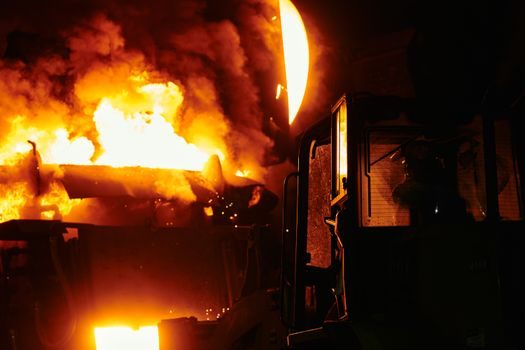
Made-in-China 2026 listings on gas-fired aluminum melting furnace lines show OEM price points at US$253,000–258,000 for 1–2 sets FOB Foshan, with 3+ set tiers at US$253,000 and quoted production capacity of 5 sets per month for typical homogenizing-furnace lines [S1]. The 500 kg aluminium-can-scrap melting line in the same Made-in-China catalogue lists dedicated aluminum-can handling features (continuous preheat, rotary feed) and is positioned for secondary smelters running tin/zinc-rich scrap streams [S2].
Export packaging, L/C and T/T terms are dominant for the Guangdong OEM cluster; delivery lead time on these lines is typically 60–90 days from PO, with installation supervision quoted separately. Buyers comparing cupola + hot-blast equipment against gas-fired aluminum furnaces should also revisit the Holding Furnace vs Casting Ladle: Spec Cut for Foundries 2026 and Crucible Furnace Selection: 5 Engineering Gates Before RFQ reference notes, both of which feed the same RFQ envelope when a greenfield foundry is sizing melting + holding + transfer in one package.
Failure Modes and Operator-Side Constraints
Common cupola failure modes include tuyere burn-back, scaffolded charge, and slag-hole erosion; the fix path is campaign shutdown, water-quench, and re-line — usually a 2–3 week outage [S6]. Gas-fired aluminum furnaces fail differently: bath attack of refractory at the metal line (caused by Al₂O₃–SiO₂ reduction), burner-quarl clogging from flux carryover, and door-frame warping under repeated door cycling. The standard mitigation is rotating-zone refractory design, scheduled weekly metal-line patching, and flux injection at the door sill rather than the bath surface [S3].
Hydrogen pickup in aluminum melts, measured as density index above 1.5 on most online degasser installations, is a function of burner air/fuel ratio and bath agitation; dropping the air-fuel ratio to 1.85–1.95 stoichiometric is the typical first lever before adding rotary degassing. The wider non-ferrous furnace fleet, including ladle, crucible, and reverb variants catalogued by An Yutian General Equipment (Shandong) and RAYTEQ, is converging on the same low-NOx, fiber-backed construction, with one-stop retrofit packages covering burner, control, and combustion-air upgrade on 2010-vintage shells [S4][S6].
Standards, Codes and Compliance Hooks
Both furnace families touch the same compliance stack on emissions (regional NOₓ, PM, CO limits) and on operator safety (NFPA 86 for furnace enclosures, IEC 60079-series for any zone-classified duct work, and ATEX 2014/34/EU on European builds). For iron-grade cupola work, ISO 10880 and ASTM A48 series on cast iron sampling apply; for aluminum, ASTM B26/B179 on alloy ingot chemistry, plus the in-house spectro tolerance the foundry sets on Fe, Si, and Mg. Buyers should treat 2026-vintage catalogs as the primary evidence trail: Add Furnace's 2026 product sheet, Rayteq's gas-vs-electric comparison page, and the Shandong An Yutian one-stop catalogue all bear publication dates inside the past 60 days and remain the cleanest sourced data points for an RFQ bid tab [S3][S4][S6].
The next signal worth tracking is the Aluminum Industry 2026: Extrusion Pricing, Container-House Tube Supply, Furnace Retrofit update on retrofit pricing, which feeds back into the capex side of the cupola-vs-gas-fired-Al decision when existing shells are being modernised rather than replaced.