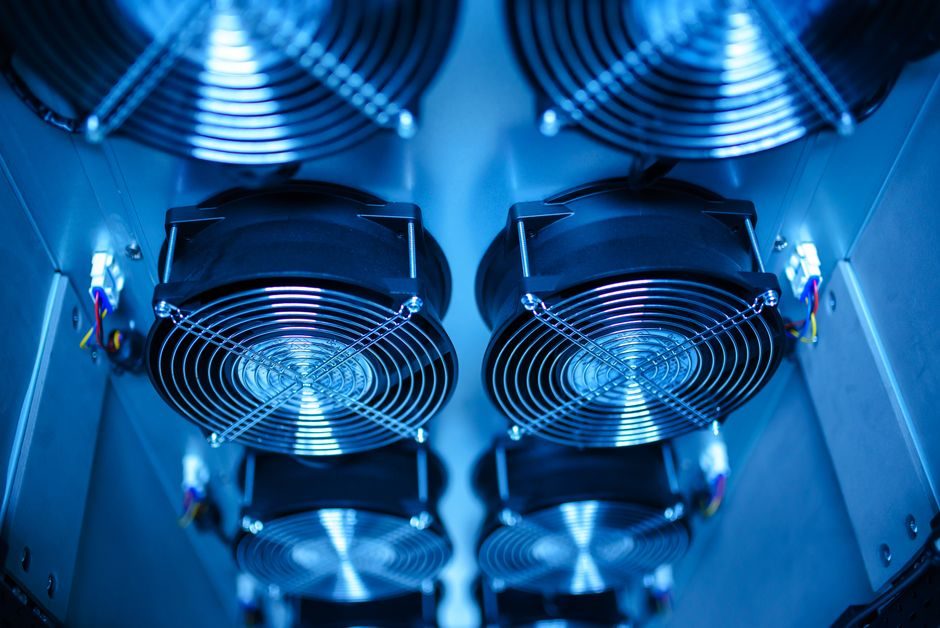
Data center thermal management in 2026 is being reframed as a smart-manufacturing problem: chilled-water and condenser-water loops are now modelled, metered and closed-loop controlled as two coupled hydraulic circuits, with process data flowing back into a unified plant data platform [S4]. The shift is driven by rack densities climbing past 40 kW per cabinet in AI training halls, which makes a single-loop CRAC/air-side architecture structurally insufficient and pushes operators toward water-side economisation, free cooling and water-water heat exchangers [S4].
The control surface itself is split between three layers: a vendor-supplied Distributed Control System for the chiller plant and pump house, a Building Management System above it for room-level setpoints, and a data-platform layer that aggregates alarms, metrology and process trends across multiple sites [S1][S2]. The practical engineering question in 2026 is no longer whether to automate, but which vendor stack owns the heat-rejection loop, which owns the room loop, and which owns the cross-site data fabric.
Two-loop thermal architecture: chilled water vs condenser water
A reference 2026 data-center cooling model is defined as two decoupled water loops coupled thermally through a water-water heat exchanger and indirectly through a chiller [S4]. The chilled-water loop absorbs heat from the server farm and rejects it into the condenser-water loop, which in turn dumps the heat to ambient via a cooling tower. This two-loop topology is now the de-facto template in MATLAB/Simulink reference designs and is being ported directly into BMS/DCS engineering libraries [S4].
Operationally, the chilled loop runs at 6–12 °C supply under partial free-cooling modes and drops below the local wet-bulb setpoint when a chiller is engaged; the condenser loop sits 5–7 °C above chilled return to drive the heat exchanger delta-T, and is trimmed against tower fan stages and pump VFDs for energy optimisation [S4]. The heat exchanger is the hinge component: its sizing fixes the maximum rejection duty and the response time the chiller sees when the IT load steps.
Control stack: ABB DCS, Honeywell BMS and the supervisory data layer
Plant-level cooling is increasingly specified as a Distributed Control System (DCS) job rather than a BMS job, because the asset count — chillers, cooling-tower fans, condenser-water pumps, plate-frame heat exchangers, VFDs — is high and the failure modes (fouling, cavitation, freeze) are process-grade, not building-grade [S1]. ABB positions its 800xA-class architecture as the platform that monitors 24/7 process operations and maximises asset utilisation and process efficiency, with cybersecurity, safety and availability built into the controller scope [S1].
On top of that, a Building Management System layer handles room-level duties: CRAH unit staging, hot-aisle/cold-aisle containment pressure balance, leak detection under raised floors, and fire/smoke interfaces [S2]. Honeywell's industrial-and-manufacturing automation stack groups these into a single BMS umbrella aimed at reducing OpEx, improving energy management, increasing safety/security and expanding building-management capability — a scope that maps cleanly onto a hyperscale white-space retrofit where chiller-plant is owned by operations and the white-space is owned by the IT facilities team [S2].
Shop-floor data fabric: closed-loop process control and cross-site trending
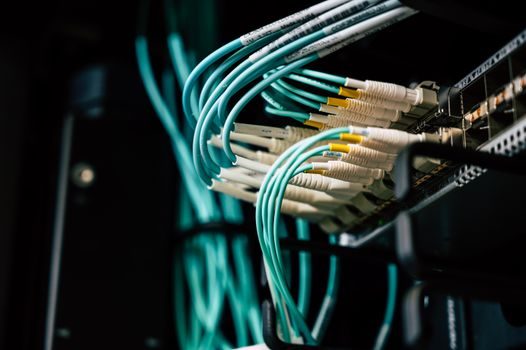
The connective tissue across modern cooling plants is a smart-manufacturing data platform. Renishaw's Central platform is a useful external reference point: it ingests metrology, status and alarm data from devices on the shop floor, displays it through dashboards, and — when paired with an intelligent process control (IPC) module — can automatically update machine tool variables, giving genuinely closed-loop process control rather than supervisory SCADA [S3].
For a data-center cooling plant the equivalent pattern is: smart VFDs, smart valves, flow meters, BTU meters and chiller controllers expose process data over OPC-UA or Modbus TCP, an on-premises historian buffers the stream, and a supervisory layer issues closed-loop setpoint corrections. Renishaw Central's on-premises deployment model is the design pattern most operators now ask for, because cooling control must not be dependent on internet connectivity for a hyperscale plant [S3].
Manufacturing the cooling skid: modular construction and precision air conditioning
At the fabrication side, data-center cooling skids are themselves a smart-manufacturing product. Verhi's product line covers micro-modular data-center rooms, UPS power supply, precision air conditioning for server rooms, modular data-center construction and a smart-management system with an AI Intelligent Assistant — i.e. the cooling skid, the IT room and the supervisory software are all delivered as a single engineered package [S5].
The engineering upside is reproducibility: skid-level factory acceptance testing (FAT) can be run on the production line with simulated IT load, and the same PLC/control code ships to site. The downside is that any proprietary supervisory stack locks the operator into a single vendor for both the skid and the control layer, which is why most 2026 procurement specs split the WBS: mechanical skid from one supplier, BMS/DCS from another, data platform from a third.
Heat-rejection hardware: radiators, cooling towers and heavy-duty exchangers
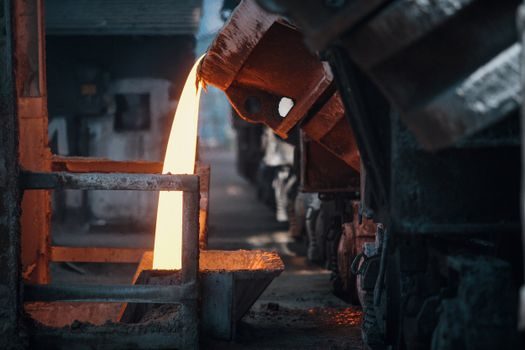
Heat-rejection hardware for adjacent or co-located industrial loads is being rationalised around standardised core geometries. Dolphin Manufacturing's catalogue groups products into off-highway and mining cooling, heavy-duty truck radiators, genset cooling for continuous power, and high-performance automotive radiators — the same aluminium-brazed core and fin-density discipline used in off-highway radiators is now being applied to genset radiators that back up data-center UPS strings in tier-III/IV sites [S6].
For data-center operators, the cross-pollination matters because standby genset cooling and the data-center cooling tower are the two largest air-side heat-rejection assets on a campus, and they share the same failure modes (fan bearing wear, fin fouling, glycol degradation) and the same predictive-maintenance data signatures.
Selection criteria: who this architecture is for, and who it is not
The two-loop water-cooled architecture with DCS-grade control is the right answer for greenfield AI-training halls at 30–100 MW IT load, for colocation retrofits replacing legacy air-side CRAH rooms, and for edge sites where the chiller plant is unmanned and must run closed-loop against a remote operator [S4][S1]. It is the wrong answer for sub-500 kW white-space rooms, where a packaged DX CRAC unit with onboard BMS is still the lowest-total-cost option, and for any site that cannot accept a water loop in the white space for insurance or code reasons.
A pragmatic 2026 selection matrix: choose DCS-grade control (ABB-class) when the chiller plant exceeds ~3 MW and the asset count justifies a dedicated control room [S1]; choose a Honeywell-class industrial BMS when the scope is facility-wide and the cooling plant is one of many subsystems [S2]; choose a data-platform layer (Renishaw Central-class, or an OSIsoft PI / Aveva class equivalent) when the operator runs more than one data-center site and needs cross-site trending and alarm correlation [S3].
Limitations, failure modes and engineering constraints
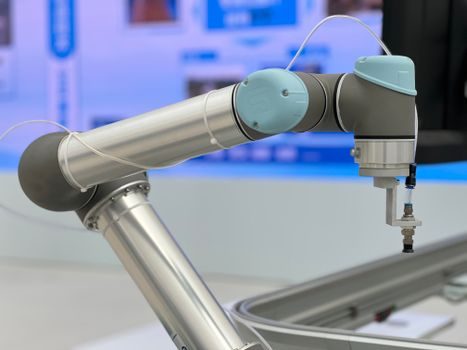
Three failure modes dominate 2026 post-incident reports on automated cooling plants: (1) heat-exchanger fouling collapses the chilled/condenser loop delta-T, which the DCS reads as a chiller capacity problem and responds to by staging more chillers — masking the root cause; (2) condenser-water pump VFDs hunting against cooling-tower fan staging under part-load, which causes supply-temperature oscillation and downstream CRAH humidity excursions; (3) supervisory setpoint overrides that bypass the DCS, breaking the closed-loop chain and forcing the chiller plant into manual [S4][S1].
Free-cooling mode in cool climates is the highest-value, highest-risk feature: when ambient wet-bulb drops below the chilled-water setpoint, the heat exchanger alone can carry the full IT load and chillers are trimmed to zero, but the transition band is narrow (typically 2–4 °C wide) and a slow-moving valve can cause return-temperature overshoot. The standard mitigation in 2026 designs is a separate, fast-acting bypass valve with its own PI loop, sized for the full design duty.
Standards, sourcing and where the data comes from
The physical cooling plant is governed by the same codes as any process plant: ASME B31.3 for the piping, ASHRAE TC 9.9 for IT-equipment inlet conditions, and local mechanical codes for the chiller and tower package [S4]. The control layer is governed by ISA-101 HMI guidelines and IEC 62443 cybersecurity on the supervisory network, with vendor positioning calling out cybersecurity and availability as built-in DCS capabilities rather than optional add-ons [S1].
For a comparable 2026 automation-stack reading across adjacent industries, see how PEM electrolyser smart manufacturing handles closed-loop process control on electrochemical skids, and how DC fast charger smart manufacturing splits supervisory control from power-module FAT — both share the same DCS-plus-data-platform pattern now being applied to data-center cooling. The broader cross-industry signal is captured in agentic AI and visual inspection reshaping smart-manufacturing specs in 2026, which documents the same supervisory-AI overlay now landing on cooling-plant dashboards.
Trackable signals over the next reporting window: vendor releases of on-premises historian appliances sized for sub-5 MW cooling plants, and any IEC or ASHRAE update to the IT-equipment inlet-condition envelope under elevated rack density. The interconnection with the chiller and tower supply chain — radiators, genset coolers, plate-frame exchangers — will surface in vendor capacity disclosures from suppliers such as Verhi and Dolphin Manufacturing in their 2026 half-year updates [S5][S6].
For component-level specifications, see data logger, additive manufacturing material, and smart camera.