
Outsourcing an OEM control cabinet in 2026 means sorting through 2,000+ Chinese factories on Made-in-China alone, with listed plant footprints spanning 30 m² to 2,000+ m² and price points from US$2 to US$3,000 per piece [S1].
At that scale, a buyer cannot rely on price or plant size; the only signal that survives a real audit is the certification stack, starting with ISO 9001:2015 and ISO 45001:2018 and ending at a Type Test Report aligned to the specific cabinet rating. The checklist below maps which documents to demand, what each one proves, and the failure modes a smart buyer has caught before on third-party factory tours [S1][S3].
Five Mandatory Documents at RFQ Stage
Issuing a request-for-quotation without these five items is the single most common reason OEM programs run late: ISO 9001:2015 quality management certificate, ISO 14001:2015 environmental management, ISO 45001:2018 occupational health and safety, a CE/CCC declaration referencing IEC 61439-1/-2 for low-voltage assemblies, and a third-party Type Test Report covering short-circuit withstand (Icw), temperature-rise, and dielectric strength for the exact current rating ordered [S1].
Suzhou Zhuwei Electrical Equipment shows the pattern: the company lists ISO 9001:2015 and ISO 45001:2018 directly on its Made-in-China profile, with ODM capability on distribution boxes, metal enclosures, and junction boxes at US$2 per piece for a 5-piece MOQ [S1]. Two certifications alone do not equal a complete stack, so a buyer still needs to request the CE technical file and the IEC 61439 Type Test Report as a separate attachment before any tooling or payment is released.
Factory Footprint and R&D Capacity as a Proxy Signal
On the Made-in-China index, 2,000+ manufacturers and 6,000+ products are listed under the distribution cabinet factory category, with R&D capacity flags splitting into Own Brand, ODM, and OEM [S1]. A factory that lists only ODM and no Own Brand can still build to spec, but it cannot modify tooling or materials without a written engineering-change order, which is the most common cause of silent cost-up during production [S1].
Guangdong Jinhuilong Electric carries Own Brand and ODM flags with a 2,000+ m² plant and 431 employees, which is roughly the median profile for a serious OEM control-cabinet source. Zhejiang B&J Electrical, by contrast, lists ODM and OEM only with a 1,800 m² footprint, fine for junction boxes and small enclosures at US$80 per piece, but the smaller workforce means a 200-unit OEM run can hit capacity if the buyer is not the only active program [S1].
Comparing the Five Common Cabinet Categories on Audit Criteria
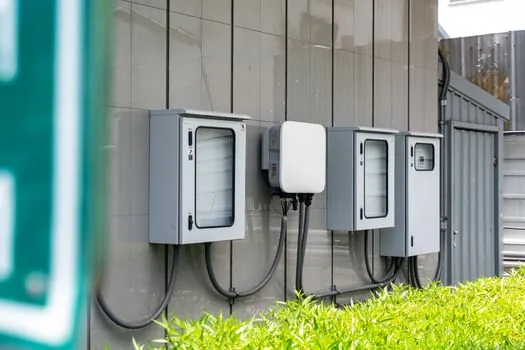
Five product categories dominate the Made-in-China distribution-cabinet supplier list, and each carries a different audit risk profile that an OEM buyer has to weigh before placing a tooling deposit: low-voltage distribution cabinets, metal enclosures, power transformer and pad-mount cabinets, fiber-optic distribution cabinets, and HV/LV prefabricated substations [S1].
Low-voltage distribution cabinets are governed by IEC 61439-1/-2 and require Icw verification at the rated short-circuit level; metal enclosures mostly fall under IEC 62208 with IP and IK code declarations; power transformer and pad-mount cabinets add IEEE C57 or GB 1094 oil-immersed type-test data; fiber-optic distribution cabinets are passive telecom enclosures rated to IP54 or higher, not governed by IEC 61439 at all; and HV/LV prefabricated substations require IEC 62271-202 plus a separate high-voltage Type Test Report [S3]. Specifying one standard across all five is the most common audit miss, and an OEM program that mixes the wrong reference document will be rejected at customer witness test [S1][S3].
IP and IK Codes: What the Certificate Must Actually Declare
For outdoor and industrial cabinets, the IP code is a contractual line item, not a marketing phrase, and the certificate must declare IP54, IP65, or IP66 with a defined dust and water test method such as IEC 60529 [S3].
The Ningbo Yuhui Communication Equipment range shows the standard market pattern: YH3005 is declared at IP54 for 30-pair cable distribution, YH3016 is a 102-way instrument enclosure with frame, and YH3012 is an outdoor 20-pair waterproof distribution box. Each model carries a separate IP declaration tied to a specific test standard, and a buyer who accepts one blanket IP number for the whole catalogue is paying for paperwork that will not survive a customer FAT [S3]. For control cabinets installed alongside silicon-steel selection for rail traction motors grade laminations, the IP declaration also constrains gasket material choice, which has to be tracked back to a separate compatibility test.
Type Test Report vs Routine Test: A Line Most Buyers Miss
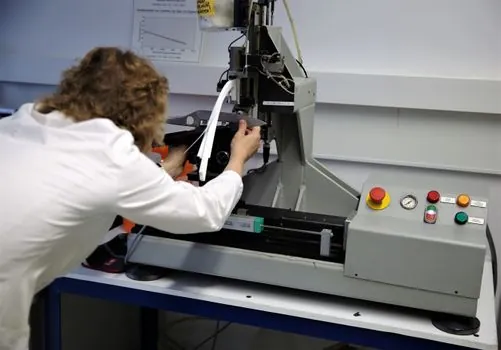
IEC 61439 splits verification into design verification (Type Test) and routine verification (Routine Test), and an OEM audit that only asks for a routine-test certificate has accepted a much weaker document, because routine tests cover wiring continuity, insulation resistance, and functional operation but not short-circuit withstand or temperature-rise at the design limit. [S1]
Demanding both, and cross-referencing the Type Test Report's Icw, Ipk, and rated current (Ina) values against the actual order, is what separates a contractual certificate from a marketing certificate. Zhejiang Kaibian Electric Technology's listing shows the typical transformer-top family at 2,000+ m² plant area with OEM/ODM capability, the kind of footprint where a Type Test Report should be on file for at least the highest-current frame in the catalogue. A buyer who only checks the routine-test slip on the small frame has no evidence the larger frame was ever short-circuit tested [S1].
Auditing R&D Capacity and Engineering-Change Control
R&D capacity flags (Own Brand, ODM, OEM) on the Made-in-China index are a fast read on whether the factory can absorb a non-standard specification or only clone a catalogue part. Suzhou Zhuwei and Zhejiang B&J list ODM and OEM only, which means they will build to a customer drawing but will not redesign a busbar system on the fly [S1].
For a power distribution box program that requires non-standard busbar spacing or copper-bar cross-section, the audit question is not whether the factory has an R&D team, it is whether the engineering-change procedure is documented and version-controlled. For an MCC cabinet build with motor-starter coordination, the same question applies to the schematic review and the ECN trail on terminal blocks, contactors, and overload relays. A documented ECN trail is the single cheapest audit pass and the single most common failure on a first-visit factory tour [S1].
Logistics, MOQ, and Pricing Transparency

MOQ varies by an order of magnitude across the same category, from 1 piece at US$500 per set for Zhejiang Guangbian switch cabinets, to 5 pieces at US$2 per piece for Suzhou Zhuwei distribution boxes, to 10 pieces at US$80 per piece for Zhejiang B&J industrial cabinets [S1].
Jiangsu Yunbo Electric's HV/LV prefabricated substation line lists US$2,916 per piece for a 1-piece MOQ and US$3,645 per set, a price band that only makes sense for substation-grade assemblies, not for a distribution cabinet build. Stating the MOQ in the RFQ and matching it to the supplier's listing is the fastest way to filter out factories that will inflate tooling cost on a small batch, and it surfaces the difference between a 1-piece MOQ for marketing and a real 5- to 10-piece MOQ for production [S1].
Common Audit Failure Modes and the Fix
Three failures repeat on OEM control-cabinet audits: certificate scope does not match the part number, Type Test Report covers a different current rating than the order, and the factory's ODM/OEM flags do not match the engineering-change scope in the contract [S1].
The fix is a one-page certificate matrix that maps every certificate to a specific part number, rated current, and standard clause, signed by the supplier's quality manager before tooling release. For an explosion-proof distribution cabinet, add ATEX 2014/34/EU or IECEx certification with the exact equipment protection level (EPL Gb or Db) declared; for a power distribution board, add the short-circuit coordination certificate and the conditional short-circuit current (Icc) value. The matrix turns a paper exercise into a contractual deliverable, and it is the document a witness-test inspector will read first [S1][S3].
Trackable next signals: (1) the supplier's response on the certificate matrix within the 3-hour response window listed on most Made-in-China profiles, and (2) whether the Type Test Report attached to the quotation is dated within 36 months, which is the typical validity window a notified body or a customer FAT will accept [S1].