
Specifying engineers can now fit 2 to 4 hermetically sealed DPDT (DPCO) proximity sensors inside a single ATEX Ex d limit switch box, as demonstrated by the Euroswitch FS-H series and the AFL ALS500M2 housing, both rated for Zone 1/2 hazardous-area valve monitoring [S1][S2].
The combination matters because a single enclosure delivers two independent changeover contact pairs per sensor, eliminating the need for an external relay when the actuator must signal both open and closed positions to a safety PLC or DCS [S1][S2].
DPDT vs SPDT Contact Topology in Ex d Boxes
A DPDT (double-pole double-throw) proximity switch carries two galvanically isolated changeover contacts, while a standard SPDT (single-pole double-throw) version delivers only one; ALS-series option code M5 packages two CROUZET DPDT mechanical switches at 15 A / 125-250 VAC inside a single IP66 die-cast aluminum Ex d enclosure, against the M2 default of two SPDT switches [S1].
For solid-state proximity designs, Euroswitch's FS series is offered with dry, volt-free SPCO/SPDT, DPCO/DPDT, or 2-wire NAMUR outputs in a single M18 housing, with operating voltages up to 240 V AC or DC depending on the variant [S2]. The DPCO/DPDT form lets a single sensor drive two independent loads, which is the typical safety-integrity reason an engineer steps up from SPDT to DPDT inside a limit switch box.
Hazardous-Area Certification Stack (Ex d / Ex db / Ex tb)
The Euroswitch FS-H is explicitly rated IECEx Ex d/db/tb, meaning the same stainless body covers flammable gas (Zone 1) and combustible dust (Zone 21) without a separate dust-only variant [S2]. The ALS500M2 from AFL carries the older Ex d IIB T6 / Ex d IIC T6 gas-group marking, with the full ALS family built to 94/9/EC, EN13980, EN60079-0:2006 and EN60079-1:2004 [S1].
Pepperl+Fuchs now ships turnkey Ex d-packaged sensors in GUB-series seawater-resistant aluminum housings at IP66, and a parallel EJB-series enclosure for larger units, both certified to ATEX/IECEx Zones 1/21 and 2/22 [S4]. The strategy of "install a standard sensor inside a certified Ex d housing" is the dominant path for 2-wire 8.2 V DC NAMUR initiators such as the IFM NS5002 used in ATEX i-box 30 enclosures [S3][S4].
Sensor Output Options for Valve Position Feedback

Five electrical output families are common in current ATEX Ex d limit switch boxes, and the choice is dictated by the upstream I/O card, not the enclosure: [S1]
1. Mechanical SPDT/DPDT (CROUZET, Cherry D41X/D44X): 10-16 A at 250 V AC, suited to solenoid or contactor coils, typically the lowest-cost option [S1][S3]. 2. 2-wire NAMUR 8.2 V DC (P+F NCB2-V3-N0, IFM NS5002, P+F SJ 3.5 N): required for intrinsically safe Ex i signal inputs, drawing roughly 1 mA or 3 mA target current [S1][S3]. 3. 3-wire PNP (P+F NBB2-V3-E2, NBN4-12GM50-E2): 10-30 V DC, 100 mA, the standard industrial 24 V DC bin [S3]. 4. 3-wire magnetic (ALMS): 5-240 V AC/DC universal supply, useful when the same box must feed both AC and DC loads [S1]. 5. 4-20 mA analogue position (Turck Ri360P1-DSU35): 0-360° programmable, used for continuous valve travel feedback rather than discrete open/closed [S3].
Engineers should match the sensor family to the controller first, then confirm the Ex d housing can accommodate the wiring density; the proximity sensor article covers the underlying physics, while the sensor switch page explains the latching logic in 2-wire DC circuits.
Mechanical and Environmental Envelope
Standard ambient ratings for ATEX Ex d limit switch boxes sit at -20 °C to +85 °C (ALS500M2) with IP66/NEMA 4X enclosure ingress, and the stainless 304/316/316L variant (ALS600) extends corrosion resistance for offshore or chemical service [S1]. Pepperl+Fuchs quotes 100 V/m EMC immunity on its INX360D-F99-I2E2-V15-Ex inclination sensor, an E1 type-approval figure that is increasingly requested for road tanker and mobile-rig retrofits [S4].
Conduit entries are usually two ¾" NPT, with optional ½" or ¾" BSPP, ½" NPT or M20-1.5 entries; the Pernow TCR-414 and TCR-416 variants use PG 13.5 cable glands on vestamid housings for lighter-weight Ex ed IIC T6 / Ex ia IIC T6 service [S1][S3]. Mounting follows ISO 5211 with a Namur stainless steel shaft, so a single bracket pattern fits most quarter-turn pneumatic actuators from 30 x 80 H:20 mm up to the larger MB-3.3 carbon-steel bracket [S1].
Selection Criteria: Match Sensor to Zone, Gas Group and Load
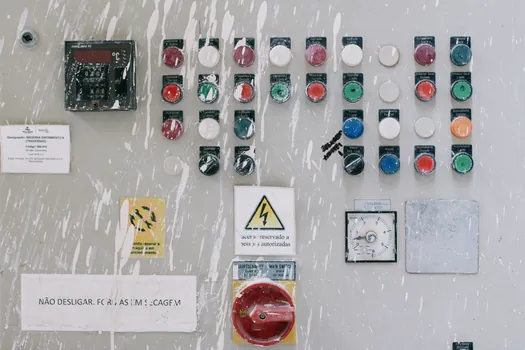
Three decision axes drive the final part number. First, the zone and gas group: IIC (hydrogen, acetylene) requires Ex d IIC T6, while IIB (ethylene) is satisfied by Ex d IIB T6 and allows a lighter enclosure wall [S1]. Second, the contact count: choose SPDT for one load, DPDT for two independent loads or for safety-rated dual-channel wiring to a SIL 2/3 PLC [S1][S2]. Third, the output protocol: 2-wire NAMUR for intrinsic safety, 3-wire PNP for 24 V DC PLCs, 4-20 mA for continuous position, and mechanical switches for direct coil drive [S1][S3].
The APL-510 ships with two SPDT mechanical switches plus the option of hermetically sealed proximity switches, an approach also seen in the limit switch range where the mechanical element is replaced by a solid-state sensor of identical footprint [S7]. When a project demands two DPDT Ex d switches plus two 230 V solenoid valves in the same box, the Eurotec flex-box housing is the typical answer [S6].
Limitations and Common Failure Modes
Mechanical DPDT switches inside Ex d enclosures are rated for a finite electrical life, typically lower than the 100 million operations quoted for solid-state proximity versions, so high-cycle valves (modulating or frequent ESD test) should be specified with the hermetically sealed reed or solid-state option from the outset [S2]. NAMUR 2-wire sensors fail "safe" at a defined current window (≈1 mA or 3 mA) but require a dedicated Ex i barrier or an IS-rated input card; substituting a standard 24 V DC PNP input will not read the signal [S3].
Ex d enclosures do not protect against dust ingress on the inside, only against ignition of an internal gas mixture, so the industrial switch datasheet's IP66 figure refers to the outside of the box; cable gland sealing compound and torque remain the most common field failure point. Finally, mismatched gas groups (ordering an Ex d IIB unit for an IIC hydrogen service) is a recurring audit finding because the IIB flamepath length is shorter than IIC's required gap [S1].
Applicable Standards and Compliance References
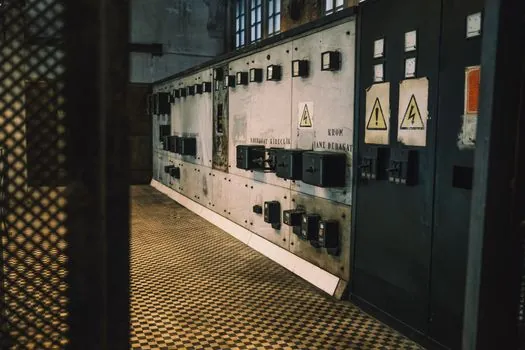
The governing reference frame is ATEX 2014/34/EU (which superseded 94/9/EC cited on legacy datasheets) and the IEC 60079 series (Ex d flameproof enclosures, Ex e increased safety, Ex i intrinsic safety, Ex t dust protection) [S1][S4]. ISO 5211 defines the actuator-mounting interface, while Namur mounting dimensions (24 x 80 mm or 30 x 80 mm shaft height) keep the switch box swappable between valve brands [S1]. For US/Canadian sites, the Class I Div 1 & 2 Group C and D / Group A-D marking seen on the ALS500M2 satisfies NEC 500 / CEC wiring methods in parallel to the IECEx route [S1].
Engineers verifying compliance should request the ATEX EU-Type Examination certificate number, the IECEx Certificate of Conformity (CoC), and the manufacturer's ISO 9001 / IECEx Scheme quality-assessment notification; the S2 FS-H product family and the S4 Pepperl+Fuchs GUB-series are both shipped with this paperwork by default. Tracking signal to watch: the migration of more discrete I/O functions (RFID, inclination, distance) into the same Ex d enclosure family, an OEM pattern that lets one housing platform cover the majority of Zone 1 valve and asset-monitoring needs.
Background reading: DBA vs Rebar for Welded Stud Connections: Spec-Driven Selection.