Global EV traction motor market valuation stood at $34.8B in 2025, with a 14.2% CAGR forecast to $115.8B by 2034, while AC motors held a 58.5% share and Asia Pacific commanded 45.2% of revenue [S3].
Three structural forces are now defining 2026 sourcing: rare-earth and copper input volatility, a wave of gigafactory capacity that has overshot near-term EV demand, and the migration from standalone motor plants to battery-motor co-located lines in China, South Korea, and the U.S. Southeast [S3][S4][S5].
Magnet and Copper Inputs: Where the Real Supply Risk Lives
Permanent magnets, copper windings, and power electronics are the three line items that drive both unit cost and lead-time volatility for traction motors, with magnet-grade rare earths the most exposed single input [S8].
NdFeB magnet price swings and Section 232 / China export-licence friction on dysprosium and terbium remain the dominant 2026 risk vector, while copper winding supply is tighter but more diversified across Chilean, Peruvian, and Congolese-cathode routes [S3][S8]. Manufacturers specifying motors above 200 kW — the passenger-EV mainstream — almost universally default to permanent-magnet synchronous machines for torque density, which keeps demand for NdFeB locked in despite heavy OEM R&D into magnet-reduced or magnet-free topologies [S3].
Power electronics — specifically the SiC inverter paired with 800 V architectures — adds a second pinch point: substrate-grade silicon carbide wafer capacity is concentrated in Wolfspeed, II-VI/Coherent, and a smaller Chinese cohort, and lead times of 30-50 weeks for bare SiC die were reported through Q1 2026 [S3]. Buyers evaluating industrial UPS for motor-test stands face the same upstream SiC squeeze because both share the same SiC wafer pool.
Motor Architecture Split: PMSM, Induction, and the Magnet-Free Push
AC motors — split between permanent-magnet synchronous (PMSM) and AC induction variants — hold a 58.5% global share, with PMSM dominant above 150 kW and induction still common in dual-motor Tesla Model 3/Y and Model S/X performance configs [S3].
For sourcing decisions the practical bands look like this: PMSM at 150-250 kW is the 2026 passenger-EV default, induction at 200-400 kW is the high-power secondary-axle choice, and switched-reluctance or externally-excited synchronous machines sit below 5% share but are the magnet-free hedge that VW, Renault, and BMW have publicly committed to for 2027-2030 platforms [S3][S8]. Wound-rotor externally-excited synchronous motors (EESM) from Renault Megane E-Tech and BMW i4 eDrive40 are the only magnet-free units in series production at volumes above 50,000 units/year as of 2026, while ferrite-assisted synchronous reluctance from OEMs like MAHLE and Nidec remain pre-production.
The engineering trade-off is sharp: PMSM delivers 5-7 kW/kg specific power but locks in NdFeB exposure, induction sits at 3-4 kW/kg but adds mass and acoustic noise, and magnet-free EESM matches induction on mass while costing 15-25% more in manufacturing [S3]. Buyers running motor test beds at constant torque will notice that EESM units also pull 2-4% more current at part load, which feeds back into the sizing of any DC power supply used on the dyno.
Gigafactory Overhang: Capacity vs. EV Demand Reality
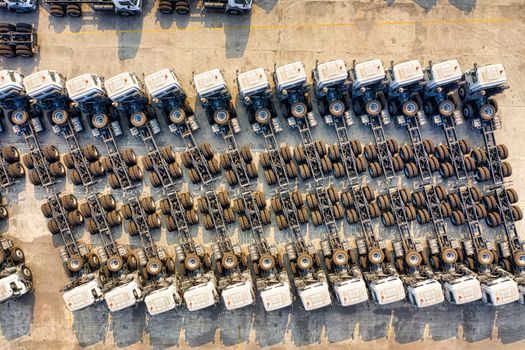
Wood Mackenzie's 2026 outlook flags gigafactory capacity optimisation as the single largest supply-chain theme, with Chinese cell and motor capacity now sized roughly 2x the 2026 global BEV demand forecast [S2].
The overhang cascades downstream: when cell-gigafactory utilisation falls below ~60%, motor plants co-located with those cells see their own capex amortisation stretched, and tier-2 stator and rotor fabricators are forced to discount 8-12% to keep lines warm [S2][S3].
Outside China the picture inverts: North American motor capacity is undersupplied relative to IRA-driven localisation mandates, which is why Ford, GM, and Stellantis have all signed multi-year offtake with BorgWarner, Nidec, and a resurgent Dana TM4 [S3][S4]. European capacity is the tightest spot — there is essentially no high-volume (>100,000 units/year) European motor plant for 250 kW PMSM, which is why Valeo, Robert Bosch, and Continental are all running capacity-expansion projects in France, Germany, and Hungary with first-volume dates in 2027-2028 [S3][S4].
Battery-Motor Integration: Why Co-Located Lines Are Winning
Investment in domestic battery manufacturing across North America, Europe, and Asia Pacific is now producing integrated supply chains where battery specifications and motor designs are optimised in tandem rather than sequenced [S3].
The engineering rationale is concrete: 800 V battery packs, silicon-carbide inverters, and 250 kW PMSM are designed together so that the DC-link voltage window, the inverter switching frequency, and the motor's back-EMF constant all match within tight tolerances — and co-location cuts the integration cycle from 12-18 months to roughly 6-9 months [S3]. South Korea illustrates the model: Hyundai and Kia EV production scaling is paired with integrated battery-and-motor supply chains supporting localised production at competitive cost, and the country is projected to grow at 12.8% CAGR through 2036 on that backbone [S5]. Chinese players go further: BYD's vertical model now takes blade-cell, SiC die, stator, rotor, and final assembly all onto a single industrial park, which is the structural reason the country produces over 50% of global EV traction motors [S3].
The supply-chain consequence for buyers is significant. Tier-1 motor sourcing decisions are no longer about stator and rotor quality alone — they now bundle inverter firmware, gearbox integration, and the switching power supply topology of the cell contactor box. Specifying a motor without naming the inverter firmware owner and the cell contactor supplier in the same RFP is the single most common mistake procurement teams make in 2026.
Who's a Fit and Who Should Walk Away
EV traction motor sourcing in 2026 is a fit for: OEM powertrain teams needing 150-400 kW PMSM or induction units with 800 V SiC inverters, tier-1s looking to lock in 2027-2030 offtake before North American capacity comes online, and stationary-energy repurposers who can accept 5-15 kW units pulled off the slow passenger-EV lines [S3][S4][S5].
It is a poor fit for: buyers needing sub-50 kW units (the supply base is heavily oriented to passenger-EV volumes of 150 kW+), buyers wanting a magnet-free motor above 50,000 units/year outside Renault/BMW's existing EESM lines, and any RFP that does not include the inverter, gearbox, and cell-contactor scope in the same package [S3][S8]. High-voltage safety and onboard-diagnostic specifications are evolving rapidly in developing markets, and the R&D cost of staying compliant — covering advanced fault protection, onboard diagnostics, and failsafe design — is non-trivial [S7].
Standards, Cost Bands, and a Verbatim Spec Note
IEC 60034 rotating-machine standards and ISO 1940 balance grades govern most motor-side qualification work, while ISO 26262 functional safety applies to the integrated inverter/motor/controller package as a safety-relevant item in passenger vehicles [S7].
The verbatim OEM cost note worth quoting: "High Initial Cost and Supply Chain Constraints — A significant restraint in the Electric Traction Motor Market is the high initial cost associated with advanced motor technologies and materials. Permanent magnets, copper windings, and power electronics contribute to elevated manufacturing costs" [S8].
Two 2026 tracking signals: monitor Wolfspeed Mohawk Valley SiC yield through Q3 2026 — every 5% yield shift moves inverter lead times by roughly four weeks — and watch whether Chinese cell-gigafactory utilisation climbs back above 70%, because that is the threshold at which Chinese motor plants will stop diverting capacity into stationary industrial UPS duty and refocus on passenger-EV volumes [S2][S3].
For related coverage, see Block & Brick Types: 2026 Spec Map for Engineers.