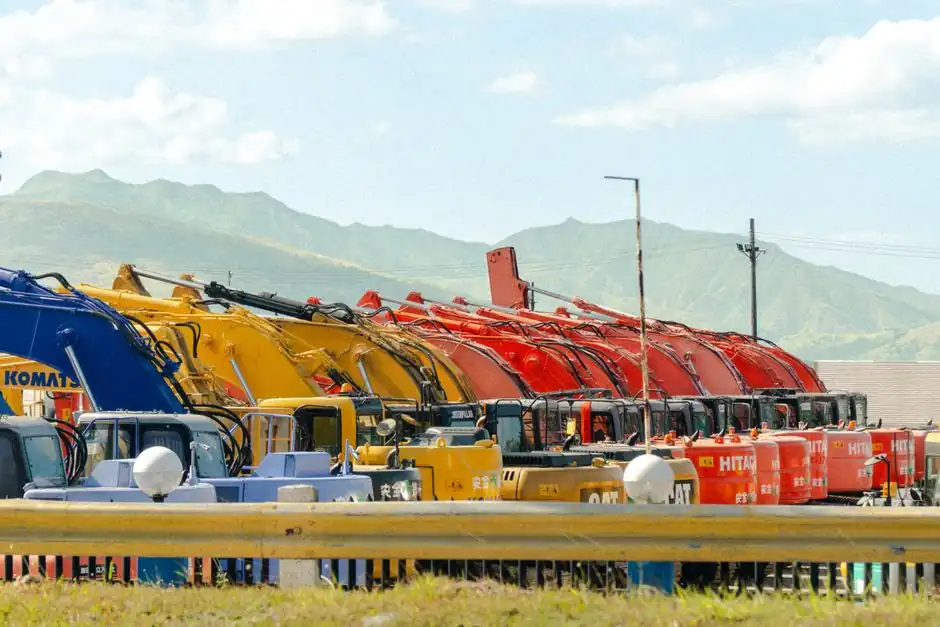
Most hydraulic excavators leave primary production at approximately 9,800 operating hours, while the broader industry expectation for a full lifespan sits between 7,000 and 10,000 hours before replacement is needed [S2][S1].
Undercarriage and track components usually drive the first major bill; hydraulic pumps, hoses, cylinders, and seals set the second wave. The spread between 7,000 and 10,000 hours is governed less by machine design than by daily inspection discipline, fluid service intervals, and operator behaviour. For a fleet spec baseline, see the construction machinery and equipment reference.
Component Hours: Where the Lifespan Actually Lives
An excavator is not a single wear part; it is a stack of components with very different service intervals, and the machine's effective life is set by the lowest survivor [S3]. Hydraulic pumps run 5,000 to 10,000 hours, hydraulic cylinders reach up to 10,000 hours, and seals need replacement every 2,000 to 5,000 hours. Hydraulic filters are short-cycle items at 500 to 1,000 hours, while hydraulic hoses are replaced on damage, not on a clock.
Maintenance intervals map onto these hours: hydraulic filters change at 250 hours, fluid sampling at 500 hours, and a full hydraulic fluid replacement is typically considered at 1,000 hours, with manufacturer variation [S4]. Daily checks add a 15 to 20 minute pre-operation walk-around covering undercarriage wear, hose leaks, bucket teeth, and fluid levels.
The undercarriage is the cost driver that most often forces early retirement. Industry guidance notes that most track-related failures trace back to incorrect tension, either too loose or too tight, and the operator's manual stored behind the seat carries the correct spec [S3]. Sprockets, idlers, and track shoes wear together; replacing one without the others shortens the life of the new part.
Decision Triggers: Repair vs Replace Math
Replacement decisions are driven by owning and operating (O&O) cost curves, not by a single hour reading [S2]. New equipment depreciates fastest in its first years, then hits a "sweet spot" where O&O cost levels out and the machine still delivers value. As components start failing, repair costs climb and eventually exceed the machine's market resale value, which is the practical replacement trigger.
Daily downtime on a stalled excavator commonly costs $5,000 to $15,000 in lost productivity, and a single major hydraulic repair can run $10,000 to $25,000 [S4]. A useful rule from the field: if the next major repair approaches 50% of the machine's current resale value, replacement is usually the lower-risk path. Conversely, machines that have been maintained on schedule can see an additional 15,000+ operating hours before retirement, per the same preventive-maintenance guidance [S4].
Used in mixed fleets, this math interacts with adjacent equipment classes. For rough-terrain lifting in the same yard, capacity and mobility trade-offs are mapped in rough terrain crane vs truck crane specs; for material handling around the same site, the diesel-forklift supply picture is laid out in 2026 forklift supplier selection criteria.
Operating Environment and Operator Effect
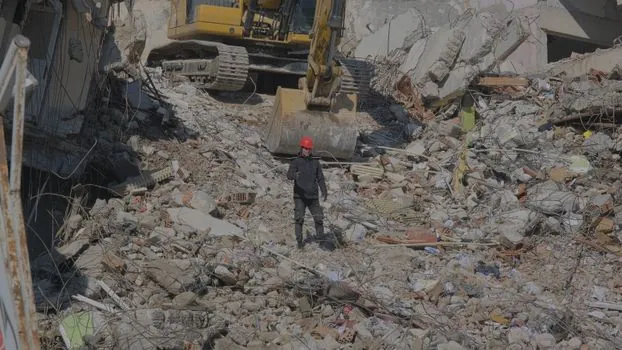
Environment moves the lifespan needle by a wide margin. Extreme heat, abrasive materials, irregular ground, and prolonged cold all shorten service life; indoor storage and winterising push it back out [S2]. High-humidity sites introduce a separate failure mode: condensation in partially filled fuel tanks, which is why refuelling at the end of every shift is standard advice in coastal and tropical fleets [S3].
Operator error is the other large variable. A district service manager quoted on excavator maintenance put it bluntly: "Improper maintenance can lead to a catastrophic failure in a short amount of time" [S3]. The same source estimates that about 90% of track-related failures come from incorrect track tension alone, a single setting that any trained operator can verify in minutes against the manual.
Cooling-system neglect compounds the problem. Clogged radiator packages are a leading cause of overheating and air-conditioning loss, especially in hot, dust-loaded sites, and a daily compressed-air blow-out of the cooling package is the lowest-cost preventive action available [S3]. Contaminated fuel ranks as the second-most common preventable failure, traced to water in the tank rather than bad batches from the supplier.
Mini Excavators: Same Logic, Tighter Intervals
Mini-excavators follow the same wear model as full-size machines but compress the duty cycle into lighter daily hours, which means many components still hit their absolute hour limits even though the machine looks lightly used [S2][S5]. Daily tasks mirror the larger machines: visual leak check, track tension and tyre pressure, hydraulic hose inspection, fluid levels, debris removal from grilles, and greasing of pivot points and pins.
Weekly work adds air-filter cleaning, fuel-filter and water-separator checks, fastener torque verification, and hydraulic oil and circuit cleaning. Monthly intervals cover engine oil and filter replacement (at least once a year even with low hours) and battery terminal service, with a full professional inspection on a quarterly to annual cadence [S5].
For machines that sit between mini and full-size classes, the excavator equipment category covers the broader working-principle reference that applies to both ends of the size range.
Selection Criteria: When an Excavator Is the Wrong Tool
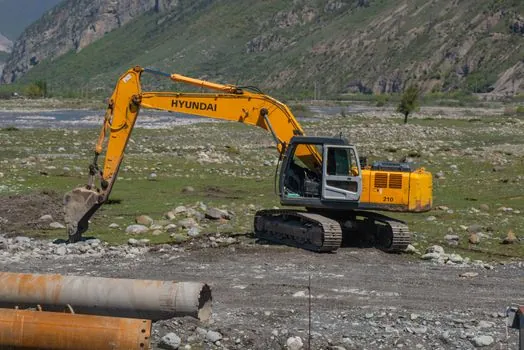
An excavator is the right primary tool for trenching, foundation excavation, and bulk earthmoving on soft-to-medium ground, and the wrong tool for finish grading, long-distance material haul, and high-cycle demolition lift work. Crawler dozers outperform excavators for fine grading and push-loading scrapers; articulated and rigid haul trucks move material more economically than an excavator on the haul road, a tradeoff mapped in ADT vs rigid hauler selection. [S2]
For demolition sites where lift height and reach matter, capacity and OSHA-fit boundaries for crawler and gantry picks are detailed in gantry crane selection for demolition. Choosing an excavator where a crane is needed costs hours, not just money.
Limitations and Common Failure Modes
The most common preventable failure modes, in order, are: clogged cooling packages, contaminated fuel from condensation, and incorrect track tension [S3]. Within the hydraulic system, contamination from dirty fluid, hose cracks and bulges, cylinder rod scarring, and drifting cylinders are the precursors to a $10,000 to $25,000 repair event [S4].
Hydraulic fluid temperature above 180°F during operation is a warning threshold; sustained overheat accelerates seal failure and shortens pump life. Monthly fluid sampling, with samples pulled at 500-hour intervals, catches wear metals and contamination before they cascade into component failure [S4].
For compact machines used indoors or on finished surfaces, the linear-motion wear parts (track rollers, idlers, slew bearings) are the parallel concern; the linear guide reference and crossed roller guide reference cover the bearing classes that show up inside slew rings and boom pivots on long-life installations.
Sourcing and Standards Anchors
No single ISO or SAE standard pins the 7,000-10,000 hour figure, which is an industry-observed range rather than a regulated one. What is standardised is the maintenance language: OEM operator manuals carry the track-tension spec, fluid type, and filter part numbers that should drive the service schedule, and deviating from them voids the wear-life assumptions above [S3].
Genuine parts and manufacturer-recommended lubricants remain the lowest-risk specification choice for any machine under warranty or under a service contract [S5]. Aftermarket filters and fluids that meet the OEM's stated spec are acceptable in principle, but they shift the risk of premature wear onto the buyer; the cost saving is real but bounded by the next 1,000-hour service interval. To track the next update window: the truck crane TCO reference and the bulldozer working-principle reference cover adjacent earthmoving classes where the same hour-based logic applies. Within the next service window, watch for OEM-published revisions to 1,000-hour hydraulic fluid replacement intervals and any new undercarriage-rebuild thresholds above 5,000 hours, both of which would shift the 7,000-10,000 hour baseline materially.