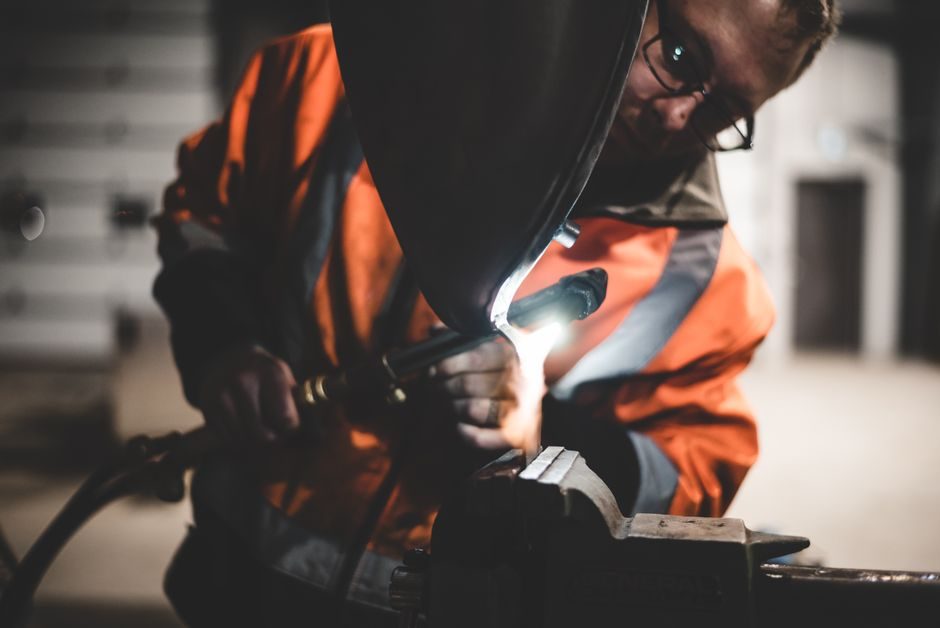
Quoted ex-works laser welding machine price spans roughly $3,000 for a 1 kW handheld carbon-steel fiber unit to $1,000,000–$1,500,000 for a turnkey automatic battery-pack welding line, with mid-range 1.5–3 kW handheld and 3-in-1 systems clustering between $5,500 and $14,000 [S1][S2][S3].
Handheld fiber units at 1500W/2000W/3000W handle carbon steel, stainless steel, aluminum, brass, copper, iron, silver and gold sheet and tube on lap, butt, tee and corner joints using an automatic wire feeder [S7]. Pricing below is for reference only — delivered cost depends on destination, configuration, and Chinese supplier MOQ terms [S1][S2][S3].
Price Bands by Machine Class
A 1 kW handheld fiber laser welder lists at $3,000–$3,500 ex-works in current Made-in-China postings, with portable 1.5–2 kW stainless-steel handheld units stepping to $3,050–$4,500 per piece at 1-piece MOQ [S1][S3]. 3 kW portable 3-in-1 weld/cut/clean systems for aluminum, stainless, wood and stone list at $8,000–$14,000 typical, and 4-in-1 2000W/3000W CE-marked units built around a Raycus source land at $1,999–$2,186 ex-works for the configuration tier [S3][S4][S6].
Mid-power 3-in-1 platforms rated 1.5–2 kW run $6,500–$12,000 for multi-process job shops, while automated 5-axis CNC metal welders with 1500W/2000W laser source and CCD platform sit in the same mid-tens range per current catalog postings [S3][S6]. At the top, fully automatic battery-pack laser welding lines (Huiyao 12 ppm line, optical-fiber robotic assembly cell) list at $1,000,000–$1,500,000 per line, and a customized Hy-Auto automatic fiber welder shares the same $1.0M–$1.5M band [S2][S9].
Spot, Jewelry and Mold-Repair Niche
Jewelry and micro laser spot welders at 100 W list around $3,500 ex-works as a 1 kW-equivalent entry tier, and a 200–500 W mold-repair system for localized tooling-edge energy typically lands in the mid- to high-thousand-dollar band per current type-by-type breakdowns [S3]. The mold-repair category — also called die welder, cold welder, or argon welder — uses instantaneous high laser energy to fuse a special-purpose wire into damaged mould surfaces, an application Aohua first commercialized in 2005 [S5].
Dental welding machines split into two bands in current sourcing data: precision automated systems at $23,150 per set, and 1 kW-class portable units at $3,000–$5,000 ex-works, the latter clustering close to general handheld-fiber pricing for thin stainless and cobalt-chrome dental frameworks [S8]. Compared with a 100 W jewelry spot welder, a dental unit at the $3,000–$5,000 tier reflects chamber and shielding-gas integration rather than raw source cost.
Robotic Cells, Workstations and Throughput
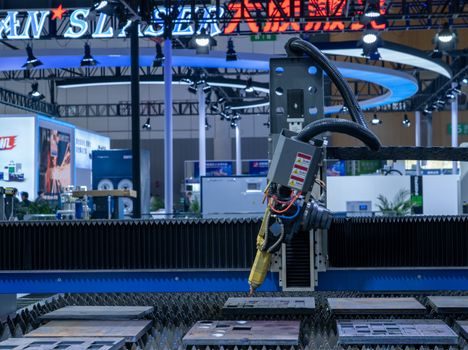
Robotic laser welding machines at 1.5 kW start near $25,000 for the bare cell, and high-speed 3-axis laser welders at 1 kW list at approximately $60,000 ex-works per the GWEIKE reference table, with full workstation cells rated 1–6 kW scaling into the tens-of-thousands and up range [S3]. The price gap between a 1 kW handheld and a 1.5 kW robotic cell is roughly 7×, paid down by fixtures, motion control, safety enclosure and integrated fume extraction [S3].
For buyers cross-shopping automated material handling, a palletizer machine selection guide comparing robot, layer and cobot options is the natural upstream pairing, since a laser welding cell is typically fed by a palletizing stage before the weld gun. Battery-pack lines at $1.0M–$1.5M bundle the laser, robotics, fixturing and inline inspection into a single throughput-rated cell rather than discrete machines [S2][S9].
Total Cost of Ownership Beyond Sticker
Monthly TCO for a handheld fiber welder decomposes into (purchase or lease ÷ 12) + shielding gas + wire/nozzles + protective lenses + extractor filters + electricity + maintenance, with shielding gas (argon or nitrogen) typically flowing at 10–20 L/min depending on joint geometry and travel speed [S3]. Wire-feeders, larger chillers, compliant fume extraction and country-specific duties or VAT can move the same model several thousand dollars apart in delivered price [S3].
On thin-to-mid sheet, the lower heat input and faster travel speed of fiber laser versus TIG/MIG often shortens payback where cosmetic seams or frequent changeovers matter, and laser cleaning machine integration in 4-in-1 platforms ($1,999–$2,186 ex-works) removes a downstream cleaning station from the capex list [S3][S4]. Buyers sourcing at MOQ 1 set or 1 piece should budget separately for the air-cooled chiller and CE-marked safety enclosure that most $3,000–$5,000 listings exclude from headline pricing [S1][S6].
Selection Criteria: Power, Material, Automation
Drive the spec by the thickest joint and the thinnest cosmetic seam, not by headline power: a 1 kW handheld covers stainless and carbon steel ≤ 2 mm, a 2 kW extends to ≤ 3 mm including aluminum, and a 3 kW is the practical floor for thicker sections at production speed [S3]. For buyers who also process sheet, the same vendor's 4-in-1 2000W/3000W weld/cut/clean platform consolidates three workstations at $1,999–$2,186 per current Raycus-equipped listings [S4][S6].
Match the platform to the production profile: handheld for on-site repair and low-mix jobbing, 3-in-1 mid-power ($6,500–$12,000) for shops that change jobs weekly, robotic cell ($25,000+) for fixed repeatable takt, and battery-pack line ($1.0M–$1.5M) only when throughput and inline inspection justify the capex [S2][S3][S9]. Buyers cross-referencing adjacent capex decisions can compare a cleanroom system price guide for ISO class and HVAC drivers and a roll formed profile price map, both of which are common downstream pairings with automated laser welding cells.
Who Laser Welding Is For — And Who Should Skip It
Handheld and 3-in-1 fiber laser welders fit job shops and field-repair crews welding thin-to-mid stainless, carbon steel and aluminum on lap, butt, tee and corner joints, displacing TIG and MIG on cosmetic seams and short-run changeovers [S3][S7]. The category does not replace mold-repair spot welders (200–500 W localized energy) for tooling-edge work, nor micro/jewelry welders (60–200 W) for prongs, watch cases and micro components [S3].
Battery-pack lines at $1.0M–$1.5M are built for high-volume pack assembly at rated throughput — for example, 12 ppm per the Huiyao line spec — and are economically wrong for low-volume prototyping or one-off weldments, where a 1–2 kW handheld at $3,000–$9,000 is the rational floor [S2][S3][S9]. Dental applications above the $23,150 precision tier or below the $3,000–$5,000 portable band should be sourced on chamber, shielding-gas integration and regulatory clearance rather than on raw laser power [S8].
Standards, Sourcing Discipline and Watch-outs
CE marking is the most common compliance note in current Made-in-China listings, including the Raycus-equipped 2000W/3000W 4-in-1 weld/cut/clean platform at $1,999–$2,186 ex-works, while high-volume battery-pack lines list to customer-specified pack and cell standards [S4][S9]. Sourcing discipline requires reading the delivered price, not the headline: most laser-welder listings ask the buyer to request a quote because freight, customs, local taxes and configuration (wire feeder, chiller, filtration, safety enclosure) move the same model several thousand dollars across destinations [S3].
The wearable cost stack is predictable: shielding gas at 10–20 L/min is the largest recurring line, followed by protective lenses, wire and nozzles, extractor filter media by hours and material, plus power and scheduled maintenance [S3]. The single most common procurement mistake is matching a 1 kW handheld to a job that needs a 3 kW source for thicker sections, which forces slower travel speed and erodes the laser-versus-TIG payback case that the equipment was specified on [S3][S7]. For buyers weighing adjacent capital decisions, the zinc die casting price and cost guide and the long reach excavator price map are useful parallel reads since both share the delivered-versus-headline cost discipline that laser welder sourcing also demands.
Track these signals over the next 6–12 months: (1) shifts in the $3,000–$9,000 handheld ex-works band as 3 kW units become the new job-shop default; (2) CE and UL compliance bundling into the headline price rather than as options, narrowing the delivered-vs-quoted gap; (3) battery-pack line pricing in the $1.0M–$1.5M band as 12 ppm-class throughput cells become the new standard capacity tier [S2][S3][S9].
For component-level specifications, see linear guide, crossed roller guide, and laser level.