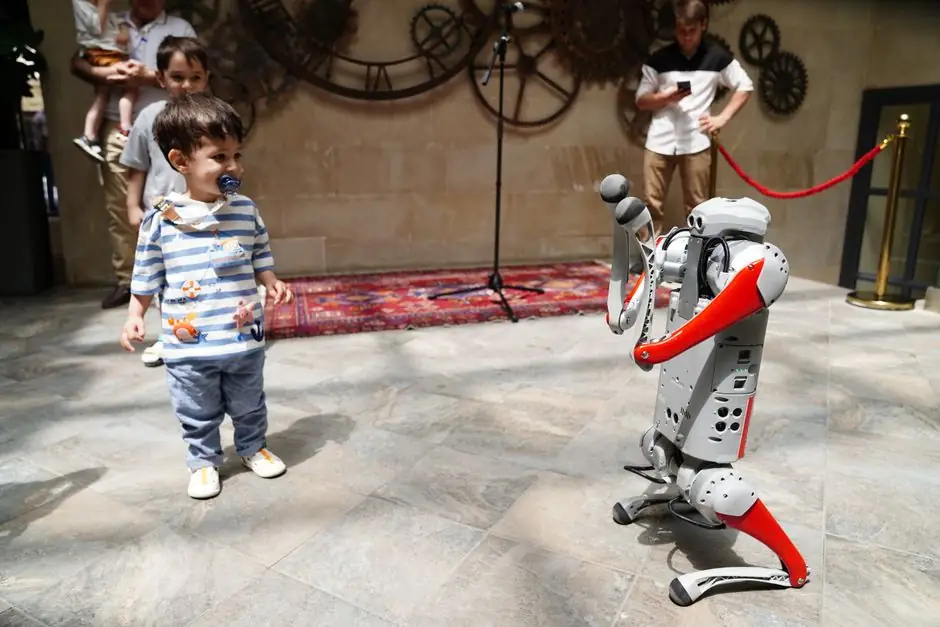
UBTech Robotics held 14% of global humanoid robot revenue in 2025, with Unitree Robotics at 13%, Agility Robotics at 11%, Fourier Intelligence at 9%, and SoftBank Robotics at 8% [S5]. The top five vendors—UBTech Robotics Corp Ltd., Unitree Robotics, Agility Robotics, Inc., Fourier Intelligence Co., Ltd., and SoftBank Robotics Group Corp.—jointly accounted for 55% of the USD 7.9B 2025 market [S5].
Volume tells a different story than revenue: global humanoid shipments reached approximately 2,052,926 units in 2025 and are projected to grow at a ~43.2% CAGR through 2035, well above the ~37.6% revenue CAGR [S5]. That gap means average selling prices are eroding as actuators, reducers, and harmonic drives are sourced in higher volume and as software/fleet management shifts toward recurring-revenue models.
How the top vendors line up on the criteria that actually matter for spec-in
Direct OEM-to-OEM market share splits come from one GMI Insights dataset [S5], and a process engineer's question is rarely "who is biggest" but "which one fits my duty cycle, footprint, and integration stack". On commercial scale and demonstrated deployments, UBTech leads with Walker-series units in Chinese automotive and electronics plants, while Unitree leans on lower-cost H1 and G1 platforms sold into research labs and pilot lines; Agility's Digit remains the most operationally hardened U.S. platform for logistics tote handling at Amazon and GXO sites. On a 5-axis trade-off of commercial scale / cost / control stack openness / payload / safety certification, UBTech scores high on scale and cost, Unitree on cost and openness, Agility on integration maturity and safety, Fourier on rehabilitation-medical focus, and SoftBank on the service/hospitality segment with Pepper and the new platform pivot.
One important secondary reference: GMI's own analyst view states the ~37.6% revenue CAGR is "supported by a commercialization sequence rather than a simultaneous move into every end market", and the faster ~43.2% volume CAGR implies "market expansion will increasingly be determined by production learning and procurement models, not by premium pricing alone" [S5]. In plain terms, the leader of 2025 is not guaranteed to lead 2028, because the OEM that accumulates task data in operating environments and reduces commissioning time will pull ahead of one that relies on demo footage.
Where the money is going: manufacturing is the first real market, and hardware still dominates
The manufacturing segment led the humanoid robot market with a 31.9% revenue share in 2025 [S7], and a separate manufacturing-specific report sizes that sub-market at USD 7.43B in 2026 with a 49.15% CAGR to USD 271.31B by 2035 [S9].
On the motion axis, the wheel-drive configuration held 66% of the market in 2025, with biped the fastest-growing form factor [S3]. Wheel-drive platforms win near-term because they trade the engineering cost of dynamic balancing for payload capacity and uptime, a relevant trade for plant engineers comparing any mobile manipulator platform to a true biped. Bill-of-materials economics have moved in step: estimated humanoid BoM declined from roughly USD 50,000–250,000 per unit in 2022 to USD 30,000–150,000 in 2023 [S5], which is the cost band at which factory pilot economics begin to close.
Forecast spread: five credible houses, five very different numbers

Humanoid market sizing for 2026 alone ranges from USD 4.87B (2025 base, SNS Insider [S3]) to USD 5.41B (MarketsandMarkets [S1]) to USD 6.24B (Fortune Business Insights, Aug 31 2026 [S2]) to USD 10.9B (GMI Insights, Sep 1 2026 [S5]). The 2034–2035 endpoint is even wider: USD 50.27B by 2035 at a 28.1% CAGR [S1], USD 165.13B by 2034 at a 50.60% CAGR [S2], USD 192.7B by 2035 at a 37.6% CAGR [S5], and USD 251.40B by 2035 at a 48.36% CAGR [S3].
The 5–6x spread across these four reports is not noise; it is the difference between unit-economic and TAM-philosophical modeling. MarketsandMarkets leans conservative on volumes and aggressive on price erosion, while SNS Insider and Fortune Business Insights extrapolate from installed-base learning curves. Morgan Stanley's separate 2025 long-horizon note puts the humanoids TAM, including supply chains and aftersales networks, at "over USD 5 trillion by 2050" [S4], and Goldman Sachs' 2024 base case set the 2035 TAM at USD 38B (2025-08) [S6]. The U.S. sub-market alone is sized at USD 1.41B in 2025 growing to USD 73.03B by 2035 at a 50.32% CAGR [S3], a line item worth tracking because U.S. policy and DoD procurement are now a direct input into OEM capex plans.
Industrial policy as a competitive input, not a footnote
U.S. robotics companies advocated in March 2025 for a national robotics strategy, and China has announced a state-backed technology fund intended to support robotics, AI, and other advanced technologies [S5]. That policy backdrop matters because humanoid production depends on specialized harmonic reducers, torque sensors, and motion controllers that cannot be scaled through software investment alone; it also explains why Chinese suppliers, with deeper actuator and reducer supply chains, currently hold the top two revenue slots [S5].
For a spec engineer, the policy layer translates into lead-time and dual-sourcing risk. U.S. and European automotive and electronics OEMs evaluating humanoid pilots for 2027–2028 production lines should map their candidate vendor's component bill of materials against tariff and export-control lists now, not after a pilot. GMI's view is unambiguous: "the most consequential competitive divide is likely to be between companies that can accumulate task data in operating environments and those that remain dependent on demonstrations" [S5].
Who humanoid robots are for, and who should not buy one yet
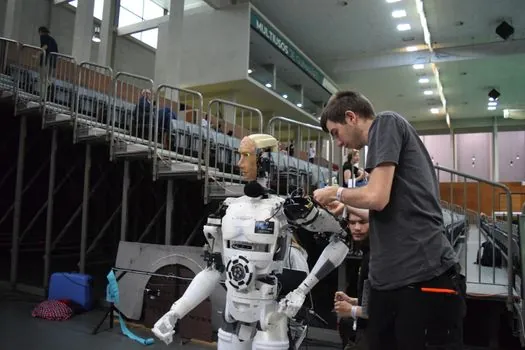
Humanoids are for plants and warehouses that have already squeezed conventional articulated arms and AMR fleets and still face a residual labor gap in tasks that require stepping through human-scale doorways, climbing human-scale stairs, or operating human-scale fixtures. They are for logistics customers running GXO- or Amazon-style tote flows where the integration ROI is already documented, and for assembly cells where a stationary arm cannot reach a second-row fastener. They are not for greenfield sites that have not yet run a basic PLC-and-cobot line, and not for any application where the failure mode of a 30–80 kg biped is unacceptable in a populated space without a certified safety perimeter. [S1]
The unit-economics reality is that 2026 humanoid platforms still cost USD 30,000–150,000 in BoM only [S5], and published pilot data on MTBF and mean-time-to-recovery across full shifts remains thin. Until a vendor publishes a multi-site uptime number signed by an integrator rather than by marketing, treat any humanoid line item as a pilot budget line, not a capex line. The broader lithium battery and cell cost trajectory is one of the few input variables where there is a public forward curve, and humanoid OEMs are exposed to the same cell-pricing curve as the EV and stationary storage markets.
What to track next: 2026–2027 signals that will resolve the forecast spread
Three verifiable nodes are worth watching over the next 6–12 months. First, the next GMI Insights or MarketsandMarkets update on unit shipment vs revenue: the volume CAGR of ~43.2% currently exceeds the revenue CAGR of 37.6% [S5], indicating the market may be commoditizing faster than the median forecast expects. Second, any industrial Ethernet and plant-floor cabling refresh cycle tied to humanoid integration, because vendor selection on the robot-side controller will be coupled to deterministic network specs (TSN, OPC UA FX) more tightly than in conventional cobot deployments. Third, U.S. national robotics strategy milestones through Q1 2027, because DoD and DOE procurement programs are the most likely non-manufacturing volume catalyst and would directly shift the U.S. sub-market CAGR above the current 50.32% [S3].
If a fourth signal materializes, it is a single OEM publishing audited multi-site MTBF for a manufacturing humanoid over a full quarter.