
The retail-spec sweet spot for water, chemicals, and food-grade liquids is the 275 to 330 gallon HDPE composite IBC with a 45 in x 48 in footprint, UN 31HA1/Y rated, and a 2 in NPT butterfly valve, priced new between roughly 200 and 600 USD [S1][S2][S3].
Composite caged totes dominate this segment because four 330 gallon units replace twenty-four 55 gallon drums and recover two pallet positions, the exact space-versus-throughput tradeoff retail warehouses run on a daily basis [S3].
Capacity, Footprint, and the 45 x 48 Base
Standard retail IBC volumes cluster at 275 gal and 330 gal for plastic units, 120 gal and 220 gal for compact and folding models, and 350 to 793 gal for stainless steel tanks, with overall dimensions running from a minimum near 42 in x 48 in x 20 in to a maximum of 42 in x 48 in x 71 in for a fully framed 550 gal unit [S1][S4].
The 45 in x 45 in or 45 in x 48 in base is not decorative, it is a GMA pallet-rack spec, so any tote that misses that footprint breaks automated stackers, stretch wrappers, and the standard 48 in warehouse aisle grid [S3].
Stainless 304 and 316L units step up to 350 to 793 gal and are specified where the product value or regulatory regime (USP, FDA, 3-A, EU 1935/2004 contact surfaces) justifies the higher capital cost per gallon [S3][S4][S5].
Material Family: Composite vs All-Poly vs Stainless vs Carbon
Composite caged IBCs pair a blow-molded HDPE inner bottle with a welded galvanized steel cage on an integrated pallet, the cage carries the structural load and the bottle stays a thin-wall, single-trip-or-few-trips design, which is why these are the lowest-cost new units and the workhorse for one-way chemical distribution, seasonal ag liquids, and bulk water delivery [S5].
All-poly rotomolded IBCs (Schutz Excalibur, Mauser, Greif stackables) are one-piece seamless HDPE, self-supporting, no cage-to-bottle interface to corrode or crack, and some have logged 20+ years in hazardous chemical service, so the total-cost-of-ownership math flips in favor of all-poly once the container is expected to return and refill on a closed loop [S5].
Stainless steel IBCs in 304 and 316L grades are the only defensible pick for hygienic food, beverage, dairy, flavor, and pharma lines because the polished surface survives CIP/SIP and the alloy tolerates aggressive sanitizers; carbon steel IBCs exist and are robust, but they are less common for retail liquids because corrosion and taste/odor carryover are recurring complaints [S3][S4][S5].
UN 31HA1/Y, Specific Gravity, and the 1.6 Number
UN/DOT packaging marks on caged composite IBCs show up as UN 31HA1/Y/(year)/Country/ID, where 31HA1 means a rigid plastic intermediate bulk container with a steel pallet, Y is the packing-group performance level (medium danger, up to 1.6 specific gravity for solids and 1.2 for liquids in the common Y variants), and the trailing letters identify the certifying country and registration [S6].
For a retail buyer this translates to three concrete checks: confirm the mark matches the specific gravity of the product (a Y rated tote handles 1.2 SG liquids, an X or higher-tier mark is needed above that), confirm the year of manufacture is current, and confirm the recertification interval has not lapsed if the tote is a used or rebottled unit [S5][S6].
Plastic Mart's UN/DOT-certified caged composite range is published at 120 to 550 gal, and Protank's metal line is published up to 793 gal, so the certified envelope most retail operations sit inside is the 275 to 330 gal composite band with a 1.2 to 1.6 specific-gravity rating [S5][S6].
Valves, Fittings, and Retail-Floor Handling Details
Standard retail valves are 2 in NPT butterfly with EPDM or Viton seals, mounted on a 6 in threaded cap or a 22.5 in dome-side weldment, and most caged units ship with a 6 in top fill cap, a 2 in tamper-evident pressure-relief vent, and fork tubes sized for a standard 27 in pallet jack span [S2][S5].
Heaters, mixers, level gauges, and leak-detection gauges are catalog accessories on the Cary Company side and are the difference between a tote that is purely a shipping container and one that functions as a retail-floor dispense station, particularly for viscous products (syrups, adhesives, lubricants) where a conical-bottom option is the right answer [S2][S4].
For a retailer moving drums to totes, the practical conversion math is one 330 gal IBC = 6 standard 55 gal drums, the changeover pays back in roughly one to two turns once labor, pallet count, and shrink-wrap are added to the 55 gal drum total cost [S3].
Rental vs Purchase, Lifespan, and Failure Modes

Rental contracts are quoted daily, monthly, and yearly, with longer terms dropping the daily rate, and most providers bundle cleaning, recertification, and refurbishment into the rental fee, which removes the capex hit and the long lead time of buying new stainless units [S4].
Failure modes that show up in real retail fleets are UV embrittlement of HDPE bottles stored outdoors without tarps, cage corrosion at the bottle-to-frame interface on composite units running acidic or high-chloride products, and valve-seat weeping on units that have been through more than three recertification cycles, the practical mitigation is to standardize on all-poly above ~3 years of intended service life [S4][S5].
Used and rebottled composite totes are widely available at the 200 to 450 USD price point and are the right answer for non-regulated process water, jobsite liquids, and short-cycle storage, but they are not the right answer for food, beverage, or any product with a flavor or odor carryover risk [S1][S5].
Selection Criteria Matrix for Retail Buyers
Concrete decision table for retail liquid distribution, all numbers sourced from the references:
275 gal composite HDPE, 45 in x 48 in base, UN 31HA1/Y up to 1.2 SG liquids, 200 to 600 USD new, 6 to 8 year life in non-hazardous service: pick for water, brine, glycol, single-trip chemical, and seasonal ag distribution [S1][S3][S5].
330 gal composite HDPE, same base, 1.2 to 1.6 SG options, 300 to 900 USD new, 6 to 10 year life: pick as the default retail distribution tote for higher-density liquids and closed-loop return-and-refill fleets [S3][S5][S6].
275 to 330 gal all-poly rotomolded HDPE, seamless one-piece, 800 to 1,800 USD new, 20+ year service life in documented hazardous chemical use: pick when the tote is a long-term asset, the site is outdoor or coastal, and metal-cage corrosion is unacceptable [S5].
350 to 550 gal stainless 304, 1,500 to 4,500 USD new, FDA/3-A compatible, 15 to 25 year life: pick for food, beverage, dairy, flavor, cosmetic, and pharma retail lines where CIP/SIP and taste neutrality are non-negotiable [S1][S3][S4].
550 to 793 gal stainless 316L, top of the published range, custom or special-order pricing, pick for aggressive chemicals, high-purity water, and biotech retail buffers where chloride pitting and extractables are concerns [S3][S4][S5].
Internal Power and Cabling Notes for Retail Sites
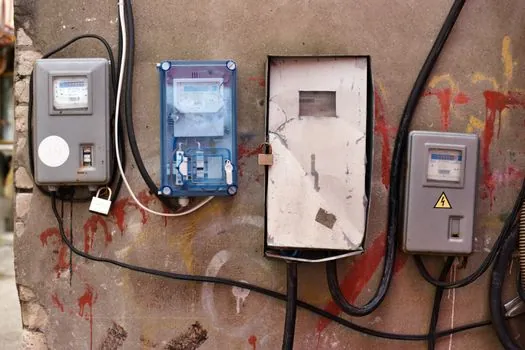
An IBC dispensing station that runs a tote heater, a drum mixer, and a transfer pump draws steady single-phase 120 V or 240 V service and benefits from a dedicated branch on a NEMA 4X local power distribution enclosure with GFCI, sized to the heater wattage plus the pump FLA. Floor-standing tote heaters around 1.5 to 3.0 kW are common and should land on a 20 A breaker; per the equipment selection rules in the IBC tank reference, the heater blanket must be matched to the container diameter and never wrapped over the valve or the level gauge [S2].
For hazardous retail storage rooms (flammable liquids, solvents, Class I areas), the heater, mixer, and level-gauge circuits must be run through an explosion proof distribution panel with the correct hazardous-location rating for the room classification, and the tote's metal cage must be bonded to the building ground per the facility's distribution cabinet grounding bus. Where a satellite tote farm feeds multiple dispensers, the cabling layout typically routes through a cable distribution cabinet to keep the conduit runs short and the disconnects accessible to operators [S2].
For temperature-critical retail skids (chocolate, syrup, wax, caustic at elevated temperature), pair the IBC station with a coolant distribution unit sized to the tote's BTU load; this is the same engineering logic used in the spec-first catalyst and chemical-injection skids covered in the related catalyst manufacturing equipment guide, and the same dry-bulk handling logic that drives the FIBC selections in the food grade FIBC selection guide applies to the sister product line of dry-bag totes for retail powder distribution [S2].
Trackable signals: the next spec change to watch is the recertification cycle for composite IBCs running 1.6 SG liquids, the supplier price band on 275 to 330 gal units has been creeping up 5 to 10 percent per year through 2024-2025, and stainless lead times on 350 to 550 gal units remain the long-pole constraint for new retail distribution builds [S4][S5].