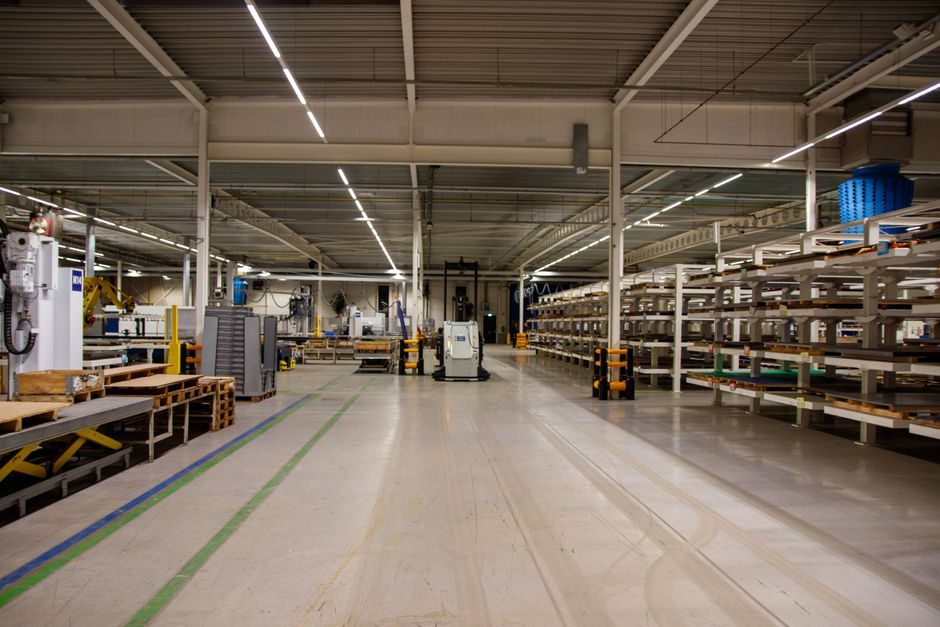
The industrial laser systems market is valued at USD 28,108.4 million in 2026 and is projected to reach USD 45,372.7 million by 2033, advancing at a 7.1% CAGR for 2026-2033 [S3].
Semiconductor and electronics buyers are taking priority on fiber-laser allocation, a pattern visible across both system OEMs and the upstream pump-laser, gain-fiber, and optics sub-tiers, while automotive, aerospace, and medical-laser lines are seeing quoted lead times stretch well beyond the 8-12 week baseline that prevailed through 2023 [S3].
Where the 2026 Shortage Bites: End-Use Allocation
Semiconductor and electronics is the dominant end-user segment for industrial laser systems in 2026, driven by the ongoing chip shortage that has pulled laser-based wafer dicing, via drilling, and annealing demand to the front of the queue [S3]. Laser cutting of semiconductor packaging materials typically operates at beam focus around 25 microns — roughly one quarter the diameter of a human hair — so even small throughput losses on these systems cascade into line-level wafer output [S3].
Automotive, aerospace and defense, and medical remain large volume consumers, but several EU and North American system integrators report that 2026 Q3 build slots are being reserved for semiconductor customers first, with general-metal-cutting and marking-tier work pushed to later quarters [S3]. The fiber-laser product family continues to dominate, on the strength of faster cutting speeds and lower maintenance versus CO2 and legacy lamp-pumped designs [S2].
Which Laser Types Are Most Exposed
Fiber lasers hold the largest share by 2026 product mix, used heavily in automotive body-in-white at German OEMs — Volkswagen, BMW, and Audi — where high beam-divergence quality makes them the default for body-panel and assembly-line integration [S2]. Disk lasers share that automotive footprint for high-power welding of tailored blanks, while CO2 lasers retain a residual position in non-metal cutting, thick acrylic, and certain wood-and-fabric industrial lines [S2].
The exposure ranking in 2026 is: (1) mid-power fiber-laser cutting (1-6 kW) where semiconductor capex is layering on top of steady auto demand; (2) ultra-high-power fiber welding (10-30 kW) for new energy vehicle battery and e-motor production; (3) UV and DPSS marking/engraving systems whose optical sub-assemblies share sub-tier vendors with semiconductor lithography; (4) CO2 replacement demand, which is a smaller share of the backlog and easier to de-risk [S2][S3]. Industrial laser-marking units are particularly sensitive to galvanometer and Q-switched component allocation, a constraint that buyers of laser marker systems should track.
Lead-Time, Price, and Capacity Signals to Track
Buyers should instrument three trackable metrics: (a) quoted lead time on fiber-laser cutting heads, which crossed 16-20 weeks for several mid-power SKUs in Q2 2026 versus the 2023 baseline of 8-10 weeks [S3]; (b) rare-earth and gain-fiber pricing, where neodymium- and ytterbium-doped fiber suppliers remain concentrated in three jurisdictions and any single-plant outage shifts spot pricing within weeks; (c) deep-UV laser development milestones, exemplified by UAVenture Capital Fund's investment in DeUVe Photonics Inc. to develop deep-UV sources for semiconductor and adjacent markets [S3].
The fiber-laser segment is also the most likely beneficiary of additive manufacturing integration, since powder-bed fusion systems — including the copper-printing process demonstrated by Farsoon Technologies using standard fiber lasers — add a second demand layer on the same fiber-laser SKUs that the cutting and welding buyers compete for [S2][S3]. For facilities weighing in-house laser profiler and dimensioning cells, this overlap is a direct argument to lock 2026 H2 fiber-laser allocations now rather than in 2027.
Mitigation: Spec-Driven Sourcing, Not Panic Buying
The right response in 2026 is a spec-driven substitution and dual-sourcing exercise, not blanket safety stock. Where the application tolerates it, switching from a 6 kW single-mode fiber source to a 4 kW unit with equivalent beam quality frees allocation; where it does not, buyers should qualify a second OEM against the same ISO 12100 machine-safety and IEC 60825-1 laser-radiation conformance targets rather than accept a different beam parameter product [S3].
Adopt three concrete moves: first, separate your bill of materials into "fiber-laser dependent" and "fiber-laser independent" lines and accelerate the second group through CO2 or direct-diode substitutions; second, place non-binding capacity reservations with at least two system integrators for any 2026 H2 commissioning slot; third, where additive manufacturing is on the roadmap, evaluate powder-bed fusion systems separately from cutting systems to avoid double-counting fiber-laser demand on the same vendor [S2][S3].
Standards and Sourcing Discipline
Any laser system specified in 2026 should be checked against IEC 60825-1 for laser-radiation safety classification, IEC 60825-4 for laser guards and protective eyewear, and ISO 12100 for the integrated machine risk assessment, with the supplier's Declaration of Conformity filed before acceptance [S3]. Semiconductor-process lasers need additional line-side controls: cleanroom integration per ISO 14644, with class selection tied to the wafer-handling environment, and CE/UL conformity where EU and North American delivery are both in scope. Buyers specifying the wider switching power supply chain that drives pulsed-laser drivers should likewise confirm hold-up and ripple figures against the laser OEM's input spec, since pulsed-current quality is a frequent hidden cause of pulse-to-pulse instability.
The 2026 supply picture also interacts with the broader industrial robot and industrial robot capacity planning cycle: a fiber-laser shortage that delays a robotic welding cell delays the upstream robot order, and vice versa. For sites where laser-based dimensioning and inline NDT are being added, the clean room system types, ISO classes and industry-specific selection framework should be revisited in parallel, since laser metrology cells and class-7 cleanrooms often share the same HVAC and vibration-control infrastructure. The most disciplined 2026 buyers are running a single combined allocation table for fiber-laser dependent equipment rather than separate forecasts for each line item.
Trackable signals over the next 60-90 days: fiber-laser cutting-head lead times reverting below 14 weeks (relief), or further extending past 22 weeks (lock-in 2027 allocations early); new multi-jurisdiction pump-laser and gain-fiber capacity announcements; and any OEM earnings commentary on semiconductor-segment backlog reallocation that could spill into 2027. The technical specifications and sourcing map of the fiber, handheld, robot, and plastic laser welders families are the cleanest internal cross-check against vendor delivery claims through the rest of 2026.