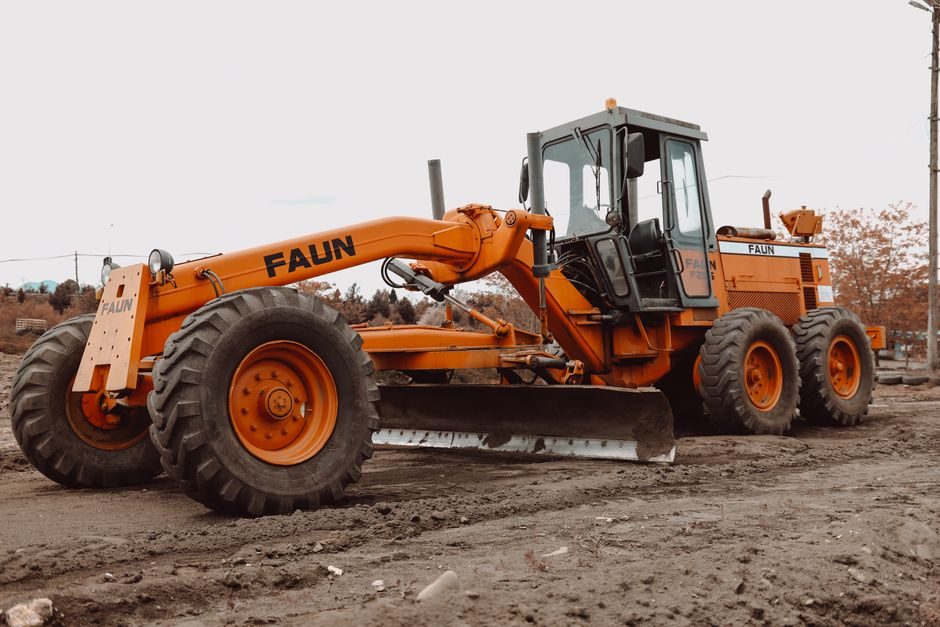
Motor grader buyers in 2026 face a market where the 100–215 HP class is dominated by Chinese OEM offerings such as the XCMG GR100 and GR215, listed at $70,000–$75,000 FOB on the Machmall industrial platform as of September 2025 [S2].
Used-equipment supply is wide: Ritchie Bros. listed 186 motor grader lots across its global auction inventory in mid-2026, with locations spanning Ocana (Spain), Edmonton, and other regional yards, giving specifiers a credible second-hand benchmark alongside new builds [S3].
For buyers comparing new versus used, the spec gates below — horsepower, moldboard geometry, frame configuration, drivetrain, and emissions — apply identically, and the same gates drive the build-up cost of competing product lines. The selection logic translates directly to adjacent earthmoving equipment: the tonnage and emission tier criteria covered in the Excavator 2026 Price & Cost Guide overlap, but a grader's defining axis is the moldboard, not the bucket.
Spec Gate 1: Horsepower Band and Operating Weight
The 100–215 HP envelope is the practical core of the 2026 motor grader market, with the XCMG GR100 sitting at the 100 HP / mini-class entry point and the XCMG GR215 anchoring the 215 HP mainstream road-class tier, both shown on Machmall's product page for motor graders in late 2025 [S2]. Sub-100 HP units are typically compact municipal graders; machines above 250 HP move into mining and large-highway classes with operating weights that can exceed 25 t.
Rule of thumb: a grader rated below ~135 HP generally cannot sustain a 14 ft (≈4.3 m) moldboard through heavy cut passes on A-1 cemented subgrade without stalling the engine, so 150 HP+ is the practical minimum for full-production road work. Heavier operating mass also stabilises the blade on long passes — graders below 12 t curb weight tend to chatter on windrowed gravel, producing a wavy finish.
Spec Gate 2: Moldboard Width and Geometry
Production moldboard width on mainstream 150–215 HP graders is 3.66 m (12 ft) with optional 4.27 m (14 ft) extensions, the latter being the default spec for highway-class machines like the GR215 [S2]. The moldboard circle rotation is typically 360° on modern units, with a blade tilt range that lets operators cut a flat bottom, a V-ditch, or a bank slope from the cab.
Buyers should treat moldboard width as a hard gate, not a soft option: specifying a 14 ft blade on a machine whose hydraulic flow was sized for 12 ft will starve the circle drive, slowing rotation under load. A 4.27 m moldboard adds roughly 15–20% to moldboard hydraulic demand versus 3.66 m, which is why the GR215 class pairs the wider blade with a higher-flow tandem gear pump stack.
The same envelope-vs-flow logic shows up in truck crane selection: a 50-ton crane spec'd with a 60-ton boom rarely delivers full charts, and the same mismatch discipline applies to grader blade sizing.
Spec Gate 3: Frame Articulation and Wheel Lean
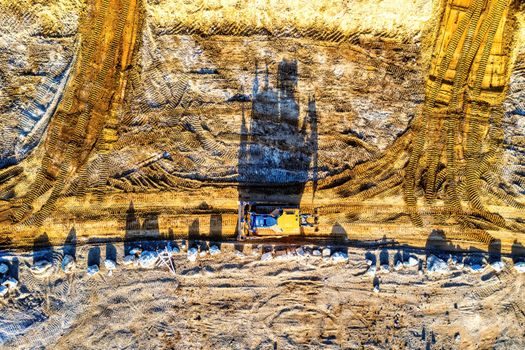
Articulated frames — a hinge between front and rear frames, typically with ±20–25° articulation either side of centre — are standard on every 150 HP+ road grader on the 2026 market, including the GR215. The hinge is what lets the operator offset the front wheels outside the rear-wheel track while the rear wheels stay on the road crown, the classic pass for shoulder work and ditch clean-out. [S1]
Wheel lean at the front axle (typically ±18°) is the second geometry lever; it lets the front wheels camber into a cut to counter side-draft loads without scrubbing the tire shoulder. A machine without front-wheel lean is essentially a long-wheelbase tractor with a blade, and buyers specifying cross-slope work should reject that configuration outright. The XCMG GR215-class chassis pairs both articulation and lean as a standard package, while some 100 HP units ship without lean to hit a lower price point [S2].
Spec Gate 4: Drivetrain, Tandem and Transmission
Full-time six-wheel drive (6×6) with a power-shift transmission and a no-spin rear differential has become the default on the 215 HP class, replacing the older 4×4 with rear-tire-only drive layout. The tandem housing — the gearbox that splits torque between the two rear axles and provides the in-cab creep for finish passes — is the single most expensive drivetrain component, and it is the item most likely to be downgraded on low-cost Chinese-built units. [S2]
Buyers should confirm the tandem is a chain-drive or direct-gear unit from a recognised supplier rather than a spur-gear economy design, and should specify at least 8 forward / 4 reverse power-shift gears. Two reverse speeds with electronic modulation are what allow an operator to back-blade a pass at walking pace without jerking the moldboard, the difference between a finish that holds density and one that re-loosens the lift.
This drivetrain-focused criterion is also the throughline in Bulldozer Selection Criteria: hydrostatic versus power-shift, final-drive rating, and undercarriage mass are the levers that separate a productive unit from a stranded one.
Spec Gate 5: Emission Tier, Engine and Aftertreatment
China-built graders exported through platforms such as Machmall now ship with Stage IIIA / Tier 3 as the entry tier and Stage V / Tier 4f on premium builds, the latter adding a diesel oxidation catalyst plus diesel particulate filter and selective catalytic reduction, with DEF consumption of roughly 3–5% of fuel burn on a sustained load [S2]. A buyer specifying a Tier 4f machine for a project that does not need it is paying 8–12% more in purchase price and another 3–5% in operating cost over the asset's first 5,000 hours.
The correct approach is to pin the emission tier to the project's regulatory environment, not the OEM's brochure: a Middle East highway job that accepts Tier 3 should not be over-spec'd to Tier 4f just because it exists. The Backhoe Loader Selection guide covers the same emission-versus-application trade-off, and the same discipline holds here.
Also confirm the engine is a six-cylinder displacement class above 6 L on any 150 HP+ machine; a four-cylinder engine in that horsepower range will be working at high mean effective pressure, shortening overhaul intervals. Engine cooling package should be rated for 45 °C ambient at minimum for tropical or Middle East deployments — units shipped with 38 °C-rated coolers are a known derate risk.
Criteria-Based Comparison: 100 HP vs 150 HP vs 215 HP Class
On a head-to-head, the 100 HP XCMG GR100 fits municipal lots, light snow clearance and subdivision finish grading, with a typical 3.0 m moldboard, no front-wheel lean on base trim, and a Tier 3 engine; purchase price sits at the low end of the China-built band [S2]. The mid-150 HP class adds front-wheel lean, a 3.66 m moldboard, and a power-shift transmission with 6F/3R as the typical spec. The 215 HP GR215 class is the highway and mining entry point, with a 4.27 m moldboard, full 6×6 drive, Stage V aftertreatment on premium trim, and the price tag of $70,000–$75,000 FOB that Machmall quotes for 2025–2026 deliveries [S2].
On four decision criteria — moldboard width, drivetrain layout, emission tier availability, and FOB price — the GR100 scores 3.0 m / 4×4 / Tier 3 / lower-tier price, the mid-class scores 3.66 m / 6×6 / Tier 3 or Stage V / mid-tier price, and the GR215 scores 4.27 m / 6×6 / Stage V available / $70,000–$75,000. A specifier matching a Tier 4f mandate to a sub-150 HP chassis will simply not find compliant product on the 2026 market, so the application must drive the chassis class, not the other way round.
Sourcing Channels and Used-Market Signals
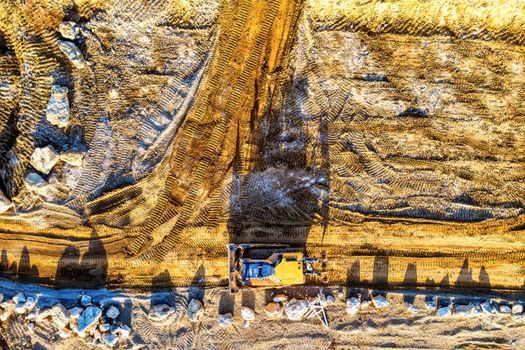
New-unit sourcing for China-built graders runs through OEM export portals such as Xuzhou Wbest Heavy-Duty Machinery Technology & Science's Made-in-China storefront, where the company lists as both a motor grader and road roller supplier under international sales manager Mr. Jamesjiao, and through aggregated industrial platforms like Machmall, where the XCMG GR100 and GR215 are listed with public FOB pricing [S1][S2].
Used-equipment sourcing runs through auction networks: Ritchie Bros. listed 186 motor grader lots in mid-2026 across locations including Ocana (Spain) and the Edmonton hub, with hours-on-engine and serial number visible per lot — the same hours data the buyer should use to set the residual assumption for any new-unit finance model [S3]. For tier-2 and tier-3 buyers who do not need the latest emission certification, a 5,000–8,000-hour late-model used grader typically delivers the lowest cost-per-hour over a 3-year deployment window.
Trackable signals going into H2 2026: whether Machmall's $70,000–$75,000 FOB band on the GR215 holds through Q4 2026, and whether Stage V penetration on the 150 HP mid-class increases — the latter is the more important indicator of regulatory tightening in the export markets that absorb Chinese-built graders.
For component-level specifications, see ac motor, and hydraulic motor.