
Marine and offshore piping uses needle valves predominantly on instrument air, gas sampling, hydraulic pilot, and chemical-injection lines, where the requirement is fine throttling at low Cv, not line isolation, and 316 stainless steel remains the default body material for seawater-exposed service per typical industrial supplier guidance [S2][S7].
The defining mechanical feature of a needle valve is a long, tapered stem that mates with a small orifice seat, giving a linear-ish relationship between handwheel turns and flow; this geometry is what makes needle valves the preferred choice for vacuum systems, metering skids, gas bleeder lines, and sampling lines, rather than for general block-and-bleed isolation [S4][S8].
Pressure classes and where each fits on a marine system
Standard industrial needle valves are commonly rated from 3,000 up to 7,500 psi, with high-pressure instrument and hydraulic versions reaching 10,000 psi and specialty medium-pressure needle valves like the Swagelok NVT series rated to 60,000 psi (4,134 bar) for cone-and-thread gauge and hydraulic-pilot duty [S1][S6][S7].
For a marine engine room, the practical split is: low-pressure (under 1,000 psi) on lube-oil scavenge drains and air-start drains, mid-pressure (3,000-6,000 psi) on hydraulic power-unit pilots and fuel-oil test rigs, and high-pressure (10,000-60,000 psi) only on chemical-injection umbilicals and high-pressure gas sampling where the system itself is at that rating [S1][S6][S7].
Body and trim materials for saltwater, sour, and cryogenic exposure
316 stainless steel is the marine workhorse for needle-valve bodies and bonnets, with brass specified only for non-corrosive, sheltered interior lines, and titanium or Monel used in highly corrosive zones such as ballast-injection wetted parts and chemical-tank vent lines per typical industrial supplier guidance [S2][S7].
For sour-service applications (H2S partial pressure above the NACE MR0175 threshold), body and trim must be specified to NACE MR0175, which restricts hardness on wetted parts and rules out standard carbon steel; for cryogenic LNG or LPG service, extended-bonnet designs with PTFE or Grafoil packing are needed to keep the packing box above the -46 °C embrittlement range of standard elastomers [S2].
Needle vs. ball vs. globe: a marine-side comparison
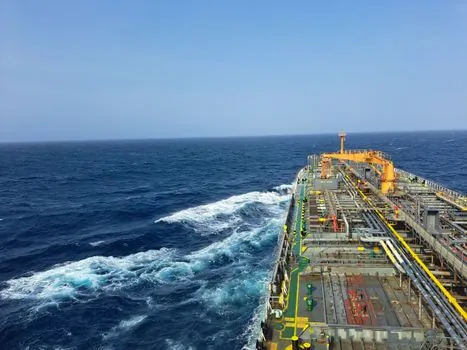
Ball valves, needle valves, and globe valves are all found on marine systems but cover different duties: a ball valve is a quarter-turn isolation device with a high Cv and clear open/closed handle position, a globe valve is the workhorse for throttling larger process lines with predictable seat geometry, and a needle valve is the precision instrument for low-Cv, high-pressure drop throttling where the operator needs many turns of adjustment [S3][S4][S8].
Three decision criteria line them up cleanly. Cv: ball valves give the highest Cv per size, globe valves mid-range, needle valves the lowest (small seat orifice, restricted flow path). Throttling precision: needle valves win on fine, repeatable adjustment, ball valves lose because their Cv curve is steep near closed, globe valves sit in the middle. Visibility of state: ball valves win (handle position is unambiguous), needle valves lose (no external indication of open vs. closed) [S4].
For marine service specifically, the practical rule is: use a ball valve for sea-water overboard and fuel-transfer isolation, use a globe valve for main steam or hot-oil block-and-throttle, and reserve needle valves for instrument-root isolation, gauge lines, and hydraulic-pilot circuits where the operator turns the handwheel to set a flow, not to open or close a line [S3][S4][S8].
Seat and stem geometry: metering vs. on/off needle
Standard needle valves use a conical plug tapering into a matching seat, which gives both regulation and reasonable shut-off; fine-metering or instrumentation needle valves use a much shallower taper or a multi-turn micro-metering stem so that each handwheel turn moves the Cv by a small, predictable increment, which is the geometry specified for laboratory, calibration, and gas-blending panels [S2][S4][S8].
Non-rotating stem tips (as on the Swagelok NVT series) reduce seat galling under high-cycle throttling and are the right pick for chemical-injection service where the valve is stroked daily; a standard rotating-tip needle valve is acceptable for gauge-root valves that are touched once a quarter [S1].
Connection types and end-fitting choices for shipboard retrofit
Threaded NPT and BSP connections dominate marine needle-valve offerings because most shipboard gauge, sample, and pilot lines are small-bore (under 1/2 in.) and threaded; compression fittings (such as Swagelok or Superlok tube ends) are specified for clean instrument-air and analytical sampling lines where zero leak paths and easy tube replacement matter [S1][S4][S7].
Flanged or socket-weld end needle valves exist but are uncommon under 1 in. size; for offshore platform hydraulic umbilicals and subsea chemical-injection skids, cone-and-thread (autoclave) high-pressure fittings on 60,000-psi-class needle valves are the standard, while the more familiar 316 NPT needle valves would never be specified at that pressure [S1][S7].
What needle valves are NOT suited for on a marine plant
Needle valves are the wrong choice for slurry, mud, or any solid-bearing service because the small seat orifice erodes and scores quickly; for high-Cv process lines because the pressure drop across a needle valve is excessive at design flow, wasting pump head; and for any application where the operator must instantly verify open/closed state, because a needle-valve stem position is not visually unambiguous [S4][S8].
On marine sewage, bilge, and fire-main lines a butterfly valve or a ball valve replaces a needle valve outright; on lube-oil purifier and FO-treatment skids a needle valve is appropriate only at the sample or test point, not on the main flow path [S4][S8].
Sourcing, standards, and what to verify on the datasheet
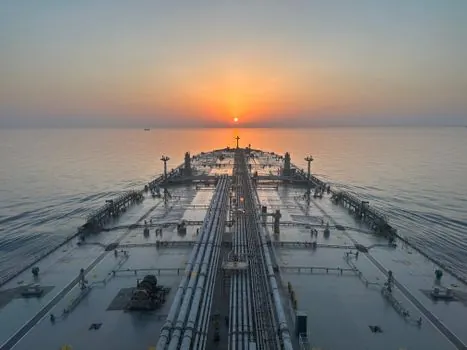
Specifying a marine needle valve typically requires: body and trim material (316SS standard, Monel/Hastelloy for chemical service), pressure class matched to the system rating with documented test pressure, NACE MR0175 compliance statement if the service is sour, seat and packing materials matched to temperature (PTFE for -29 to 200 °C, Grafoil for higher), and end connections sized to the existing piping [S2][S7].
For an integrated selection view, the marine valve reference page lays out how needle valves fit alongside ball, gate, globe, and check valves in a typical shipboard piping class, and for balance and HVAC seawater cooling circuits the balancing valve and marine HVAC pages cover the throttling valves used on chilled-water and ventilation systems that are commonly confused with precision needle valves. Related process and material context that pairs with needle-valve trim selection is covered in the alloy and service-environment map for oil-and-gas applications.
This topic is covered further in Metal Powder Selection for Oil and Gas: Alloy, Process, and Service-Environment Map.