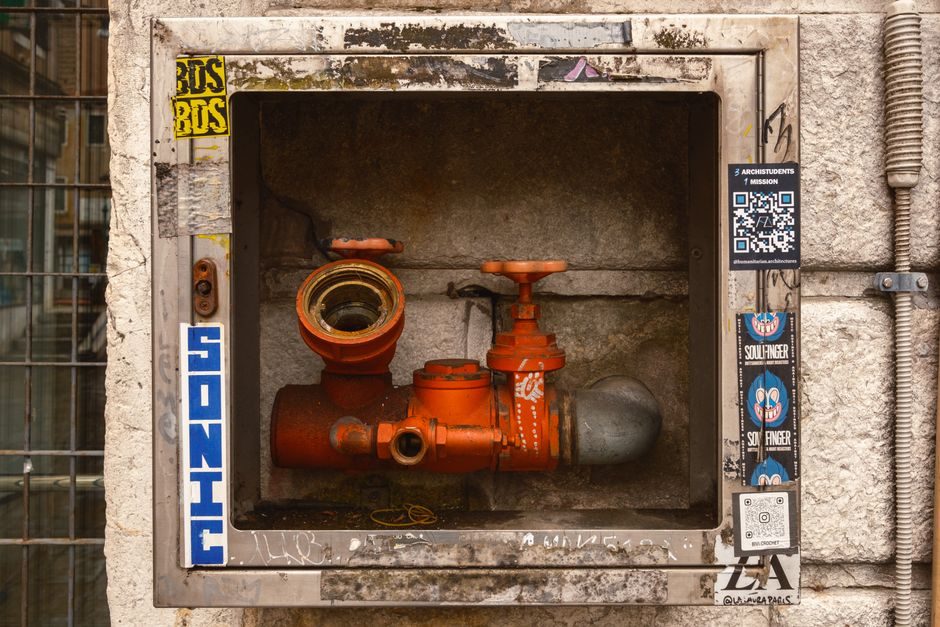
A plug valve is a quarter-turn isolation device whose tapered or cylindrical plug rotates 90° to align or block flow — the simplest definition hides four distinct commercial variants that do not interchange on duty [S1][S2][S3].
Across the 2026 supplier landscape, current catalogues cluster around lubricated API 599 units, PTFE-sleeved BASIC/HIGH-PERFORMANCE lines, metal-seated lifting-plug units, and pneumatic double block-and-bleed (DBB) assemblies sized from DN25 to DN300 [S1][S2][S3][S4]. For a process engineer, the buy starts with variant-by-service mapping — not bore size, not price.
Lubricated vs Sleeved vs Metal-Seated vs DBB: The Four Real Families
Lubricated plug valves carry a sealant-injection channel that forces a grease film between plug and body, used historically on API 6D pipelines and still listed for oil and gas duty under API 599 with API 598 hydrostatic testing [S3][S5]. Sleeved (PTFE-lined) plug valves replaced the grease routine in chemical and food service — the AZ Valve BASIC/HIGH-PERFORMANCE series is marketed as “free of cavities, maintenance-free, self-lubricating” with reduced-bore F-2, multiport F-3/F-4/F-5, full-bore ISO-EXTRA, and weld-end SW variants, all with a “wide range of special sleeve materials” beyond standard PTFE [S4].
Metal-seated lifting plug valves are the heavy-duty branch: a Zhejiang Zhonggong listing calls out API 607 anti-static, API 599 steel-valve design, ASME B16.34 face-to-face, bolted bonnet, in-line adjustment, fire-safe construction, anti-static device, stopper device, and renewable seat ring [S3]. Double block-and-bleed pneumatic plug units — Kühme's KVII/F-KVII/F — sit at DN65 to DN300, 16 bar (232.1 psi), 180 °C (356 °F), and add a soft seat rated to EN 12266-1 leakage rate A plus closing time under 1 second for gas-turbine and H2-ready service [S2]. A plug valve is therefore not one product but a family decision governed by service fluid, fire-safety need, and actuation speed.
Standards That Actually Pin the Spec
API 599 governs metal plug valve design and dimensions for general refinery and chemical service; the lifting-type Chinese export listing cites API 599 alongside API 607 fire-safe and ASME B16.34 for the pressure-temperature envelope [S3]. API 607 is the fire-test standard for soft-seated quarter-turn valves — when a PTFE-sleeved unit is specified for hydrocarbons, insist on the API 607 certificate, not just a generic “fire-safe” label. API 6D appears on pipeline-grade lubricated units and on manufacturer marking/inspection language from Chinese export listings [S3][S5].
For European process plants, EN 12266-1 leakage class is the closing-test benchmark; the Kühme KVII/F DBB unit is rated to “leakage rate A in acc. with EN 12266-1” and is supplied in both DIN and ANSI 150 lbs. flange variants for direct drop-in to either piping system [S2]. Hygienic plug valves (Evoguard SC) carry ATEX on the actuator side for explosive-gas zones, with body working pressure up to 22.7 bar (329.2 psi) and DN25 to DN150 weld-end bodies in 1.4404 / EPDM-elastomer combinations [S1]. Buyers should write the standard and the leakage class into the PO line — not in a cover note.
Selection Criteria: Media, Temperature, Cycle Count, and Fire-Safe
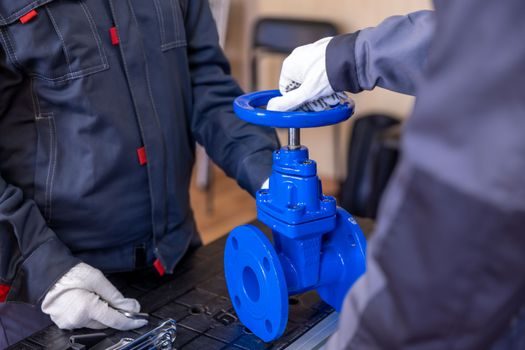
Media is the first gate. Abrasive slurry, clean gas, hygienic food, and sour hydrocarbon each push toward a different body, seat, and seal. PTFE sleeves tolerate a wide chemical range but are temperature-limited; metal-seated lifting-plug designs accept higher temperatures and meet API 607 after a soft-seat sacrificial graphite layer is consumed in a fire event [S3][S4]. For dry, clean, non-abrasive gas, the Kühme KVII/F DBB quick-closing unit delivers sub-1-second closure with spring-return pneumatic fail-safe at 16 bar and 180 °C [S2].
Cycle count and torque are the second gate. Lubricated plug valves tolerate frequent cycling and reseat easily via the sealant injector, but the lubricant can contaminate food/pharma product — that rules them out of hygienic lines, where Evoguard's weld-end, cavity-free, drainable PN 25 housing is the correct geometry [S1]. For high-cycle, leak-tight gas service, soft-seated quick-closing plug valves are the dominant pick; for moderate-cycle, general chemical isolation, a PTFE-sleeved BASIC series plug is the cost-effective default [S2][S4]. The ball valve is the usual fallback when full-bore, low-torque, bubble-tight shutoff is needed — but plug valves win on multiport and diverter duty where 3-way or 3/2-way flow paths are required [S1].
Pressure-Temperature and Material Envelope
Working-pressure and temperature ratings are not interchangeable across families. The Evoguard SC hygienic line caps at PN 25 body rating (≈22.7 bar) but is rated for pressure-blow surges up to 45 bar (652 psi) on the double-balanced disc [S1]. The Kühme KVII/F line is published at 16 bar and 180 °C continuous — adequate for natural gas, biogas, and landfill gas but not for superheated steam or high-pressure hydrocarbon refining [S2].
Metal-seated lifting plug valves from Chinese exporters trace to ASME B16.34 pressure-temperature classes, which span Class 150 to Class 600 and temperatures from -46 °C to 600 °C depending on body and trim material — common carbon-steel WCB bodies with 13Cr/SS316 trim, or full SS316/SS316L for low-temperature and corrosive service [S3]. For sub-zero or LNG-class service, confirm low-temperature impact testing per ASME B16.34 and the body material's Charpy rating; do not assume the standard “stainless” label covers it. Buyers who skip the material certificate inherit the leakage path.
Actuation, DBB, and H2-Ready Service
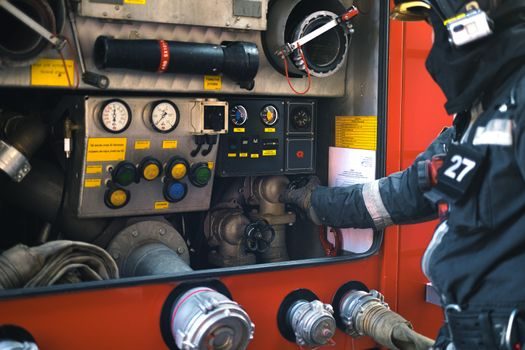
Quarter-turn geometry makes plug valves cheap to automate — pneumatic, electric, or spring-return — and the dominant growth in 2026 supplier listings is in pre-engineered, actuator-mounted, DBB-ready assemblies rather than bare valves [S1][S2]. Kühme's KVII/F-KVII/F ships as a “pre-mounted component, completely ready for installation” with double block-and-bleed and intermediate ventilation; the optional first-valve-as-control-valve configuration removes a separate control valve in the line, with a tailored control curve for burner management [S2]. The same family is published as H2-ready for hydrogen blending and dedicated H2 service — a label that currently means material and sealing compatibility for high-purity hydrogen, not a separate ASME hydrogen code.
For pipeline isolation where DBB is mandated, a plug-valve-based DBB can replace a dual ball-valve manifold at lower cost and footprint, but verify the cavity between the two seats can be vented to a safe location and that the soft seat is EN 12266-1 rate A on both seats, not just the downstream one [S2]. For pneumatic distribution in hygienic lines, the Evoguard SC offers 3-way, 3/2-way, and 2/3-way flow paths with EPDM seals and I/O-link feedback — a configuration no standard butterfly valve can match without an extra tee and second valve [S1].
When NOT to Pick a Plug Valve
Do not specify a plug valve for throttling in clean, high-pressure steam — control valves with characterized trim are the correct tool, and the control valve buying guide covers sizing and trim logic for that duty. Avoid lubricated plug valves on food, pharmaceutical, or oxygen service where the sealant can migrate into the product stream; the hygienic weld-end PN 25 plug with EPDM seal is the only acceptable geometry [S1][S5].
Skip PTFE-sleeved units on temperatures above the sleeve rating — typically 200 °C continuous for virgin PTFE, lower for glass-filled compounds — and on services with hard solids that will score the sleeve; switch to metal-seated lifting plug or a knife gate valve for slurry duty [S3][S4]. For bubble-tight, frequent-cycle, clean-service isolation where full bore is required, a ball valve is the cheaper, lower-torque default — plugs win only on multiport, diverter, or DBB-quick-closing duty. Specifying the wrong family to save 20% on the PO is the most common path to a six-figure shutdown.
Shortlist Logic and Sourcing Signals
For 2026 procurement, the shortlist is: (1) PTFE-sleeved BASIC series for general chemical, low-cycle, clean service below 200 °C; (2) metal-seated lifting plug to API 599/API 607 for hydrocarbon, high-temperature, and fire-safe service; (3) pneumatic DBB quick-closing plug for gas-turbine, biogas, pipeline, and H2-ready service with sub-1-second closure; (4) hygienic weld-end plug with EPDM or FKM seal and ATEX actuator for food, beverage, and pharma. Each family has a distinct supplier base — European hygienic lines from Evoguard and equivalent sanitary OEMs [S1], heavy-duty DBB quick-closing from Kühme and similar combustion-system packagers [S2], API 599 metal-seated and lubricated units concentrated among Chinese exporters and global pipeline-valve brands [S3][S5].
Trackable signals for the next sourcing cycle: confirm the API 607 certificate scope (the certificate must cover the exact size/class/size pattern ordered, not the family), the EN 12266-1 leakage-class test report for soft-seated DBB units, and the body material traceability cert (EN 10204 3.1) for any pressure-bearing wetted part [S2][S3]. For a side-by-side reference on adjacent isolation choices, the ball valve selection criteria for corrosive chemical service and the check valve selection criteria pieces give the cross-family comparison.