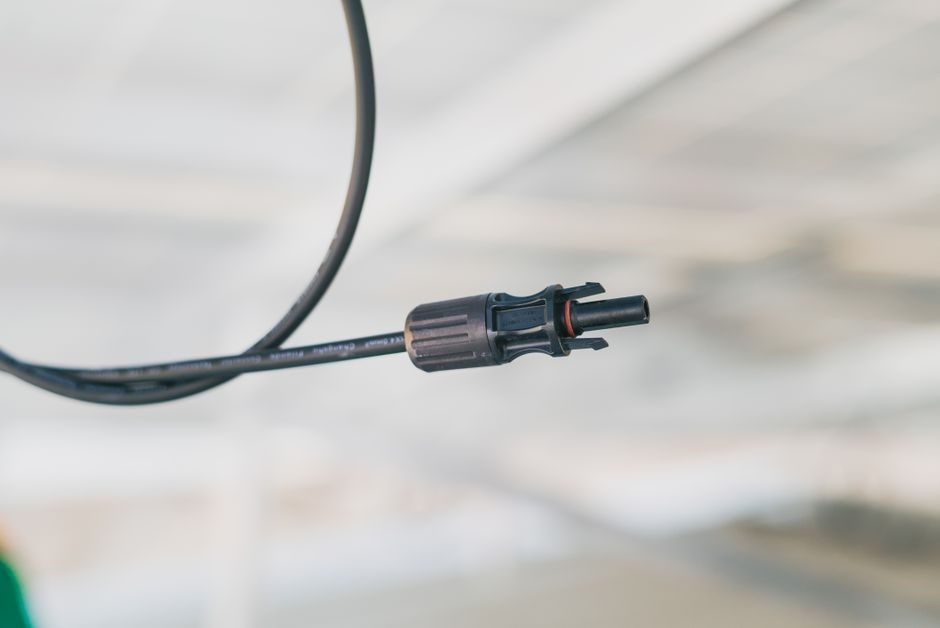
Power cable and wiring duct sit on opposite ends of an industrial cable system: one is the energized conductor, the other is a passive routing enclosure, and confusing the two drives both over-spec and under-spec failures on the same project.
Power cables are typically XLPE- or PVC-insulated, rated 0.6/1 kV for building and distribution feeders, and stepped up to 6/10 kV, 8.7/15 kV, 26/35 kV for utility and large-plant feeders; cross-sections in Chinese supply run from 1.5 mm² control cores up to 630 mm² three-phase power cores [S6]. Wiring duct is almost always rigid self-extinguishing PVC, with the OMEGA WD Series specifying UL94 V-0 flammability rating, a captive lid that resists vibration, and conformance to DIN 43659 for slot geometry [S1].
What Each Product Actually Is
Power cable is a cable product used to transmit and distribute electrical energy in the main lines of a power system, normally comprising conductor, insulation, fillers, bedding, and sheath; control cable, by contrast, carries low-current signals to drives, relays, and instrumentation rather than bulk power [S6]. The most common construction is copper conductor with PVC or XLPE insulation, PVC inner sheath, steel-tape or steel-wire armour for direct-burial runs, and an outer PVC jacket; the same construction with cross-linked polyethylene insulation is specified where conductor temperature ratings above 90 °C or higher short-circuit withstand are required.
Wiring duct is an open-top rigid channel with vertical fingers or slots, supplied with a separate clip-on lid, mounted inside control cabinets to route and retain low-voltage wiring; OMEGA's WD Series is described as a premium wire-management product for routing and organizing wiring in control panels, with the cover included in price and the geometry designed to combat vibration in industrial cabinets [S1]. RCCN's catalogue extends this family with halogen-free VDRT-HF, 110 °C high-temperature HVDRT-HF, narrow-slot HVDRFZ, wide-slot VDRF, and flexible FD grades, showing how duct has fragmented into material-and-temperature sub-lines rather than staying a single commodity SKU [S2].
Selection Criteria: Voltage, Current, Environment, Codes
The first decision tree separates the two products entirely: if the item is meant to carry energized current, it is a power cable and must be specified by voltage class (0.6/1 kV is the default building/plant rating), conductor size, insulation system (PVC vs XLPE), armour, and short-circuit withstand; if the item is meant to organize already-insulated conductors inside a panel, it is a wiring duct and is specified by channel size, slot width, material flammability rating, lid retention, and mounting method [S1][S6].
For wiring duct, three specs dominate: (1) flammability — OMEGA's WD uses self-extinguishing PVC rated UL94 V-0, the highest ease-of-flame-extinction tier under the UL94 vertical burn test [S1]; (2) mechanical standard — DIN 43659 governs slot and pitch geometry so off-the-shelf DIN-rail-mount components and standard cutters fit [S1]; (3) temperature and chemistry — RCCN offers VDRF-HF rated to 110 °C continuous and VDRT-HF as halogen-free, both real options for engine compartments, welding cells, and tunnels where standard PVC would outgas or melt [S2]. A typical Made-in-China export SKU is CE-approved white or grey PVC trunking, supplied with adhesive backing, at roughly US$4.25 per piece at 50–999 piece orders and US$4.32 at 1,000+ pieces, FOB Shanghai [S3].
Comparison Matrix: Power Cable vs Wiring Duct
On a like-for-like basis across four procurement and engineering criteria, the two products are not substitutes but complements — the matrix below is the one to keep in a spec review:
1. Function: power cable transmits electrical energy from source to load; wiring duct only routes and retains already-insulated wires inside a panel and carries no load current [S1][S6]. 2. Voltage class: power cable is specified at a voltage class (0.6/1 kV, 6/10 kV, 26/35 kV); wiring duct is non-voltage-rated and is used only for low-voltage control, signal, and SELV wiring inside enclosures. 3. Governing standards: power cable is built to IEC 60502 (power cables with extruded insulation) or GB/T 12706 for the Chinese market; wiring duct is built to UL94 V-0 for flammability and DIN 43659 for geometry [S1]. 4. Failure mode: a power cable failure is an electrical event (insulation breakdown, thermal runaway, short-circuit); a wiring duct failure is a mechanical or fire-load event (lid detachment under vibration, PVC melt, halogen-acid smoke) — the two failure domains rarely overlap, which is exactly why both items appear in a control-cabinet BoM rather than one replacing the other.
Adjacent Products: Cable Tray, Conduit, Trunking, Duct Bank
Engineers often hear "wiring duct" used loosely for any plastic channel and the result is mis-specification. The 256 active Alibaba suppliers of "power cable duct" split their catalogue across PVC trunking, PVC cable duct, GI box, and PVC pipe fittings — none of which are the same product [S5]. PVC trunking is the surface-mounted indoor cousin of conduit and typically handles the same small-control-wire role as wiring duct; PVC-C underground power cable duct, by contrast, is a heavy-wall chlorinated-PVC pipe for direct-buried power runs, with the LESSO product claiming volume resistivity ≥ 1.0 × 10¹⁰ Ω·m and high temperature resistance to keep buried runs from cracking [S4].
Above ground, the higher-capacity parallel is the cable tray — ladder, perforated, or solid — sized by load per metre, span, and NEMA VE-1 / IEC 61537 fill rules; it carries both power and control cables between cabinets, while wiring duct is confined to inside the cabinet itself [S1]. A cable duct bank, in Chinese plant engineering 习惯, is the structural corridor of steel or reinforced-concrete columns, beams, and trusses that carries pipe racks and cable trays between process units; it is outdoor, single- or multi-layer, and either walkable or non-walkable [S8]. The "fire-proof power cable" BTTE/BTLE family from Shanghai Yongjin Cable uses inorganic mineral insulation with a copper core and a low-smoke halogen-free sheath, specified where circuit integrity under fire is required (e.g. fire pumps, emergency lighting feeders) — a different problem again from either cable or duct [S7].
Typical Use Cases and What NOT to Substitute

Use a power cable whenever current must flow from a transformer, busway, or MCC to a load: 0.6/1 kV XLPE/SWA/PVC armoured cable is the workhorse for indoor distribution and direct burial; 6/10 kV and 8.7/15 kV XLPE classes are specified for plant feeder loops and large-motor feeders; the 26/35 kV class is reserved for utility and substation interconnects [S6]. Fire-survival circuits, where the cable must continue to carry load for 90 minutes under flame, are typically mineral-insulated BTTE/BTLE with a copper sheath and inorganic mineral powder, not standard XLPE [S7].
Use a wiring duct inside a control panel, drive cabinet, or marshalling box: OMEGA's WD Series is sized for typical DIN-rail panels and is rated to resist vibration-induced lid loss and cable pop-out, with the UL94 V-0 self-extinguishing PVC providing a flame-load ceiling acceptable to most panel builders [S1]. For a wider decision tree that includes upstream short-circuit protection, see the Busway vs Fuse selection map; for cabinet-level harmonic mitigation alongside metering, the Harmonic Filter vs Multifunction Power Meter temperature-limited spec is the relevant companion; and for the upstream distribution transformer that feeds the power cable, Distribution Cabinet vs Dry-Type Transformer closes the loop on the energy path. Do not substitute wiring duct for cable tray on long horizontal runs — duct is panel-internal, lacks the load rating, and is not designed to span between cabinets. Do not substitute cable tray for a wiring duct inside a high-density panel — the tray cannot retain individual conductors and will leave the panel builder non-compliant with DIN 43659 retention expectations.
Limitations, Failure Modes, and Procurement Caveats
Wiring duct is constrained by four real limits: (1) thermal — standard PVC begins to soften above 60–70 °C continuous, so a panel mounted near a heat source should spec the 110 °C HVDRT-HF halogen-free grade rather than the stock VDRF [S2]; (2) chemical — standard PVC outgases HCl in a fire; for enclosed spaces or tunnel runs, the halogen-free SDRHF or VDRT-HF is the engineered choice [S2]; (3) mechanical — duct is not load-bearing; it will not support a cable bundle heavier than its fill-and-derating calculation allows, and overstuffing pushes cables out of the slot; (4) standards — DIN 43659 governs geometry, not voltage or current, so duct datasheets never carry an amperage rating, and a panel builder who treats the duct as if it were a conductor is misreading the spec [S1].
Power cable is constrained differently: insulation temperature class (70 °C PVC, 90 °C XLPE), minimum bend radius (typically 12× OD for single-core, 15× OD for multi-core XLPE), armour type for the burial/duct/tray environment, and short-circuit withstand (which is set by conductor cross-section and insulation thermal limit, not by the cable jacket). Procurement caveat: on Alibaba, "power cable duct" returns 256 suppliers but most are actually selling PVC trunking and fittings rather than high-voltage cable conduit [S5]; the higher-grade LESSO PVC-C underground duct is a real buried power raceway with published dielectric specs, but it is a pipe product, not a cable, and is sized by ID and pressure rating, not by current carrying capacity [S4].
Decision Tree in One Page
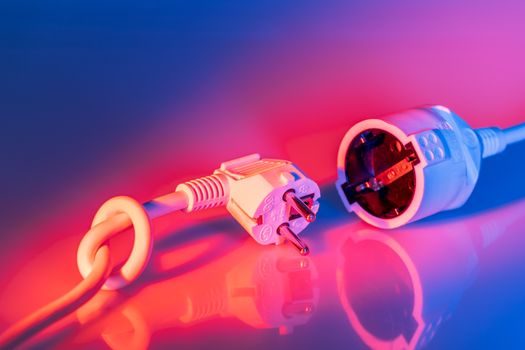
If the item carries load current, size it as a power cable by voltage class, conductor mm², insulation, armour, and environment; if it is a passive raceway inside a panel, size it as a wiring duct by channel W×H, slot pitch, UL94 V-0 flammability, DIN 43659 geometry, and either standard PVC or 110 °C halogen-free material [S1][S2]. Power cable fails electrically (insulation breakdown, overload), wiring duct fails mechanically or in fire (lid pop-out, PVC melt, HCl smoke) — and the two failure domains are why a control-cabinet BoM lists both, not either/or.
Trackable signals to watch over the next procurement cycle: (1) halogen-free and 110 °C duct share of RCCN's catalogue continues to expand as panel builders migrate away from standard PVC [S2]; (2) Chinese suppliers are adding CE-approved adhesive-backed trunking at US$4.25–4.32 per piece FOB Shanghai, which compresses landed cost on small-quantity duct orders [S3]; (3) the LESSO PVC-C underground power-duct line is being marketed on a 1.0 × 10¹⁰ Ω·m volume-resistivity claim, and procurement should verify the test method and test voltage behind that number before substitution into a 0.6/1 kV direct-burial feeder [S4].
For the relevant spec sheets and selection criteria, see spiral duct.