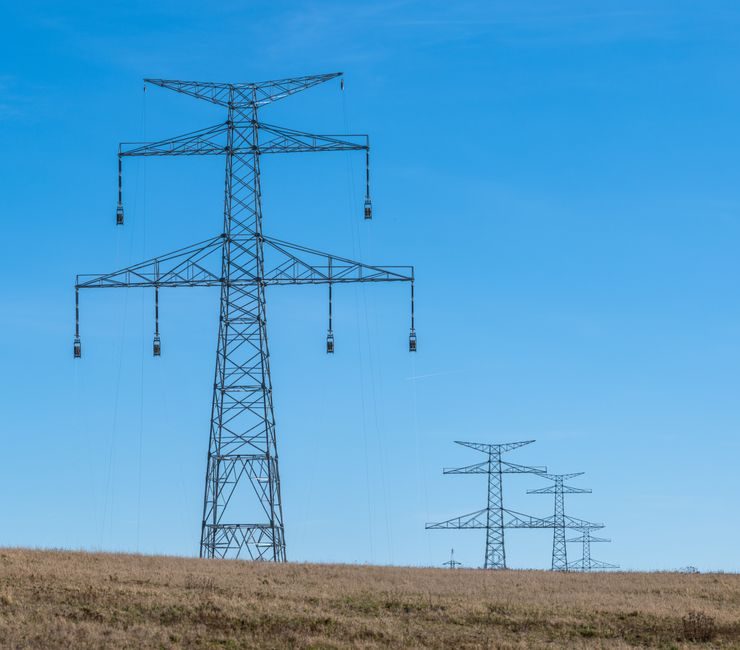
A power distribution box for industrial duty is a low-voltage assembly that splits one feeder into multiple protected branch circuits, and the right one is selected on enclosure IP rating, busbar current, short-circuit withstand (Icc / Icw), and SCCR of the built-in breakers, not on FOB price [S2][S3].
Buying decisions in 2026 split cleanly across four duty types — indoor LV plant feeder, outdoor wet/dusty site, hazardous area, and rack PDU — and the spec shortlist for each overlaps by only about 30%, so the rest of this map breaks them out separately and ends with a comparison table [S1][S2][S4].
Define the duty before you look at a catalog page
IP54 is the practical floor for indoor plant rooms, IP65 is the right call for wash-down food lines and outdoor wall-mount, and IP66 enters the picture only where high-pressure hot water or coastal salt spray is expected, per the IP rating bands commonly stated for power distribution box enclosures [S3][S5].
Material drives both cost and corrosion life: powder-coated cold-rolled steel covers 80% of indoor duties at the lowest cost, 304 stainless is the workhorse for food and outdoor, and 316 stainless is the right pick only when chloride exposure is sustained [S3][S5].
For a 2026 procurement pass, lock four numbers first: rated busbar current (A), rated voltage (400/415 V AC three-phase is the EU/CN baseline), short-circuit withstand Icw (kA / 1 s), and the assembled short-circuit current rating SCCR — none of these are negotiable downstream [S2][S4].
Indoor LV plant distribution: GGD, GCK, and integrated XPZW
GGD-type fixed power distribution cabinet assemblies remain the default indoor workhorse, and a 2026 China-made GGD line ships at FOB prices around US $2,000 per piece at minimum-order quantity, ISO 9001:2000 certified [S2].
GCK is the draw-out variant: modular withdrawable feeder units allow live swap of a faulted branch without full busbar shutdown, which is why GCK is preferred for continuous-process plants where a tripped feeder is more costly than the cabinet itself [S2].
The XPZW low-voltage integrated box bundles distribution and reactive-power compensation in one enclosure, which removes a separate capacitor bank and shortens wall space; on space-constrained retrofit floors this is the cleanest single-box answer [S4].
For indoor duty, GGD, GCK, and XPZW line up against three criteria: cost per kA withstand (GGD wins), maintainability under load (GCK wins), and reactive compensation integration (XPZW wins) [S2][S4].
Outdoor, wet, and dusty sites: rain-proof enclosures and IP65 junction boxes

Outdoor wall-mount boxes need a rain hood, sealed gland plates, and a verified IP65 test report; the 2026 made-in-China pool shows IP65-rated power distribution box units with CCC certification as the prevailing outdoor supply [S3][S5].
For a single-phase AC adapter / lighting feed, the 600 W overload-and-short-circuit protected supply box (US $38 at 1-49 pieces, dropping to US $32 at 300+) is a representative 2026 street price for a sealed rain-proof unit [S3].
Junction-only outdoor runs (no breaker) can drop to smaller IP65 boxes with cable glands on each face; the trade-off is that a junction box has no overcurrent protection, so the upstream breaker still has to be sized for the full feeder [S5].
Hazardous-area and high-IP builds: what the spec must show
For Zone 1 / Zone 2 chemical or refinery duty, an explosion-proof distribution enclosure is the only acceptable form, and the certification chain (ATEX 2014/34/EU for the EU, IECEx for the rest of the world) has to be on the nameplate, not just in the brochure. [S1]
On hazardous builds, three numbers are non-negotiable: gas group (IIA / IIB / IIC), temperature class (T4 / T5 / T6), and IP66 minimum — drop any one and the inspector will red-line the drawing [S3][S5].
If a quote on a Zone 1 build is within 10% of a non-Ex quote, the certification is almost certainly fake; ATEX/IECEx units carry a 2-4x cost premium over a plain IP65 box of the same busbar rating, and that gap is the budget signal, not a negotiable margin [S3][S5].
What the 2026 catalog looks like, and where the price breaks fall

The 2026 export catalog for power distribution hardware is dominated by China-made supply, and three price bands are stable through 2026: small sealed rain-proof boxes (US $32-38 at 50-piece MOQ), fixed indoor cabinets (US $2,000 FOB at 1-piece MOQ for GGD), and rack PDUs (US $200-1,500 refurbished/used depending on outlet count and metering) [S2][S3][S1].
Rack PDUs deserve a separate lane: a 2026 used/refurb market lists the APC AP7950B (Switched, 16 outlets, 10 A, 230 V), CyberPower PDU81005 (8 outlets, 1U, monitored + switched), APC AP6003A (Basic, 14 outlets, 0U/2U, 100-240 V), Emerson MPHC1243 (0U, 24 outlets, 230 V), and Raritan PX3-5292-N1Q1 (32 A, 200-240 V, C13 × 12, metered + switched), each priced on the secondary market well below OEM new [S1].
For new-build indoor LV, MCC selection criteria overlap with distribution-box selection in the busbar and SCCR fields, but the MCC carries motor starters and overload relays where a plain distribution box carries only breakers — confusing the two is the most common 2026 buying error.
Selection criteria: the seven-point spec checklist
Run any quote through this gate before signing: (1) IP rating backed by a test certificate, (2) rated busbar current ≥125% of design load, (3) Icw short-circuit withstand ≥10 kA / 1 s for 400 V indoor, (4) assembled SCCR matching the upstream breaker, (5) enclosure material and finish matched to corrosion class, (6) certification chain (ISO 9001 minimum, ATEX/IECEx for hazardous, CCC for CN supply), and (7) verified busbar cross-section and copper purity, not just a current label [S2][S3][S4][S5].
Two red flags that should fail any quote: a vendor who cannot name the busbar copper cross-section in mm², and a vendor who quotes an SCCR above the breaker Icu without showing the let-through coordination chart [S2][S4].
A useful cross-reference for budget planning is the distribution cabinet price breakdown, which lines material, busbar, and breaker content against the final FOB number — it is the cleanest way to read a 2026 quote without the line-item camouflage.
Who a power distribution box is for, and who should pick something else
A power distribution box is the right pick for splitting a single LV feeder into multiple protected branch circuits in a plant, building, or outdoor panel — that is exactly its job, and the 2026 supply market covers that duty well from US $32 for a sealed 600 W box up to US $2,000+ for a fixed indoor cabinet [S2][S3].
It is the wrong pick if the real need is motor starting and overload protection (use an MCC instead), if the load is one server rack (use a rack PDU), if the upstream is medium voltage above 1 kV (use a power distribution cabinet with a transformer front-end), or if the site is ATEX Zone 0 (a plain IP65 box is not enough, you need a fully Ex-rated assembly) [S2][S3][S5].
For transformer-fronted LV builds, the distribution cabinet vs dry-type transformer comparison map shows where the cabinet ends and the transformer begins — pick the wrong one and you pay for both, or worse, sit with a mis-sized impedance.
Comparison: four common form factors on four buyer criteria
Against four decision criteria — cost, IP rating ceiling, branch maintainability under load, and hazardous-area eligibility — the four main form factors line up as follows: rain-proof sealed box (US $32-38, IP65, no live maintainability, not Ex-rated) [S3]; indoor fixed cabinet GGD (US $2,000, IP54-65, low maintainability, optional Ex variant) [S2]; indoor draw-out GCK (US $2,500-4,000 typical, full live swap, optional Ex variant) [S2]; integrated XPZW (US $1,500-3,000, IP31-54, full live maintainability, indoor only) [S4].
For a 2026 indoor continuous-process plant, GCK is the cleanest answer; for a 2026 outdoor wall-mount on a water-treatment skid, the rain-proof IP65 box is the right answer; for a 2026 hazardous refinery feeder, only an ATEX/IECEx-rated cabinet with verified Icw, gas group, and temperature class will pass inspection [S2][S3][S4][S5].
If the upstream source is a power transformer, the impedance and inrush of the transformer set the SCCR floor for the downstream box — coordinate the two before signing either PO, because a transformer change later will often force a cabinet re-spec.
Track two signals over the next buying cycle: published 2026 FOB prices for GGD/GCK indoor cabinets, which set the floor for indoor LV distribution, and the IECEx certification list for the same vendors, which is the cleanest single proxy for whether a hazardous-area build can be sourced in volume at a non-premium price [S2][S5].