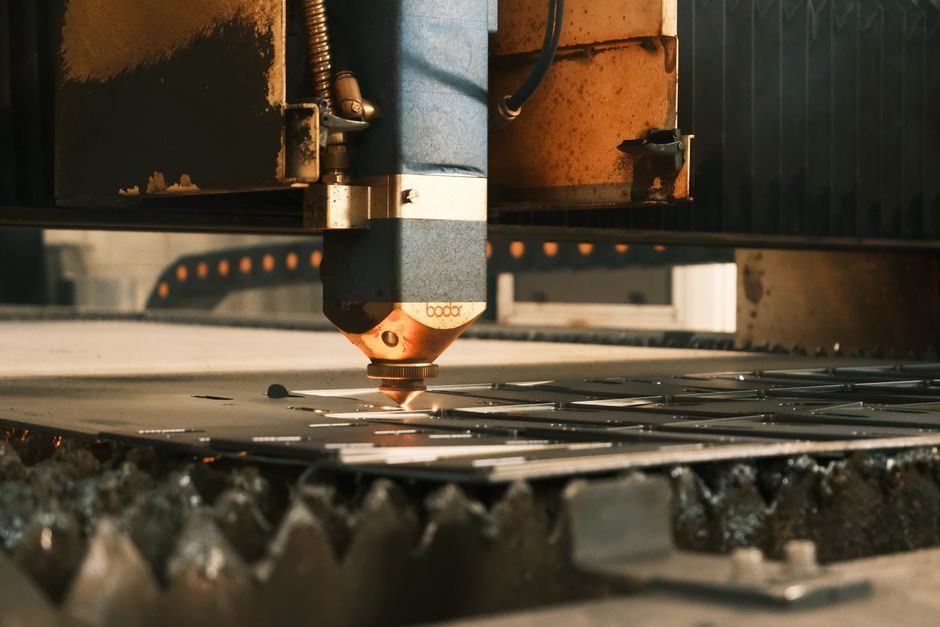
Precision air conditioning for smart factories must hold ambient temperature within ±0.1°C and relative humidity within ±2% of setpoint to protect SMT lines, semiconductor metrology, and medical-device cleanrooms, against the ±2°C / ±10% envelope that comfort HVAC targets [S4].
The category splits along two axes: factory-side conditioning of the production environment (cleanrooms, dry booths, thermostatic booths) and product-side conditioning of the air conditioner itself on smart assembly lines, with TCL's Wuhan Intelligent Industrial Park reporting 6 million-unit annual air-conditioner capacity inside a USD 497 million, three-phase build [S7].
Process Envelope vs Comfort Envelope
Precision air conditioning controls the ambient environment by providing constant temperature and humidity conditions to costly and sensitive electronic equipment throughout the year, in contrast to normal air conditioning which provides only cooling comfort to people in a room [S4]. The functional delta is the control band: precision units close a ±0.1°C / ±2% RH loop around sensors, while comfort chillers run an open ±2°C band sized for human occupants. That gap is what drives the redundant compressor, reheating, and humidifier architecture that distinguishes CRAC (computer room air conditioning) and PAC (precision air conditioning) units from packaged DX splits.
Where the equipment lands depends on ISO 14644-1 cleanroom class and process load. Nihon Spindle's Thermal Cube precision air controller family and NS Dry Booth CE line are positioned for smartphone, tablet, automotive component, precision medical device, and foodstuff manufacturing environments, where dew-point control and particulate count — not occupant count — set the spec [S3].
Selection Criteria for a Smart-Manufacturing PAC Stack
Three criteria decide a fit: (1) control band (temperature and RH setpoint tolerance), (2) integration surface (BMS / Modbus / BACnet / Ethernet-APL), (3) audit-grade QMS at the supplier (ISO 9001:2015, AS 9100, IATF 16949). CBS Manufacturing's 40,000 sq ft facility runs ISO 9001 registration plus AS 9100 QMS certification with 3-, 4-, and 5-axis horizontal/vertical machining centers and CNC lathes up to 6 axis — the kind of supplier depth that PAC cabinet and coil skids get sourced from [S2]. G&M Automation extends that shop floor into cells, holding ISO 9001:2015 certification and over two decades of precision engineering and automation for automotive, industrial, and specialty sectors across North America [S6].
For comparison on shop-floor criteria relevant to a PAC build-out, three reference suppliers line up as follows. Spectrum Custom Molds & Manufacturing runs full-service metal fabrication including laser cutting, CNC machining, welding, assembly, and powder coating, with CAD-to-prototyping services aimed at medical, defense, consumer, and commercial accounts (S1, 2024-02). CBS Manufacturing pairs AS 9100 with 5-axis machining and lean/5S/Kaizen programs for aerospace-tier tolerances (S2). G&M Automation adds the controls layer — robotics, vision, and line integration — under an ISO 9001:2015 quality system, with Fortune 500 partnerships in the Greater Toronto Area (S6). The three together cover fab, machining, and integration: the stack a PAC line needs.
Product-Side Smart Manufacturing: TCL Wuhan Reference Point
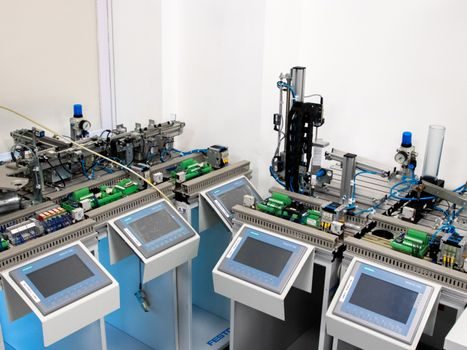
TCL announced Phase I completion of the TCL Wuhan Intelligent Industrial Park for Air Conditioner in February 2023, reporting an annual manufacture capacity of over 6 million units inside a three-phase project valued at USD 497 million, with the site designed to double down on smart manufacturing for premium air-conditioner output [S7]. That figure remains the most concrete publicly cited capacity benchmark for a single AC smart-manufacturing campus and is the volume target newer entrants benchmark against when sizing their own smart lines.
For context on how a smart AC line is wired, the 2026 cell-to-pack and AOI patterns feeding the broader smart-manufacturing conversation show up in the Precision AC manufacturing five-band process map, which breaks data-center and lab PAC units into the same five-band process logic applied to DC fast chargers and solar inverters.
Cleanroom and Dry-Booth Equipment Side
Nihon Spindle's Precision Air Controller Units (Thermal Cube) pair with Thermostatic Booths, Dry Booths and Dry Rooms, Clean Room Systems, Clean Room Equipment, and Air Filters to form an "invisible" category of air conditioning that contributes to manufacturing quality in smartphone, tablet, automotive component, precision medical, and foodstuff lines [S3]. The NS Dry Booth CE model is also marketed through Seika Sangyo GmbH for European accounts, giving a hint of the cross-regional supply chain that PAC skids ride on.
Cleanroom-grade air control is the most spec-driven subset of PAC. Where the production line is the product, a different automation stack applies — robotic screwdriving, vision-guided coil insertion, end-of-line helium leak and burn-in tests. Adjacent references for that side of the discipline include HBM smart manufacturing: TSV, CoWoS, and the 2026 automation stack and Chip packaging smart manufacturing: AOI, robotics and digital-twin stack in 2026.
Cooling-Tower and Heat-Rejection Sizing
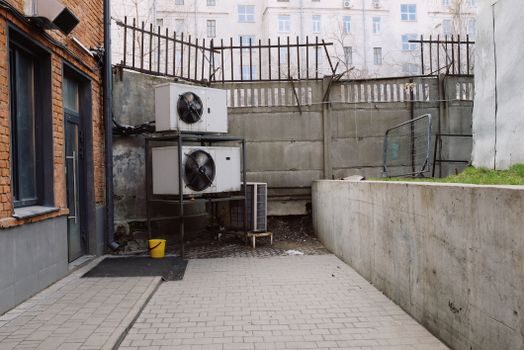
Nihon Spindle splits its heat-rejection portfolio into NE/NL Series and KG Series cooling towers, with after-sales service contracts attached to each line [S3]. For a smart-manufacturing PAC cell, tower sizing tracks the redundancy class of the unit (N+1, N+2) and the site's wet-bulb design day; matching tower model to PAC frame is a routine submittal item on data-center and lab builds.
Liquid-side heat rejection in 2026 is moving toward cold-plate and heat-sink integration on the high-density end. See the liquid cooling smart manufacturing: 2026 cold plate, heat sink and digital-twin reference for the air-versus-liquid boundary, and the grid-scale BESS smart manufacturing: 2026 automation stack specs and vendor signals entry for thermal-management parallels in battery lines, which share the same cell-level thermal-mapping problem.
Standards, Audit Anchors, and Limitations
Anchor the PAC spec to ISO 14644-1 for cleanroom classification, ASHRAE TC 9.9 for data-center thermal envelopes, and supplier-side ISO 9001:2015 / AS 9100 / IATF 16949 QMS registration. CBS Manufacturing pairs ISO 9001 registration with AS 9100 QMS certification and a lean/5S/Kaizen continuous-improvement program, and uses programmable CMM as its inspection anchor [S2]. G&M Automation holds ISO 9001:2015 certification and frames its offering as engineering excellence delivered to the factory floor, not just to paper [S6].
Limitations to flag for specifiers: precision AC is not a substitute for process cooling (chillers, cold plates, immersion), and the ±0.1°C / ±2% RH control band is only meaningful if the room envelope, door discipline, and rack layout are designed to that band — the unit cannot fix a leaking envelope. Comfort HVAC vendors (e.g. Precision Air QC, a Davenport-Iowa residential and light-commercial HVAC service firm at 563.285.9510 [S5]) operate in a different spec universe and should not be cross-specified on data-center or cleanroom work.
Trackable Signals for the Next Cycle
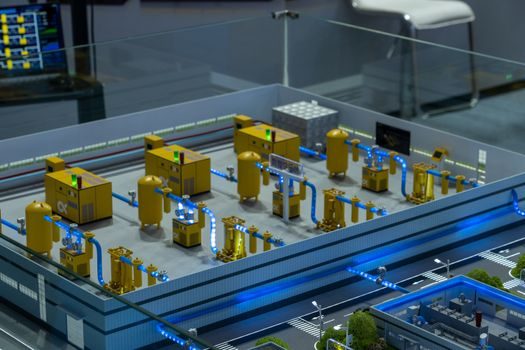
Watch (1) Phase II and Phase III capacity disclosures from the TCL Wuhan Intelligent Industrial Park against the 6 million-unit Phase I baseline [S7]; (2) North American PAC-line capex announcements from G&M Automation and similar ISO 9001:2015 system integrators as the reshoring of HVAC assembly continues [S6]; (3) updates to the DC fast charger smart manufacturing: 2026 power-module, OCPP and end-of-line test map and solar inverter smart manufacturing: 2026 power bands, cell pairing and audit anchors for cross-sector automation-stack convergence on the same cell- and module-level test patterns that PAC assembly cells are beginning to adopt.
For component-level specifications, see precision filter, additive manufacturing material, and smart camera.